
Homemade Croutons Recipe

- Published
- 18 comments



This easy homemade croutons recipe uses day-old baguette, good olive oil, and coarse salt to turn stale bread into a crisp and golden topper for any salad or soup. I can have the whole tray in and out of the oven in 20 minutes. Crunchy outside and chewy in the middle.
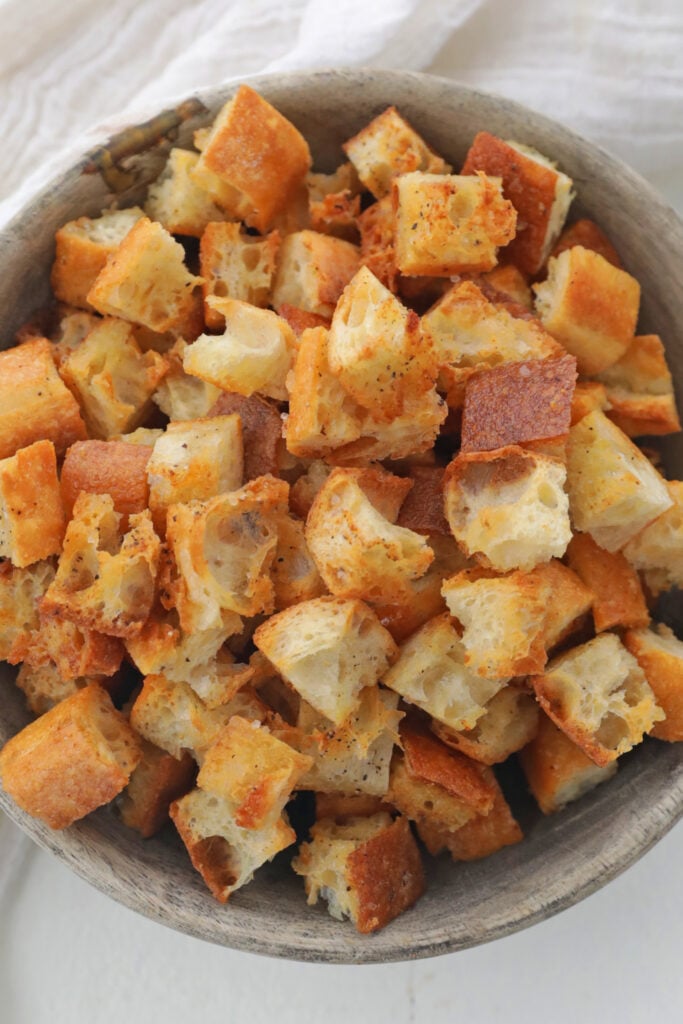
I can not bring myself to buy croutons out of a bag anymore once I started making my own back on the line, because the version at the store always tastes like dust and freezer burn next to a tray I just pulled from the oven. They are the best on a classic Caesar salad, the entire point of a panzanella, and what turns a pot of Ribollita soup from leftover stew into a real Tuscan bowl.
Croutons
Croutons get their name from the French word croûton, a diminutive of croûte, meaning crust. The dish itself is older than the name. Long before anybody was calling them croutons, cooks across the Mediterranean were tearing stale bread into pieces and crisping it up to keep nothing in the kitchen going to waste. That is where dishes like Italian panzanella and ribollita come from, both of them built around old crusty bread as the actual structure of the dish, not just a garnish.
When I worked in restaurants, croutons were a salad station prep item I would knock out every morning before service so they were always sitting ready in a pan above the pickup line. How I make them at home is very similar: cube the bread big enough that the centers stay tender, toss in plenty of olive oil and salt and pepper, spread them across a sheet tray in a single layer, and bake until the outsides are golden brown. It’s that easy!
You can even push them harder with garlic powder, dried oregano, or a melt of butter the way I do for my homemade garlic bread, or keep them simple with just oil and salt the way I do for Caesar. Once you have these in a jar on the counter, every salad and soup that you put on the table for the next week gets better at no extra work.
Ingredients and Substitutions
Croutons are a three-ingredient dish, which means each one has to do its job. Here is what I use to make it from scratch:
Bread – A day-old baguette is my first pick because the crust gives me the crunch and the inside gives me the chew. A simple French bread, a Sourdough, a ciabatta, an artisan, or a hearty white sandwich bread all work. Fresh, soft sandwich bread skips the resting step and crisps up faster but does not hold stay intact as well. Skip thin and sweet breads like brioche unless you are making a dessert.
Extra virgin olive oil – A good fruity olive oil because it carries every other flavor and the bread is going to soak up most of it. A grassy Tuscan or a peppery Sicilian both work, and a Spanish blend is a fine everyday choice. Melted unsalted butter can stand in or split the difference with the oil for a richer crouton that browns deeper.
Seasonings – Coarse sea salt sticks to the oiled bread and seasons every cube. Fine table salt slides right off and ends up in the bottom of the tray. Cracked black pepper goes on at the same time so the pepper toasts in the oven and tastes nuttier.
How to Make Croutons from Scratch
Preheat the oven: I set my oven to 375°F with a rack in the middle position. The middle rack is what keeps the cubes from scorching on top or bottoming out before the centers are dry.
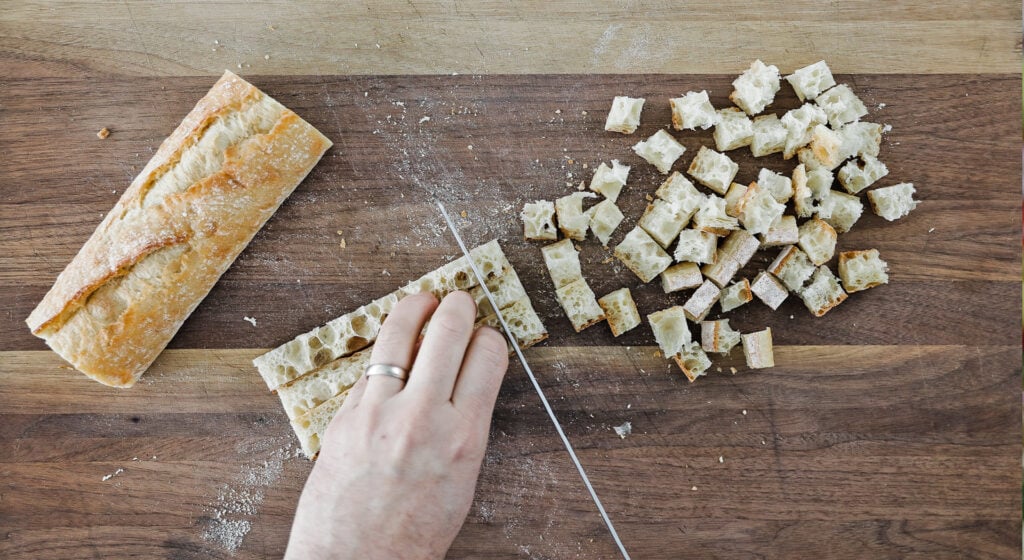
Cut the bread: I slice the baguette into 1/2 inch planks, stack the planks, and cut them down into half-inch cubes. I aim for the same size on every piece so they bake at the same rate. Smaller and I end up with rocks. Bigger and the middles stay too chewy for me.
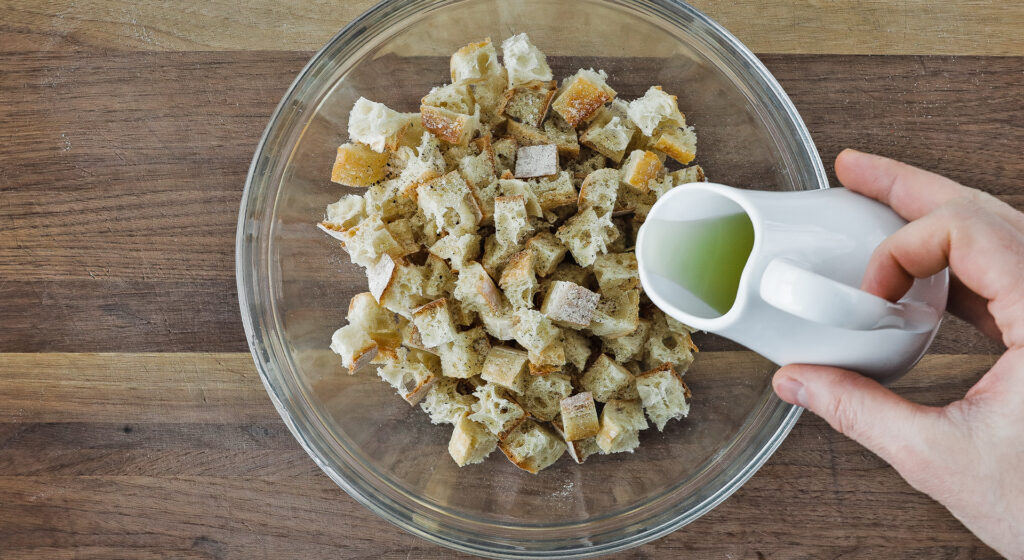
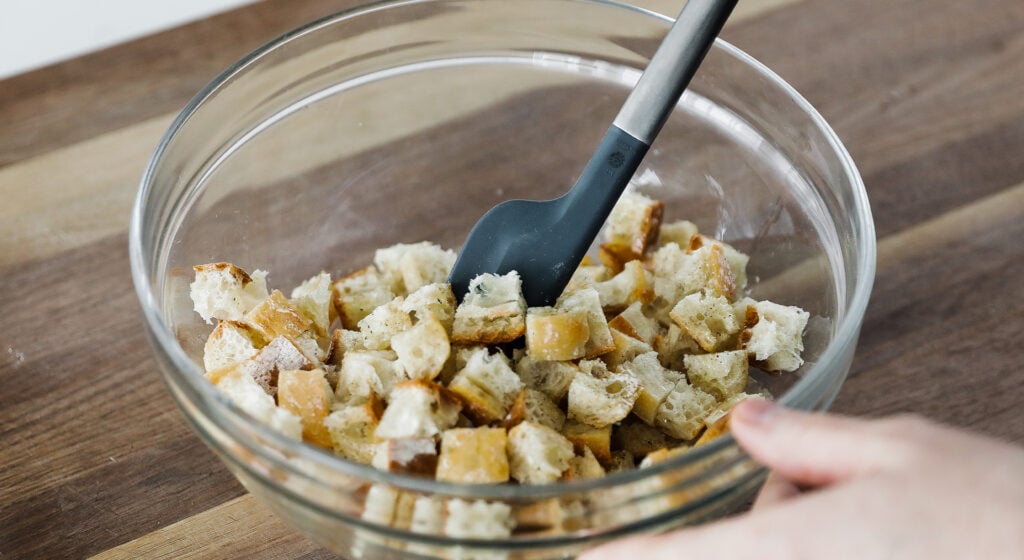
Toss the bread with oil and seasoning: I add the cubes to a large mixing bowl, drizzle them with olive oil, and hit them with coarse salt and cracked black pepper. I toss with my hands so every cube picks up oil on all sides. If I am adding garlic powder, oregano, or other dried herbs, I add them now and toss again.
Spread the cubes: I lay the seasoned bread out across a sheet tray lined with parchment in a single layer with space between the pieces.
Bake: I slide the tray into the oven and bake for about 10 minutes. Then I pull the tray, give it a shake or a toss with a spatula so the cubes roll over, and return it to the oven for another 5 to 10 minutes until the cubes are deep golden brown on all sides.
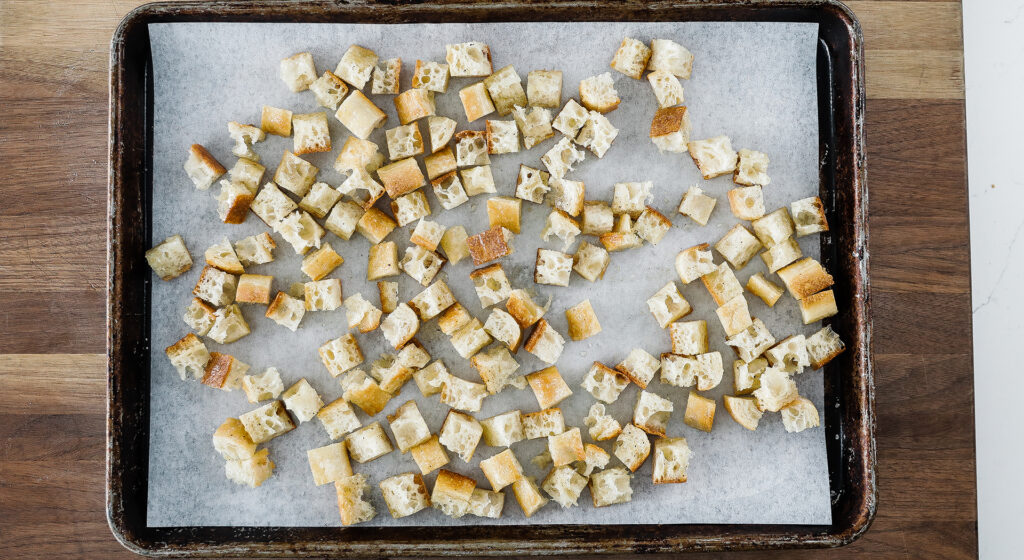
Cool and serve: I let the croutons cool on the sheet tray for at least 10 minutes before they go into a bowl or container. They keep crisping as they cool, and a hot crouton straight off the tray can still have a slightly soft center that finishes setting at room temperature.

chef tip + notes
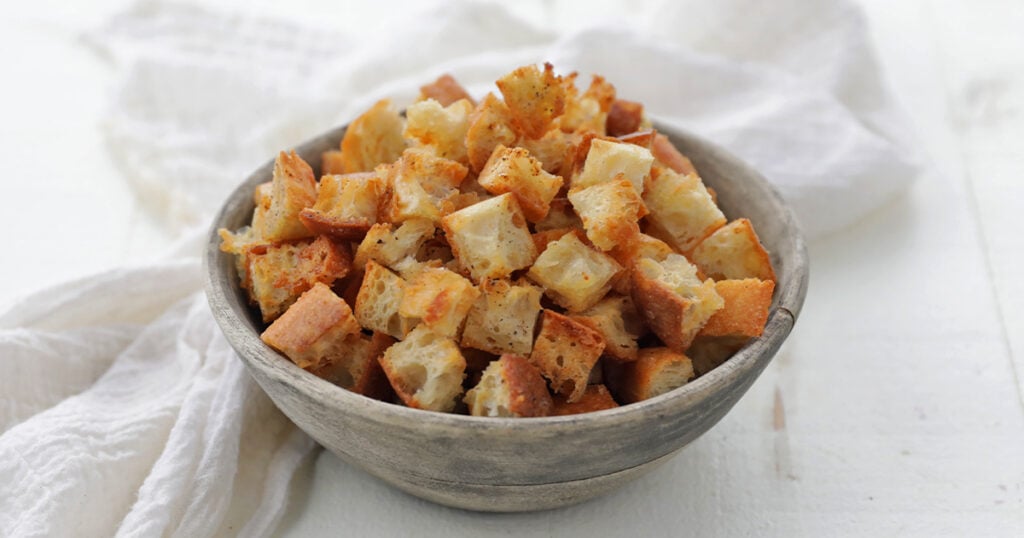
The thing that separates a real homemade crouton from a bag at the store is moisture, or rather the lack of it. A bagged crouton has been dehydrated to within an inch of its life and tastes like cardboard because there is nothing left inside it. A homemade crouton hits a different target: dry enough on the outside to crunch, just enough chew left in the middle that the bread still tastes like bread.
- Use day-old bread when you can: Fresh bread holds too much moisture and ends up softer in the middle than I want, even after a full bake. Day-old bread is already dried out a little, which means the oven is finishing a job that the kitchen air started.
- Single layer, every time: Stack the cubes and the bottom row steams while the top row toasts. Single layer, space between, every cube gets airflow and color on every side.
- Salt the bread before the oven, not after: Salt on oiled bread sticks. Salt on a baked crouton bounces off and lands in the bottom of the bowl. If a salad needs extra seasoning, that is a separate problem for the dressing.
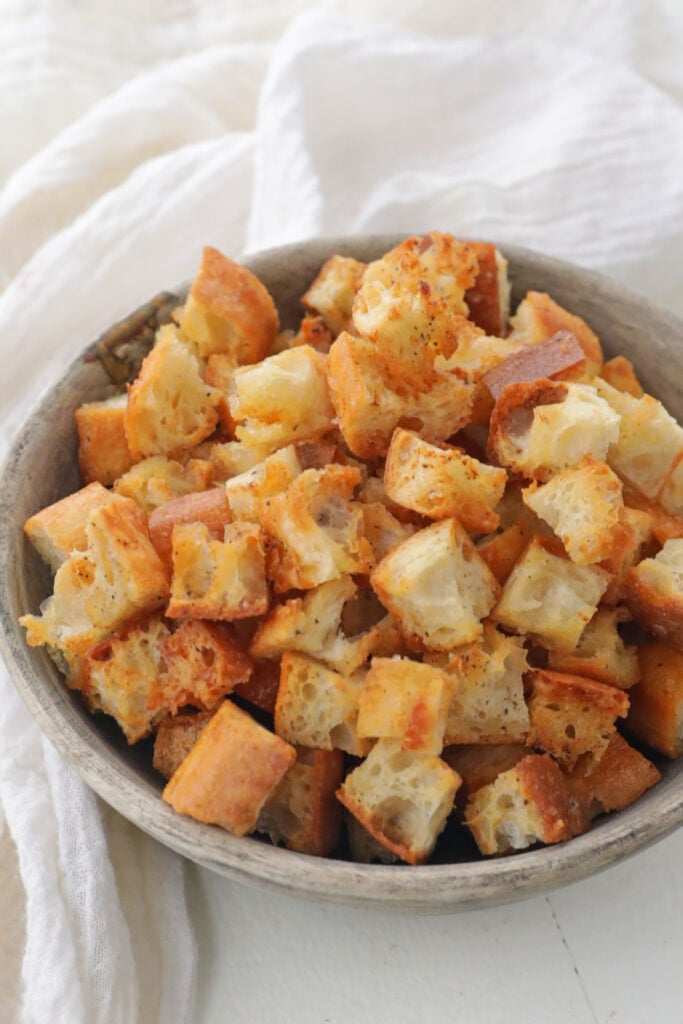
- Push them deeper than you think: A pale crouton tastes like dry bread. A deep golden brown crouton tastes like a crouton. If they look almost too dark coming out, they are right.
- Optional seasonings: A teaspoon of garlic powder, onion powder, dried oregano, dried basil, dried thyme, or a smoked paprika each pushes the crouton toward a specific dish. Italian seasoning blend is the easy move when I want all of those at once. I add the seasonings to the bowl with the oil so they coat the bread instead of falling onto the parchment.
- Parchment paper: I like adding parchment between the bread and the sheet tray, it makes the difference between an even bake and a tray with the bottom edges burnt. Worth using every time.
Serving Suggestions
These show up on almost every salad I put on the table during the school year. A handful on top of a green goddess salad is what my daughter actually waits for, and she will reach into the jar on the counter for a snack while I am still building the bowl. In the winter I will make a tray of them late on a Saturday afternoon and float them on top of a deep bowl of classic French onion soup right under the cheese, because the croutons under the broiler crust go from soft and brothy on the bottom to crisp and bubbling on top.
The other place these are great is in a soup pot. A spoonful of croutons across the top of an authentic Italian minestrone right before the bowl goes to the table, and the same handful turns a bowl of tomato soup into a dish I want to eat with a spoon and a fork. So good!
Make-Ahead and Storage
Make-Ahead: Make a full batch up to 3 days ahead and cool them all the way before storing. A warm crouton in a sealed container traps steam and turns soft.
How to Store: Once cooled, store in an airtight container or a sealed bag at room temperature for up to 7 days. A jar with the lid screwed on tight is what I use because it keeps the air out and the smell of the croutons in.
How to Reheat: If the croutons have lost a little crunch after a couple of days, spread them on a parchment-lined sheet tray and toast at 350°F for 4 to 6 minutes until they snap back. Let them cool a few minutes before serving.
How to Freeze: Croutons freeze for up to 2 months in a sealed bag with the air pressed out. Pull them straight from the freezer, spread on a sheet tray, and warm at 350°F for 5 minutes before serving.
More Recipes to Use Croutons In
- Mandarin Orange Salad
- Shaved Brussels Sprout Salad
- Middle Eastern Salad
- Tuscan Bean Soup
- Mulligatawny

Homemade Croutons Recipe
Ingredients
- 1 baguette cut into ½” cubes
- 3 tablespoons olive oil
- sea salt and pepper
Instructions
- Preheat the oven to 375°.
- Add the cubed bread to a large bowl and toss with the olive oil, salt, and pepper until evenly coated.
- Spread out on a cookie sheet tray lined with parchment paper and bake at 375° for 15 to 20 minutes or until browned and crunchy.
- Cool and serve.
These croutons were so easy to make and taste delicious. I used an artesian French baguette for mine.
Simple, easy & delicious! I took your suggestionon and added a little garlic powder. Another winner!
this are delicious 2Nd batch I added a lettle kemon zest to the olive oil they were delicius too
Thank you dear for this easy crouton recipe! I’ll use my own bread for it. Again, thank you dearly! I get a kick out of you and your recipes! The stray cat I named after you, his name’s “the Great Grand Chef Billy Purr-easy” is settling in well! I hope you and yours have a lovely holiday! Take care and stay safe!!!!!!!!!
This recipe is so simple, yet so delicious. These are not even in the same league as pre made croutons from the supermarket. In addition to a salad topping, we make these as a crunchy snack.
appreciate you trying it
Very good! I love it with the Garlic Powder.
so good!!
So easy and so delicious. I added a little garlic, because thats what I do.
appreciate you trying it
I appreciate your site Even a long time foodie like me loves to try your recipes- this is a go to for me almost daily.
thanks for giving it a shot!!
Love these croutons. I eat as snack or in salads and soups.
yup!
👌❤