

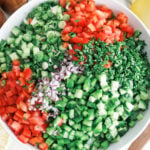
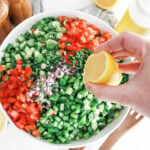
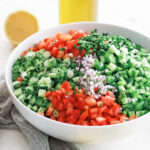
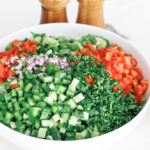
This simple Middle Eastern Salad lightly dresses lettuce, peppers, cucumber, tomatoes, and parsley in a bright lemony dressing. Using fresh, in-season vegetables makes it a clean and vibrant side salad you can serve next to almost any meal.
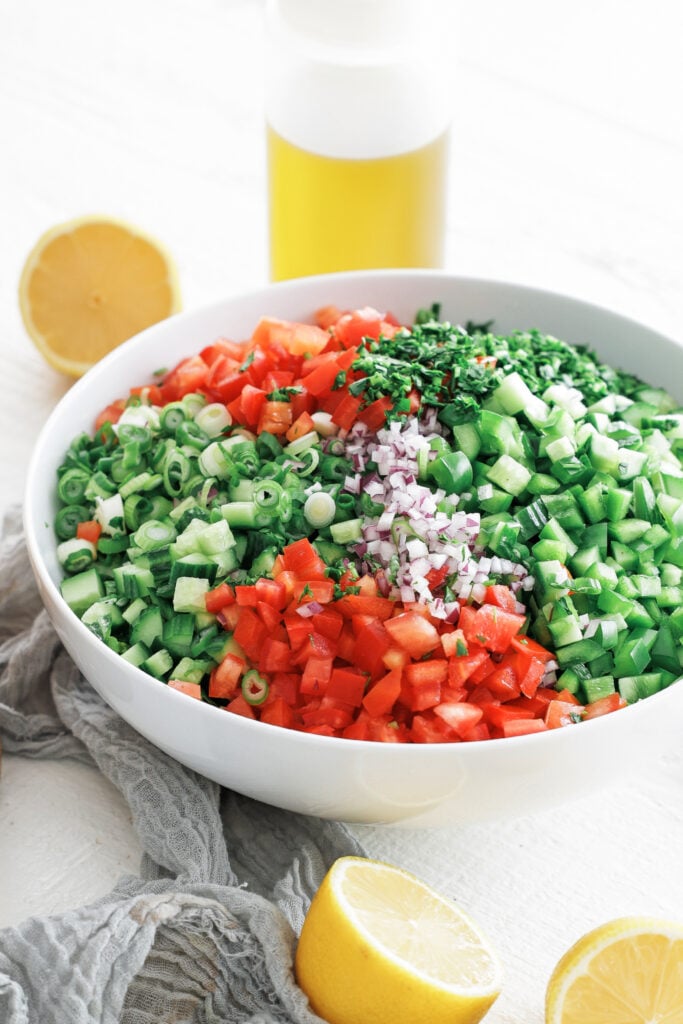
I eat salads a few times a week, and they are rarely boring. My secret? Always using the best produce and a really tasty dressing. If a big bowl of veggies dressed in a vibrant vinaigrette is what you’re looking for, too, then you should check out my Panzanella Salad and my Tomato Onion Salad.
Easy Middle Eastern Salad
This Middle Eastern Salad is a crisp and refreshing side dish that tosses chopped lettuce, fresh vegetables, and parsley in lemon juice, salt, and pepper. Our dear Egyptian friends first introduced it to us, and I love how it’s the kind of dish that makes you appreciate simple, seasonal produce. I always make it to the farmers’ market when I can because those freshly harvested veggies make all the difference.
There are many variations of Middle Eastern salads, such as Lebanese salata, Israeli salad, and Egyptian salata baladi. This recipe is a mix of all three, thanks to its bright lemon dressing and chopped vegetables as the stars. I personally like to serve it alongside my Middle Eastern Kibbeh, with a bowl of creamy, garlicky toum on the side for dipping, but it honestly pairs well with almost everything.
Maybe the best thing about this salad is that it’s a “measure with your heart” kind of recipe. It’s meant to be flexible, so go ahead and add extra cucumber, double the lemon, or load up on parsley. Just remember that quality matters here. The sweeter the tomatoes, the crunchier the cucumbers, and the more fragrant the parsley, the better this salad will taste.
Ingredients and Substitutions
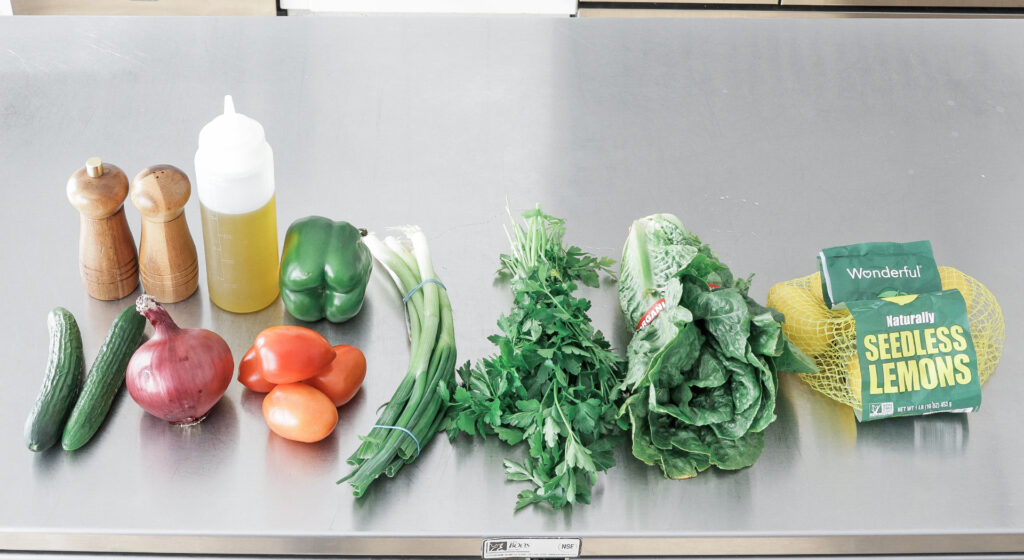
I always make this Middle Eastern salad with in-season vegetables, but there are several substitutions available. This is what I used:
- Lettuce – Crisp romaine lettuce is my go-to, but green leaf or iceberg lettuce will work.
- Red Bell Peppers added for color and sweetness. Green bell peppers are also great.
- Cucumbers – Crispy and juicy Persian cucumbers are my favorite. If you need a substitute, use an English cucumber instead.
- Onions, diced red and green onions.
- Tomatoes – I like Roma tomatoes, but quartered cherry or grape tomatoes also work.
- Parsley – Soft, vagrant herbs are a must here. For more freshness, combine the parsley with fresh mint leaves.
- Lemons for the dressing
- Olive Oil to finish the salad
- Salt and pepper
How to Make a Middle Eastern Salad
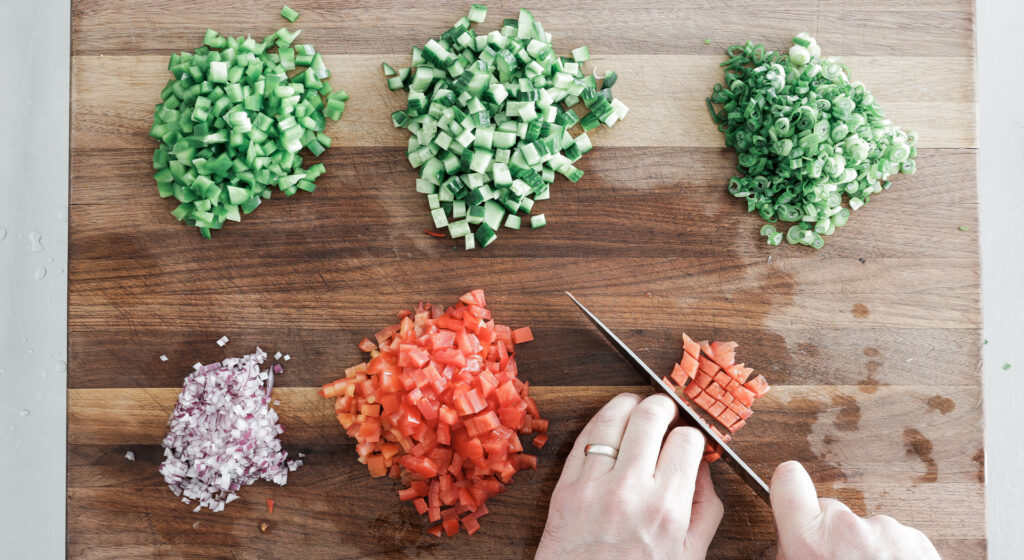
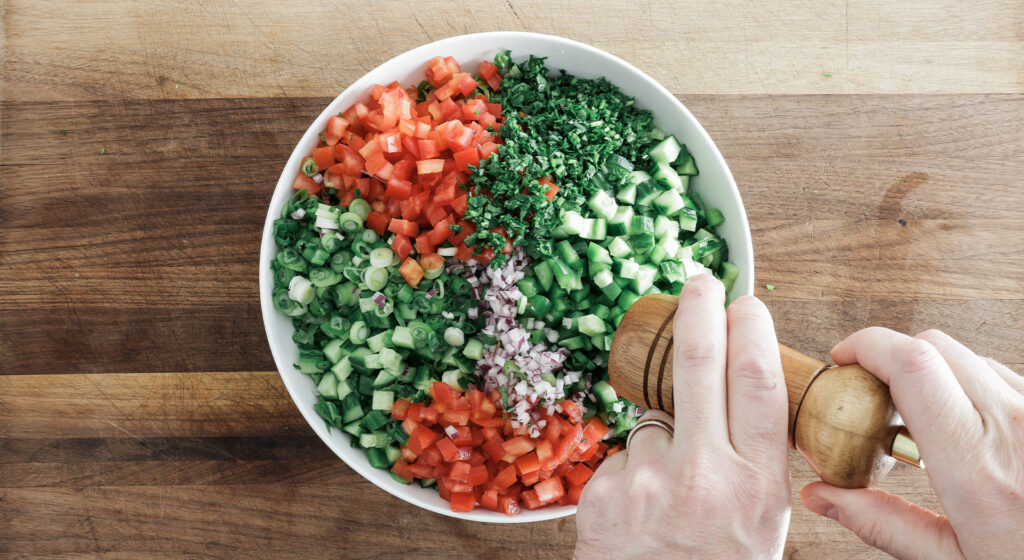
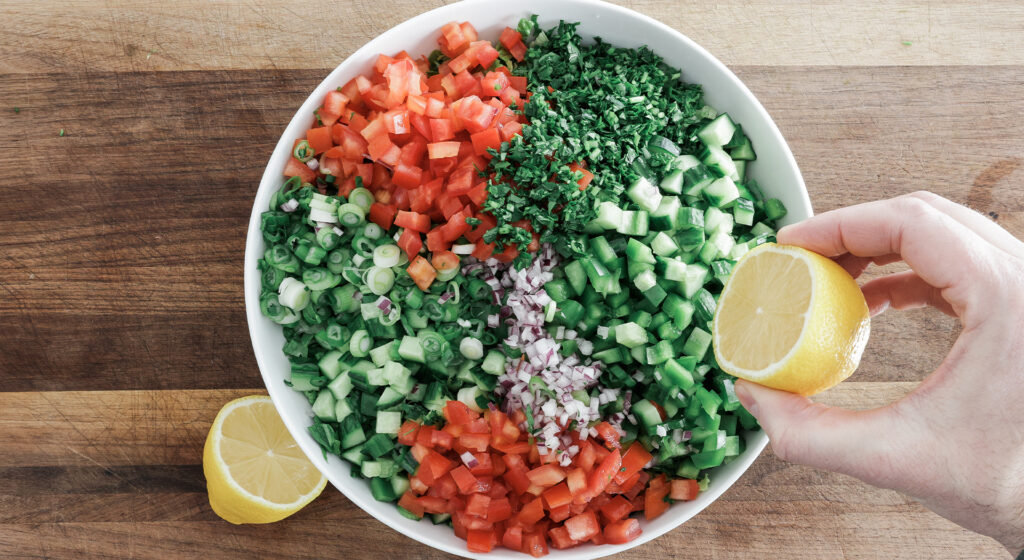
Combine the ingredients: Start by adding the chopped lettuce to a large salad bowl. Next, add the peppers, cucumbers, red onions, green onions, tomatoes, parsley, lemon juice, salt, and pepper over top.
Toss: Toss everything together until it’s thoroughly mixed. Most of the time, I’ll finish it with a drizzle of olive oil for a richer flavor.
Serve: Serve the salad right away.

Chef Tip + Notes
Whether you wash the lettuce before or after it’s chopped, make sure it’s thoroughly dried before assembling the salad. I always use my salad spinner since it’s great at removing excess water. Wet lettuce leads to muted flavors and dressing pooling at the bottom of the bowl.
- Lettuce hack: Make this with store-bought pre-chopped lettuce to speed things up.
- Seed the tomatoes: Slice the tomatoes in half and scoop out the juicy, seedy middles before dicing them for the salad. The texture will be so much better, trust me.
- Oil-free variation: I always finish this salad with a quick drizzle of olive oil because it adds a great flavor and more body. Omit it from the recipe if you’d prefer to keep it oil-free; the salad will still be delicious without it.
- Add more veggies: A few thinly sliced radishes or some grated garlic cloves would be really tasty here.
- Season the dressing: Za’atar, garlic powder, Aleppo pepper, sumac, or cumin can all be sprinkled over the salad along with the salt and pepper.
Serving Suggestions
This is one of my go-to summer side salads because it’s so light and fresh. We like it best on the side of these Middle Eastern Kofta Kebabs and next to my Homemade Falafel. It instantly makes the meal refreshing!
Sometimes I’ll even swap the chopped parsley sprinkled over homemade hummus for a spoonful of this salad instead. I love serving this on a mezze platter with pita and more veggies for scooping and dunking.
Remember that there’s no real wrong way to serve this, no matter the cuisine you’re eating. My wife and I like pairing it with a few grilled salmon filets for summer dinners, and with leftover chicken cutlets for lunch.
Make-Ahead and Storage
Make-Ahead: The lemon dressing and prepared vegetables can be stored in separate airtight containers in the fridge for 1-2 days before combining. I always wait to dress the salad until right before I’m ready to eat.
How to Store: The leftovers can be kept covered in the fridge for about 2 days, but the veggies will soften and make the salad a little juicy or soggy as it sits.
More Salad Recipes

Middle Eastern Salad Recipe
Ingredients
- 2 heads of Romaine lettuce, small diced
- 1 seeded, small-diced green or red bell pepper
- 2 small diced Persian cucumbers, or 1 English cucumber
- ½ cup small-diced red onion
- 3 small diced green onions
- 6 to 8 seeded, small diced roma tomatoes
- ½ bunch finely minced parsley
- juice of 1 to 2 lemons
- olive oil, optional
- salt and pepper to taste
Instructions
- You can wash the lettuce before or after it is chopped. Thoroughly dry it using a salad spinner, paper towels, or kitchen towels.
- Add the lettuce to a large bowl.
- Add the peppers, cucumbers, red onions, green onions, tomatoes, parsley, lemon juice, salt, and pepper.
- Mix thoroughly to combine. I personally like to add a few tablespoons of olive oil for flavor and coating.
- Serve.
Middle Eastern Salad Recipe