
Hard Boiled Eggs Recipe

- Published
- 140 comments
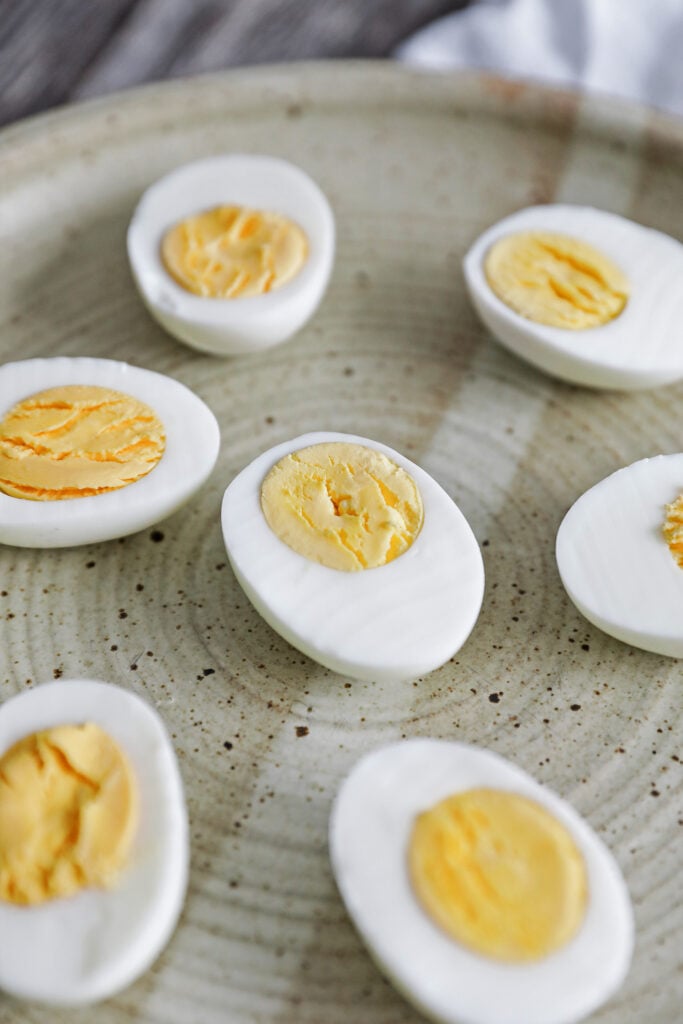
My perfect hard boiled eggs use a foolproof 6+6 method where I boil for 6 minutes, then turn the heat off and let them sit covered for 6 more minutes. The result is a fully set yolk with no green ring and a shell that peels off in seconds.
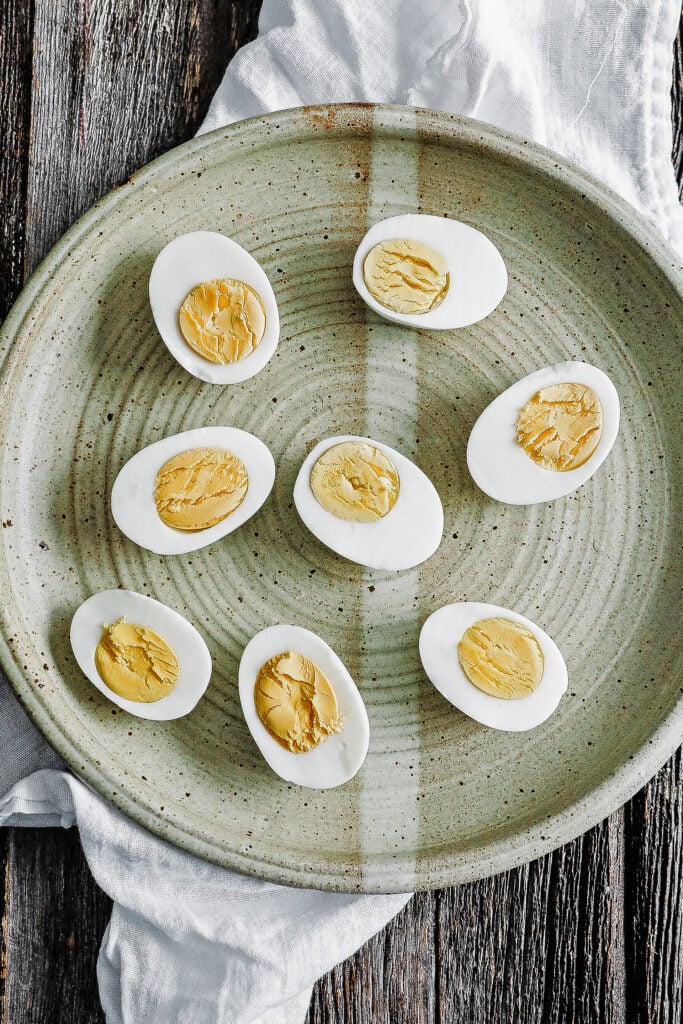
A good friend once told me that everyone has their own way to hard boil an egg, and every single one of those people is very passionate about their procedure. I am no different. I have made thousands upon thousands of hard boiled eggs in my career, and this is the method I trust completely. It works every time whether I am prepping a batch for classic deviled eggs, making egg salad for lunch, or just keeping a container in the fridge for the week. If you prefer your yolks runny, check out my soft boiled eggs or my medium boiled eggs for a jammy center.
Hard Boiled Eggs
Hard boiled eggs are one of the oldest prepared foods in human history. Eggs have been boiled as a cooking method since ancient Rome, where they were commonly served as a first course at banquets. The classic French chef’s toque is said to have 100 folds, each representing a different way a chef can prepare an egg. That tradition speaks to how seriously the culinary world takes egg cookery. Hard boiled eggs specifically became a staple in American kitchens through their use in salads, deviled eggs, and as a portable protein for packed lunches and picnics.
The secret to this method is simple but non-negotiable: you must start with rolling boiling water. I can not stress this enough. I drop the eggs in, boil for 6 minutes, then put the lid on, turn the heat completely off, and let them sit for 6 more minutes in the hot water. After that, straight into an ice bath to shock them and stop the cooking immediately.
My daughter is the official taste tester in this house, and she can tell the difference between a perfectly cooked hard boiled egg and one that has been overdone. She will not eat one with a green ring, and honestly I do not blame her. Grab a pot, boil some water, and let’s make these.
Ingredients and Substitutions
Hard boiled eggs might be the simplest recipe on my entire site, but the technique is everything.
Large Eggs – I use large brown or white eggs. It does not matter which color or variety you choose. Organic, free-range, conventional, they all cook the same way.
Distilled Vinegar – I add a splash to the boiling water before the eggs go in. It helps cut the sulfur smell that sometimes comes from boiling eggs. It does not affect the flavor of the eggs.
Ice – For the ice bath. This is not optional.
How to Make Hard Boiled Eggs
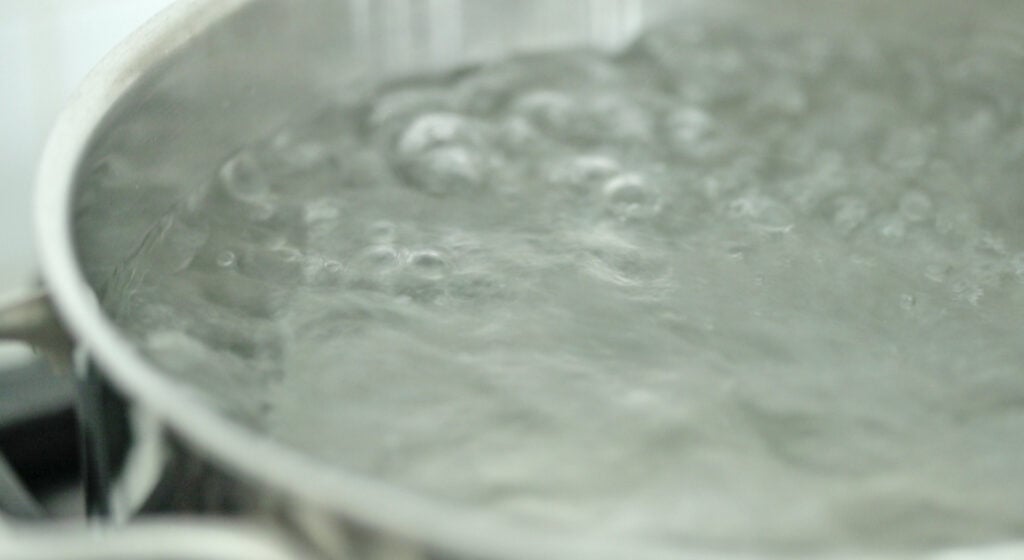
Boil the water: I fill a large pot about three-quarters full with water and bring it to a rolling boil over high heat.
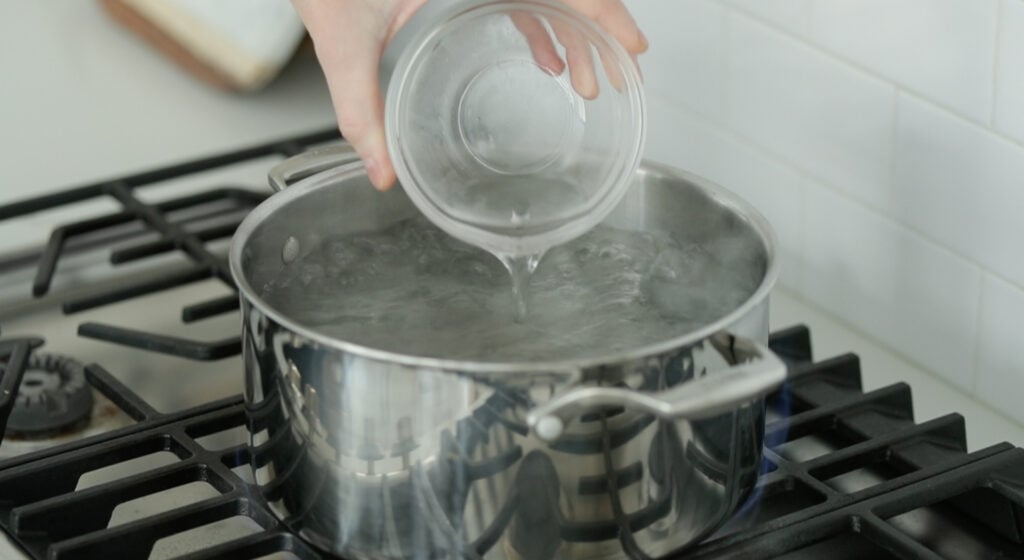
Add vinegar: I pour in about a tablespoon of distilled vinegar.
Add the eggs: I gently lower the eggs into the boiling water using a large spoon so they do not crack against the bottom of the pot.
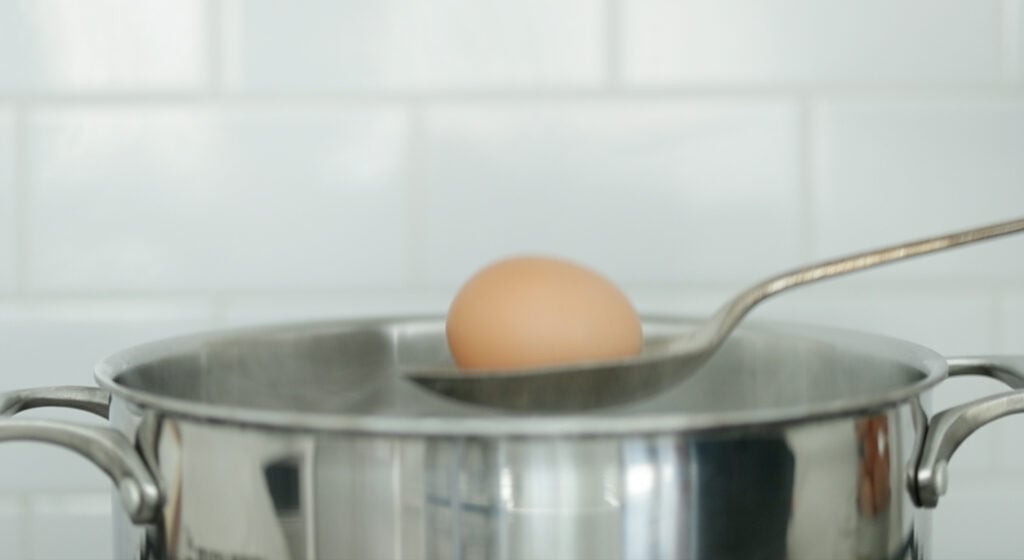
Boil for 6 minutes: I keep the water at a steady boil with the eggs in for exactly 6 minutes.
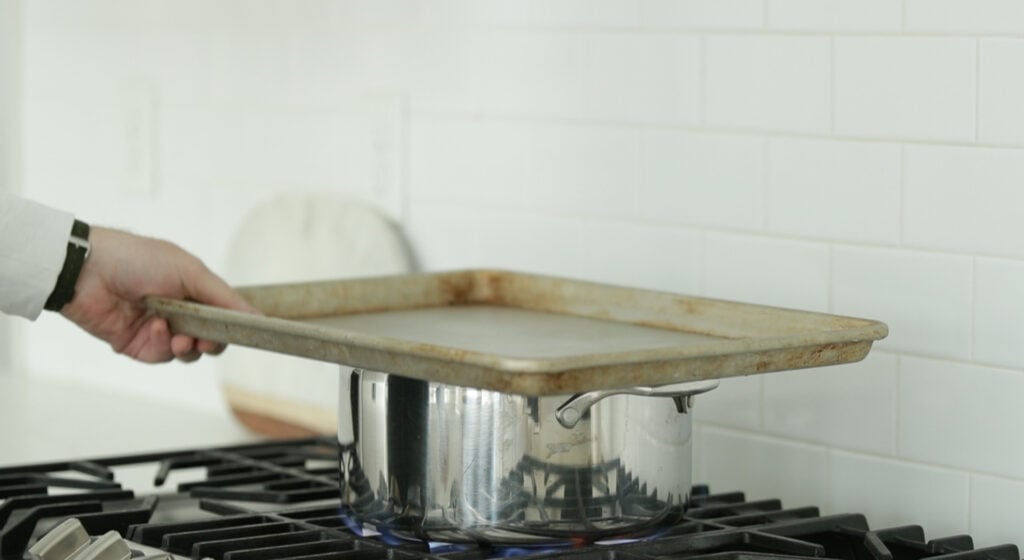
Cover and rest for 6 minutes: After 6 minutes, I put a lid on the pot and turn the heat completely off. I let the eggs sit in the hot water for 6 more minutes. This is the 6+6 method and it cooks the yolk all the way through without overcooking it.
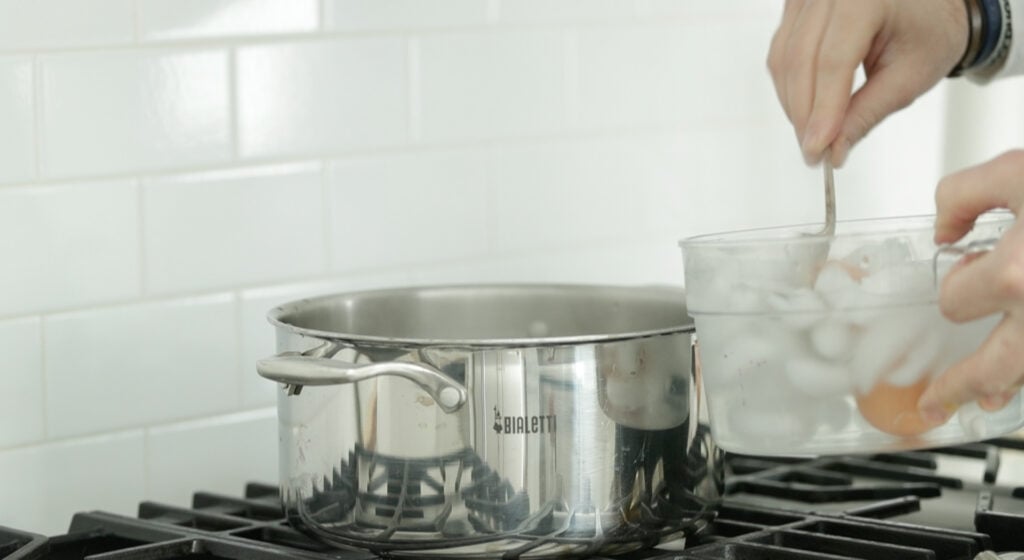
Ice bath: I immediately transfer the eggs to a bowl of ice water using a slotted spoon. I let them sit for 2 to 4 minutes until completely cooled. This stops the cooking and prevents the green ring.
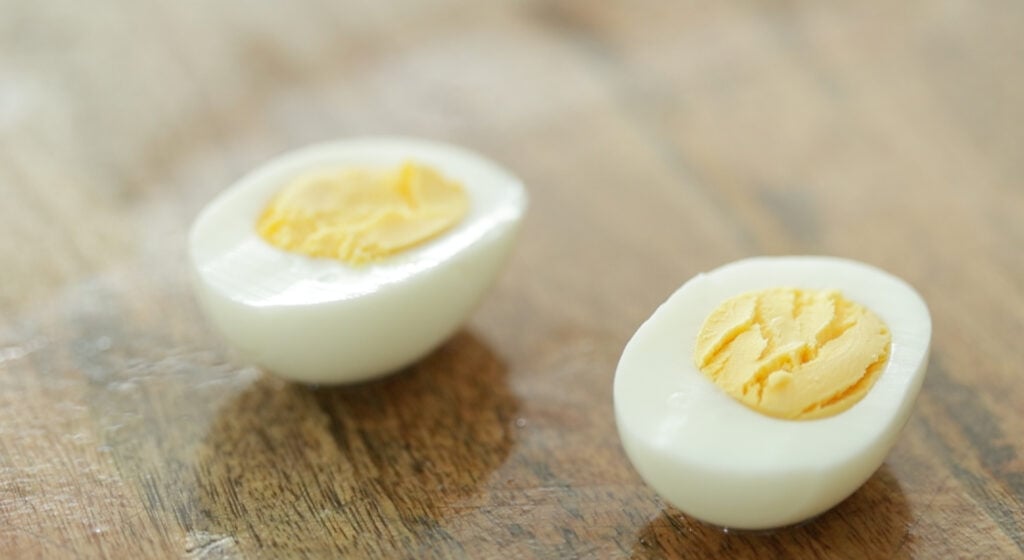
Peel under water: I crack each egg gently on a surface and roll it around to create a web of small cracks. Then I peel under lukewarm running water. Once I get under the membrane between the shell and the egg white, the shell comes off in large pieces with almost no effort.

chef tip + notes
Having made thousands of hard boiled eggs in professional kitchens, I can tell you the two things that ruin them every time are starting with cold water and skipping the ice bath. Cold water start equals eggs that fight you when you peel them. No ice bath equals a green, overcooked ring around the yolk.
- Start with boiling water, always: I do not care what other methods say about starting with cold water. It does not work for clean peeling. Boiling water first, eggs in second. This is the technique I have used for 15 years and it has never failed me.
- Use older eggs: Eggs that have been in the refrigerator for 7 to 14 days peel significantly easier than eggs bought the same day. The older the egg, the more the membrane pulls away from the shell.
- The fresh egg test: Drop an egg into a container of water. If it sinks to the bottom, it is fresh. If it floats, discard it. This test tells you freshness but not whether the egg is bad. The only way to know for sure is to smell it after cooking. A bad egg has an unmistakable sulfur stench.
- Do not skip the ice bath: The ice bath is what separates a bright yellow yolk from a grey-green chalky one. Two to four minutes is enough.
- Use the membrane trick: When peeling, the goal is to get under the thin membrane between the shell and the white. Once you get under it, the shell slides off in large pieces. Running lukewarm water over the egg while peeling helps loosen everything.
- Brown vs white does not matter: I have heard people claim that white eggs peel easier. It is not true. The color of the shell has nothing to do with how it peels. The water temperature at the start is what matters.
Serving Suggestions
Hard boiled eggs are the foundation of half the recipes on my site. I use them in all of my deviled egg recipes: avocado deviled egg, my comforting deviled egg with bacon, and of course in my southern with relish deviled egg style.
They also go straight into my southern potato salad and my traditional Cobb salad where they add richness and protein to every bite. Beyond recipes, I keep a container of peeled hard boiled eggs in the fridge at all times for quick snacks and breakfast. I slice them over tomato toast with salt and pepper, chop them into a Niçoise salad for dinner, or just eat them straight out of the fridge with a sprinkle of sea salt.
Make-Ahead and Storage
Make-Ahead: Hard boiled eggs are one of the best make-ahead foods. I cook a batch at the start of the week and they are ready to grab whenever I need them.
How to Store: I keep them in the shell, submerged in water in a covered container in the refrigerator for up to 7 days. Keeping them in water prevents the outside of the egg from drying out and absorbing fridge odors. Peeled eggs stored in a sealed container last up to 5 days.
How to Reheat: Hard boiled eggs are typically served cold or at room temperature. If I want them warm, I place them in a bowl of hot tap water for 5 minutes.
More Recipes Using Eggs

Video
Hard-Boiled Eggs Recipe
Ingredients
- 1 tablespoon distilled vinegar
- 6 large eggs
Instructions
- Bring a large pot of water to a rolling boil over high heat.
- Pour in the vinegar to help with the smell.
- Gently add the eggs into the boiling water using a large spoon and cook for 6 minutes.
- Next, place a lid onto the pot, turn the heat completely off and let them sit for 6 more minutes.
- Immediately place the eggs after they are done cooking to a container filled with cold water and ice.
- Cool the eggs for 2-4 minutes to stop the cooking process.
- Peel the eggs under running lukewarm water, slice and serve.
I love the recipe. The nutrition info seems to be for all 6 eggs combined rather than per serving (1 egg). Would you confirm the per serving nutrition?
I updated the recipe card information, and the nutrition is now listed for one egg, not all 6.
I made it using Eggland’s lower-cholesterol eggs and they turned out great – no green-gray ring around the yolk. And the best part was they were totally cooked which I am fussy about. THANK YOU
And I have a question: The nutritional information is for all 12 eggs – correct?
As a retired nurse who has helped patients with medically needed diets including the nutritional info saves caregivers’ much valuable time. I know because my mother was on a high-protein medical diet and having that info readily available with a recipe saved me loads of look-up time. Thank you for including it with your recipes.
Do you use eggs straight from the fridge, or do you allow them to come to room temperature first?
Thank you for your reply!
I do from the fridge or maybe just a few minutes at room temp.
The best recipe I’ve used. Thank you!
My pleasure!!
Perfect every time. I’m a big fan Billy!
Many thanks!
The ones that survived peeled PERFECTLY and were cooked perfectly as well. (I started the timer as soon as it hit the water as another poster suggested.) I will try again….
Love your videos and thank you for posting!
My pleasure.