
Osso Buco Recipe

- Updated
- 126 comments


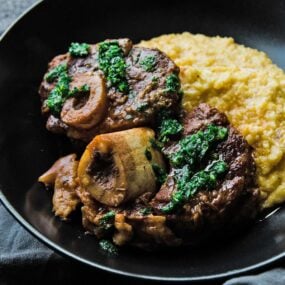
This Osso Buco recipe features slow-braised veal shanks simmered with vegetables, tomatoes, wine, and rich stock, creating a fall-off-the-bone tender dish. Being Sicilian, Italian food has always been second nature in my home. I’ve been cooking this dish for years, and to this day, it’s still one of my all-time favorites.
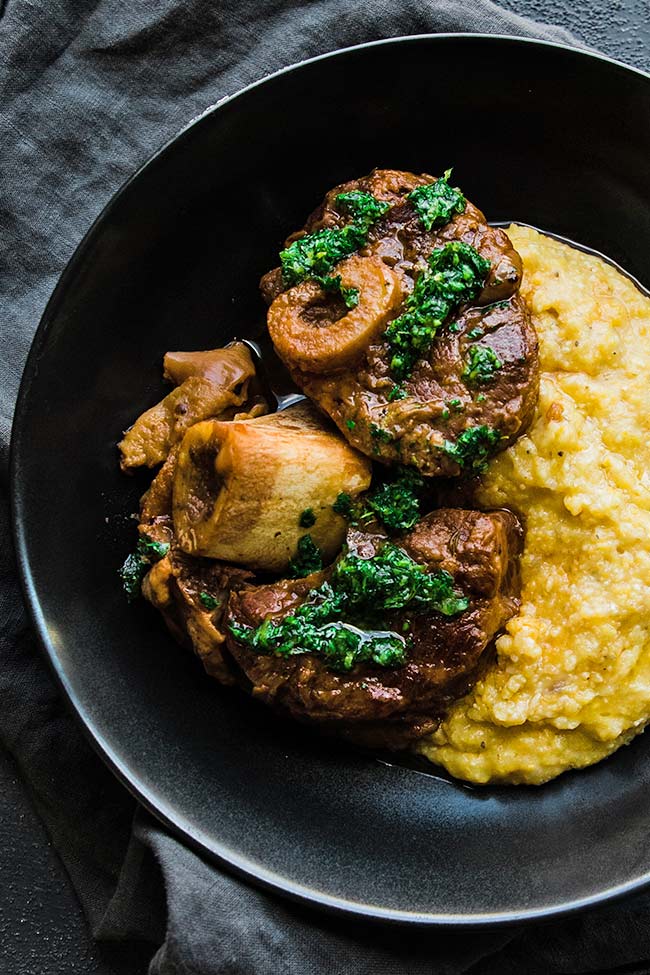
My Osso Buco isn’t a “throw it together and be done in 30 minutes” kind of meal, this is a commitment to flavor. If you love this meal, you’ll appreciate other braised dishes like my braised beef short ribs or my delicious braised lamb shanks recipe.
What is Osso Buco?
Osso Buco is a classic Italian dish of slow-braised veal shanks cooked with wine, vegetables, and stock, then finished with a gremolata, which is a classic garnish of parsley, garlic, and lemon. This dish originated in Milan, and the name translates to ‘marrowbone’ in English, where that coveted bone marrow is emulsified into the sauce. Traditionally, the marrow inside the veal shank is commonly enjoyed with a special “bone marrow” spoon.
I have to say, finding Osso Buco on Italian restaurant menus can be quite difficult these days since veal shanks have become less common. However, if you just happen to find Osso Buco on the menu, especially in a traditional Milanese trattoria, you better order it while you still can.
I’ve made this recipe countless times, from my time as a Chef at a fine dining continental restaurant, to my own home, and I can tell you: patience is the key to this recipe. If you’ve ever had a version that was just “okay,” I’m guessing one of two things went wrong:
- The veal wasn’t properly seared. That deep golden maillaird crust is a must and brings about so much more umami to the dish.
- The braising liquid wasn’t seasoned enough. I always say that when food seems “bland,” in almost 99% of cases, it’s a lack of salt and pepper. You need the right balance of acidity, aromatics, and salt to really make the dish pop.
Trust me, I’ve made this dish enough and perfected it so you can rest assured it will turn out for you at home.
Ingredients and Substitutions
- Meat – I usually make this with veal shanks, as they’re the traditional cut for Osso Buco. But if I can’t find them, I go for beef shanks instead.
- Olive oil is best to use for this recipe. Feel free to substitute with avocado oil.
- Flour – You will need some all-purpose flour to coat the veal shanks in before searing them.
- Vegetables – I used a combination of onions, carrots, celery, and garlic. You can use white, yellow, sweet, or red onions. These are your standard vegetables when braising any piece of meat.
- Tomato paste and fresh tomatoes in the braising liquid. You can substitute the fresh tomatoes for canned tomatoes.
- Wine – You can use a dry white wine, such as Pinot Grigio or Chardonnay, or a dry red wine, like I did, such as Sangiovese or Barolo.
- Beef stock is best to use in this recipe. You can also substitute with Brodo.
- Herbs – I added bay leaves, fresh parsley, and thyme to the braising liquid. You can also use dried parsley and thyme.
- Gremolata is the traditional garnish used in osso buco. It’s a combination of lemon zest and finely minced flat-leaf Italian parsley.
How to Make Osso Buco
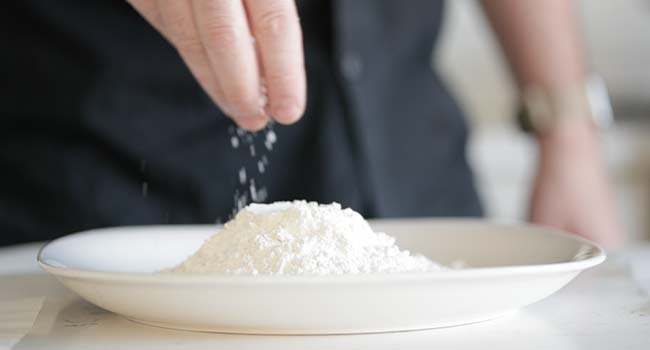
Season everything: Add the flour to a bowl or plate and generously season it with salt and pepper, making sure it’s well mixed in.
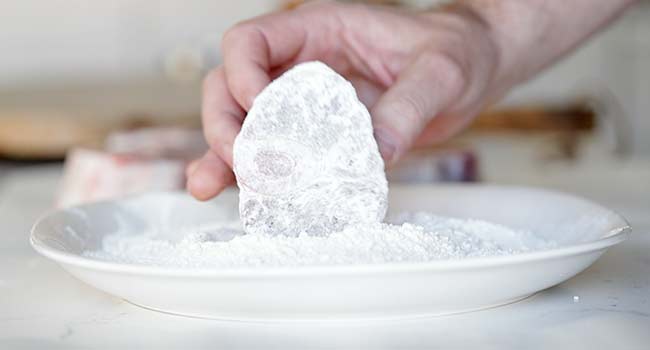
Dredge the veal shanks: I then coat the veal shanks on all sides in the seasoned flour, shaking off any excess, then set them aside.
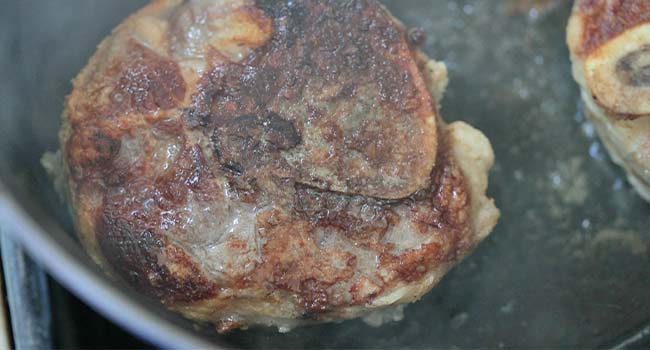
Sear the meat: Heat the olive oil in a Dutch oven over medium-high heat. Then, I add the veal shanks and sear them for 5 to 7 minutes per side, turning until they are well browned.
Sauté the veggies: Remove the veal shanks and add the onions, carrots, celery, and garlic to the pot, letting them cook for 3 to 4 minutes until slightly softened. Then, stir in the tomato paste, allowing it to cook down and darken—this step helps deepen the flavor and thicken the braising liquid.
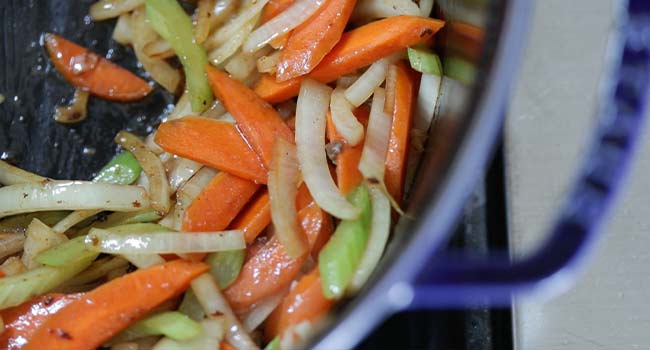
Deglaze the Pot: I let the tomato paste cook for 2 minutes, then add the tomatoes and pour in the wine, scraping up any browned bits from the bottom of the pot. Once the wine has reduced slightly, I stir in the beef stock, bay leaves, parsley, thyme, and salt, making sure the liquid is well-seasoned to build a rich, flavorful braising base.
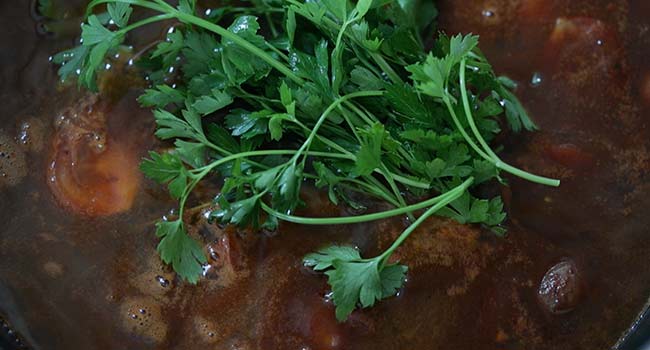
Braise: Next, is when I add the veal shanks back into the pot and sort of nestle them in, making sure they’re mostly submerged in the braising liquid. Then, cover the pot and transfer it to a 325°F oven. Let it it cook for 2 to 2 ½ hours, or until the meat is fork-tender and easily pulls away from the bone.
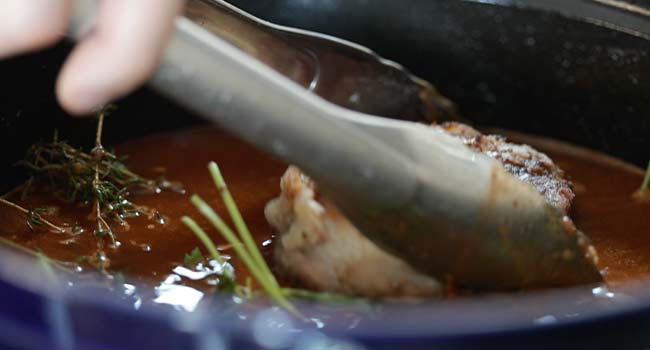
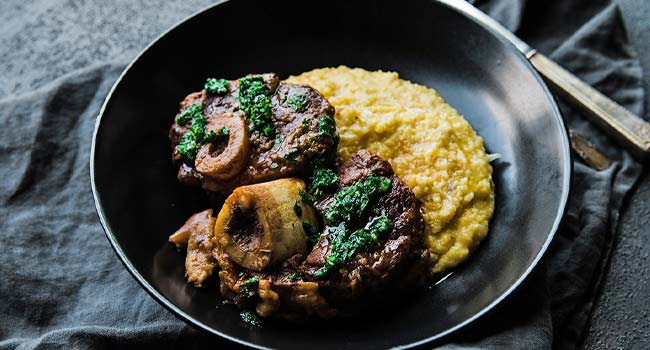
Serve this like a true Italian: I carefully remove the veal ossobuco from the pot and plate it with a spoonful of the rich braising sauce. To finish, spoon on the gremolata over the top.

chef tip + notes
The most important thing I do to make the best Osso Buco is properly searing the veal shanks before braising. Take the time to get that deep, golden-brown crust because it lays the base for ensuring the sauce is dang tasty.
- Slow it down: Never rush the braise, 2 to 2 ½ hours of low, slow cooking makes the meat fall-apart tender, so my advice is don’t skip it!
- Layer the seasoning: When you season at every step, from the flour dredge to the braising liquid, everything becomes better seasoned. In addition, you’ll end up using less salt as the flavor concentrates.
- Choose the right wine: Use a good Sangiovese or Barolo since the wine reduces and intensifies in the sauce. I was taught to cook with what you would also drink.
- Don’t skip the gremolata: The fresh parsley, garlic, and lemon zest cut the richness, much like how cabbage pairs so well with tonkatsu. It seems like a random garnish, but I promise it brightens the entire dish up.
- Dried herb swaps: If I’m out of fresh parsley or thyme for the braise, you can absolutely substitute with 2 tablespoons of dried parsley or 1 ½ tablespoons of dried thyme instead. Remember, use what you have on hand; it’ll still be delicious.
- Use tomato paste wisely: Cooking the tomato paste for a couple of minutes helps darken and thicken the braising liquid and will bring out more umami in the sauce. This process is known as pince.
- Save the extra liquid: If you just so happen to have any leftover braising liquid, strain and freeze it. This is one of the best parts, and it essentially turns into an incredible homemade beef stock for another meal.
Serving Suggestions
Serving this Osso Buco with pasta is always a favorite for me. If you really want to make this dish sing, add it to some homemade pasta, you won’t regret it.
Other classic pairings include serving Osso Buco over a bed of risotto or alongside creamy polenta. These are my favorites because they both soak up the rich braising sauce perfectly. You really can’t go wrong with these comforting, timeless combinations.
Make-Ahead and Storage
Make-Ahead: You can make this up to 1 hour ahead of time. Keep it warm, covered over low heat.
How to Store: Cover and keep in the refrigerator for up to 4 days. Cover and keep in the freezer for up to 2 months. Thaw for one whole day before reheating.
How to Reheat: Add your desired portion of ossobuco and braising liquid to a small pot. From there, cook it over low heat until hot, stirring occasionally.
More Italian Recipes

Video
Osso Buco Recipe
Ingredients
For the Osso Bucco:
- 1 cup all-purpose flour
- 4 veal shanks, 8 ounces each
- 2 tablespoons of olive oil
- 1 peeled and large diced yellow onion
- 1 peeled and large diced carrot
- 2 peeled and large diced celery stalks
- 6-8 garlic cloves
- 2 tablespoons tomato paste
- 3 cups roughly chopped fresh tomatoes
- 2 cups dry red wine,, Sangiovese or Barolo
- 4 cups of beef stock
- 2 bay leaves
- 1 bunch of Italian parsley
- 20 to 25 fresh thyme sprigs
- coarse salt and fresh cracked pepper to taste
- 1 gremolata recipe
Instructions
- Preheat the oven to 325°.
- Add the flour to a bowl or a plate and season it very well with salt and pepper, about 1 tablespoon of salt and 1/2 teaspoon of pepper.
- Dredge the veal shanks on all sides in the flour and set them aside.
- Next, heat the olive oil in a Dutch oven over medium-high heat and heat until it begins to smoke lightly.
- Add the veal shanks, turn the heat down to medium, and sear them until they are golden brown on all sides, about 4 to 6 minutes per side.
- Remove the veal shanks and add the onions, carrots, celery, and garlic to the pot and sauté for 3 to 4 minutes or until lightly browned.
- Mix in the tomato paste and cook for two minutes.
- Add the tomatoes and deglaze with the wine. Cook for 2 minutes.
- Place in the beef stock, bay leaves, parsley, thyme, salt, and pepper. Be sure to try the liquid to make sure it's well seasoned.
- Add the veal shanks back into the pot, submerge them, place a cover over the pot, and cook in the oven for 2 to 2 ½ hours in the oven at 325°. or until they are very tender and easily remove from the bone.
- Serve the Osso Buco and some of the sauce over top, and add the gremolata to the top of the veal shanks. We used to serve all the vegetables in the braising liquid underneath the osso buco at a restaurant I worked at.
Made this several times family favorite followed your recipe exactly you are the best chef always use your recipes thank you
Many thanks!
Best OB recipe ever! Thank you, absolutely delicious, will definitely be making it again and again!!!! Signing up for your newsletter! Thank you 🤩
Thank you for giving it a shot!
Amazingly good!! I made ours with garlic mustard mashed potatoes. Osso good!! Great recipe!
Fantastic! Thank you!!
My favourite part about this recipe is that you manage to reverse time when you make it. Amazing.
Many thanks!
Wow wow wow! Absolutely amazing! I used to make oxtail very similar way. Have to say reading your recipe just elevated my osso Bucco and oxtail! Thank you!!
Thank you!!
Sounds great. But how many shanks or weight or thickness? To fit the rest of the recipe?
4 veal shanks, 8 ounces each. You may have to scroll down a bit to see the recipe card with all of the information.
Thanks for sharing! Will definitely make this again.
My pleasure!