

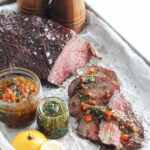
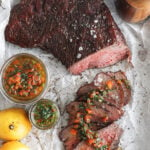
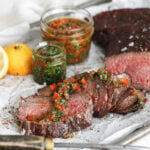
My easy tri tip steak recipe turns an affordable, lean cut into a deeply savory dinner. Using the dry-brine and reverse-sear methods, you’ll get a caramelized crust and a melt-in-your-mouth steak every time. It’s proof that you don’t need a steakhouse budget to get a steakhouse-quality dinner.
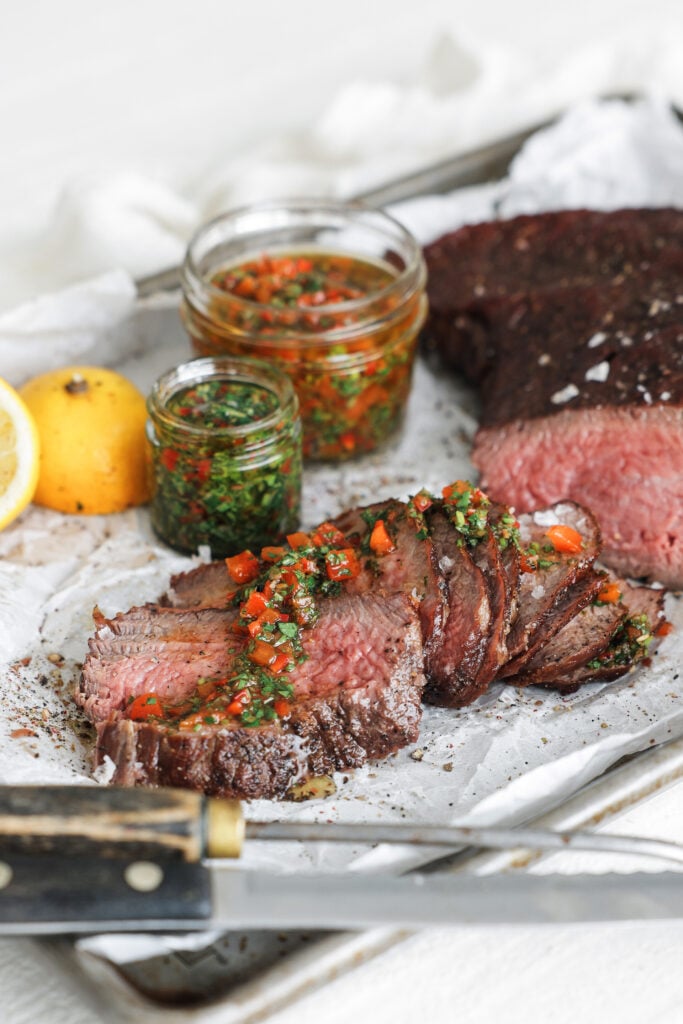
Spending hundreds of dollars on beef isn’t my idea of a good time. Luckily, all those years spent in professional kitchens have taught me a few tricks for making even the most inexpensive cuts taste as if they came from a world-class steakhouse. If you don’t believe me, then you’ll definitely want to give my steak with red wine sauce and Bottom Round Roast recipes a try.
Tri Tip Steak
Tri tip is an underrated steak. Cut from a boneless muscle at the very bottom of the sirloin, this triangular-shaped roast is an affordable option. It typically costs $10 to $15 per pound, which makes it great for both casual dinners and special occasions.
This is a lean, tough muscle with long fibers, meaning that even if you slightly overcook it, you’ll end up with chewy meat. Thankfully, I’ve learned that all it takes is a little technique and precision to turn tri tip into a dang good steak.
I always start with a dry brine, which seasons the meat from the inside out and draws out excess surface moisture for the best crust possible. After that, I hit it with the reverse sear method, resulting in a gorgeous medium-rare steak with bold, beefy flavors and a deeply caramelized crust. It’s fantastic on its own, but I usually dress it up with a spoonful of bright and herby chimichurri to cut through the rich beef.
Ingredients and Substitutions
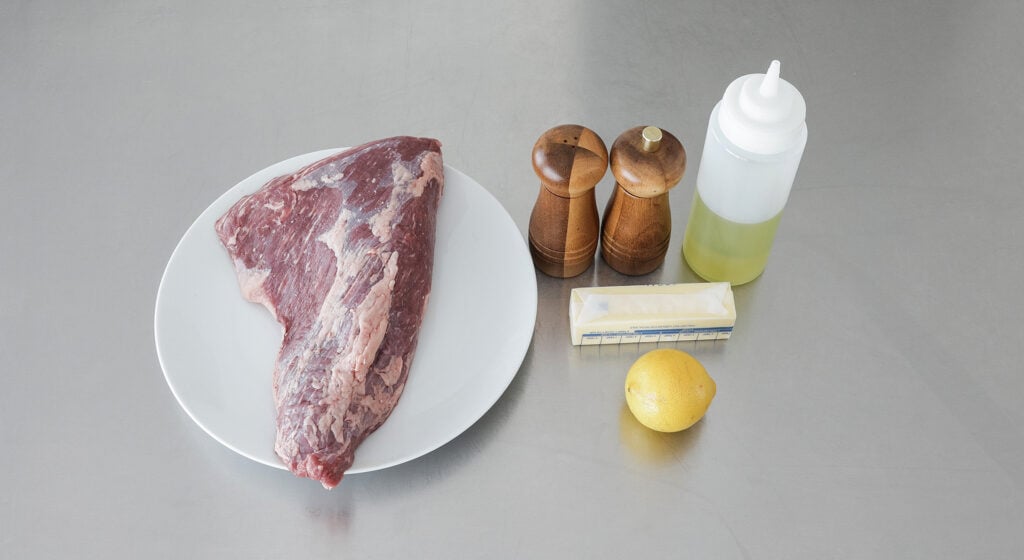
This recipe is all about making the tri tip taste its best, but that doesn’t mean we need any complicated ingredients. I salted the meat to bring out the juices, then zhuzhed up the finishing flavors with lemon juice and butter. Here’s everything I used:
- Tri Tip Steak – you’ll need a trimmed tri tip steak (often labeled as “peeled”) with some marbling to keep it juicy. If you want to save a few bucks per pound, buy an untrimmed tri tip roast instead. You’ll just have to trim the tough silver skin and any gristly fat deposits before cooking.
- Oil, Any high-heat oil, like avocado, canola, or beef tallow, will work here.
- Butter for drizzling over the seared steak. This gives it a rich, glossy finish.
- Lemon Juice to finish the steak. That might sound weird for steak, but the acidity actually intensifies the umami and rich beefy flavor.
- Seasonings – Coarse salt for the dry brine and freshly cracked black pepper just before cooking.
How to Reverse Sear Tri Tip Steak
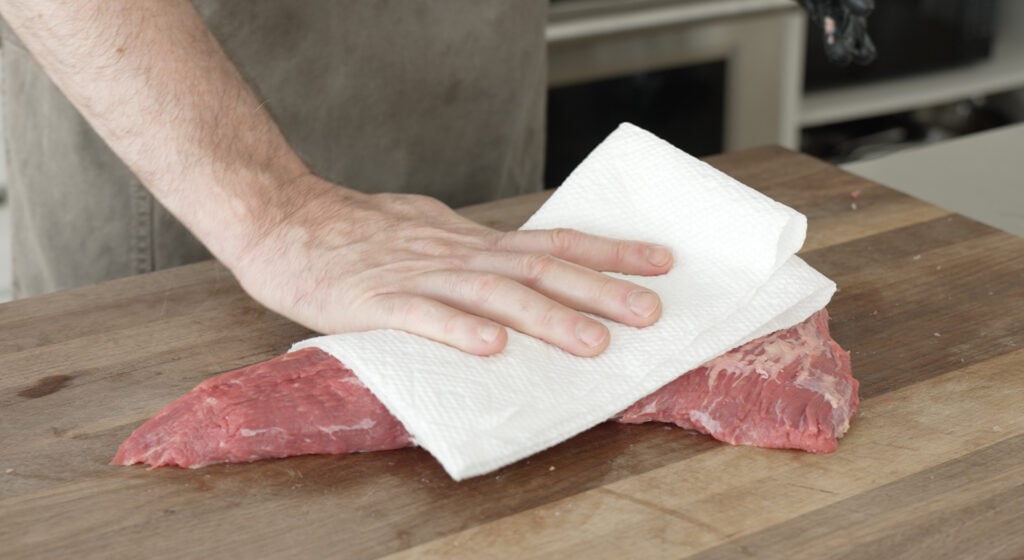
Prep and salt: After trimming, place the tri tip on a wire rack set on a sheet tray and pat it completely dry. Next, season it on all sides with salt.
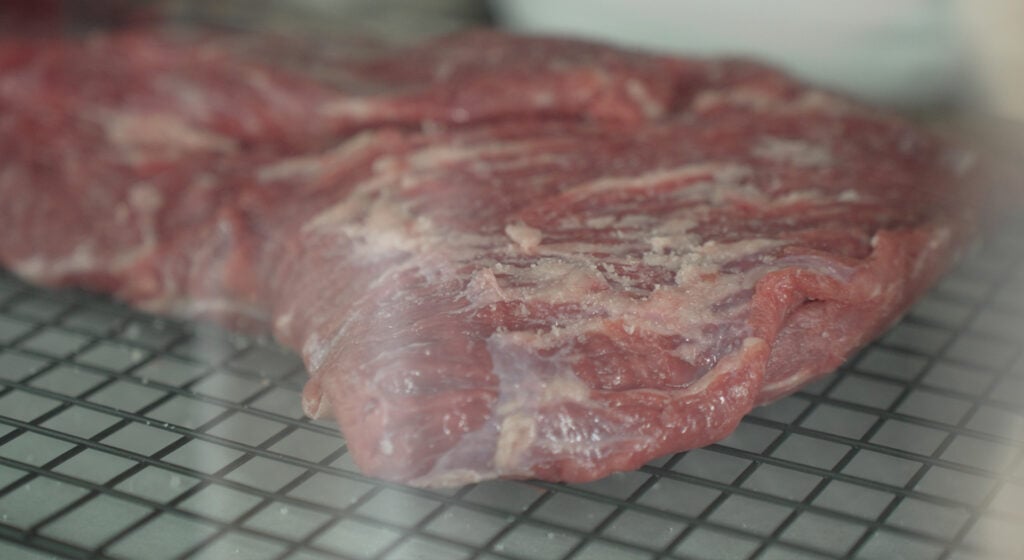
Dry brine: transfer the salted steak to the fridge and let it dry brine for at least 2 hours or up to 24 hours.
Temper and preheat: Take the steak out of the fridge to let it come to room temperature.
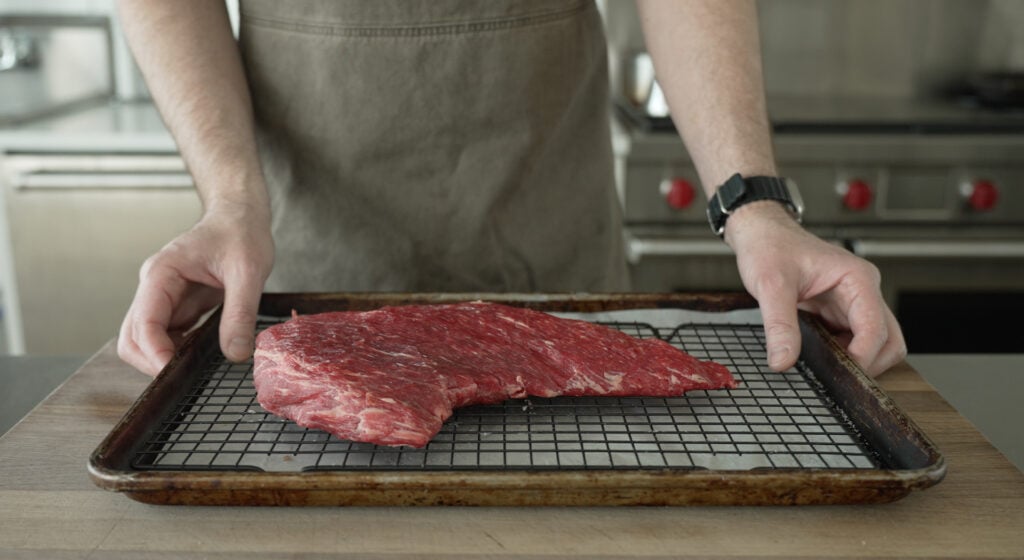
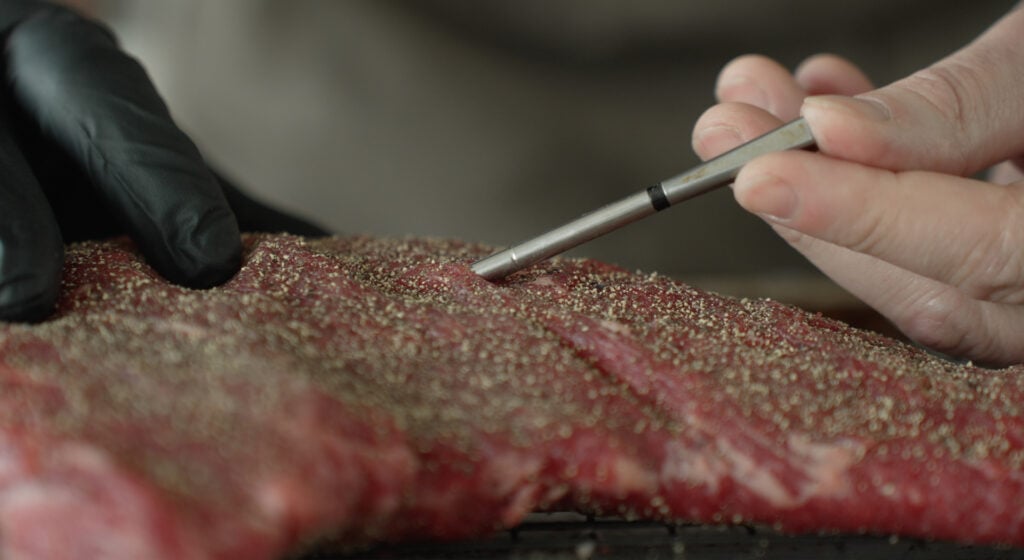
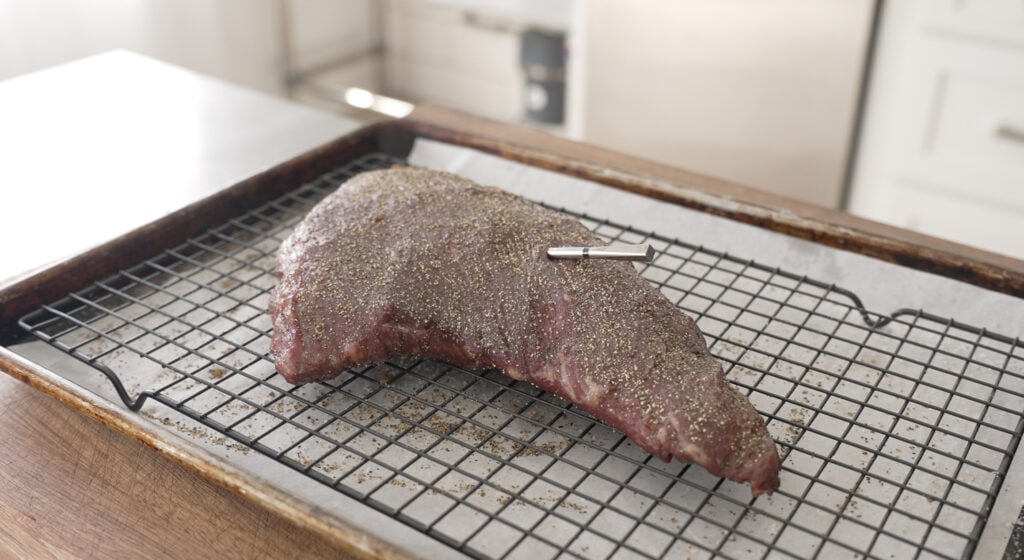
Season the steak on all sides with black pepper, then insert an oven-safe thermometer into the center of the thickest part of the beef.
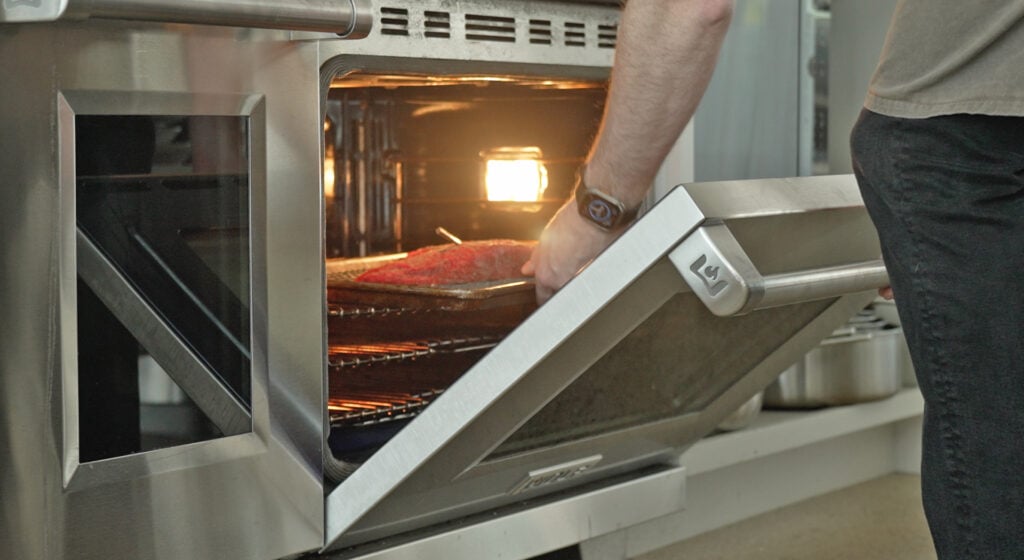
Slow roast the steak until the internal temperature reaches 115°F.
Preheat the pan: Remove the tri tip from the oven and set it aside. Heat the oil in a large skillet over high heat.
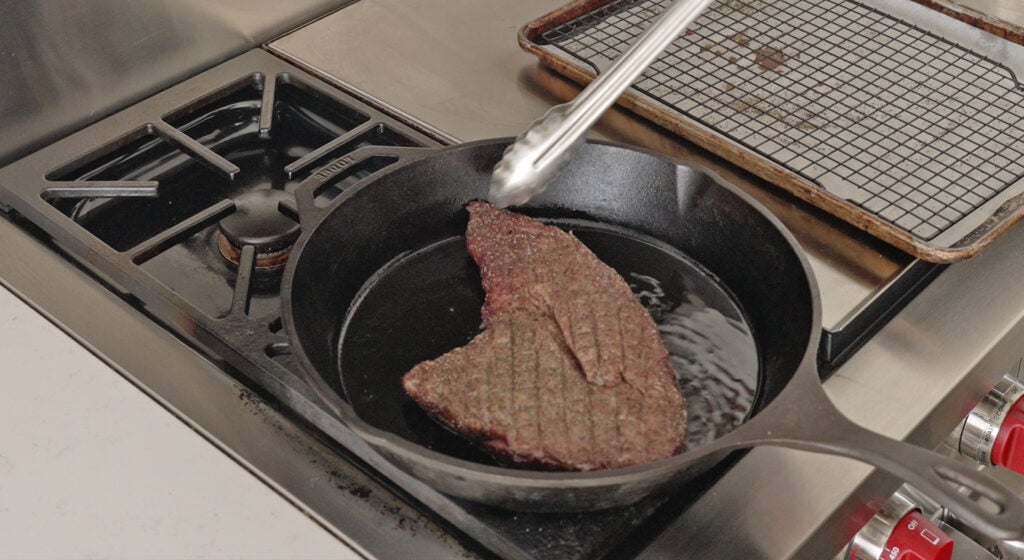
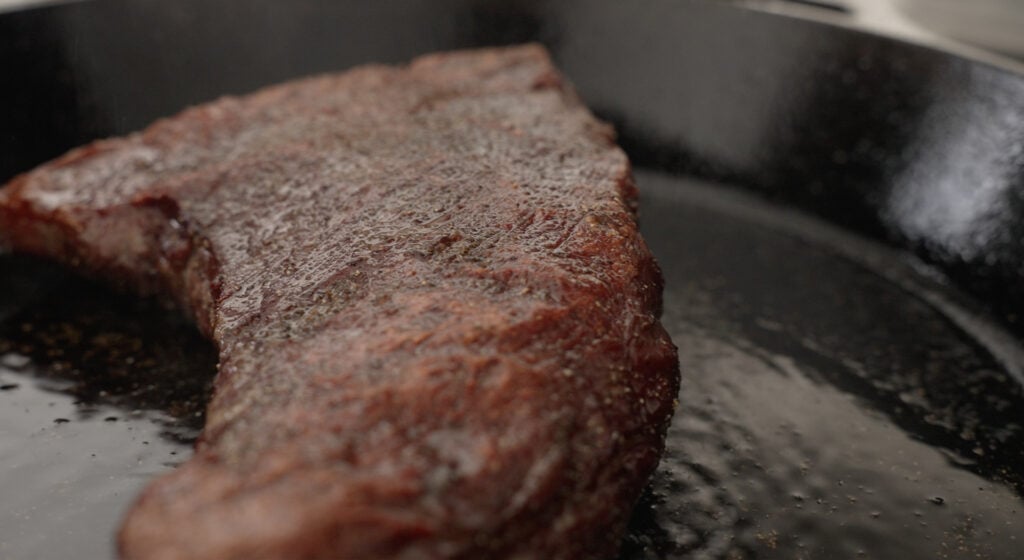
Sear the steak on both sides in the preheated pan
Sear the edges: Next, lift the beef with tongs and press the edges against the pan to get it evenly browned all the way around.
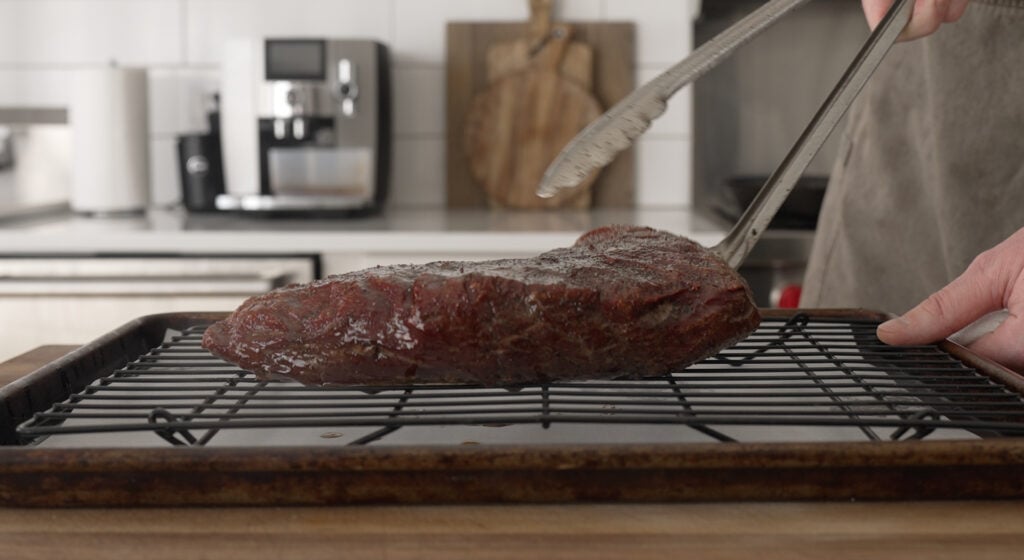
Finish and rest: transfer the steak to a wire rack on a sheet tray. Then, drizzle it with butter and lemon juice, tent it with aluminum foil, and let it rest.
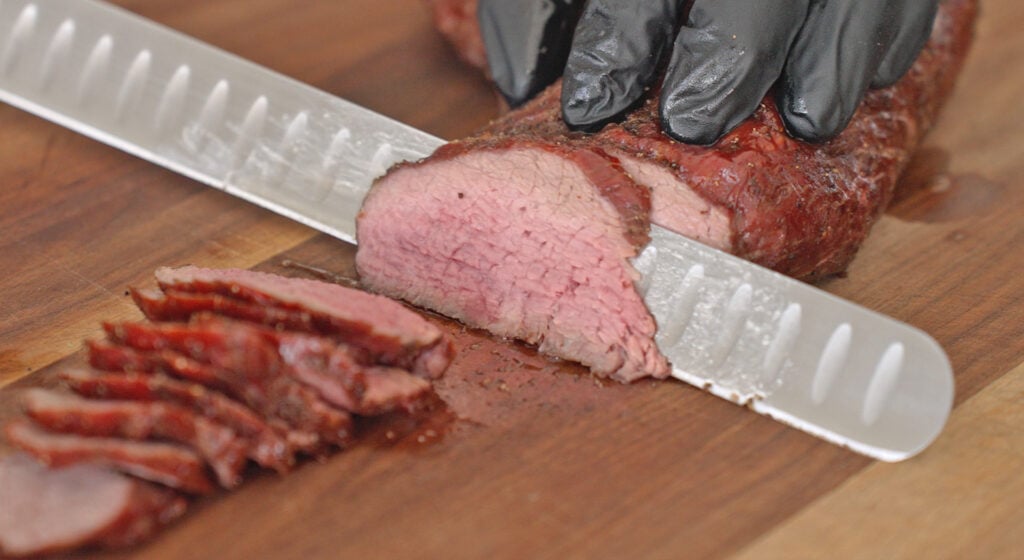
Slice: Holding the knife on a bias, start slicing the meat at the thinner end, cutting quarter-inch-thick slices. Once you get to the center, the grain changes direction. Rotate the uncut end 45 degrees and repeat the same slicing technique.
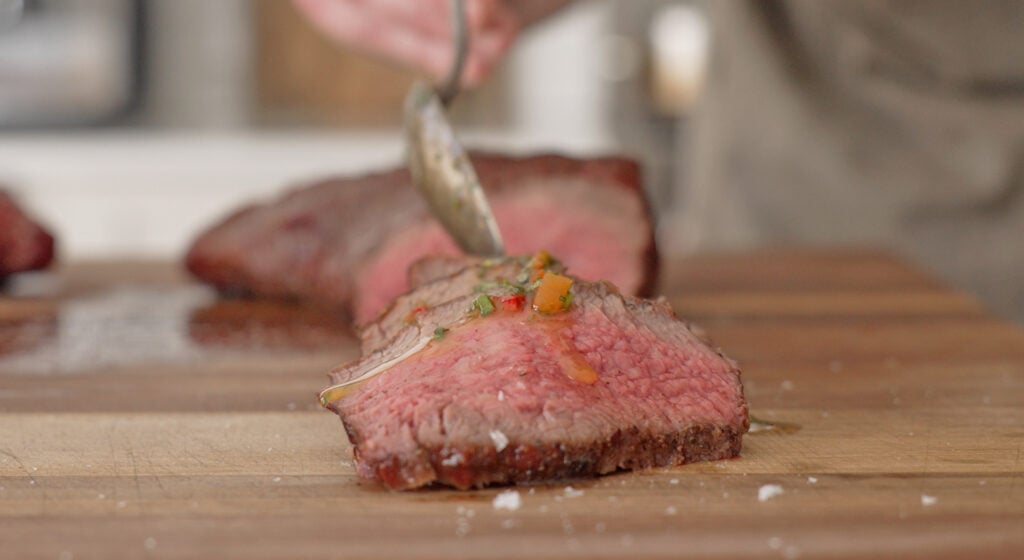
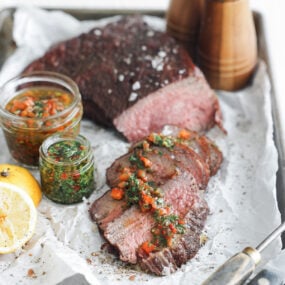
Serve: Finally, arrange the tri tip slices on a platter, drizzle them with chimichurri sauce, and serve.
Want to infuse this steak with the best wood-fired flavors? Use my Smoked Tri Tip Recipe to learn how to cook tri tip in your smoker instead.

Chef Tip + Notes
Most of the time, I’ll press my finger on the steak to check for doneness, but this method unfortunately does not work for tri tip. Because it’s a triangular cut with uneven thickness, inserting the probe of a digital meat thermometer at an angle into the center of the thickest part of the meat is the best way to get an accurate reading.
- Trim the fat: I find that even pre-trimmed tri tip usually needs a little extra trimming. Some of the soft surface fat will render as the steak cooks, but all of the tough, silvery-white connective tissue has to go.
- Marinate instead: I swear by a dry brine, but you can also soak the beef in an acidic, oil-based marinade for 6 to 12 hours instead.
- Rotate the steak: After I place it in the pan, its surface temperature will drop immediately. That’s why I gently rotate it in a circular motion for 30 seconds and keep it in constant contact with the hotter spots.
- Cook to medium-rare: Medium-rare tri tip is the way to go since this cut tends to dry out and become chewy if overcooked. For the juiciest results, pull it from the oven when the internal temp hits 115°F. It will look undercooked, but the reverse sear and resting window will bring the temp up to the 130°F to 135°F medium-rare sweet spot.
Serving Suggestions
I can never get enough of a properly dry-brined and reverse-seared tri tip. It’s already incredibly juicy and flavorful, but it gets even better with chimichurri sauce on top. I’ll usually stick with the classic green chimichurri, although it’s fun to mix it up with Argentinian red chimichurri sometimes.
When I’m making this for a family dinner, I’ll almost always pair the steak with crispy roasted potatoes. I also like to throw together a grilled romaine salad for good measure.
Make-Ahead and Storage
Make-Ahead: Serve the tri tip as soon as it’s sliced.
How to Store: Cover the leftover slices and refrigerate them for 3 to 4 days.
How to Reheat: To keep the steak slices juicy and tender, reheat them in a covered baking dish. Add a splash of beef broth and warm them in a 250°F oven for 10 to 15 minutes.
More Steak Recipes
- Coulotte Steak
- Skirt Steak Recipe
- Authentic Carne Asada
- Chopped Steak with Onions & Mushrooms
- Classic Steak Diane

Video
Tri Tip Steak Recipe
Ingredients
- 2 to 2 ½ pound trimmed tri-tip steak
- 3 tablespoons high-smoke-point oil, like avocado
- 3 tablespoons melted unsalted butter
- 2 to 3 teaspoons freshly squeezed lemon juice
- optional chimichurri sauce for serving
- salt and pepper to taste
Instructions
- Place the trimmed tri tip over a rack on a sheet tray. Pat it dry on all sides with paper towels.
- Next, season well with salt on all sides. A good rule of thumb is 1 teaspoon of salt per pound of meat.
- Place it uncovered in the fridge for as little as 2 hours or up to 24 hours to dry-brine. The longer the brine, the more flavorful and juicier it will be.
- Remove the steak from the fridge and set it at room temperature. In the meantime, preheat the oven to 225°F, no fan.
- Next, season the steak on all sides with pepper. I use about a teaspoon.
- Place a thermometer at an angle in the center of the cut of beef to get to the thickest part.
- Put the pan on the middle rack in the oven at 225°F until the internal temperature reaches 115°F internally, which takes about 1:30 to 1:45. This is for a medium-rare internal temperature. Take it 120° to 125°F for medium.
- Once it reaches the desired internal temperature, remove it from the oven and set it to the side.
- In the meantime, add the oil to a large frying pan over high heat. Heat it until it begins to smoke.
- Place in the tri tip. Let it sit for 30 seconds. Next, using long tongs, move it around in a circular motion for 30 seconds. Then, flip the steak over and repeat the exact same process. This will create a nice brown Maillard on both sides.
- Then, hold the beef in the tongs and cook it on the sides for only 15 to 20 seconds per side.
- Remove the steak and set it over a rack on a sheet tray. Immediately drizzle the butter and lemon juice over it. Cover it in foil and let it rest for 10 to 15 minutes. During this time, the steak will reach that perfect 125°F internally.
- To slice, start at the thin end and slice a quarter-inch thick, slightly on a bias. Do this until you reach the center. At this point, you’ll notice the grain changes, so turn that uncut end 45° and repeat the same slicing technique. Watch the video to see exactly how it’s done.
- Serve the slices with optional chimichurri sauce.
Tri Tip Steak Recipe