
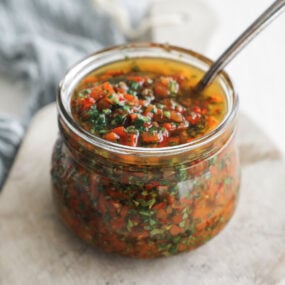
This simple red chimichurri sauce puts a tangy, herbaceous, and smoky twist on the classic green condiment. Made with roasted red peppers, simple aromatics, and plenty of fresh herbs, it’s an easy, crowd-pleasing side that goes well with just about everything. I always make sure to have a jar on the table for our backyard BBQs.
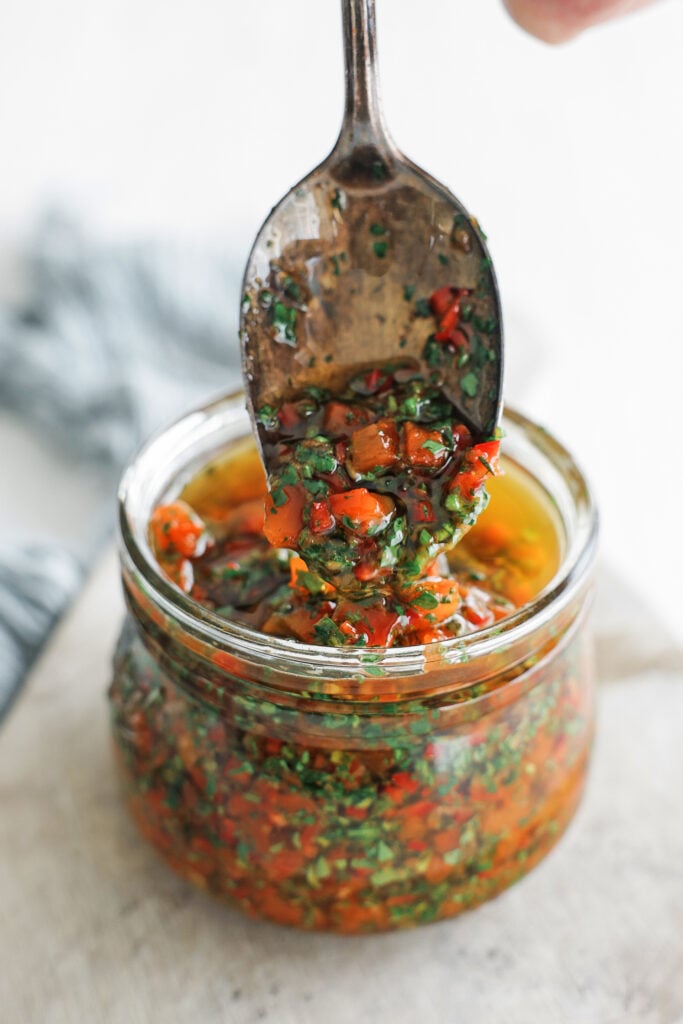
There are a few sauces I can put in the “goes well with almost anything” category… Homemade BBQ Sauce and Honey Mustard, just to name a couple. The same goes for this Argentine-inspired red chimichurri sauce. Steak, chicken, pork, fish, veggies, or pasta—I’ll seriously drizzle some on everything.
Red Chimichurri Sauce
Most people have heard of classic green chimichurri, but what about its red, smoky cousin? While the green version is associated with Irish immigrants, red chimichurri (or chimichurri roja) is rooted in Argentina’s 19th-century cowboy culture. Both versions were born of the need for a bold, all-purpose condiment made from simple ingredients that could be served with meats cooked over an open flame.
Red chimichurri was clearly the winning solution. It’s made with the same fresh herb, garlic, and vinegar base as the original but has a simple twist. Adding roasted red peppers and smoked paprika (or cayenne in some recipes) gives it a deeper, more complex sweetness and smoky undertones I personally can’t get enough of.
Because this is a no-cook sauce (unless you want to use my Roasted Red Pepper Recipe to roast your own peppers), I’ll almost always make a quick batch right before I throw the meat on the grill. Believe me, Argentine chimichurri sauce is THE sauce you’re going to want to slather on all of your summer meals—steak, chicken, pork, fish, vegetables, you name it.
Ingredients and Substitutions
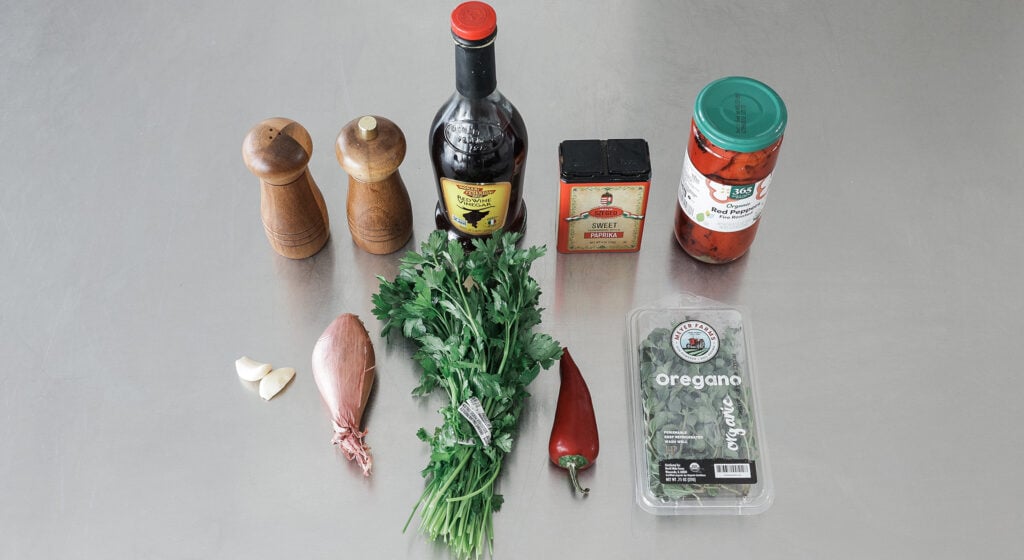
The good news is that both red and green chimichurri recipes do not require many ingredients. Still, try to use the highest-quality ingredients you can find to make the sauce taste as close to the authentic version as possible. Here’s what I used:
- Roasted Red Peppers are the base of my chimichurri roja. You can buy jarred roasted red peppers in most major grocery stores, although roasting them yourself is straightforward. I also added a seeded red Fresno for that signature fruity flavor and a kick of heat. Most recipes use cayenne pepper or red pepper flakes, and either one can be used as a substitute if you can’t find any Fresno peppers.
- Aromatics – I added grated shallots and garlic cloves.
- Fresh Herbs, they have to be fresh (dry herbs are not great in chimichurri). I used fresh parsley and oregano, but any fresh green herb is welcome here. Mix and match the herbs with fresh cilantro, thyme, and/or chives.
- Smoked paprika is the best to use in my opinion, but sweet paprika will work just as well.
- Red wine vinegar is the traditional choice. If you need a substitute, use white wine vinegar, champagne vinegar, or fresh lemon or lime juice.
- Oil – Any good quality olive oil is a great choice.
- Seasonings – Salt and pepper bring this sauce together in the end.
How to Make Red Chimichurri Sauce
Combine Everything. Add all of the ingredients to a medium bowl and stir until the sauce is combined.
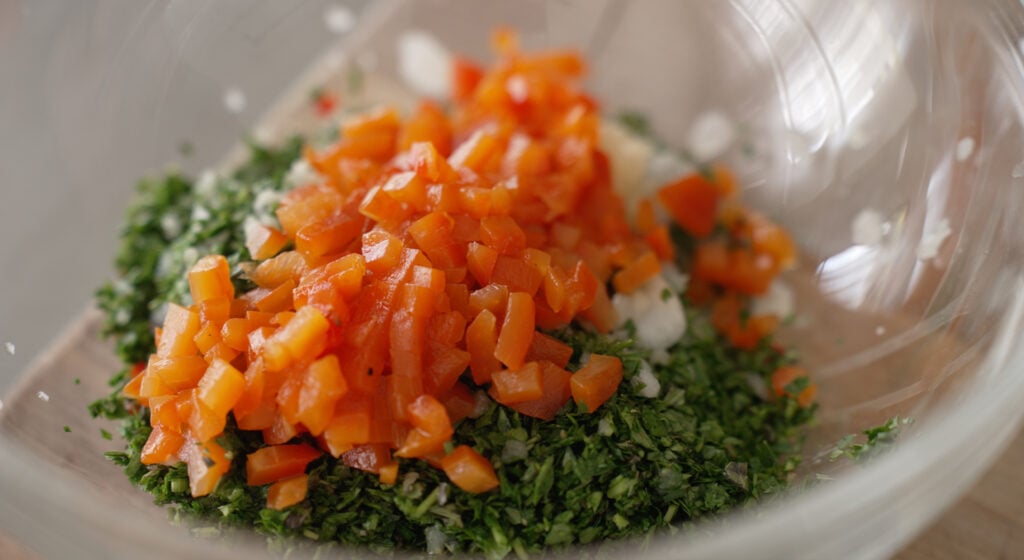
Taste and adjust. Taste the sauce and adjust the seasonings as needed. Most of the time, I add another pinch of salt and pepper or a small splash of vinegar.
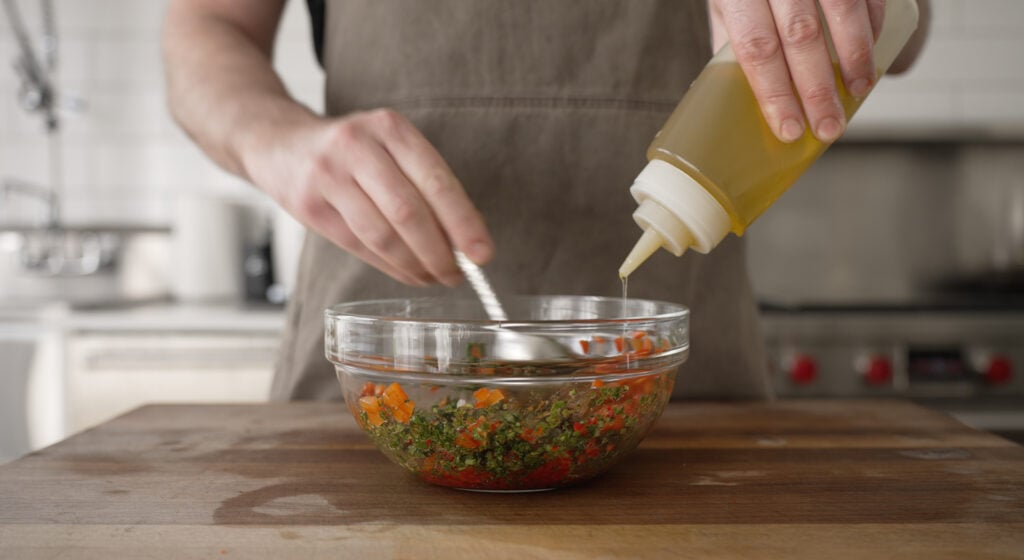
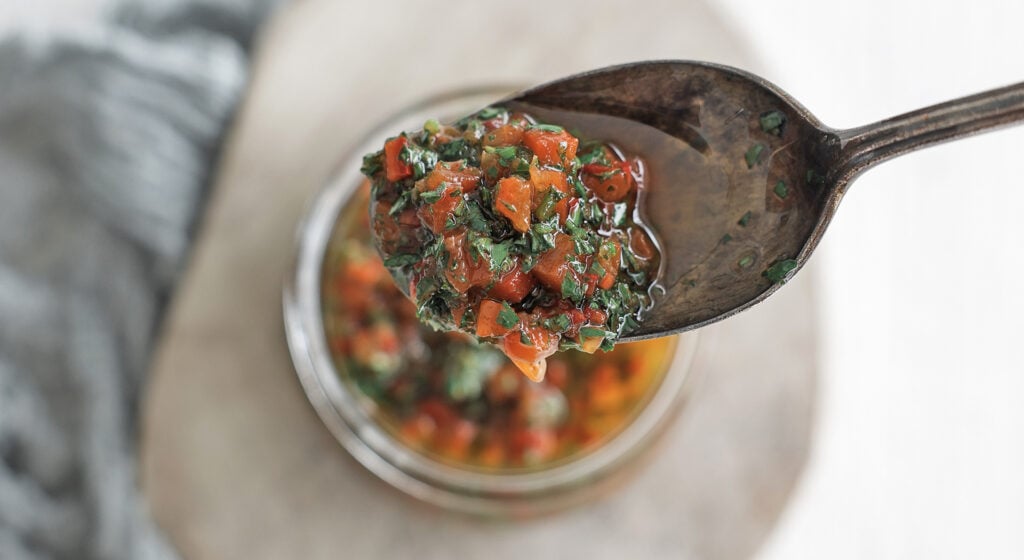
Serve or store. Once the flavor is exactly where you want it, either serve the red chimichurri right away or store it in the fridge for later.

Chef Tip + Notes
Chopping all of those herbs, aromatics, and peppers is the hardest part of making a chimichurri sauce. It’s definitely faster to pulse all of the ingredients together in a food processor, but I still prefer to chop everything by hand. It keeps the texture rustic, and my chef’s knife never bruises the herbs.
- Dry the fresh herbs. After washing the parsley, I either dry the leaves in a salad spinner or dab them with a paper towel. If they’re still wet, then the oil won’t stick, and any excess water will pool at the bottom of the bowl.
- Do I add the stems? Yes, the stems from fresh herbs can be finely chopped and added to the sauce. They’re full of flavor, so there’s no reason to waste them.
- Adjust the spice level. The Fresno pepper adds some heat here. When I don’t want all that heat, I’ll scrape out the seeds and veins from the pepper. Or, I’ll use a pinch of red pepper flakes for a milder version.
- Oil-to-vinegar ratio. A good balance of fat and acid is the key to a great-tasting red chimichurri. I find that a 3:1 oil-to-vinegar ratio is a good starting point. Don’t be afraid to tweak it until you have the perfect balance of richness and tang.
- Let it rest for 10 to 15 minutes once it’s ready. This will give the garlic time to mellow out and the flavors time to deepen and come together. When I don’t need it right away, I’ll chill it in the fridge so those ingredients have plenty of time to mingle.
Serving Suggestions
Even my wife can attest that this sauce is great on everything. I mixed it into some cooked pasta one night, and she loved it. Other nights, especially during grilling season, I’ll slather it on steak, chicken, fish, and veggies.
Red chimichurri sauce is most famously served with juicy cuts of grilled beef, chorizo, and sweetbreads. It’s also delicious paired with fish, especially grilled salmon or flaky white fish. It just adds a hit of excitement to an otherwise light meal.
And when I need a punchy dipping sauce for empanadas, sweet potato fries, or chicken tenders, I’ll make a quick chimichurri aioli by mixing a 1/4 cup of the sauce into 1 cup of mayonnaise. It also makes a killer burger and sandwich spread.
Make-Ahead and Storage
Make-Ahead – This sauce tastes even better when it’s made ahead of time. I try to throw it together at least 30 minutes in advance, but I’ve been known to leave it in the fridge for about 3 days before.
How to Store – Store the leftover sauce in a covered container in the fridge for up to 10 days or in the freezer for up to 3 months. Freeze the chimichurri in silicone ice cube trays, then thaw as many frozen cubes as needed.
More Sauce Recipes

Video
Red Chimichurri Sauce Recipe
Ingredients
- 1 seeded small-diced Fresno pepper
- 1 seeded small-diced roasted red bell pepper
- 2 tablespoons finely grated shallots
- 2 finely grated garlic cloves
- 1 bunch finely minced fresh parsley, about ½ cup minced
- 12 finely minced fresh oregano sprigs
- 1 teaspoon sweet or smoked paprika
- 2 to 3 tablespoons red wine vinegar
- 1/3 to ½ cup olive oil
- salt and pepper to taste.
Instructions
- Add all the ingredients to a medium-sized bowl. If you are roasting the peppers yourself, be sure to check out my roasted red peppers recipe.
- Using a spoon, mix everything together.
- Adjust any seasonings with salt and pepper, or perhaps a bit more vinegar.
- Store or serve at room temperature with chicken, fish, pork, beef, or vegetables.
Red Chimichurri Sauce Recipe