
Baked Potato Recipe

- Published
- 103 comments
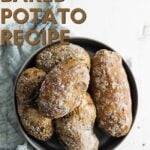


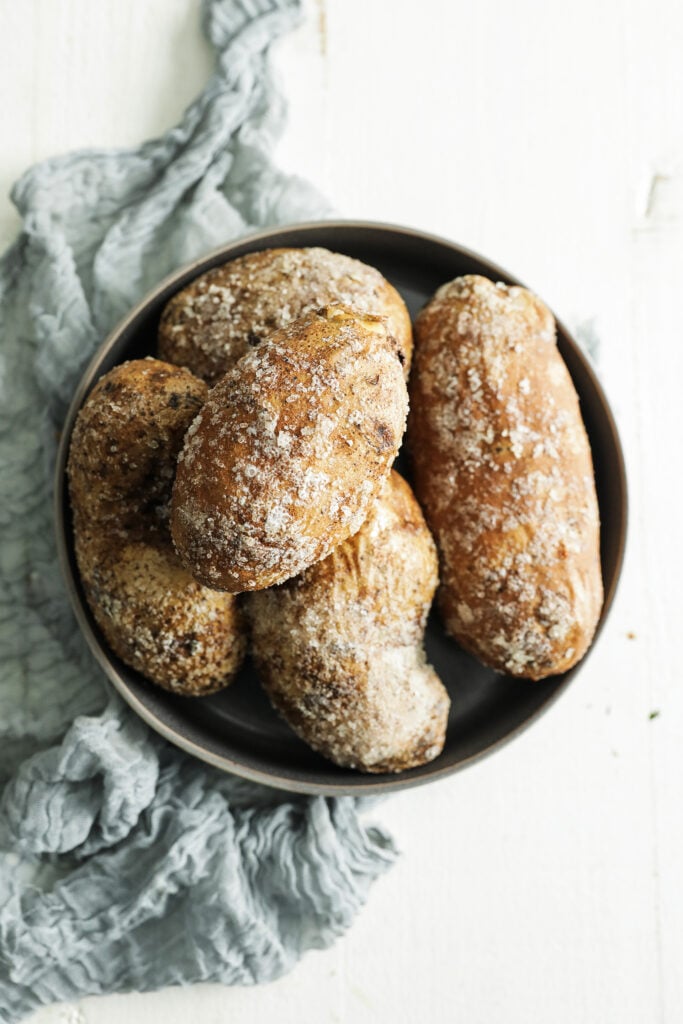
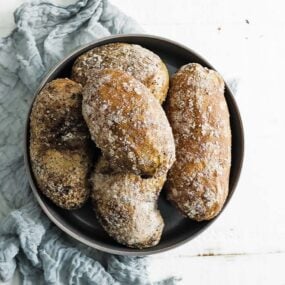
This perfect baked potato is salt-crusted and crispy on the outside with a fluffy, tender center, made with just russet potatoes, olive oil, and sea salt. I take about 5 minutes to prep and let the oven do the rest for the next hour.
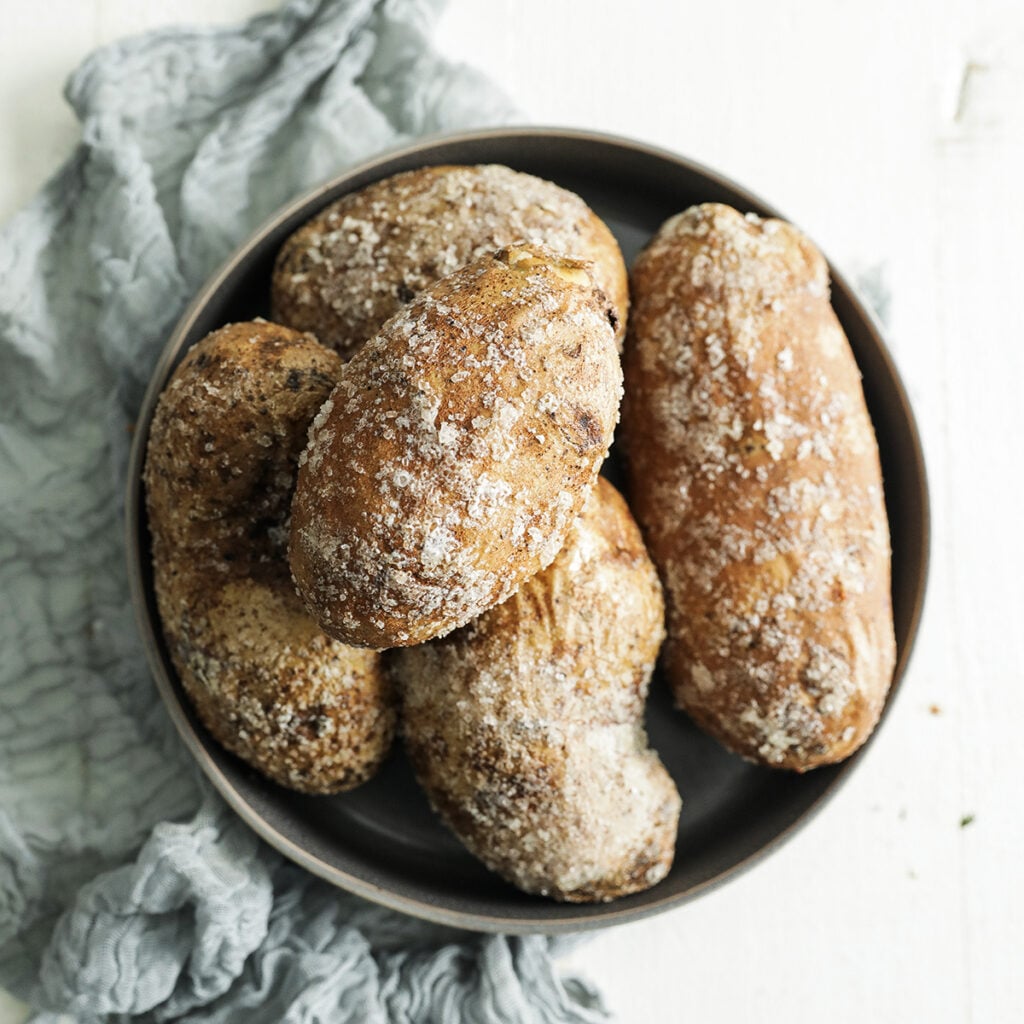
I am going to be honest with you, most people do not know how to bake a potato. They wrap it in foil, pop it in the microwave, and wonder why the skin is soggy and the inside is dense. Once I learned the salt-crusted method in a professional kitchen, I never went back. The difference is night and day, and I am about to show you exactly how to get it right. If you are looking for more ways to cook potatoes, check out my jacket potatoes or my oven roasted baby potatoes for two more of my favorites.
Baked Potato
The baked potato has been a staple of American home cooking since the mid 1800s, when russet potatoes became widely grown across the western United States. The russet, originally developed by Luther Burbank in the 1870s, became the go-to baking potato because of its high starch content and dry, fluffy texture when cooked. The idea of rubbing the skin with fat and salt before baking is a restaurant technique that made its way into home kitchens over the decades, and once you try it you will understand why professional cooks have been doing it that way for years.
I remember growing up, my dad would fire up the grill on a Saturday afternoon and throw on some steaks, and my mom would have baked potatoes coming out of the oven right alongside them. That combination is burned into my memory. The technique I use now is one I picked up early in my career, and it is dead simple. I coat each potato in olive oil mixed with a generous amount of sea salt, set them on a sheet tray, and bake them until the skin puffs up and turns golden and crispy.
The salt draws moisture out of the skin during baking, which is exactly what creates that crunch. I do not wrap them in foil and I do not poke them with a fork. The skin stays intact, the inside steams itself perfectly, and the whole potato is seasoned from the outside in. Steak night is not complete at our house without these on the table, and honestly neither is Thanksgiving, Easter, or any big Sunday dinner.
Ingredients and Substitutions
A baked potato only needs three things, and the quality of each one matters more than you might expect.
- Russet Potatoes – Russets are the only potato I recommend for baking. They have a high starch content and low moisture, which is what gives you A light fluffy interior. Yukon Golds will work too, but they come out denser and waxier instead of fluffy.
- Olive Oil – I use extra virgin olive oil because it adds flavor and helps the salt adhere to the skin. Any neutral oil will work if you prefer, but olive oil is my first choice.
- Sea Salt – I use coarse sea salt or kosher salt. Fine table salt dissolves too quickly and does not give you the same texture.
How to Make Baked Potatoes
Preheat the oven: I set the oven to 375°F. Higher heat is what gets the skin crispy while keeping the inside fluffy.
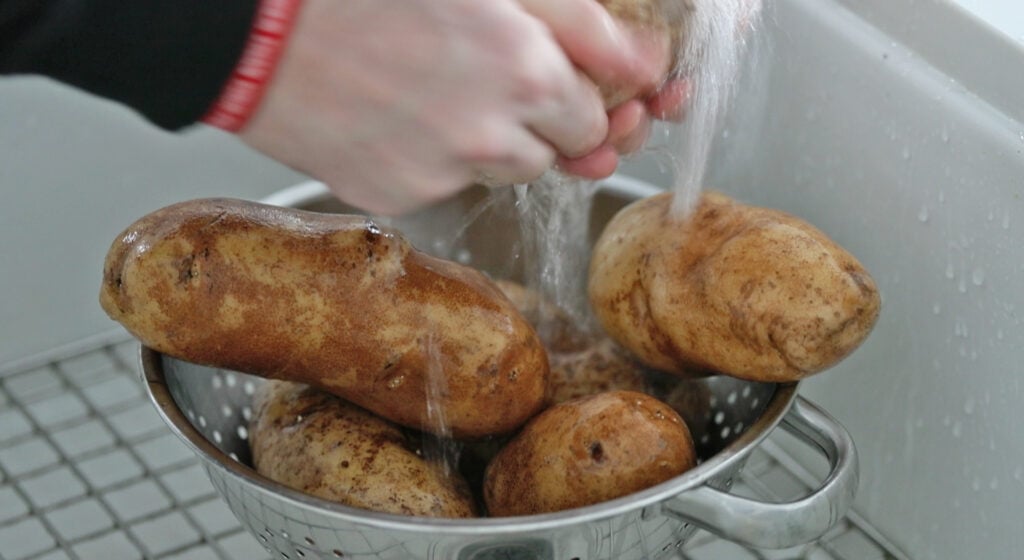
Wash and dry the potatoes: I rinse each potato under cold water and rub the skin with my hands to remove any dirt. Then I dry them completely with a kitchen towel.
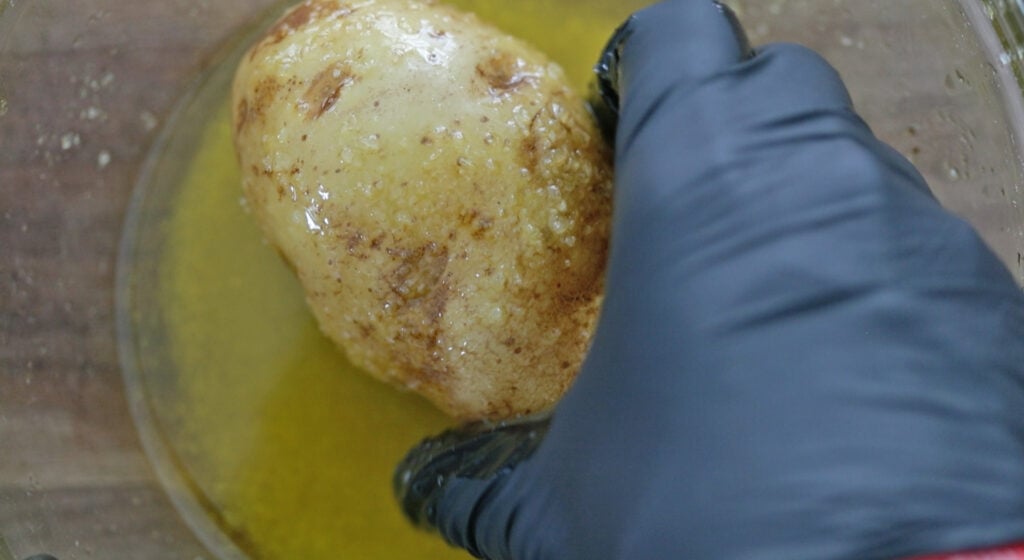
Coat in oil and salt: I combine olive oil and sea salt in a bowl and roll each potato through the mixture until it is completely coated on all sides. I want a generous layer of salt on the skin.
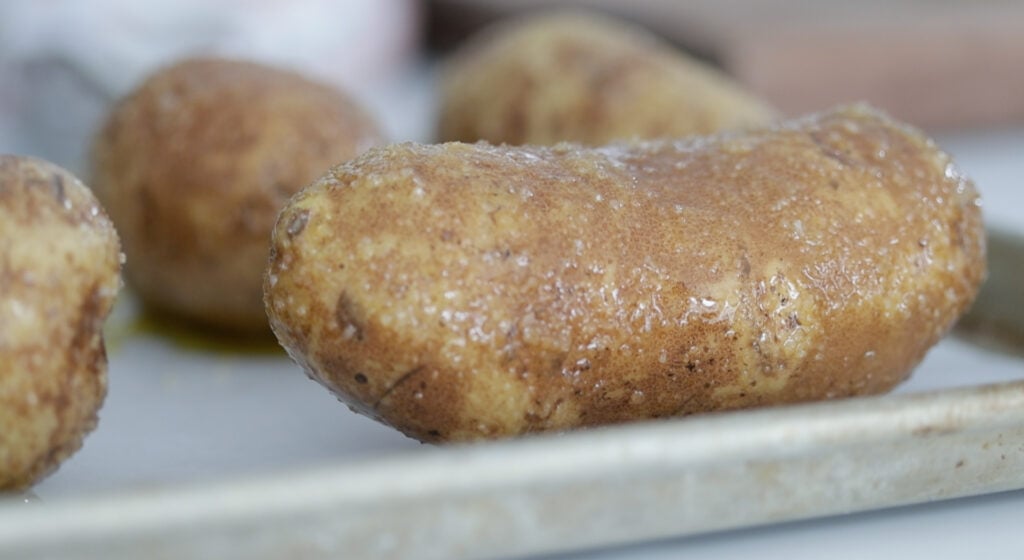
Place on a sheet tray: I set the potatoes on a sheet tray lined with parchment paper, spaced apart so air can circulate around each one.=
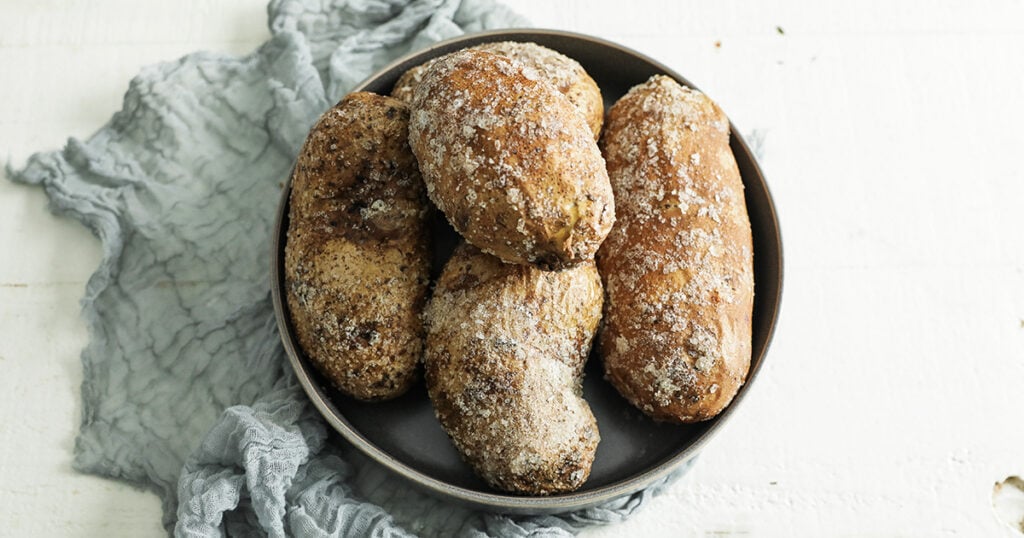
Bake: I bake for 50 to 60 minutes at 375°F. The potatoes are done when the skin is golden and crispy, and a thermometer inserted into the center reads 210°F. I can also tell they are done when I squeeze the sides (using an oven mitt) and they give easily.
Slice and serve: I cut a slit down the center of each potato, push the ends together to open it up, and fluff the inside with a fork. I add butter, salt, and pepper right away while it is still steaming.

chef tip + notes
I have baked thousands of potatoes, and the two things I see people get wrong every single time are oven temperature and skin preparation. I crank my oven higher than most recipes tell you to, and I coat the skin in more salt than most people are comfortable with. That is what separates a restaurant-quality baked potato from the one you grew up eating.
- Do not wrap in foil: Foil traps steam and makes the skin soft and soggy. I never wrap my potatoes. The whole point of baking them is to get crispy skin, and foil defeats that purpose.
- Skip the fork poking: I know a lot of people say to pierce the potato so it does not explode. In all my years of cooking, I have never had a potato explode in the oven. Piercing creates holes that let moisture escape, and that can dry out the inside. I leave them whole.
- Use a thermometer: I check for 210°F internally. At that temperature, the starches have fully broken down and the inside is light and fluffy. Anything under 200°F and the center will still be dense.
- Size matters: I pick potatoes that are roughly the same size so they finish at the same time. If I have a mix of sizes, I pull the smaller ones out first and leave the larger ones in a few minutes longer.
- Let them rest for a minute: I give the potatoes a couple of minutes after they come out of the oven before slicing. The steam inside is extremely hot and needs a moment to settle.
Serving Suggestions
Steak night at our house always has baked potatoes right next to it. I pull a pan-seared ribeye off the heat, set it next to a baked potato loaded with butter, and that is a meal I could eat every single week. My daughter likes to scoop out the inside and mix it with butter and cheese on her plate, which, honestly, is basically a deconstructed twice-baked potato, and I respect it.
For a bigger spread, I serve these alongside my pot roast or smoked pulled pork. I set out toppings like shredded cheese, bacon, chives, and sour cream, and let it turn into a baked potato bar. If you want to go the soup route, my broccoli cheddar soup ladled right over a split baked potato is one of the best cold-weather meals I know. And for holidays, these go right on the table next to my easy glazed ham or my delicious New York strip steak.
Make-Ahead and Storage
Make-Ahead: Baked potatoes are best eaten right out of the oven. If dinner is running behind, I keep them warm in the oven at 200°F for up to 1 hour. They hold well and the skin stays crispy.
How to Store: I let the potatoes cool completely, then cover and refrigerate for up to 4 days. I do not recommend freezing baked potatoes because the texture changes and they become mealy when thawed.
How to Reheat: I place leftover potatoes on a sheet tray and bake at 350°F for 15 to 20 minutes until warmed through and the skin crisps back up. I avoid the microwave because it turns the skin soft.
More Potato Recipes

Baked Potato Recipe
Ingredients
- 5 large baking potatoes
- 1/4 cup olive oil
- 2 tablespoons salt
Instructions
- Preheat the oven to 375°.
- Rinse the baked potatoes under cold water and rub with your hands to remove any dirt. Dry with a towel.
- Mix together the oil and salt in a medium-size bowl until combined.
- Taking one potato at a time add it to the bowl and completely coat it in the oil and salt.
- Place the potatoes once coated onto a cookie sheet tray lined with parchment paper and bake at 375° for 60 minutes.
- When they are done cooking serve whole, or slice in the center and push the outsides to the middle and serve.
This Is the way to make the best baked potato.
I use a temp probe to make sure the internal temperature is at least 195. Try to stay under 205
Love to olive oil and salt the potato, then put it on the grill until the skin gets a little char and crispy. Yummy!
Love this recipe
Easy peasy & delicious
Thank you so much wonderful learning’s teaching …tasty ChefBilly 🙏👋😋🤩
Thank you enjoying your teaching learning sooogood video fab ChefBilly 😁😋👋🤩
Delicious out come thanks ChefBilly😁😋🤩👋
So appreciate you help fabulous ChefBilly recipes 😁👋😋🤩
Thank you ChefBilly loving this help the extras bits 😋😁🤩👋
Thank you for you knowledge &helpChefBilly yummy 😋 😁👋