
Greek Salad (Horiatiki Salata)

- Published
- 30 comments


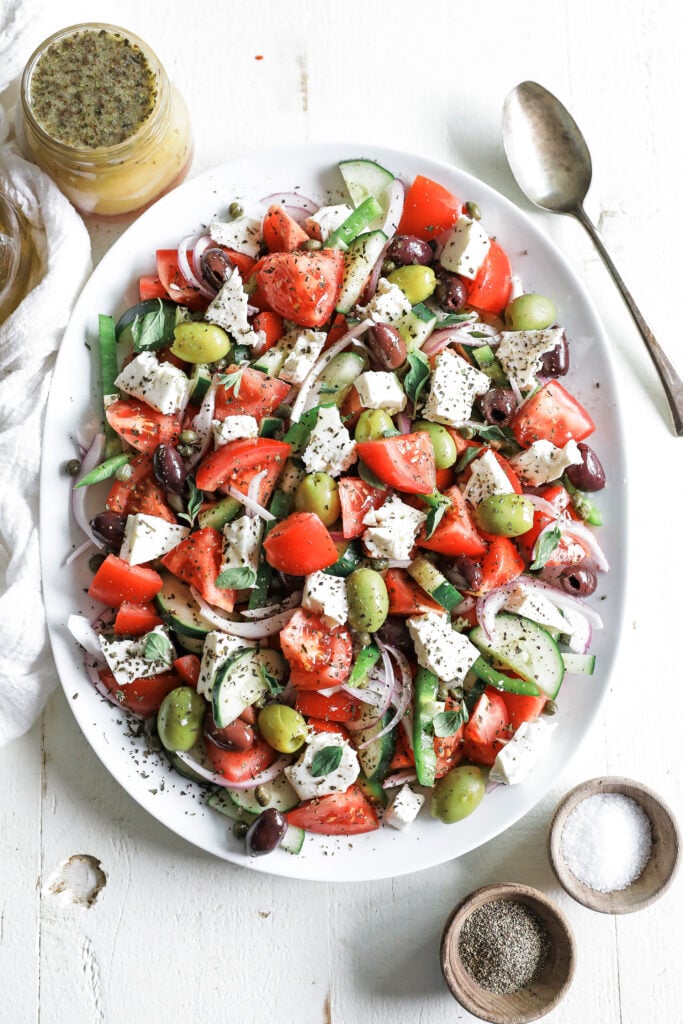
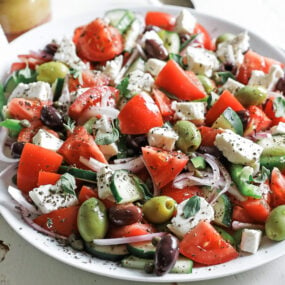
I make this traditional Greek salad with vine-ripened tomatoes, cucumber, feta, Kalamata olives, and red onion. I drizzle everything with red wine vinegar, olive oil, and dried oregano. It is so easy to make that in just 15 minutes, I can have this delicious side dish ready to pair with steaks, grilled mains, or enjoy on its own.
At least 2 or 3 times a week, I get a real craving for salads. My body wants those fresh veggies and I always do better when I make them a regular part of the week. Horiatiki is the one I go to when I want the kitchen off and dinner on the table quick, just cold vegetables and a slab of feta eating like a dish on purpose. If you are after more salads to add to your meals, my classic chef salad, my easy traditional cobb salad, and my Mediterranean bean salad are the three I keep coming back to.
Greek Salad (Horiatiki Salata)
Horiatiki, Χωριάτικη in Greek, comes from the word χωριό, meaning village. It is the village salad, the one made out of whatever was in the garden and the cellar: ripe tomato, a sliced cucumber, green pepper, red onion, Kalamata olives, feta, and the olive oil and red wine vinegar that were already on the table. Feta itself is a Protected Designation of Origin product in the European Union, which means real feta has to be made in Greece from sheep’s milk, or a mix of sheep’s and goat’s milk, by traditional methods. For me, using real feta is one of the small details that makes a Greek salad taste really authentic.
What I am after with this recipe is the village-style approach: cold vegetables, a sharp knife, and a block of real feta on top so it looks like a chef prepared it rather than simply sprinkling cheese over the salad. I start by adding the red onion to the bowl with a pinch of salt, then layer in the tomato wedges, cucumber half-moons, green pepper, capers and olives. The block of feta goes on top, and I drizzle the red wine vinegar and olive oil over everything right at the table. It really doesn’t get any easier than this!
I highly recommend making this at least once this summer, especially if you are hosting a dinner party for family and friends. This Greek salad is ready in just 15 minutes, which makes entertaining so much easier. And don’t forget to check out the section below, where I share a few of my favorite serving suggestions to pair with it.
Ingredients and Substitutions
These are the ingredients I use to make this easy traditional Greek salad, along with a few slight variations you can try.
- Tomatoes – I like bigger tomatoes like vine-ripe, but all tomatoes are good to use.
- Cucumbers – A regular cucumber will do, and it can be peeled or non-peeled.
- Peppers – Green bell peppers are most commonly used.
- Onion – Red onions are classically used, but you can substitute out for yellow, white, or sweet.
- Olives and Capers – Kalamata olives are the classic olive of choice but feel free to add any of your favorite Greek olives.
- Feta Cheese – I prefer a block of feta over crumbled feta.
- Vinaigrette – Simple combination of red wine vinegar and olive oil.
- Herbs – Either dry or fresh oregano is classically served with this salad.
- Seasonings – A sprinkle of coarse sea salt and freshly cracked black pepper is all this salad needs.
How to Make a Greek Salad from Scratch
Salt the red onion: I julienne the red onion thin and put it in a small bowl with a pinch of salt. I toss it with my fingers and let it sit for about 5 minutes while I cut the rest of the vegetables.
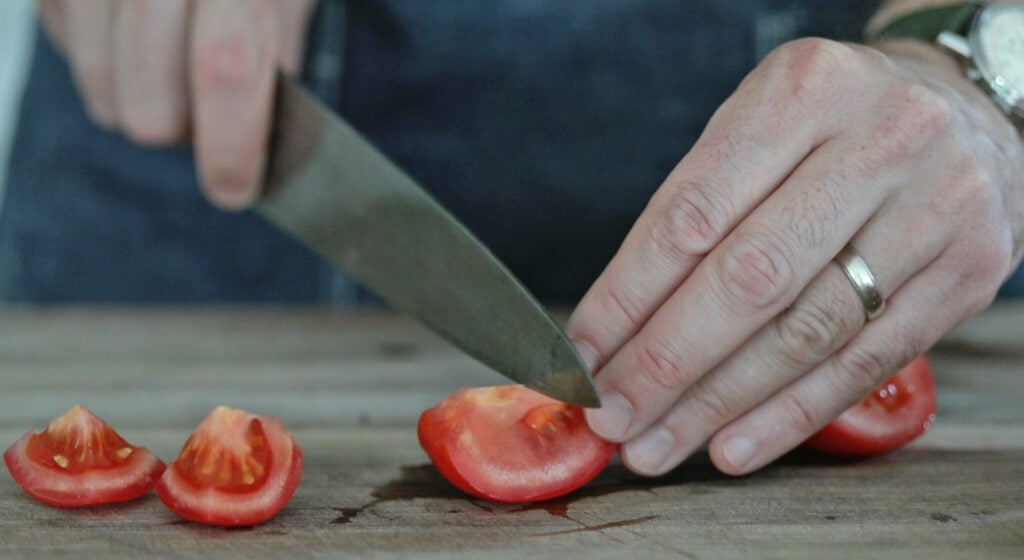
Cut the tomatoes: I core the vine-ripe tomatoes and cut each one into wedges, 6 to 8 per tomato depending on size.
Slice the cucumber: I cut the cucumber in half lengthwise, then slice it into half-moons about 1/4 inch thick.
Julienne the green pepper: I slice the sides off the core, lay them flat, and cut them into thin strips about an eighth of an inch wide.
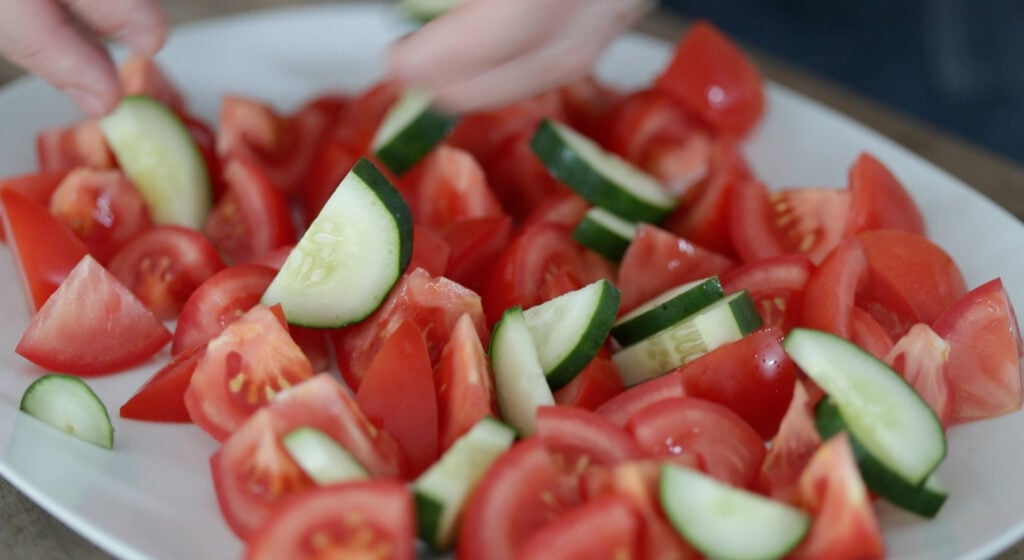
Plate the vegetables: I lay the salted red onion across a wide, shallow serving platter or a large salad bowl. I pile the tomatoes, cucumber, and green pepper on top in a single layer so each one stays visible.
Top with olives, capers, and the feta block: I scatter the Kalamata olives, any green Greek olives, and the capers across the salad. I set the whole block of feta on top in the center, or break it into a few large pieces like you see below.
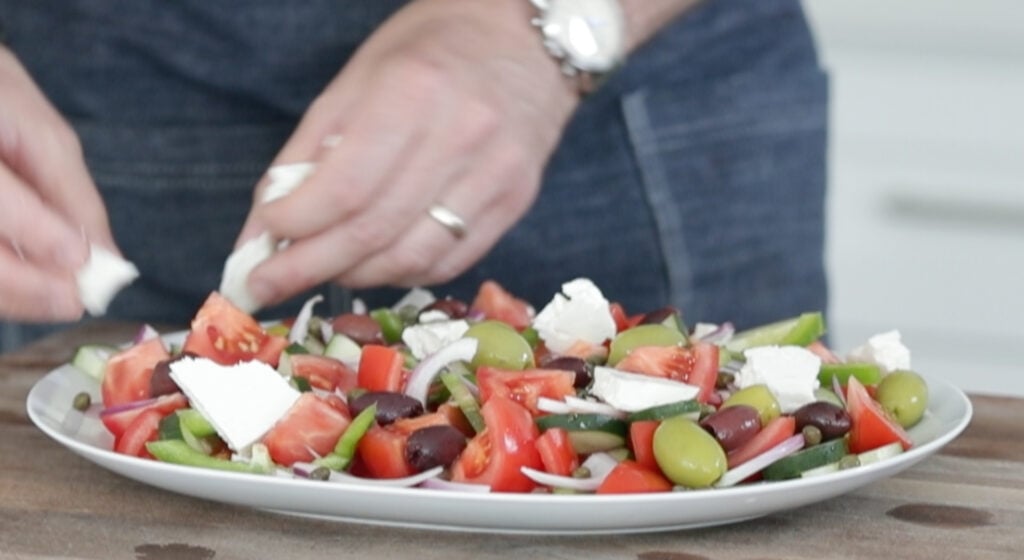
Dress the salad: I drizzle the olive oil across everything in a slow, steady stream so every piece picks up a coat, then follow with the red wine vinegar in the same pattern.
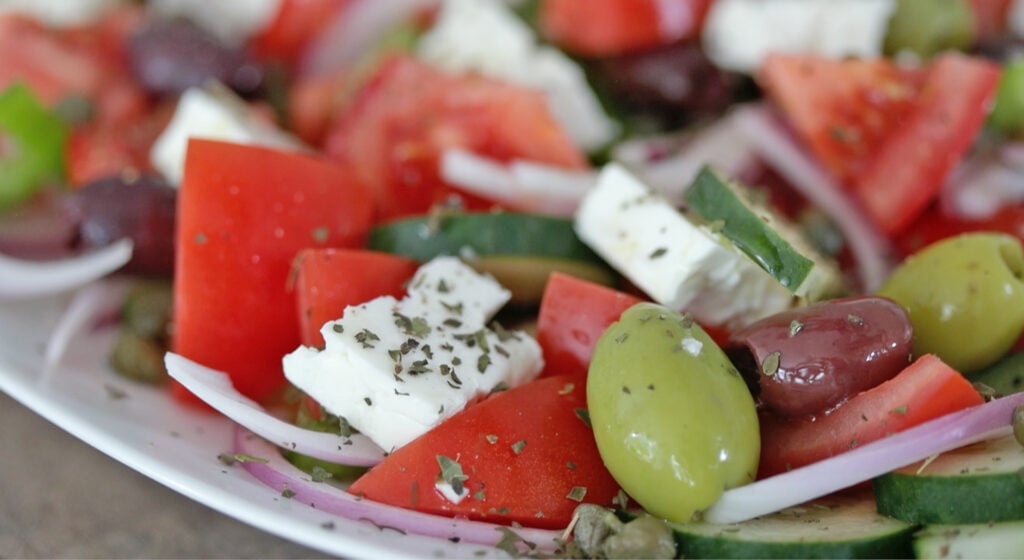
Season and serve: I sprinkle the dried oregano over the top, rubbing it between my fingers as it falls. I finish with coarse sea salt and cracked black pepper on the tomatoes and feta, then bring the platter straight to the table.
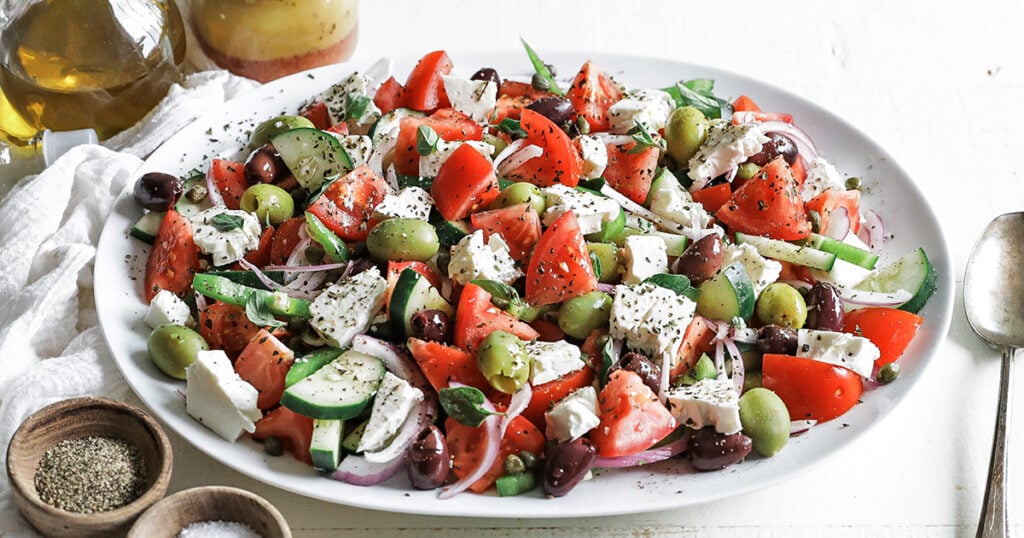

chef tip + notes
The best tip I can give you after making this Greek salad so many times is to keep it simple. The hardest part of making a proper horiatiki is knowing when to stop. I am always tempted to add extra greens, different tomatoes, more herbs, or another garnish, but every time I do, the salad starts drifting away from what makes it authentic in the first place. Cold vegetables, a sharp knife, good olive oil, real feta, and quality ingredients are all you need in my experience.
- Buy feta in brine, in a block: I avoid vacuum-sealed crumbled feta because it is dry, mealy, and loses the tang almost the second I open the package. A block of feta in brine, sliced fresh at the deli counter or pulled from a refrigerated tub, is the whole salad.
- Salt the onion before it hits the platter: I give the red onion 5 minutes with a pinch of salt and it loses the harshness without losing the snap. I skip the step and people (including my daughter) leave the onions on the platter every time.
- Do not pre-mix the dressing: I pour the olive oil and the red wine vinegar separately, in that order, because that is the way a horiatiki has been dressed for as long as there has been a horiatiki. Whisking them together in a bottle first dulls both flavors and pushes the salad into vinaigrette territory.
- Dress it cold and eat it fast: Once the salt and vinegar hit, the tomatoes start releasing water and the platter is sitting in a puddle inside 20 minutes. I dress at the table or right before serving, and I bring a piece of sourdough bread to soak up what is left in the bowl.
Serving Suggestions
In the summer I like placing this platter in the middle of the kitchen island next to a stack of warm pita and a board of Greek chicken marinade. A small bowl of homemade tzatziki sauce and a jar of my homemade Greek dressing on the side creates a small meze without needing anything else.
For an easy Sunday meal with my family, I cook a tray of Greek lemon chicken and potatoes and put this salad next to it as the cold counterpoint to the roasting pan. A platter of grilled romaine and a tray of crispy roasted potatoes round out the table when I want to push it further.
Make-Ahead and Storage
Make-Ahead: I cut the tomatoes, cucumber, pepper, and onion up to 1 day ahead and hold them in separate containers in the fridge. I keep the feta block in its brine until just before serving, and I do not dress or salt the salad until it is on the table.
How to Store: I cover leftover horiatiki and refrigerate it for up to 2 days. Once it is dressed the salad is at its best for the first hour.
How to Reheat: I never put heat near this one.
How to Freeze: I do not freeze a horiatiki.
More Salad Recipes
- Middle Eastern Salad Recipe
- Hawaiian Macaroni Salad
- Mandarin Orange Salad
- Brussels Sprouts Salad
- Watermelon and Feta Salad

Greek Salad (Horiatiki Salada)
Ingredients
- 5 cored vine ripe tomatoes cut into bitesize pieces
- 1 cucumber sliced into half-moons
- 1 seeded and julienne green bell pepper
- ½ peeled and julienne red onion
- ¼ cup capers
- 10 to 12 pitted kalamata olives
- 10 to 12 pitted green Greek olives
- 8- ounce block of feta cheese broken into bitesize pieces
- ¼ cup extra virgin olive oil
- 2 tablespoons red wine vinegar
- 1 ½ teaspoons dry oregano
- salt and pepper to taste
Instructions
- Rinse and prepare all of the vegetables accordingly.
- Add the tomatoes, cucumbers, peppers, and red onions to a large platter or bowl.
- Evenly place on the capers, olives, and feta cheese.
- Drizzle on the olive oil and red wine vinegar.
- Sprinkle the oregano, salt, and pepper over top, and serve.
I make this a few times a week, it is the perfect salad for lunch, and I LOVE how it is presented. So simple and SO delicious. Thank you, Billy, for so many amazing recipes. I am going to try making bread this week, your videos make me think I can do this :/
fantastic!
I’ve had this three times this week! My husband doesn’t even like olives and he loves this salad. I didn’t have green pepper, used an orange pepper. I don’t use the capers, and I just to the olive oil with red wine vinegar – love, love, love!!
Nice
Easy to make and the dressing was amazing!!
perfect!!
Made this tonight and it is delicious. I love how he layers the ingredients instead of mixing them in a bowl. I opted for the red wine vinegar and olive oil dressing with oregano from our garden. My husband is not an olive fan so he ate around this which was fine by me because I love olives. The kids loved it too. Definitely a salad we will make once or twice a week.
perfect!!
I am known for making a great green salad with home made Italian dressing. Well I stepped out and tried this salad!! My husband and I could not stop raving about it!! So many amazing flavors and so colorful!! Thanks Chef Billy!
my pleasure!
LOVE LOVE LOVED THIS!!! I stuffed mine into a whole wheat pita with some sprouts and it was the best lunch I’ve eaten in a good, long time!
excellent!
Have a Greek salad every day with dinner! (Yes, we’re Greek!) This recipe is spot on – although sometimes we switch out balsamic vinegar for the red wine, just to change it up a bit. Enjoy all your recipes and your tips! Have learned a lot from you. God bless you!
Thank you!
I made this and it was excellent!
I have now made this a couple times in the past week. The first time I made it as written. The second time I made it like a panzanella using a leftover baguette. Both were delicious!!
Awesome!
This Greek Salad is the BOMB! The salad dressing is thebest. Thank you so much for sharing this.
My pleasure.