

Sourdough Starter Recipe (Levain)

- By Chef Billy Parisi
- Published

This sourdough starter recipe (levain) is a natural leavening agent I build from whole wheat, bread, and rye flour, fed daily with water until it is bubbling and strong enough to raise a loaf. It takes me about 5 days to get going. Once it is active, I use it in everything from breads to pizza dough.
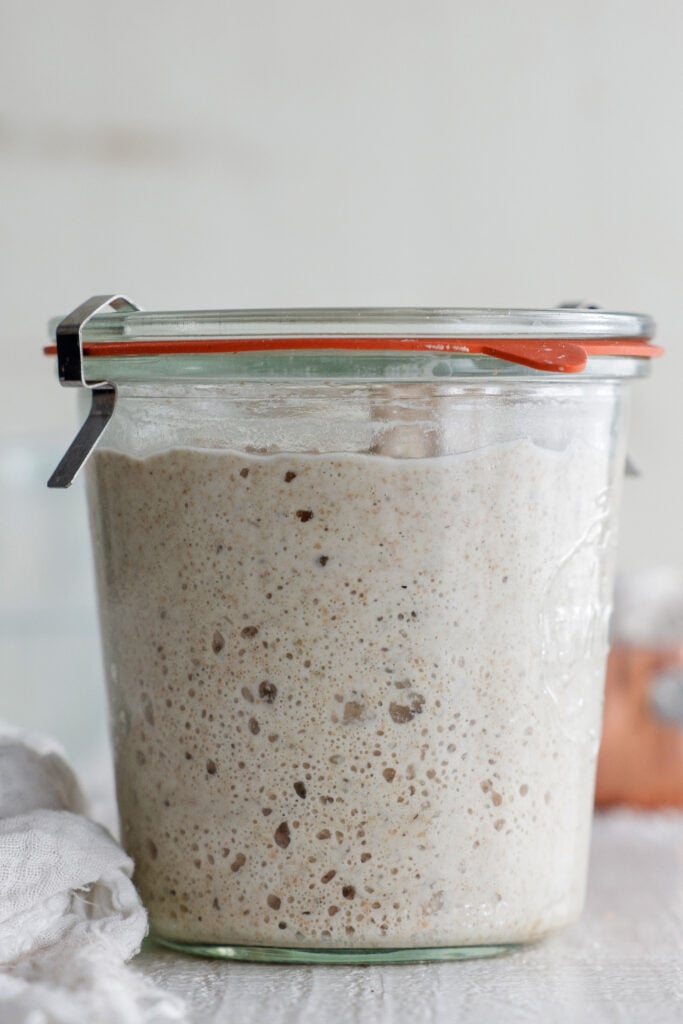

I am not sure I have come to love anything more in the bread-making world than using a natural leavening agent like a sourdough starter. People tend to use it different ways, either because they want a very sour flavor or because they simply want the lift it provides in the oven for whatever it is they are using it in. I tend toward the latter. Just because it is not overly sour does not mean it does not add incredible complexity, color, and flavor to every single thing that I put it in.
It truly is remarkable, and it is the oldest leavening agent in the world. I think there is a reason for that, because it stands the test of time, period. If you are just getting into bread, this is where I would start before you touch a sourdough bread or an artisan bread.
Sourdough Starter
A sourdough starter is a living culture of wild yeast and bacteria that ferments flour and water. That fermentation is what raises bread without any commercial yeast. It is the most natural way to get lift in a dough. The same fermentation that gives you flavor also helps break down some of the gluten, which is part of why a lot of people find it easier to digest. One thing worth knowing is that a sourdough starter changes its name to levain once it is actually fed and used in a recipe. In this recipe, you will see me use both words.
Building it is more about patience and a steady schedule than anything hard at the stove. You mix whole wheat flour and water and let it sit open to catch the wild yeast in the air. Then you discard most of it and refeed it every day. Switch to a whole wheat, bread, and rye blend as it matures, until it is strong enough to double and smell alive.
Seriously, none of it is difficult. It just asks you to show up at the same time every day for a few days. Stick with the feeding rhythm below, pay attention to the two chef tips on the flour blend and feed ratio, and you will have a starter that is genuinely active rather than the boring, sleepy kind. It is also pretty classic to name yours, so go ahead. This thing takes on a life of its own and honestly needs a little parental care. Ha!
I have killed more starters than I can remember, and because of that I have gotten exceptionally good at keeping them and bringing them back to life. The secret is not complicated. It is daily feedings around the same time. I hold myself to a strict 24-hour rule, though I will be honest that I have accidentally left one sitting out for 2 or 3 days, fed it, and had it come back just fine. A lot of it depends on the environment. Warmer means much more active much faster. I am up north, so in the cold of a Northwest Indiana winter, a starter can last a little longer between feedings than it would in July.
If you want the flavor, the rise, and the easier digestion that come with a real natural leavener, this is the one to make. You can absolutely do this.
Ingredients and Substitutions
There are only 4 ingredients in a starter, but the flour you choose and the ratio you feed at do most of the work. Here is what I use and why:
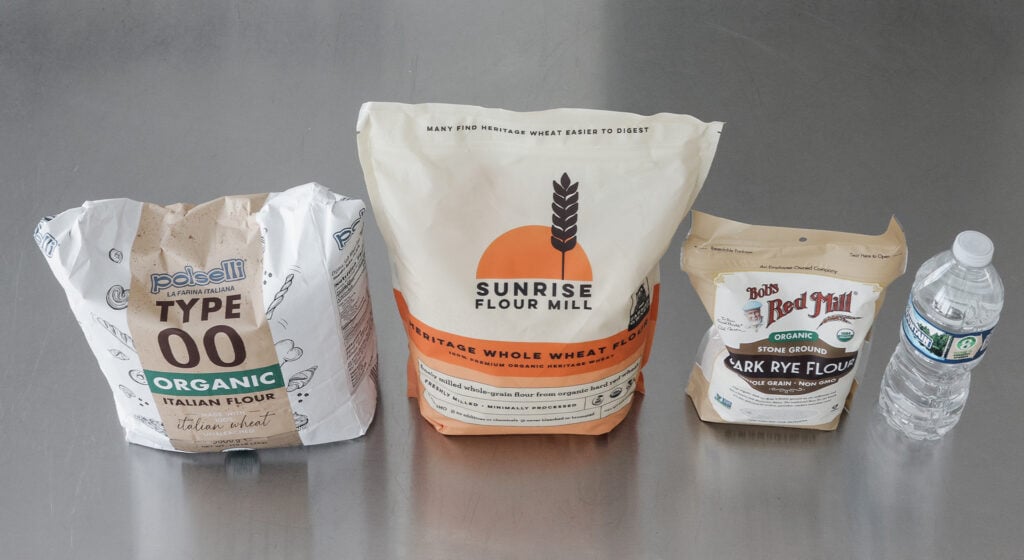
- Whole wheat flour – This is where much of the richness and earthy, nutty flavor come from. It is the flour I start with because it is the best at capturing wild yeast from the air. It builds a strong active culture from day one. I usually reach for King Arthur, the 365 brand from Whole Foods, or Sunrise Flour Mill.
- Bread flour has a high protein for gluten strength with a good W value. This is what gives you a starter that actually expands instead of just fizzing.
- Rye flour – Earthy and nutty with a gentle sourness. It is the fastest way I know to make a starter active or bring a slow one back to life. A little goes into the daily blend for complexity.
- Water – I use purified or bottled water for all my bread baking. Tap water can carry chlorine and other things that sometimes knock back the natural yeast. There is no reason to fight your own starter.
How to Make a Sourdough Starter (Levain)
Mix the first starter: In a large plastic container, mix 1/2 cup of whole wheat flour with 3 tablespoons of room-temperature water just until combined. Rest, uncovered, for 2 to 2 1/2 hours so it can catch the wild yeast in the air. Then cover it and keep it in a warm place between 70° and 90° for 20 to 24 hours.
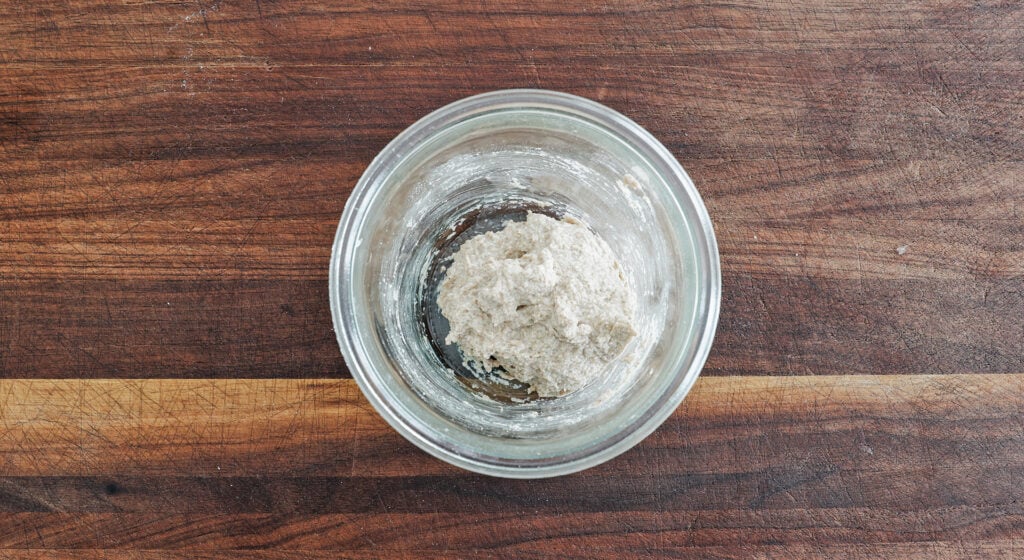
Discard and feed: Remove and discard 2/3 to 3/4 of the mixture. Add another half cup of whole wheat flour and 3 tablespoons of water to the young starter. Mix just until combined. Rest uncovered for 2 to 2 1/2 hours, then cover and keep it warm for another 20 to 24 hours.
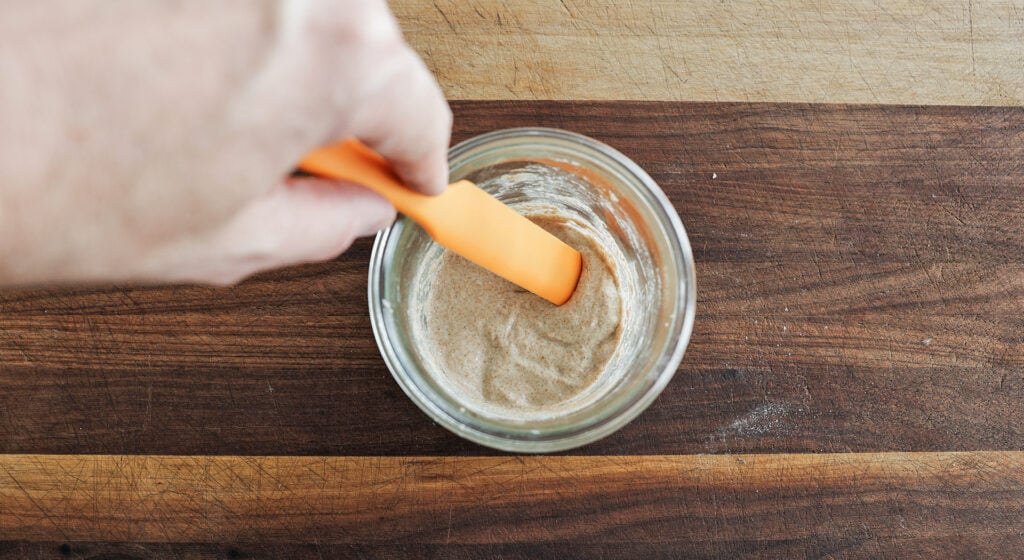
Repeat the feed: Do the previous step again in its entirety. By now you should start to notice the mixture rising and a leathery, faintly sour smell coming off it.
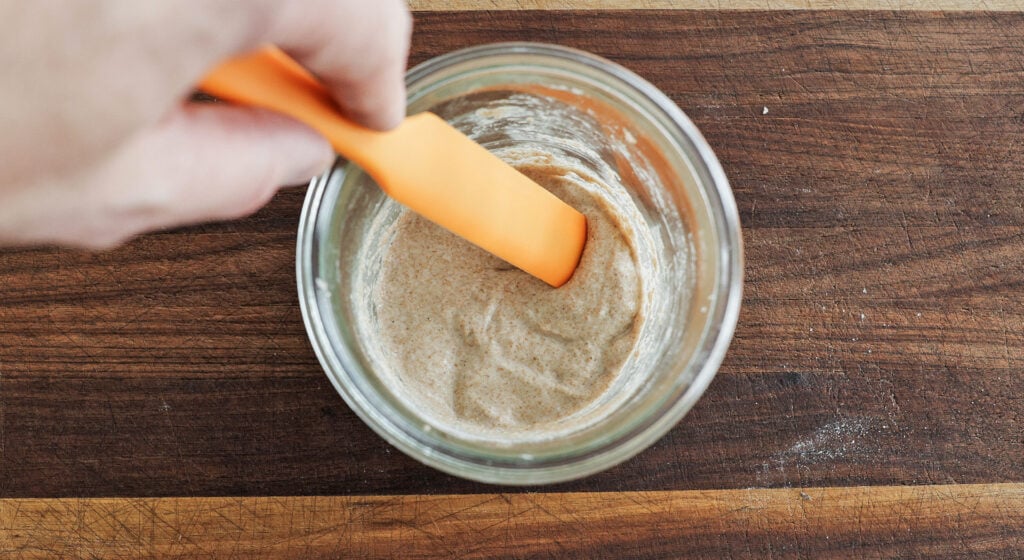
Feed the teenage starter: Remove and discard half of the starter. Add 1/2 cup of whole wheat flour and 3 tablespoons of water. Mix just until combined, then cover and keep warm for 20 to 24 hours. It should have plenty of bubbles and air pockets by this stage even if it is not doubling yet.
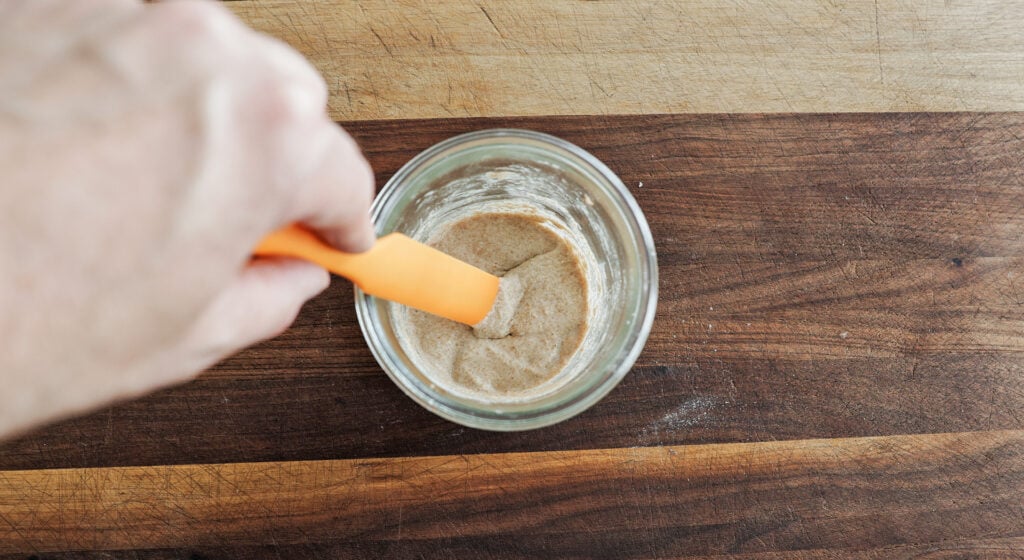
Switch to the daily blend: Remove and discard 3/4 of the starter. Add 1/2 cup of the daily feeding blend, which is 75% bread flour, 20% whole wheat flour, and 5% rye, along with 3 tablespoons of water. Mix until combined. Cover and keep warm for 20 to 24 hours. From here, it is ready to use within about 8 to 8 1/2 hours of a feed.
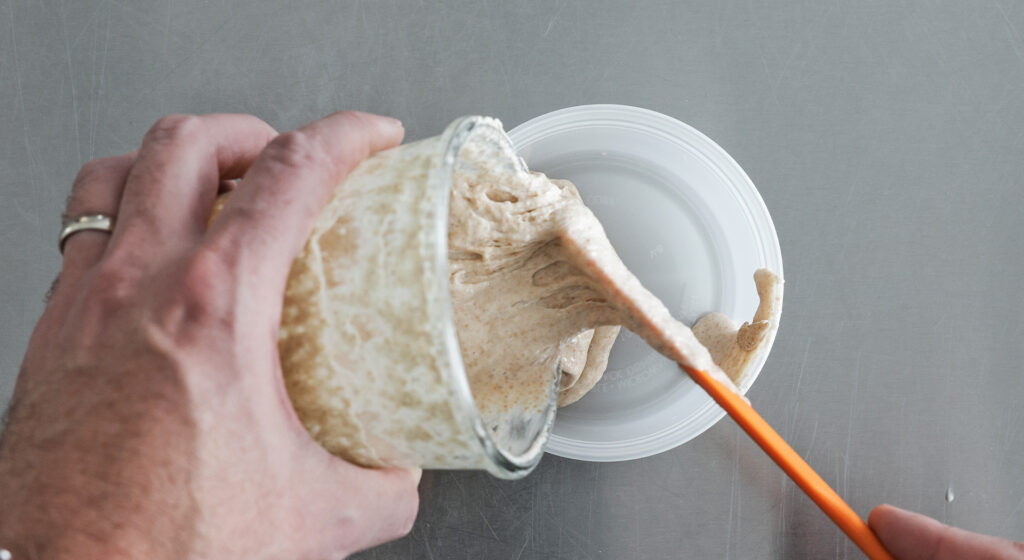
Keep it going: Continue discarding and feeding every day.
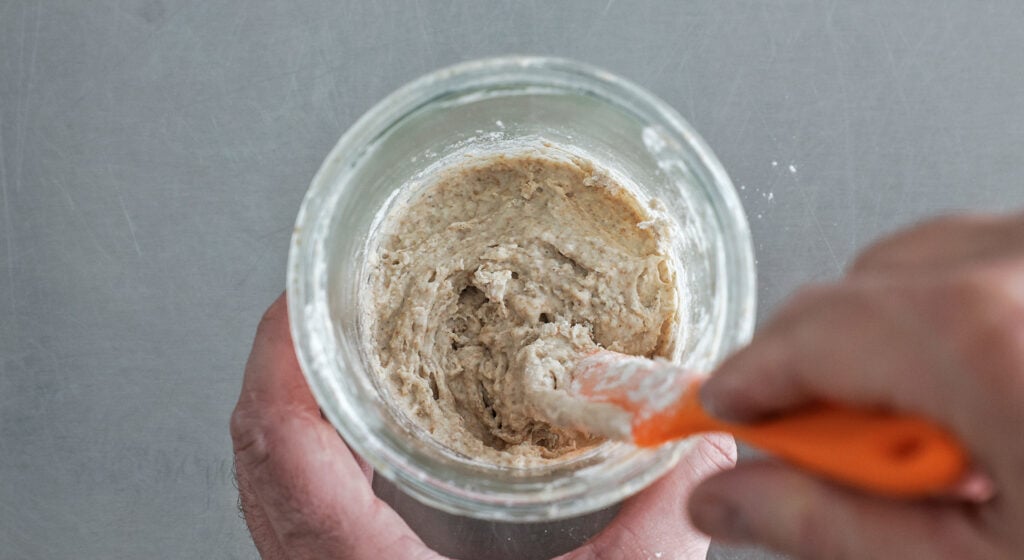
Once it is mature and active, it is a levain the moment you feed it and take it to a recipe.
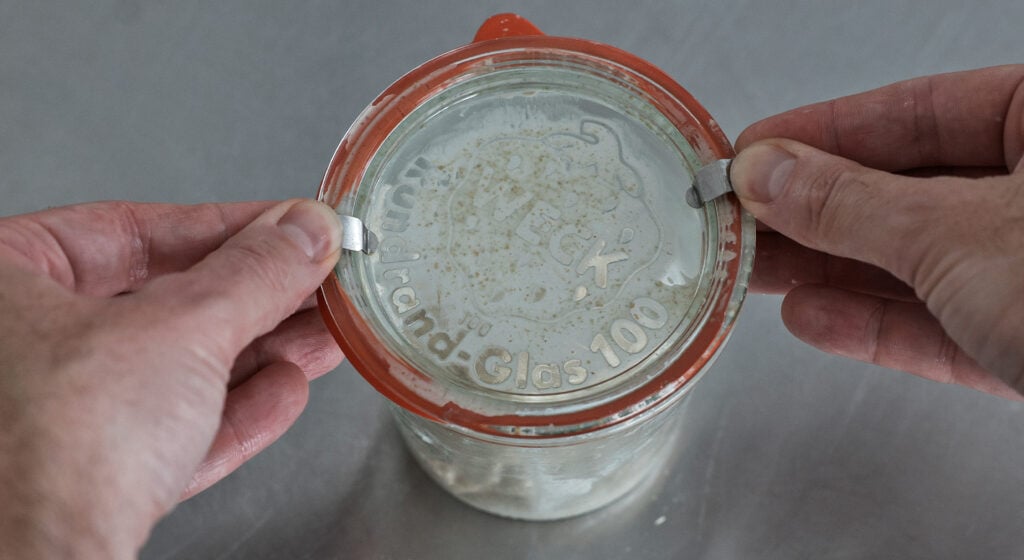

chef tip + notes
Here is the tip I lean on most to keep a starter really active. I feed it a little thicker than most instructions recommend, and it makes a big difference. If I am using 70 grams of flour for a daily feed, I will often go with only 60 grams of water instead of matching them one to one. That slightly stiffer concentration lets the wild yeast and bacteria feast without water getting in the way. It comes out noticeably more vigorous. Pair that with the whole wheat, bread, and rye blend, and you have got a starter that wakes up fast and pushes real lift into a loaf.
- Feed at the same time daily: I keep to a roughly 24-hour rhythm. A starter fed on a schedule stays predictable, and predictable is what lets you plan a bake around it.
- Read the room temperature: Warmer rooms mean faster, more active fermentation. In summer or a warm climate, drop the water temperature a few degrees and expect it to move quicker. In a cold northern winter it will move slower and forgive a late feed.
- Rye to revive it: If a starter is sluggish or you are trying to bring one back, I recommend using rye in the feed. It is the quickest way to get bubbles going again.
- Do not panic over a missed feed: A day or 2 out on the counter is usually recoverable. Discard, feed, and give it time before you decide it is gone.
Serving Suggestions
Once the starter is active, this is the part I actually look forward to. Now it gets turned into a real loaf of bread. On a weekend when I have time, I feed it in the morning. Then, I use it that afternoon to make a sourdough bread. The kind with an open crumb and a crackly crust that we tear into warm. It is just as good in a batch of naan puffed straight off a hot skillet. The rise you get from a healthy levain is a different thing than what commercial yeast gives you.
The one I have been most excited about lately is my sourdough pizza. A well-fed levain gives the crust a chew and a flavor that a same day yeast dough just cannot match. Friday nights around here have turned into pizza nights because of it, with my daughter topping her own before it goes in the oven
When I want to bake with something other than plain wheat, I use it in a kamut flour bread, keeping the sour restrained so the flavor of the grain itself is what you taste.
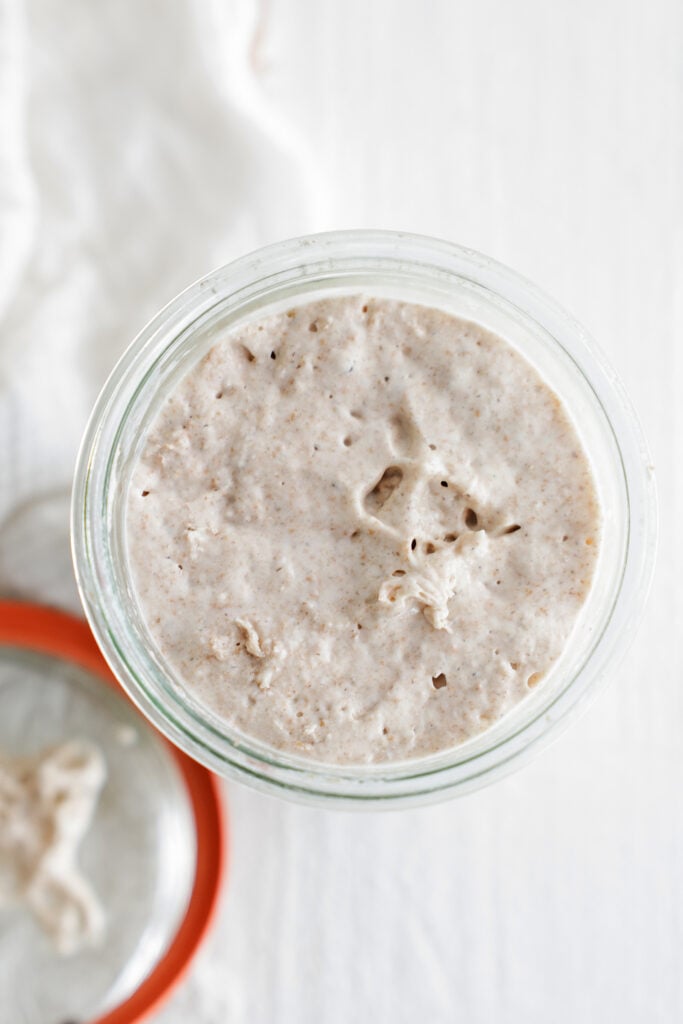
Make-Ahead and Storage
Make-Ahead: I plan a starter about 5 days ahead of the first bake I want to use it in, since that is how long the daily feeding cycle takes to get it fully active. Once it is mature, I feed it the morning of a bake and it is ready to go within 8 to 8 1/2 hours.
How to Store: I keep mine at room temperature, around 72° to 77°, and feed it every day when I am baking regularly. When I need a break from feeding, I discard some, feed it, transfer it to a container, add a thin layer of purified water over the top, seal the lid, and put it in the refrigerator for up to 2 months.
How to Reheat: Bring a chilled starter back to life by taking it out of the fridge and running it through the daily discard-and-feed cycle at room temperature until it is bubbling and active again. Rye in the feed speeds this up. I have actually revived a 7 month old fridge starter this way using my flour blend with a higher ratio of dry to wet, so do not write one off too quickly.
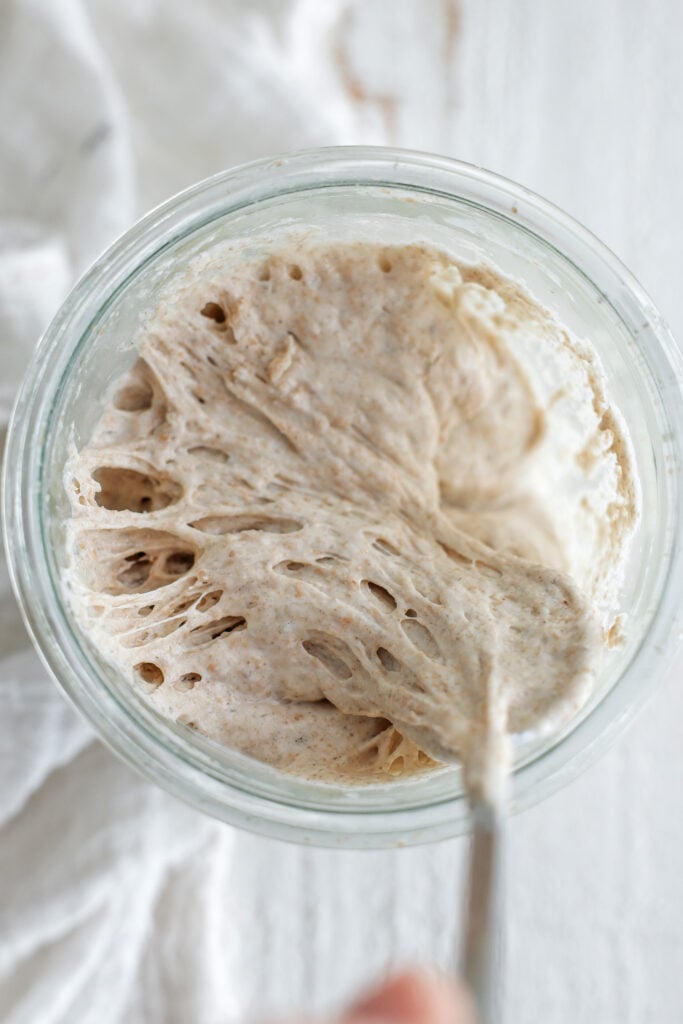
More Amazing Bread Recipes
- Homemade Pita Bread Recipe
- Homemade White Bread
- Monkey Bread
- French Boule with Poolish
- Irish Soda Bread

Video
Sourdough Starter Recipe (Levain)
Ingredients
For the Starter
- 2 cups whole wheat flour
- 12 tablespoons water, room temperature
For the Daily Feeding
- 1/2 cup flour blend , 75% bread flour, 20% whole wheat flour, 5% rye flour
- 3 tablespoons water, room temperature
Instructions
- In a large plastic container mix together ½ cup of whole wheat flour and 3 tablespoons of water just until combined. Rest uncovered for 2 to 2 ½ hours then cover and keep in a warm place (70° to 90°) for 20 to 24 hours.
- Remove 2/3 to ¾ of the mixture and discard. Add ½ cup of whole wheat flour and 3 tablespoons of water to the young starter and mix just until combined. Rest uncovered for 2 to 2 ½ hours then cover and keep in a warm place (70° to 90°) for 20 to 24 hours.
- Repeat step 2 in its entirety.
- Remove half of the starter and discard. Add 1/2 cup of whole wheat flour and 3 tablespoons to the starter and mix just until combined. Cover and keep in a warm place (70° to 90°) for 20 to 24 hours.
- Remove 3/4 of the starter and discard. Add ½ cup of the daily feeding flour blend and 3 tablespoons of water and mix until combined. Cover and keep in a warm place (70° to 90°) for 20 to 24 hours and it is ready to use within 8 to 8 1/2 hours.
- Continue the discarding and feeding every day.
I have a ton of unbleached ap flour in my house but no whole wheat; can I make this starter with just ap flour or does it truly need to be whole wheat?
need some whole wheat or at least bread flour
This recipe is incredible- I made the starter in late 2020. Been feeding family, friends, neighbors, and myself since then. I use it to make ciabatta, bialys, dinner rolls, country rye, and other breads. I love to bake bread. Thank you Billy !
Does your starter dough need to float in water before it’s ready? It’s been about 10 days so far, it looks great, smells great and more than doubles, but doesn’t float!
It’s not a make or break if it doesn’t. Best way to test it is to use it.
Chef,
When you say to continue to feed every day, how much do you feed? Do I repeat step 5 daily?
Yes
Hi Billy,
Just about to get started on this, uh, starter. I could’ve sworn you mentioned it, but I can’t seem to find where. When you get to the point of adding white flour to the starter, are you using AP or bread flour?
Using AP
Hi Billy. I’m making your sourdough starter and I’ve cut it by 6 so during initial and first couple feedings I’m doing 100 gr whole wheat Flour and 100 gr warm water. I’m using King Arthur Flour and my mixture seems much drier than yours. Is there something different I need to do using that brand? Most other starters I’ve read about use a combination of AP flour and whole wheat. Thanks and keep up the great work. I love your recipes!!
is your white flour bread or ap?
Billy helllooooo!
I make your perfect sourdough bread but my bread is not as airy. Can I add my home made starter plus commercial yeast? If so, when do I add commercial yeast?
I suppose you could, but I would just focus on making sure your starter is really active.
HI Billy,
when the starter goes into the fridge ( if you’re not using it ) should it be taken out a day in advance if you plan to bake bread again?Also how long does this starter last and since feeding it requires so much flour is it possible to make it using less flour?
BTW your blueberrry crostata is a huge hit in our house now!!
Yes on taking it out of the fridge a few days before. Watch the video for sure because I explain all of that stuff in there. It can last up to a month. Cut the total amount of ingredients 3/4 so only make a 1/4 of the recipe and you’ll be fine. When I was making this that week I was making an insane amount of bread.
Hi Billy,
Do we have to feed the starter before putting it in the refrigerator after waiting for 24 hours after Step 5? I fed it once again on day 6 just as Step 5 (white and whole wheat mixture) as I needed to bake the bread on day 7, but there was mold on it and unfortunately I had to throw it away. This is my second time now and tomorrow is day 5. Fingers crossed!
Also, you wrote on step 6; continue feeding every day. Do you mean feeding just as step 5 with the mixture (if we don’t put it in the refrigerator)?
Thanks a lot in advance.
just as step 5. Keep feeding it. It should never go in the refrigerator unless you don’t want to use it for a few days and up to 1 month.
So is this recipe only good for a month? Or do I treat it as a sourdough? I’m sorry I’m confused.
It’s the active natural yeast, or starter that you need yo make sourdough bread with. If you feed it every day it lasts forever. If you don’t feed it and follow my procedures on how to store it, you have a month with it before it needs to be thrown out or refed
Why do you have to discard some of the starter. Can’t you just use less water and flour to feed
You actually could do that as well. Start with a very small amount and continue to feed it for several days until it’s mature.