








I make this sourdough pizza with just 4 simple ingredients: an active starter, 00 flour, water, and salt. It bakes with a crisp bottom and airy crust, ready for your favorite sauce, cheese, and toppings. This is one of the best pizzas I’ve ever made, and I’m proud to share my step-by-step recipe and tips so you can easily make it at home.
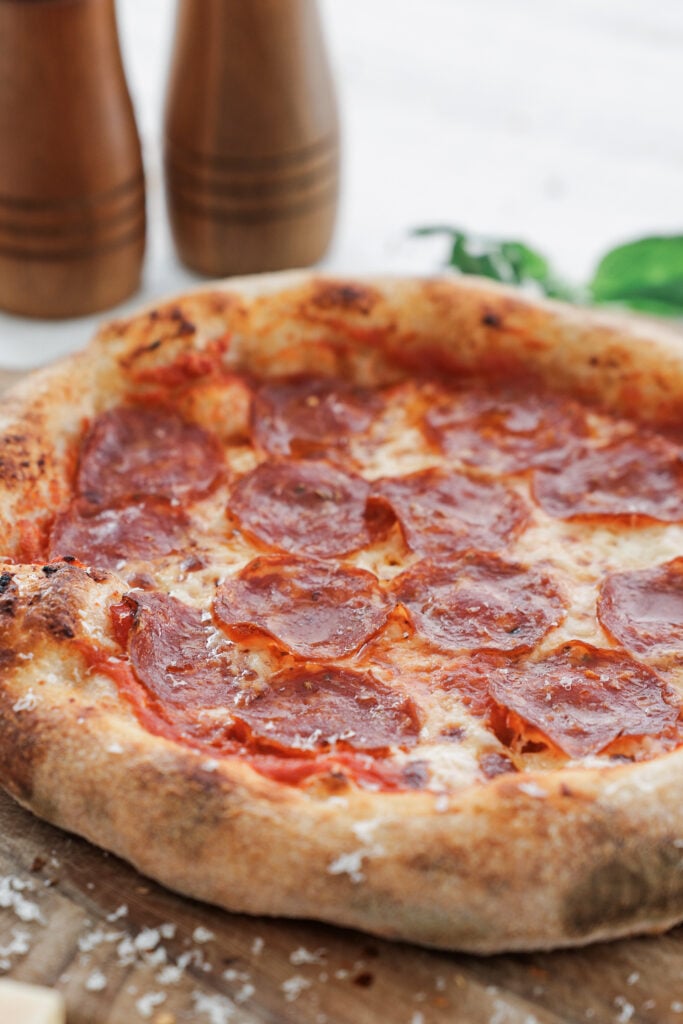

I have made thousands of pizzas in my life, and I mean it sincerely when I say this one might be my favorite, whether I made it or a pizzeria did. Yes, it is that good. The complexity of the flavor, the spring on the rim, the crispness on the bottom, all of it is pizza exactly the way I love it. While I’ve made this many pizzas, I haven’t made a lot of sourdough pizzas so this one was tested and perfected while trying to streamline the process as simply as I could to get you the exact same results. If you already keep a jar going, my sourdough starter is where this begins. My sourdough bread uses the same living leavener if you want more to do with it.
Sourdough Pizza
Sourdough pizza is pizza leavened with a natural sourdough starter instead of commercial yeast. This is exactly how some of the best pizzerias in the world do it. The wild yeast and bacteria in the starter ferment the dough slowly. That slow fermentation is what gives you more complex flavor, an airy crumb on the rim, and a crust that a lot of people find easier to digest. Mine runs at 66% hydration, the classic number for a Neapolitan-style dough.
Most of this recipe is the dough doing its own thing while you go live your life. You feed a starter until it peaks, whisk it into cool water, mix in the flour, and let that rest to hydrate. Then, knead in the salt and bulk ferment the dough until it doubles. From there, divide it into balls and cold proof them in the fridge overnight. Temper them the day you bake, stretch each one over semola, and slide it onto a screaming-hot stone until the rim leopard spots. None of the steps are hard on their own, they just ask you to plan a little, so read my chef tips below about peak starter and never touching the rim, and you will put down a pizza nobody guesses came out of a home oven.
I wholeheartedly think that if I ever opened a pizzeria of some kind, I would figure out how to make this my main pizza. I simply can’t say enough good things about this one, and I do not mean to toot my own horn. My wife told me it was probably one of the best pizzas she has ever had, and she grew up in Chicago, so she does not hand that out lightly. Friends who spent time in Italy tried it and told me it was as good as their favorite pie over there. When someone eats this pizza, I want them to feel like they are sitting in Italy. That is the whole payoff for the couple of extra days. You can absolutely pull this off. Sounds good? Let’s cook, my friends!
Ingredients and Substitutions
Only 4 ingredients go into the dough: flour, water, salt, and an active starter, and each one matters more than you might think. Here is what I use and why, plus what goes on top.
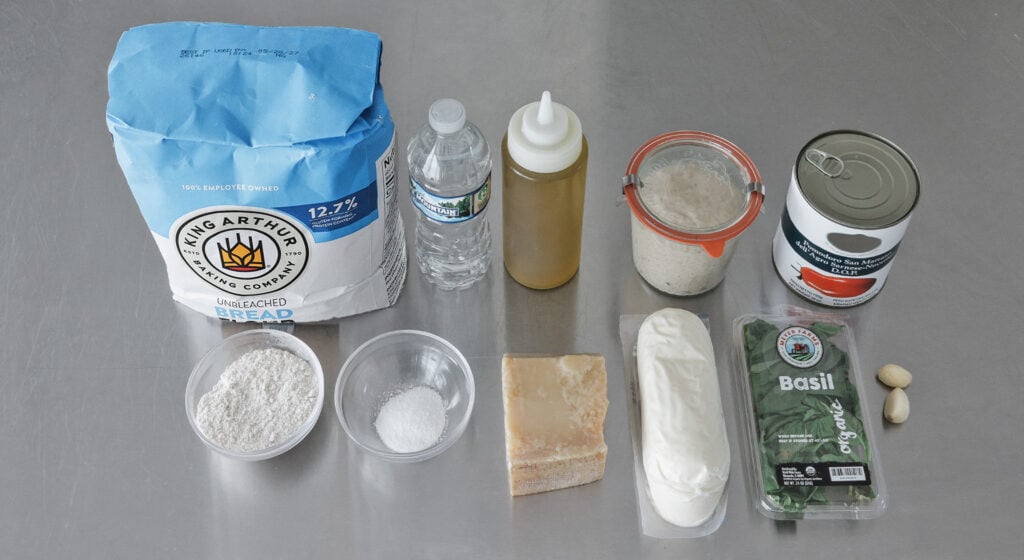
- Active sourdough starter – A natural leavener of just flour and water, and the single reason this dough tastes the way it does. The one thing that matters most is that it is genuinely active and at its peak, so feed it 6 to 8 hours ahead. If you do not keep one, my recipe gets you there in about 5 days, or you can grab a little from a baking friend, feed it, and go.
- Flour – You want high protein for gluten strength and a high W value, which is just how far the dough stretches before it tears. King Arthur bread flour is perfect, and I also love the 365 brand from Whole Foods and Sunrise Flour Mill. If you want to keep it classic with a 00, use one with a high W value like Caputo Chef or Polselli Super.
- Water, I use purified or bottled water for all my bread baking. Keep it cool, right around 65 F, so the fermentation stays slow and controlled without commercial yeast forcing it.
- Salt – Diamond Crystal kosher for me. It seasons the dough, works flavor through the bulk and cold ferments, and helps the crust brown. It goes in after the flour has rested so it does not slow the early hydration.
- Olive oil – Just a smidge to coat the container so the dough releases easily, plus a drizzle to finish the baked pizza. We are making Italian food, so olive oil is what you want here.
- Semola – Semolina that has been reground finer. I dust it on the surface and the peel when I stretch, and it beats flour because it does not soak into the dough and throw off the hydration. It acts like tiny ball bearings so the pizza slides off the peel instead of sticking.
- Pizza sauce – I keep it traditional: a good canned San Marzano blended smooth with a few smashed garlic cloves, torn basil, salt, and olive oil, then left to sit a few hours at room temperature.
- Fresh mozzarella – Whole milk, sliced or cubed. I love how creamy fresh is, but a whole-milk low-moisture works great too and browns a little more.
- Parmigiano Reggiano – Nuttiness, umami, and acidity all in one cheese. A little goes a long way and it is what makes this pizza unforgettable.
- Basil and toppings – I finish nearly every pie with fresh basil for that sweet, peppery minty flavors. After that, have a field day: pepperoni, sausage, mushrooms, peppers, or go creative with pesto, squash, bacon, and apples. Whatever your favorite pizza is, you can do it with this dough.
How to Make Sourdough Pizza
Feed the starter to peak: Feed the starter with a blend of bread, whole wheat, and rye flour, then cover it and let it sit at room temperature 6 to 8 hours until it is bubbling and about to crest.
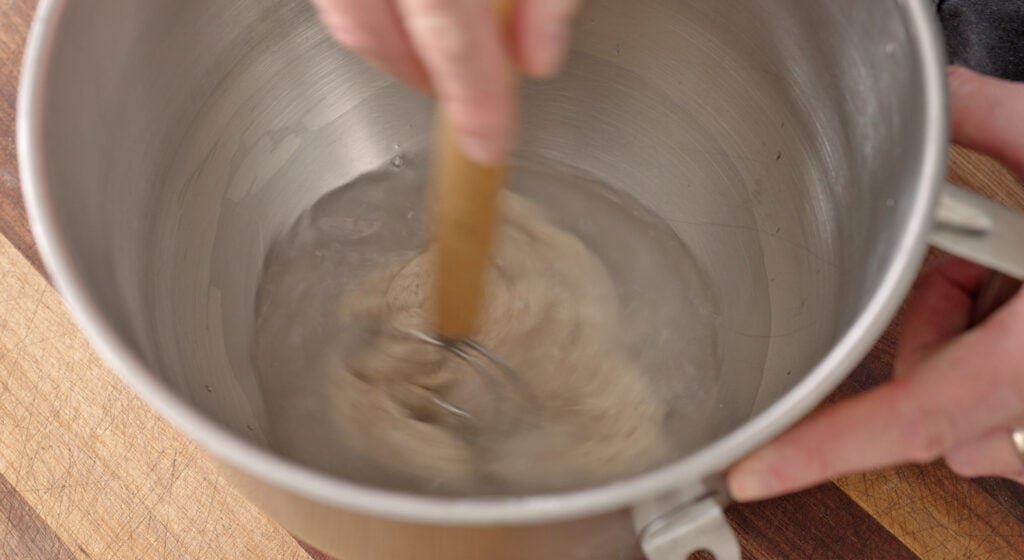
Mix and autolyse: Add the cool water and active starter to the bowl of a stand mixer and whisk until the starter dissolves. Fit the hook, add the flour slowly, and mix on low just until everything comes into a shaggy dough. Rest it 30 minutes.
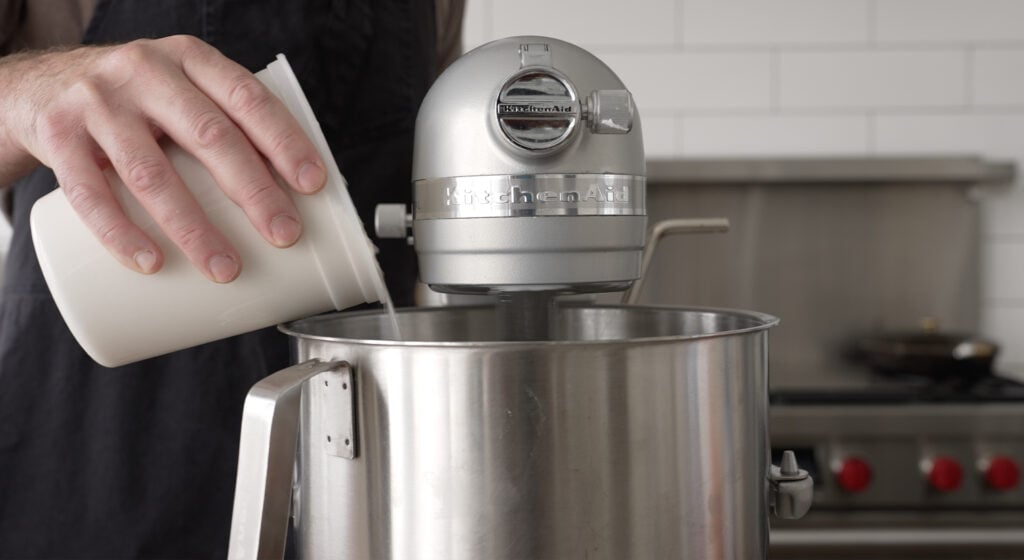
This autolyse lets the flour hydrate and start organizing gluten on its own before the mixer does any work, which is what makes a 66% hydration dough easy to handle later.
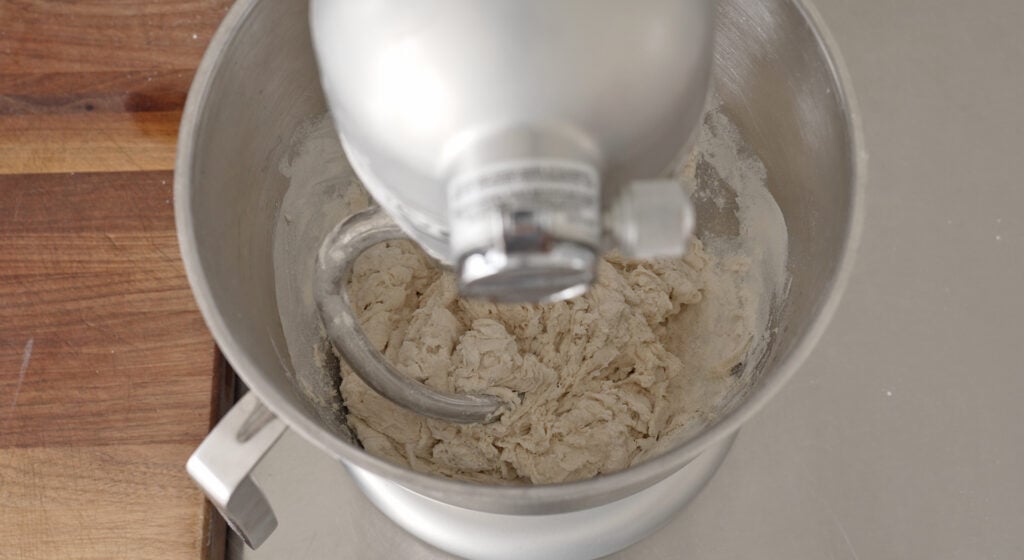
Knead in the salt: Sprinkle in the salt and mix on low to medium low for about 8 minutes. The dough is ready when it cleans the sides and bottom of the bowl and is smooth and elastic.
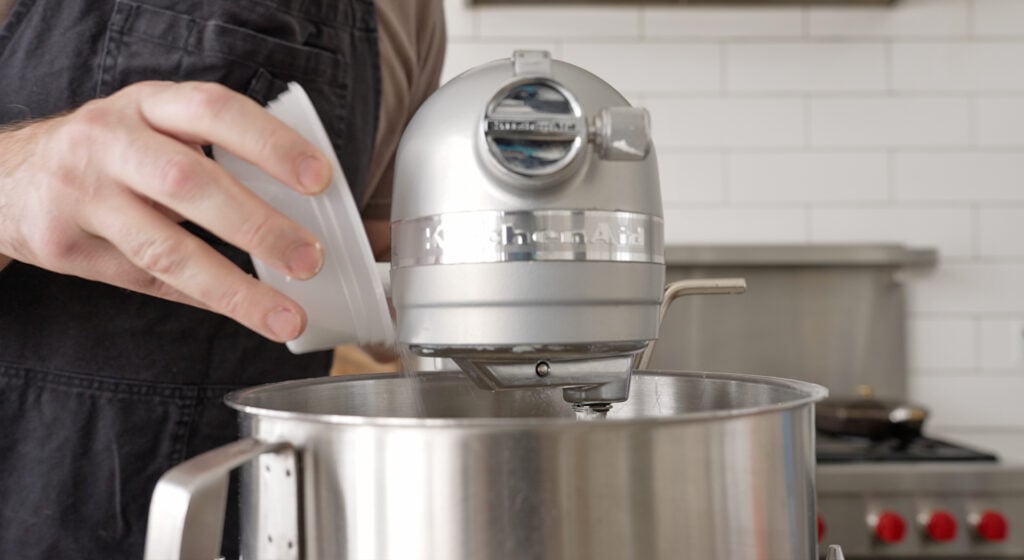
Rest, then fold: Transfer the dough to a container lightly coated in olive oil, cover it, and let it stand 1 hour at room temperature. Then do one series of folds: grab part of the dough, lift it up and over the center, rotate 45 degrees, and repeat.
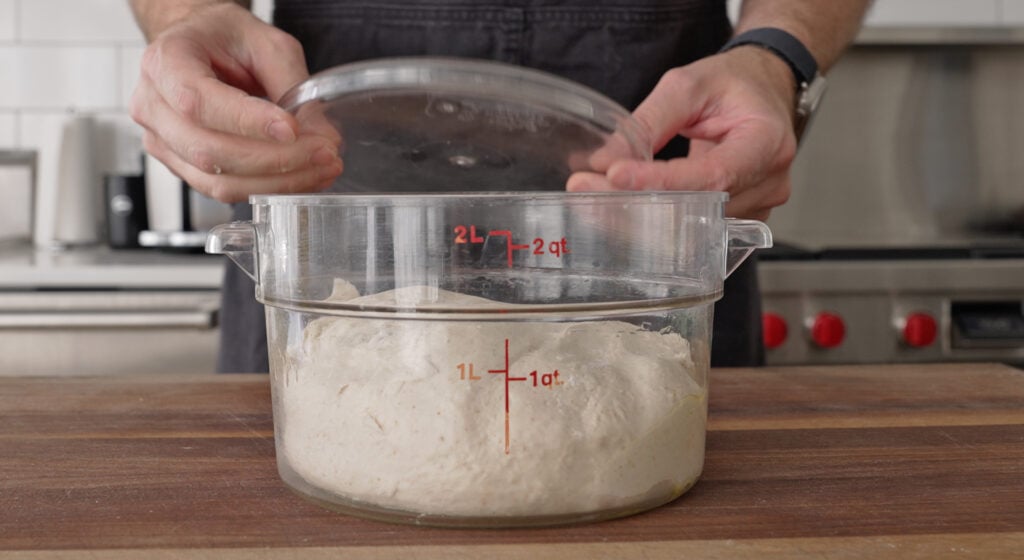
You will get 5 to 6 folds before it stops stretching. Tuck it under gently into a taut ball. The folds organize and reinforce the gluten network without knocking out the gas.
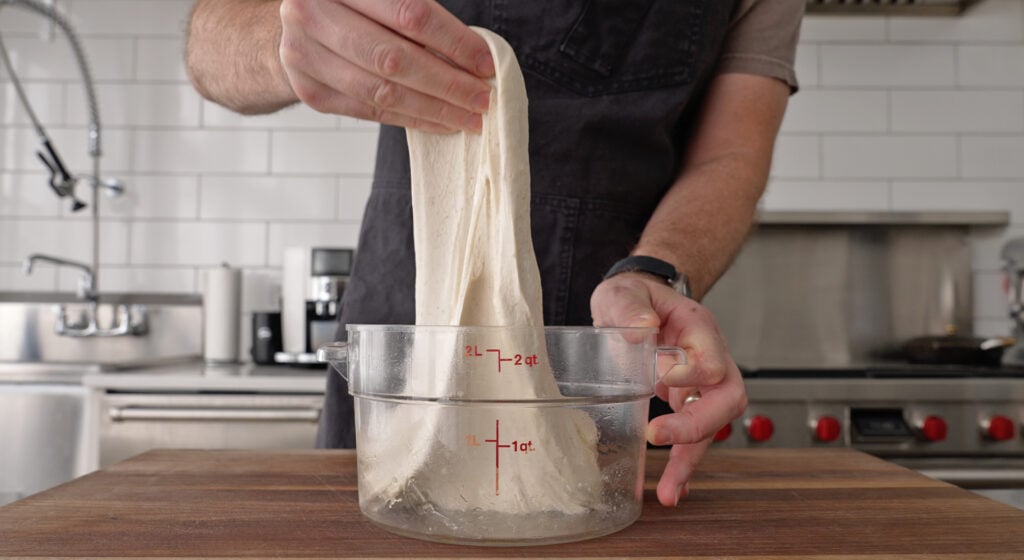
Bulk ferment (puntata): Cover and bulk ferment somewhere warm until the dough doubles, roughly 5 to 7 hours.
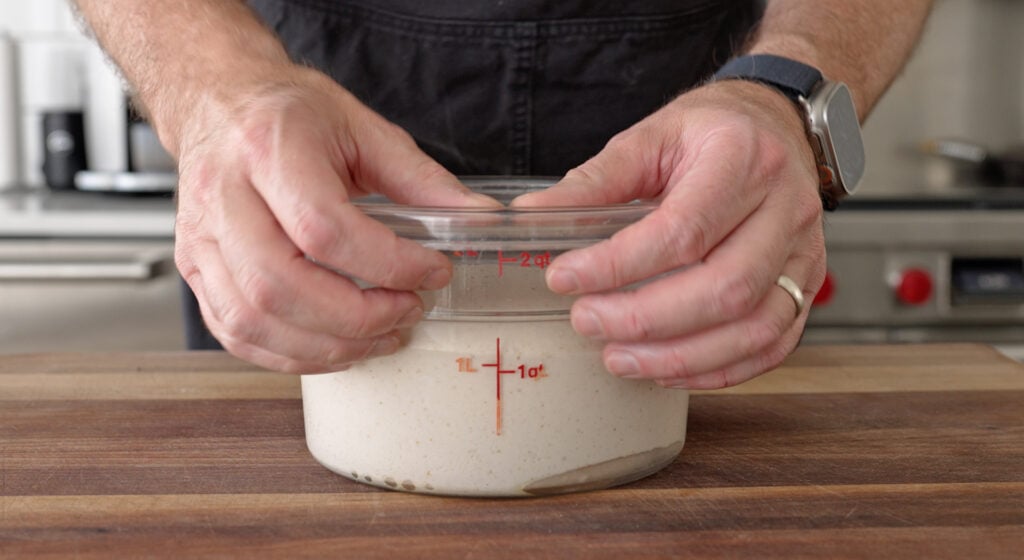
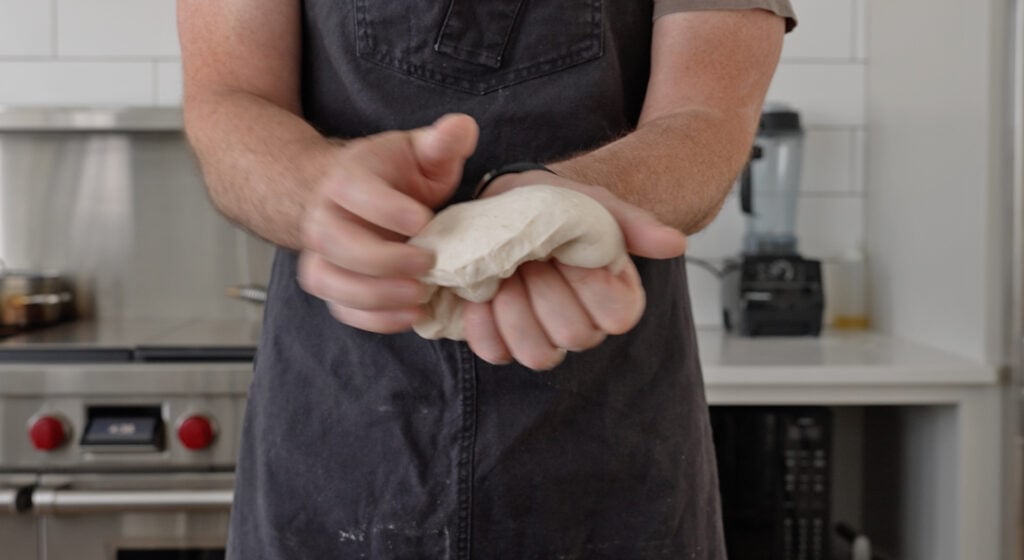
Divide and ball (panetti): Scrape the doubled dough onto a lightly floured surface, dust the top, and divide into 4 equal portions, about 281 grams each. Ball each one by folding the corners in and down. Work across the middle to the bottom, fold bottom to center and top to center, and roll it over. Then pick it up and fold the edge inward left to right, rotating 45 degrees each time, until the surface is smooth and taut.
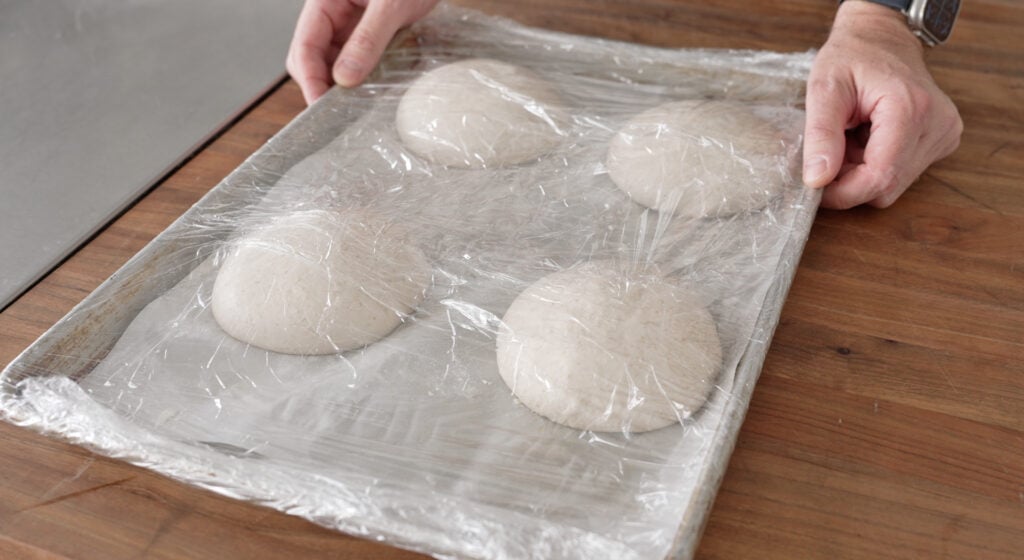
Cold proof (appretto): Set the balls a few inches apart on a parchment-lined tray coated lightly in olive oil. Dust the tops, and wrap the tray airtight in plastic. Cold ferment 12 to 72 hours.
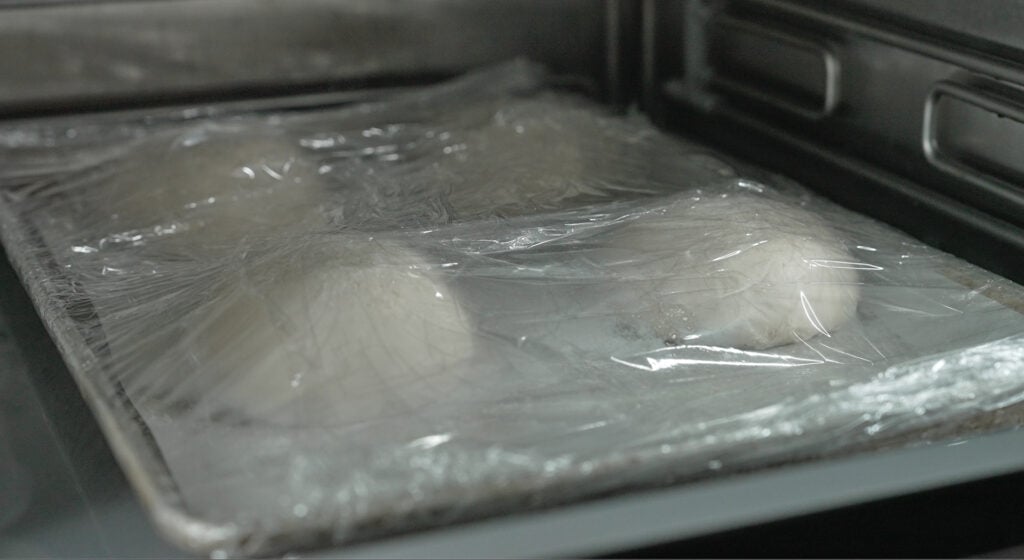
Temper the dough: The day you bake, take the tray out and let the balls come to room temperature, about 3 hours, kept covered the whole time. Cold dough fights you when you stretch it, so this step is what makes shaping easy.
Make the sauce and prep: Blend the San Marzanos until smooth. Then stir in smashed garlic, torn basil, salt, and olive oil, and let it sit for a few hours at room temperature. Slice or cube the mozzarella and prep any toppings while the oven heats.
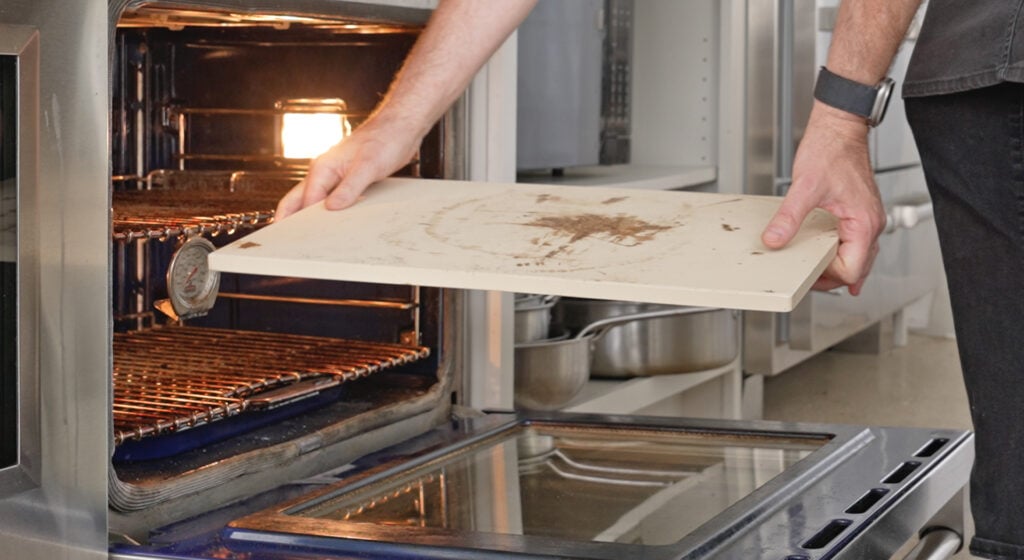
Preheat the stone: Set a pizza stone on the upper-third rack and preheat the oven to 500 F on convection. Let the stone heat for a full 60 minutes before baking the first pizza. I also put a pan with about 2 inches of water on the bottom rack to keep the oven moist. No stone is fine, just invert a sheet tray and preheat it the same way. No peel either? The underside of a sheet tray transfers a pizza just fine.
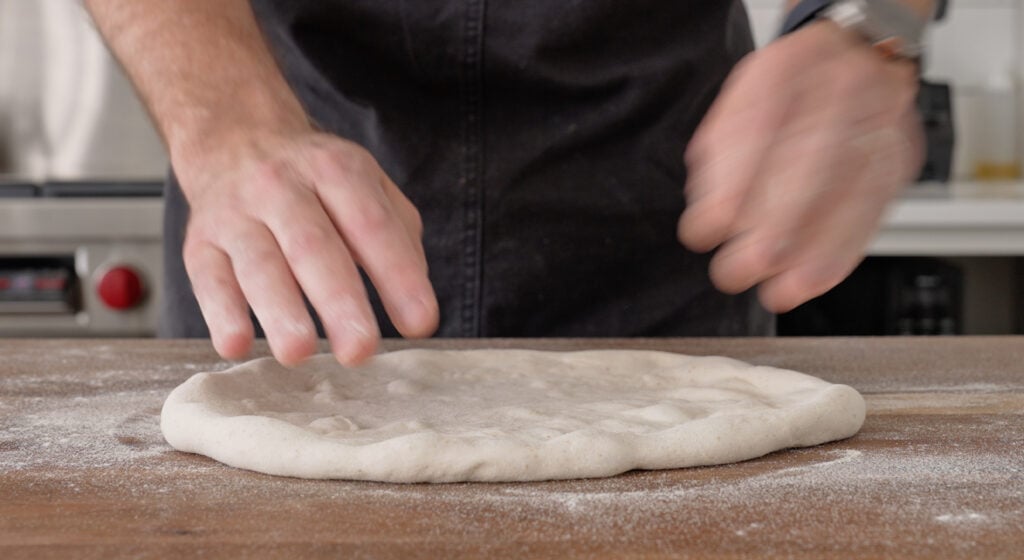
Stretch over semola: Add a dough ball to a plate of semola and flip to coat both sides. Move it to a lightly dusted surface. Press from the center outward with your fingertips to degas, leaving about 1 inch of the rim untouched. That outer ring is the cornicione, the crust, and it stays puffy. Gently hand-stretch to 10 to 11 inches, taking care not to deflate that rim. Then, move it to a semola-dusted peel.
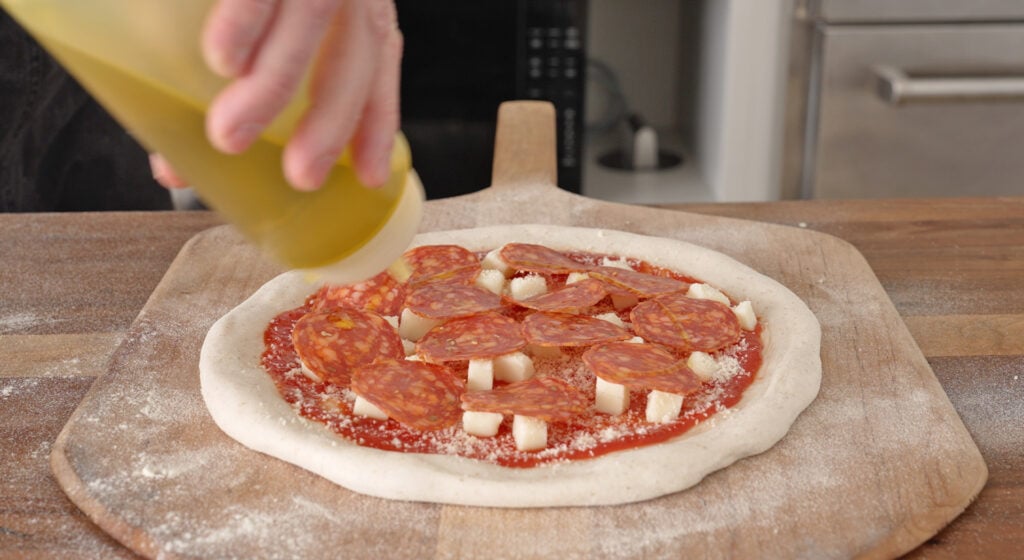
Sauce and top: Spoon 1/4 cup of sauce onto the dough and smooth it out, leaving the rim bare. Add the cheeses, toppings, and a drizzle of olive oil, then slide the pizza directly onto the hot stone.
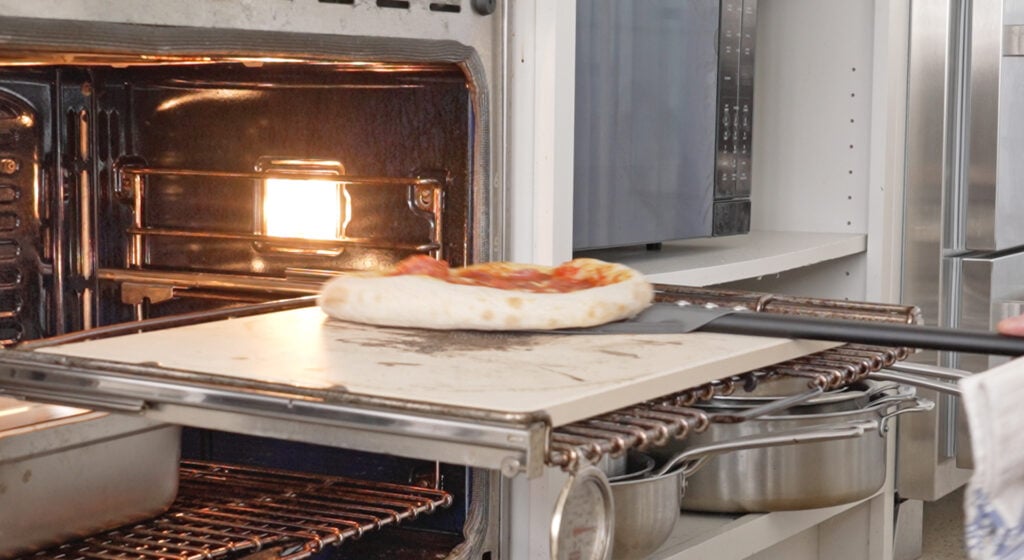
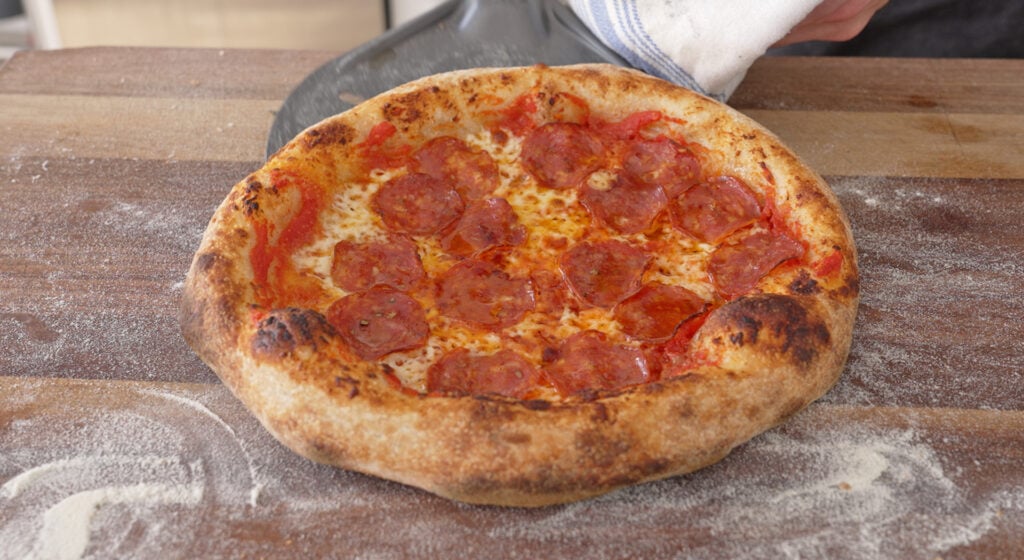
Bake 5 to 7 minutes, until the bottom is browned and the crust has risen and leopard spotted. Give it a 180-degree turn halfway through.
Serve: I love finishing with more Parmigiano and olive oil and serve warm.

Chef Tip + Notes
Based on my experience, this sourdough pizza recipe depends on 2 key decisions. I want to make sure you’re prepared for both before you start. First, use the starter right at its peak, when it is domed and full of bubbles and just about to fall. That is when it has the most lifting power and the cleanest flavor to give the dough. Second, once you have degassed and set the cornicione, never press it again. That untouched outer inch is where all the trapped gas goes when the pizza hits the heat. It is the difference between a puffed airy rim and a flat cracker edge. Get those 2 things right, and the rest is just handling.
- Choose flour with a high W value: For a long sourdough ferment, you need strength. A high-protein bread flour like King Arthur, or a high-W 00 like Caputo Chef or Polselli Super, holds its structure through a 2 day fermentation. Weaker flour tears and will not stretch, trust me on this one.
- Bake bread with clean water: Use purified or bottled water. Chlorine and other things in tap water can knock back the wild yeast, and there is no reason to fight your own starter.
- Dust with semola, not just flour: Remilled semolina is coarser and slides the dough off the peel instead of letting it stick and tear, and it does not soak into the dough and throw off the hydration the way loose flour does.
- Give the oven steam: A pan of water on the bottom rack keeps the environment moist while the stone runs hot, which helps the crust rise and brown instead of drying out.
- Bake into the hot spot and turn it: Launch onto the hottest part of the stone and give the pizza a 180 degree turn halfway through. That is how you get even leopard spotting instead of a pale undercooked crust.
Serving Suggestions
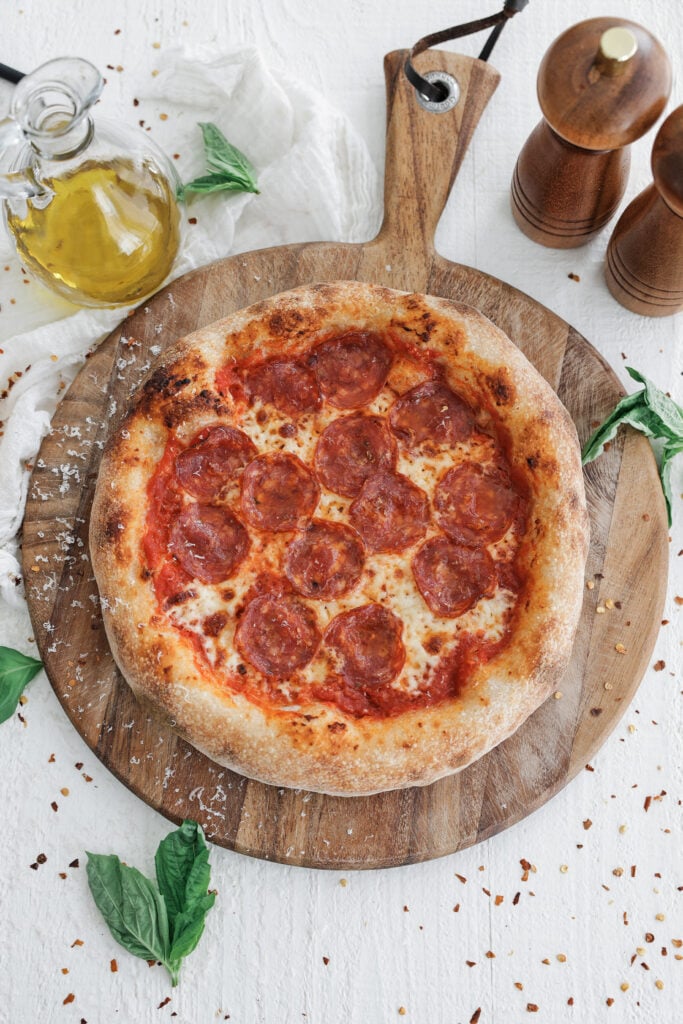
Pizza night at our place is loud and hands-on. I temper the dough in the afternoon. By the time the stone is hot, my daughter is already claiming a ball to top her own, usually plain cheese with more basil than any adult would use. I bake them one at a time so everyone gets a hot pie straight off the stone. I cut them with a pizza wheel or scissors. Then hit them with a little more olive oil and Parmigiano before it goes to the table. A big Italian salad tossed in my homemade Italian dressing goes ridiculously well with this pizza, so I highly recommend serving it alongside.
When I have friends over, I stick with the same dough and cold ferment and just make more of it. I put out a tray of homemade garlic bread and my buffalo chicken dip for the people circling the kitchen. Cold leftover slices are honestly one of my favorite breakfasts, eaten standing at the counter before anyone else is up. Ha!
Make-Ahead and Storage
Make-Ahead: I plan this dough a day or two out, since the flavor comes from the overnight cold proof. Once the balls go in the refrigerator, they hold up to 72 hours. A cooked pizza, though, is best served within a few minutes off the stone.
How to Store: Keep cooked leftover pizza covered in the refrigerator for up to 3 days. Uncooked dough stays in the fridge, wrapped, for up to 72 hours.
How to Reheat: Set an inverted sheet tray or a pizza stone in the oven at 400 F. Once it is preheated, I add the cooked pizza and heat it for 4 to 7 minutes until hot.
How to Freeze: Freeze uncooked dough balls for up to 2 months, wrapped tightly. Thaw one in the fridge for a day before tempering. A cooked pizza freezes well, too. Wrap it tightly and store it for up to 3 months. Thaw in the fridge before reheating.
More Italian Recipes
- Homemade Pizza Recipe
- Homemade Pizza Sauce Recipe
- Sheet Pan Sicilian Pizza Recipe
- Chicken Margherita
- Homemade Italian Sausage Recipe

Sourdough Pizza Recipe
Ingredients
For the Pizza:
- 375 grams cool water, about 65
- 140 grams active starter
- 604 grams Bread flour, or 00 flour
- 18 grams kosher salt
- Olive oil for coating
- Semola for stretching
Semola for stretching
- Semola for stretching
- Fresh or whole milk low moisture mozzarella
- Parmigiano Reggiano
- Fresh basil
- Olive oil
- Your choice of toppings
Instructions
- Add the water and active sourdough starter to the bowl of a stand mixer and whisk until the starter is dissolved.
- Next add the flour slowly to the mixing bowl fixed to the stand mixer with the hook attachment mix on low speed just until everything is combined.
- Let the dough rest for 30 minutes to autolyse.
- Sprinkle in the salt and mix on low to medium-low speed for 8 minutes, The dough will clean the sides and bottom of the bowl and be smooth and elastic.
- Transfer the dough to a medium sized container that’s been gently coated in olive oil. Cover and let it stand for 1 hour at room temperature.
- Next, perform a series of folds by grabbing part of the dough, pulling it up and folding it over the center. Turn it 45 degrees and repeat the process. You’ll get 5 to 6 pulls and then it won’t stretch anymore. From there just tuck it under gently to form a more taught ball.
- Cover and let the dough bulk ferment for 5 to 7 hours or until its doubled in size.
- Transfer the dough to a lightly flour dusted clean surface. Gently dust the top as well and divide it into 4 equal portions, about 281 grams each. Starting at the corner fold in and down. Do the same with the other corner. Then repeat it all the way through the middle and to the bottom. Then fold the bottom to the center and the top to center and roll it over. From there, pick up the dough and fold the edge of the dough inward from left to right and turning 45 degrees after doing so. Continue doing this several times until the dough has a smooth taught surface.
- Place the dough on the sheet tray lined with parchment paper and lightly coated in olive oil, and give it a light dust of flour on top. Repeat the process until all the dough balls are rolled out. Cover the tray completely in plastic wrap and cold ferment for 12 to 72 hours.
- Remove the dough balls from the refrigerator and temper them to room temperature. This will take about 3 hours. Keep them covered at all times.
- Place a pizza stone on an upper third rack of the oven and preheat to 500°F convection. Make sure the stone is in the oven for 60 minutes before placing a pizza on it. I also usually put a pan with about 2 inches of water in it on the bottom rack. This will help create a moist environment in the oven.
- Add a dough ball to a plate with semola and flip it over to dust the other side. Place the dough on a lightly dusted surface and press from the center to the outer rim using your fingertips to degas. Leave about 1 inch of the rim untouched.
- Gently stretch the dough by hand to 10 to 11 inches taking care not to deflate that outer rim.
- Transfer the dough to a lightly dusted pizza peel and add about ¼ cup or so of the sauce and spread it around leaving the outer rim untouched. Next add the cheeses, toppings, drizzle of olive oil, and transfer directly to the hot stone. Bake for approximately 5 to 7 minutes, or until the bottom is browned and the crust is risen. I usually give it a 180° turn half way through the cooking process.
- Garnish with optional more parmigiano and olive oil and serve.
Sourdough Pizza Recipe