



You won’t believe how easy it is to make Shrimp Stock from shrimp shells. Follow my step-by-step guide to make a briny, umami-packed base for soups, risottos, sauces, gumbo, and more. Once you try making it yourself, you’ll never go back to store-bought.
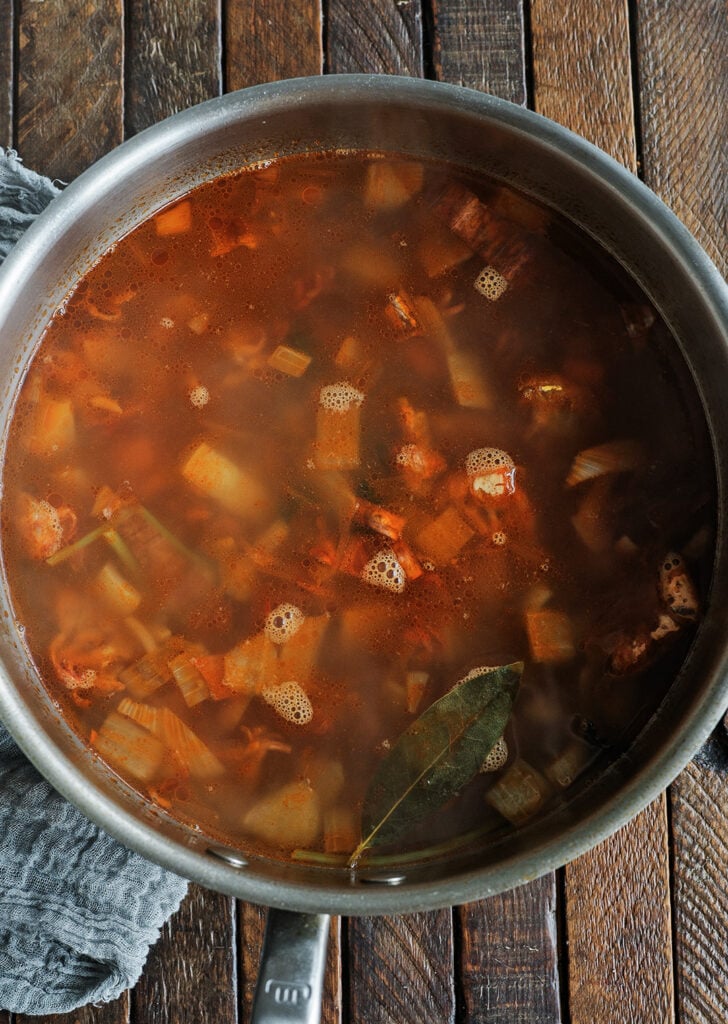
Stock is one of those kitchen essentials that I can never not make from scratch. I have so much more control over the ingredients and flavor this way! It’s why you’ll always find homemade Chicken Stock and Veal Stock in my fridge.
Easy Shrimp Stock
Shrimp stock is a simple soup base made by simmering shrimp shells with flavorful basic ingredients. Compared to fish stock, it’s richer, more briny, and packed with a clean, fresh taste that store-bought versions just can’t touch.
I tested this recipe a few times using the leftover shrimp shells from any recipe that called for peeled raw shrimp. The seafood flavor was great, but it got even better when I added a touch of tomato paste. That, plus sautéed vegetables and fresh herbs, really brought a delicious balance of savory seafood flavors.
You’ll usually see shrimp stock in a lot of Cajun recipes, like gumbos and stews. Personally, I love it in tom yum soup. Luckily, this recipe makes a lot of stock, so there should be plenty to experiment with in bisques, chowders, risottos, and more.
Ingredients and Substitutions
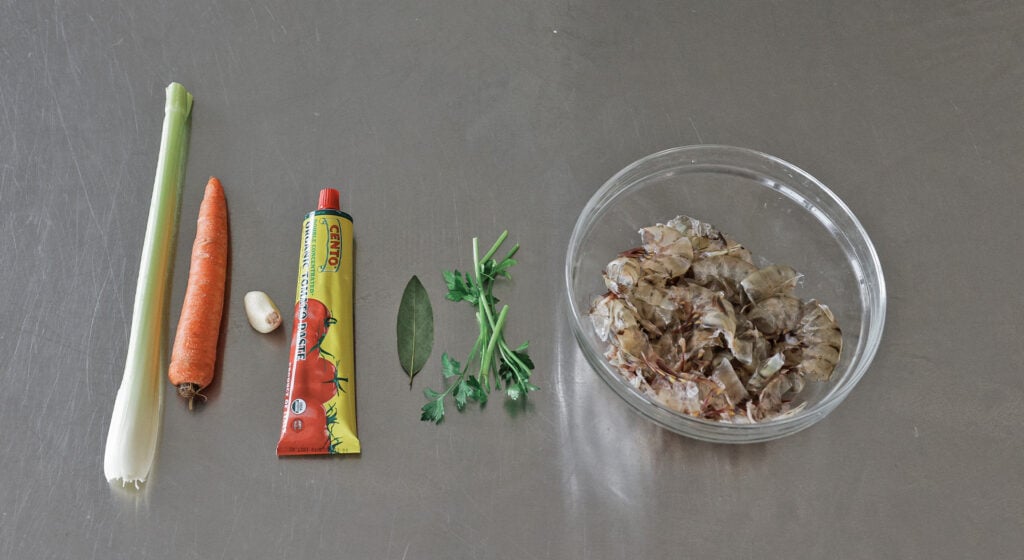
- Oil – I’ll use any high-heat cooking oil I have on hand to cook the shrimp shells and aromatics. Avocado, grapeseed, and vegetable oil are all great options.
- Shrimp Shells – I usually freeze the shrimp shells leftover from my favorite shrimp recipes instead of throwing them in the compost. I find that shells from raw shrimp work best, but shells from cooked shrimp will still give you great results. You can also add in shrimp heads.
- Aromatics – The stock gets much of its savory flavor from sautéed onions, carrots, celery, and garlic.
- Herbs – Just fresh parsley stems and a bay leaf. If you don’t have parsley, thyme stems make a great substitute.
- Tomato Paste – I cooked a small amount of tomato paste with the aromatics to give the stock a more complex, seafood-like umami flavor.
- Water – I always start with cold, filtered water because it extracts the most flavor as the stock slowly simmers.
How to Make Shrimp Stock
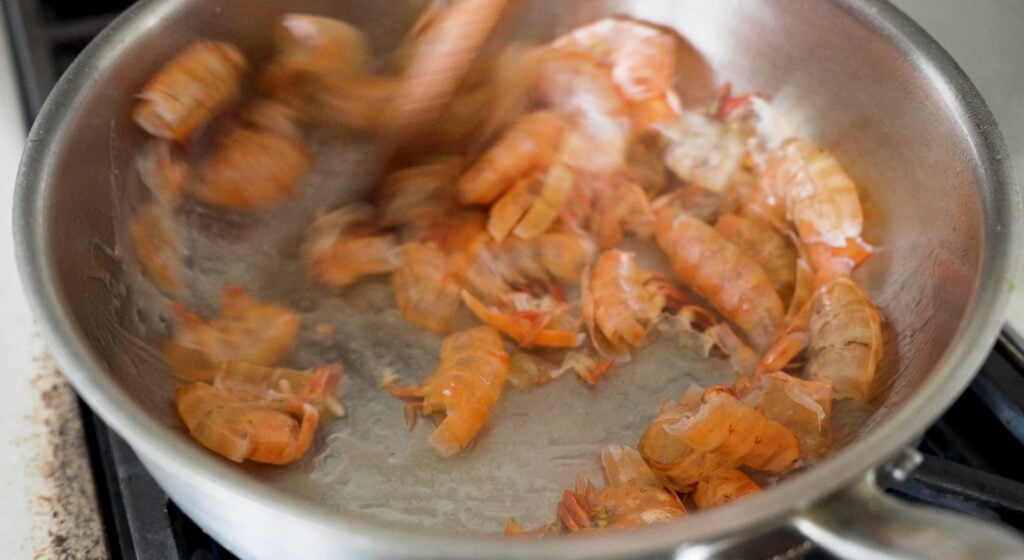
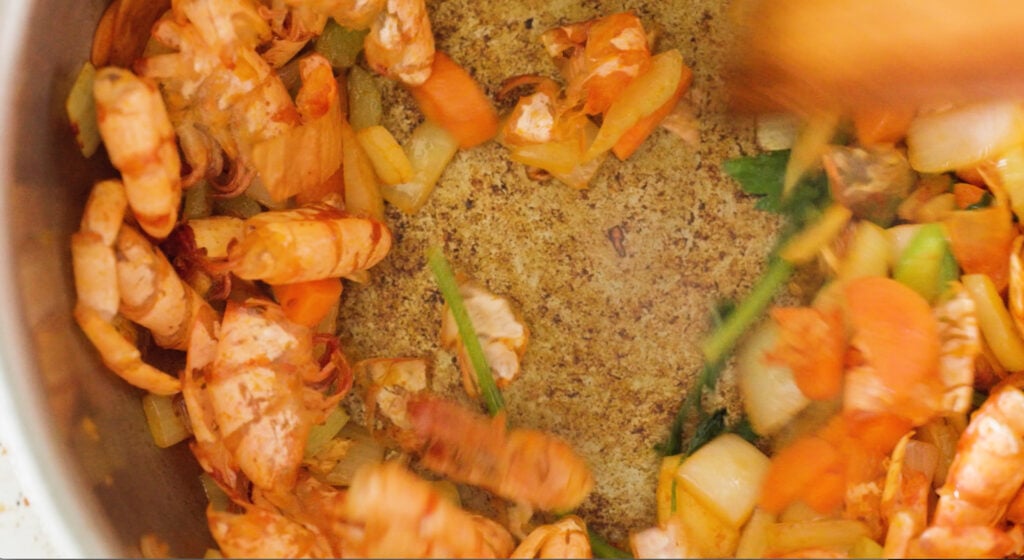
Sauté the shells: First, I sauté the shrimp shells in a large pot until they turn bright pink.
Cook the aromatics: Next, I cook the onion, carrot, celery, garlic, parsley stems, and bay leaf until the vegetables soften.
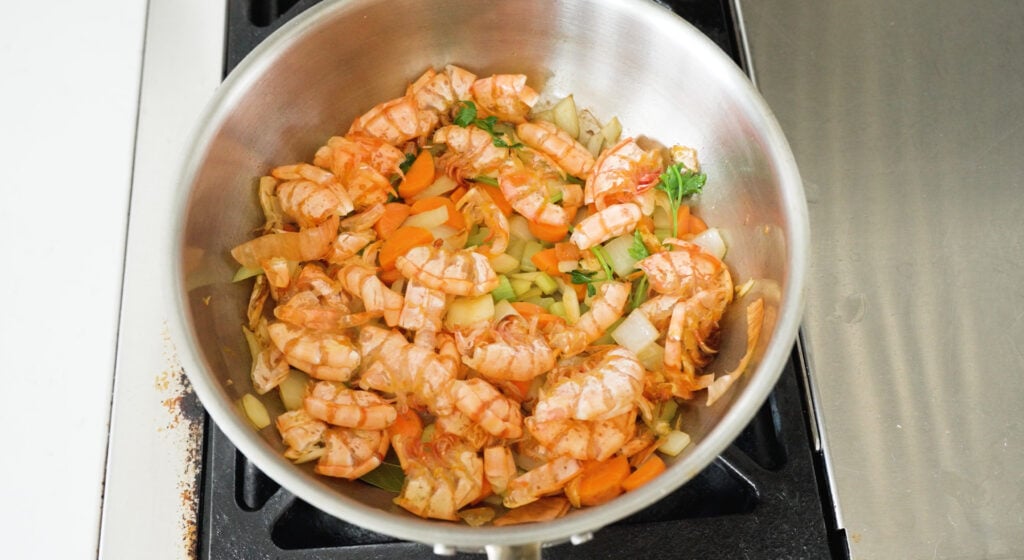
Add tomato paste: I stir in the tomato paste and let it cook until it darkens to a rust-like color.
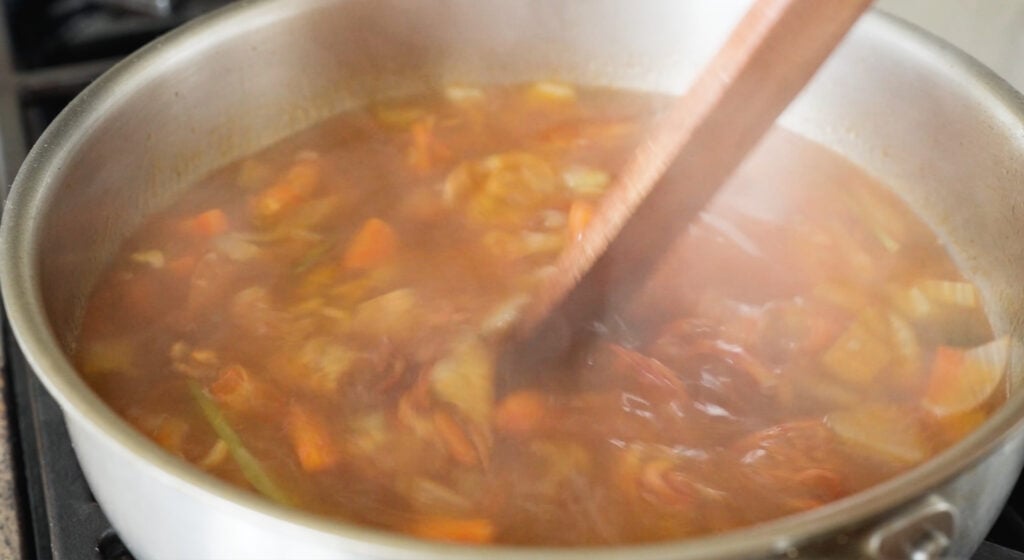
Simmer: I pour in the water, bring everything to a gentle simmer, and let it cook over low to medium heat for about 45 minutes.
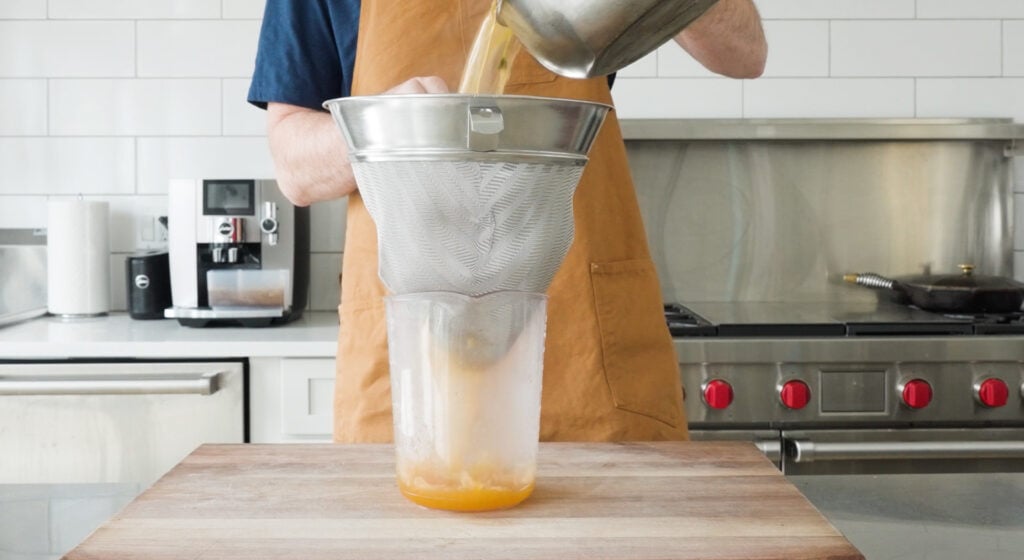
Strain and store: Finally, I strain the stock through a chinois or fine-mesh strainer. From here, I can either use the shrimp stock right away or let it cool completely before storing it in the fridge or freezer.
Slow Cooker Instructions
To make shrimp stock in a slow cooker, layer in the sautéed shrimp shells, aromatics, and tomato paste, then cover with cold water. Cook on Low for 4 to 6 hours, then strain.
Instant Pot Instructions
To make it in the Instant Pot, start by using the sauté function to cook the shrimp shells, aromatics, and tomato paste. Pour in 5 1/2 cups of cold water and cook on high pressure for 20 to 25 minutes. Once it’s done, let the pressure release naturally, then strain the stock.

Chef Tip + Notes
The most important thing I can tell you about making any stock is never to boil it aggressively. High heat can break down proteins too quickly, leading to a cloudy, bitter stock. I always keep the heat low enough so that the liquid just barely bubbles. This gently extracts flavor while keeping the stock clear and clean.
- Save the shells: Anytime I peel shrimp, I toss the shells straight into a freezer bag. Once the bag is full, it’s time to make stock. Frozen shells work just as well as fresh, and there’s no need to thaw them first.
- Skim the surface: As the stock simmers, a light foam may rise to the top. I skim it off with a spoon to prevent the stock from looking murky.
- Salty stock: My quick fix for salty stock is to dilute it with a little more water.
- Don’t over-simmer: I usually cap the simmer time at about 45 minutes, or 60 minutes max. More time doesn’t mean more flavor here. In fact, over-simmering stock can actually make it taste bitter.
- Make seafood stock: Even more seafood scraps are welcome here. When I have leftover fish bones, fish heads, lobster shells, and crab shells, I’ll toss them right in the stock for extra oceany flavor.
- Add flavor: Feel free to customize the flavor of your shrimp stock by adding mild vegetables like fennel, leeks, or scallion whites; soft herbs such as thyme stems, dill stems, or cilantro stems; or aromatics like peppercorns, coriander seed, or a strip of lemon peel.
Serving Suggestions
That seriously good flavor in shrimp stock makes it the perfect base for endless recipes. It’s a staple in my tom yum soup and all kinds of seafood soups, like cioppino, seafood bisque, clam chowder, and more.
There are usually extras leftover in my fridge, which I love using to make shrimp risotto and seafood paella. It’s an easy way to infuse the grains with a subtle seafood flavor.
After searing shrimp, I sometimes use a splash of shrimp stock to deglaze the pan to make a quick pan sauce. It’s great for drizzling over simple but flavorful dinners, like my garlic shrimp pasta.
Make-Ahead and Storage
Make-Ahead: Once the shrimp stock is finished cooking, cool it quickly to prevent bacterial growth. I usually place the pot in an ice bath or portion the stock into small deli containers to speed up cooling.
How to Store: Once cooled, store the stock in sealed containers in the fridge for 3 to 4 days. I also like freezing small portions in ice cube trays. Once frozen, I transfer the stock cubes to a labeled freezer bag so I can easily grab the exact amount I need without thawing the entire batch.
How to Reheat: Add as much stock (or frozen stock cubes) as you need to a saucepan and gently warm over low to medium heat until hot.
More Shrimp Recipes

Shrimp Stock Recipe
Ingredients
- 3 tablespoons neutral flavored cooking oil
- 3 cups shrimp shells
- ¼ peeled yellow onion, roughly chopped
- 1 thinly sliced carrot
- 1 thinly sliced rib of celery
- 1 smashed garlic clove
- 5 parsley stems
- 1 bay leaf
- 2 teaspoons tomato paste
- 6 cups cold water
Instructions
- In a medium to large pot, add the oil and cook the shells over medium heat until they turn bright pink. This will take about 3 to 4 minutes, stirring frequently.
- Next, add in the onion, carrot, celery, garlic, parsley, and bay leaf, and saute for 4 to 5 minutes, until lightly browned.
- Stir in the tomato paste and cook for 2 to 3 minutes or until it becomes a rust-like color.
- Add in the water and simmer over low to medium heat for 45 minutes.
- Drain through a chinois or a fine-mesh strainer. Use or store.
Shrimp Stock Recipe