

Quick Shatta Sauce Recipe (Spicy Middle Eastern Sauce)
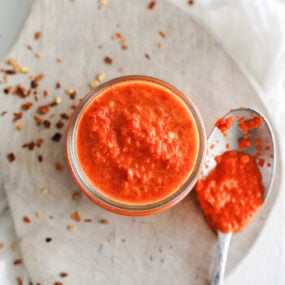
This Quick Shatta Sauce packs the same fiery, tangy punch as the traditional fermented version, just without the 3-day wait. It’s loaded with the bold Middle Eastern chili flavors I crave and ready in only 10 minutes.
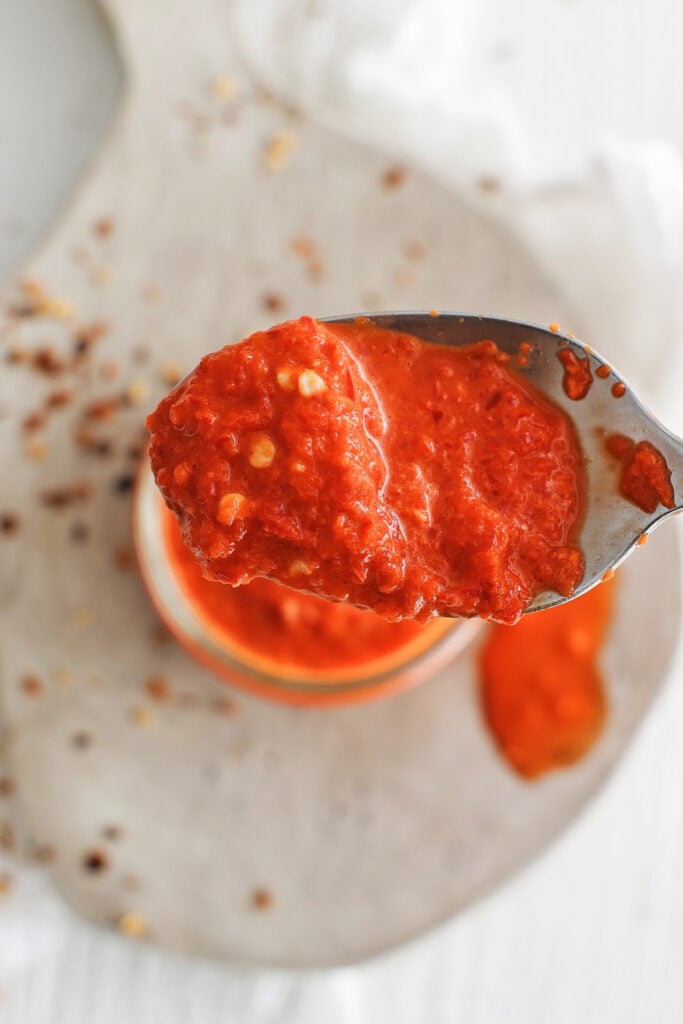
I live for rich, well-rounded sauces like citrusy South African Peri Peri Sauce and smoky Spanish Salsa Bravas. Still, there’s something about the bright, punchy heat in Middle Eastern shatta sauce that makes it the holy grail of pepper-based condiments. Fortunately, my version is significantly quicker than classic recipes, and honestly, I like it even more.
Spicy Middle Eastern Shatta Sauce
Shatta is a spicy Middle Eastern sauce that makes fiery chili peppers the star. With Levantine and North African roots, it’s traditionally made by fermenting crushed chili peppers in salt for up to 3 days to soften their intensity and develop deep, funky flavors.
Few condiments excite me more than shatta, but I don’t always want to wait 3 days before drizzling it over my Egyptian-inspired Koshari Recipe. That’s why I developed this quick recipe that skips the long fermentation and uses vinegar and lemon juice to create the same fresh-fermented flavor.
And the fun part? You can switch up the color, making this hot sauce red or green, depending on the chili peppers you pick. No matter what, the sauce always brings fiery heat and a punchy brightness that immediately wakes up my taste buds.
Ingredients and Substitutions
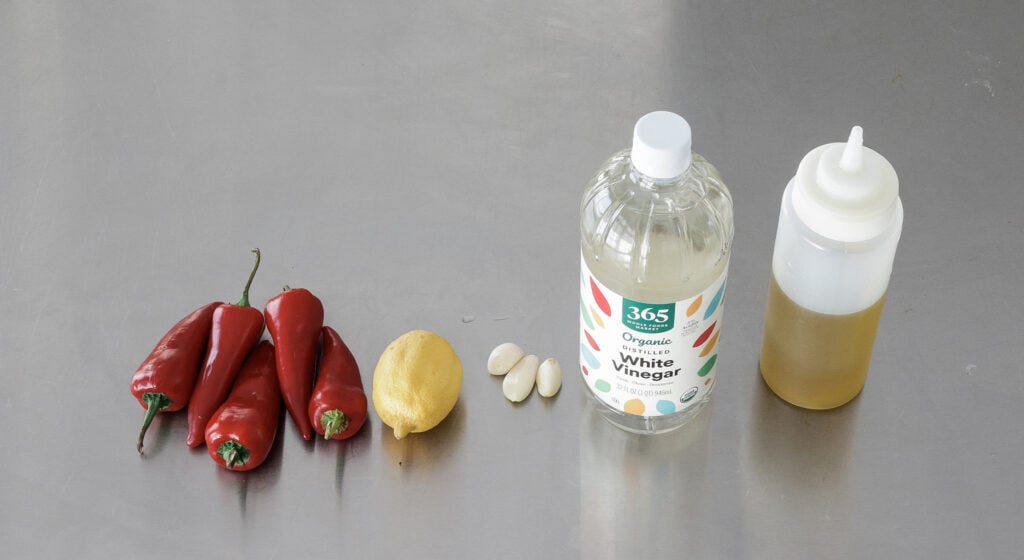
Even though my shatta sauce has only 6 ingredients, the flavors are out of this world.
- Chili Peppers – I choose the peppers based on how much heat I want and the color I’d like the sauce to be. For green shatta with lots of heat and grassy flavors, I use jalapeños. For red shatta with extra spice and a fruitier profile, I use red jalapeños or red Fresnos. And when I’m looking for some serious heat, I’ll use bird’s eye chilis.
- Garlic, Fresh, peeled garlic cloves are non-negotiable.
- Sea Salt helps break down the peppers and preserve the sauce. Kosher salt also works well.
- Freshly Squeezed Lemon Juice adds some bright acidity. Lime juice should work as a substitute, but it will make the sauce sharper and zestier.
- Oil – A high-quality olive oil or avocado oil is my preferred oil for this sauce.
- Vinegar is the secret to my quick shatta sauce. It perfectly mimics the tang of a traditional 3-day fermentation.
How to Make Spicy Shatta Sauce
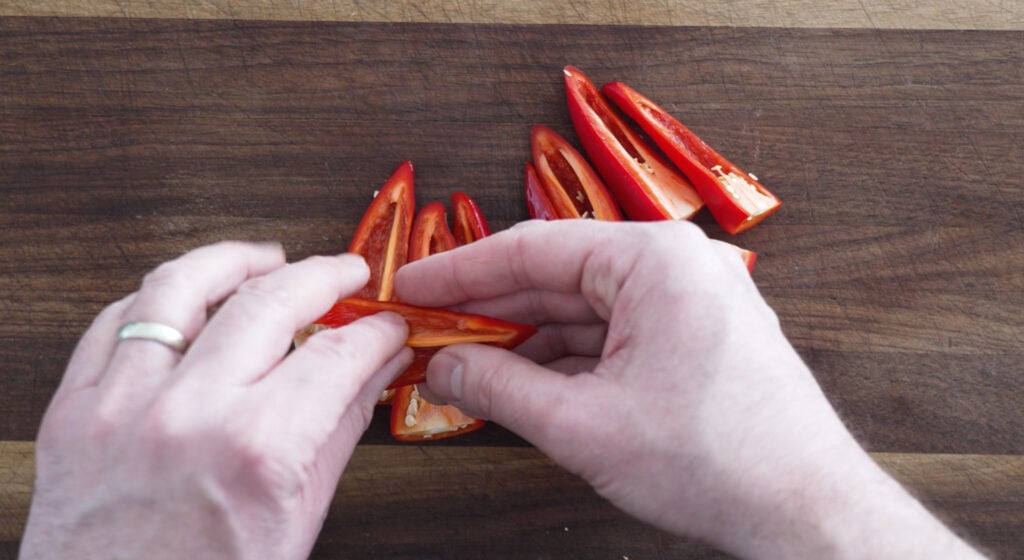
Prep the peppers: First, remove the stems from the chili peppers and scrape out the pith and seeds with a spoon.
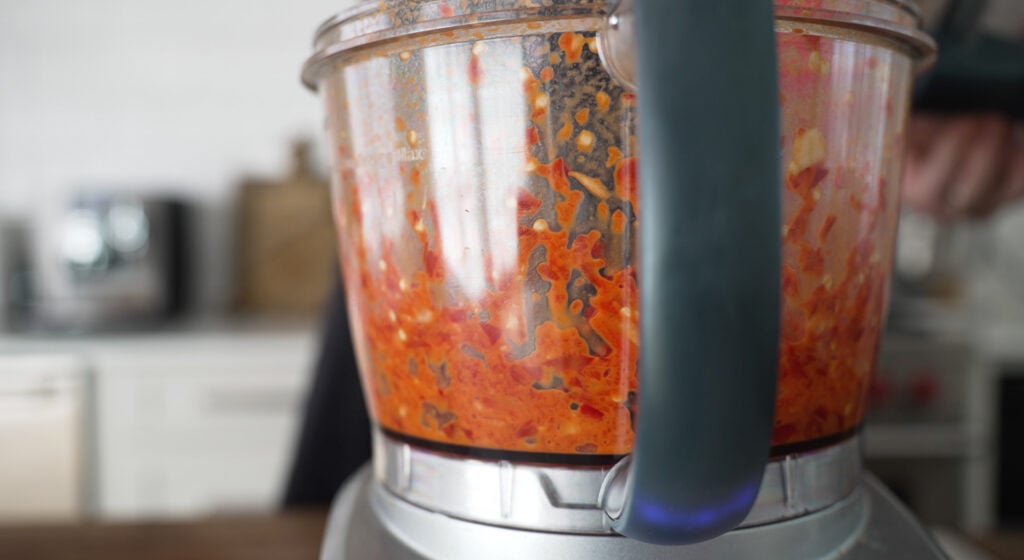
Emulsify the sauce: Transfer the peppers to a food processor, along with the garlic, salt, lemon juice, and olive oil. Process on high until the mixture is like a paste and slightly runny. To finish, blend in the vinegar.
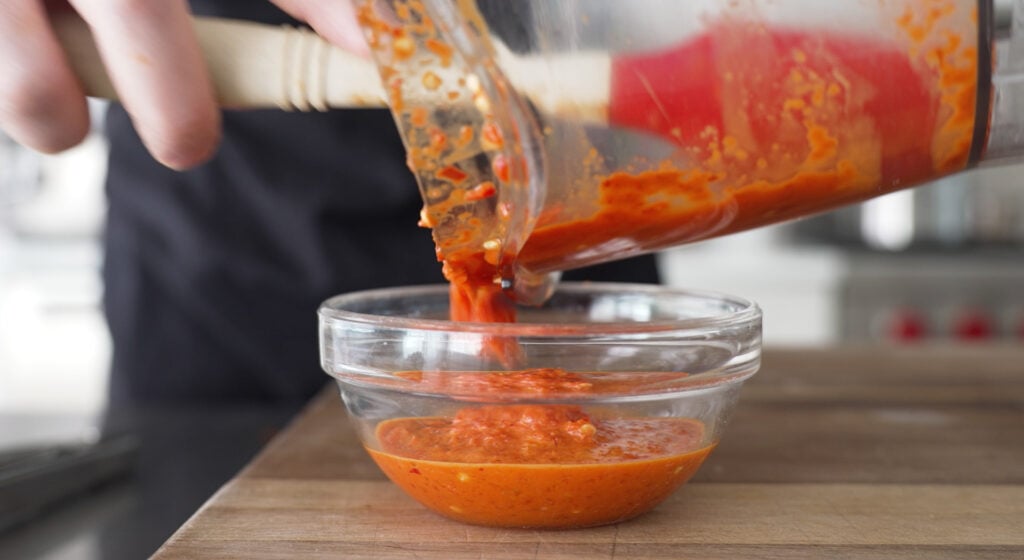
Serve: Now can either use the sauce right away or refrigerate it for later.

Chef Tip + Notes
I highly recommend wearing gloves when making this sauce. Those peppers are seriously hot, and admittedly, I’ve accidentally touched my face after handling them with my bare hands (the burning was not fun).
- Control the heat: The heat in this sauce comes from the peppers’ membranes and seeds. For an extra-spicy sauce, I’ll leave the membrane and seeds intact; for a medium sauce, I’ll remove them.
- Soupy consistency: Overprocessing the sauce can make it soupy. To thicken it, blend in another one or two peppers.
- Mortar and pestle: I like using my food processor when I want to serve this sauce ASAP, but when I have time, I prefer a mortar and pestle. This old-school method bruises the peppers, creating a more rustic texture and aromatic flavor.
- Add herbs and spices: This is a versatile sauce, so go ahead and add fresh herbs (parsley, mint, or cilantro), lemon zest, chopped tomatoes, or toasted whole spices (cumin or caraway seeds) to change up the flavors.
Serving Suggestions
I use shatta almost anywhere I’d use hot sauce. Since it’s a classic Middle Eastern sauce, I’ll swirl it into a bowl of homemade hummus or baba ganoush.
I also like to whisk it into salad dressings to give simple salads and grilled vegetables an unexpected hit of tangy heat. It’s fantastic stirred into creamy, garlicky sauces, like Lebanese toum, and served as a dipping sauce with crispy Middle Eastern meat dishes, like beef kofta kebabs.
Make-Ahead and Storage
Make-Ahead: When I don’t need the sauce right away, I’ll make it one day in advance and chill it in the fridge overnight to let the flavors deepen.
How to Store: Keep the sauce covered in the fridge for up to 1 week. You can also freeze it for up to 3 months.
More Green Sauce Recipes

Quick Shatta Sauce Recipe (Spicy Middle Eastern Sauce)
Ingredients
- 4 ounces Fresno or jalapeño peppers, about 5 to 6
- 1 garlic clove
- ½ teaspoon salt
- juice of ½ lemon, about 1 to 1 ½ tablespoons
- 3 tablespoons olive oil
- 2 teaspoons distilled white vinegar
Instructions
- Remove the stems of the peppers. Next, depending on how much spice you prefer, remove all, some, or none of the pith and seeds.
- Transfer the peppers to a food processor along with the garlic, salt, lemon juice, and olive oil.
- Process at high speed until it becomes a slightly runny paste. You may need to stop and scrape the bowl a few times.
- Finish by processing in the vinegar.
- Serve or store in an airtight container in the refrigerator for up to 7 days.
If I wanted to make a fairly less spicy version (my wife doesn’t like spicy!!) could I mix in some Bell or other sweet peppers to give it the ‘feel’ without the heat?
I think you could, but it’ll still have some heat on it.