Prime Rib Recipe

- By Chef Billy Parisi
- Published
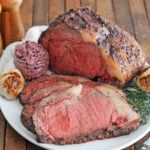
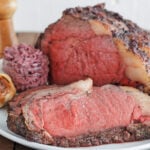
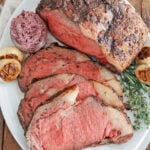
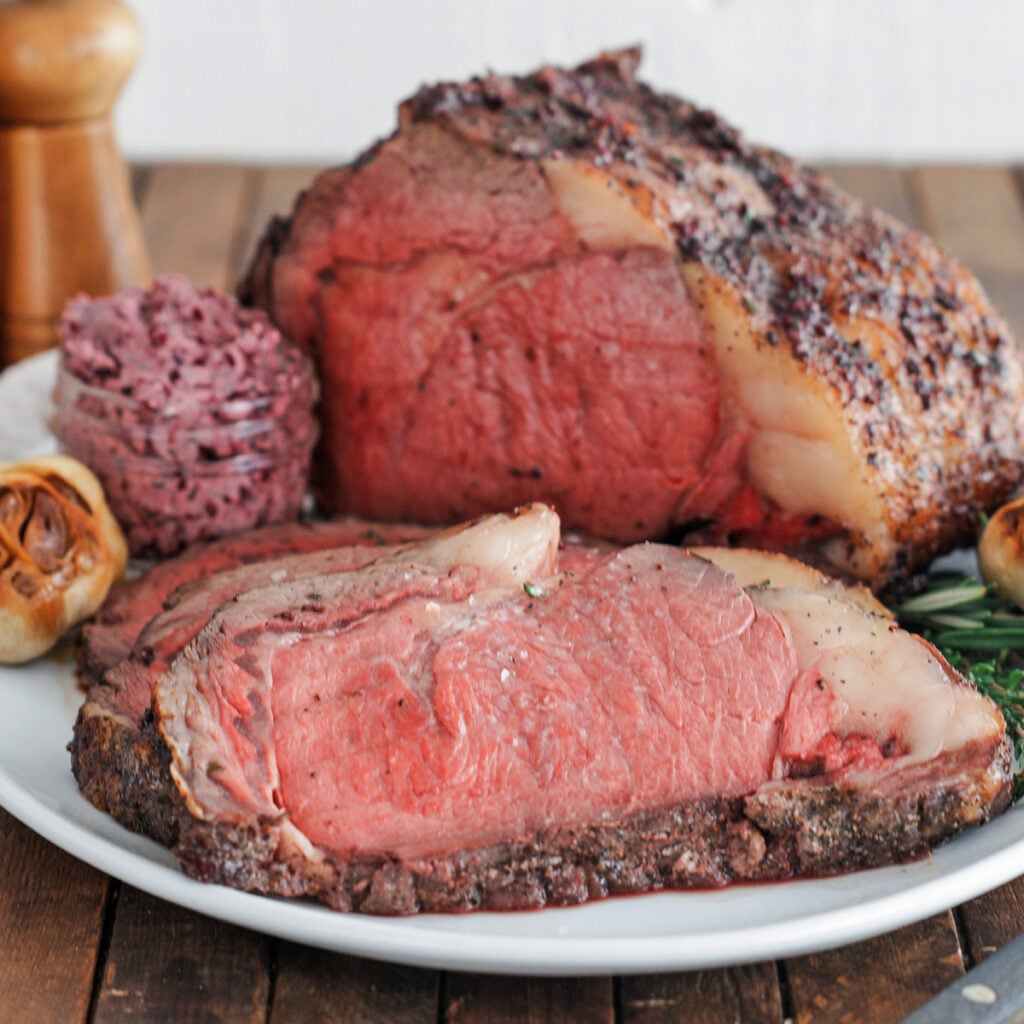
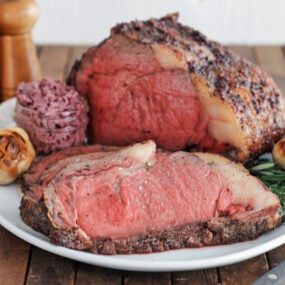
My boneless prime rib recipe uses a large 8-pound cut, seasoned well and reverse-seared until tender and juicy. There are many ways to cook prime rib, and I believe my method is as foolproof as you can get. And just wait until you get a taste of the red wine butter at the end.
I used to work at a Country Club in St. Louis, and we would do prime rib night every Sunday during the fall and winter months. We cooked anywhere from 8 to 10 prime ribs, each weighing 12 to 14 pounds. That’s where I learned the importance of trussing and seasoning beef.
While I believe this recipe can stand on its own, it’s definitely traditional to serve it with a side of homemade au jus for deeper beef flavors, or creamy horseradish to cut the richness of the prime rib.
What is Prime Rib?
Prime rib comes from the beef rib primal cut, usually between bones 6 and 12. I’ve often heard it called the Cadillac of steaks or the king of steaks because of its luxurious reputation, and once you try my recipe. I think you’ll agree. The name prime simply means the cut here, not the USDA grade. A lot of the prime rib you’ll find at the store is actually choice. It’s a fairly expensive cut of beef, and I’ve seen it go for as little as $14 a pound for choice and as much as $35 a pound for dry-aged. In the end, the cooking technique matters far more to the result than buying the most expensive cut. My recipe is boneless, but if you want the bone for looks or beefier flavors, then try my bone-in standing rib roast.
The Secret to Edge-to-Edge Pink
Plan ahead and give yourself time to prepare this. Because of the beef’s size, I recommend at least a 6-hour pre-seasoning dry brine. This lets the salt penetrate deep into the beef, so every bite is well seasoned. Plus, during the reverse-sear method the beef slowly cooks at low temperatures to help keep it tender and juicy, then is seared for a short amount of time for that beautiful Maillard crust for flavor. It gives you 100% control of the internal temperature, so things aren’t overcooked. It’s tried and true, as I’ve legit used this process hundreds of times.
Another crucial element is letting it rest after the slow roast and before the sear. This lets all the juices rush back through the roast while cooling the surface, giving you that coveted end-to-end pink in the center.
Ingredients and Substitutions
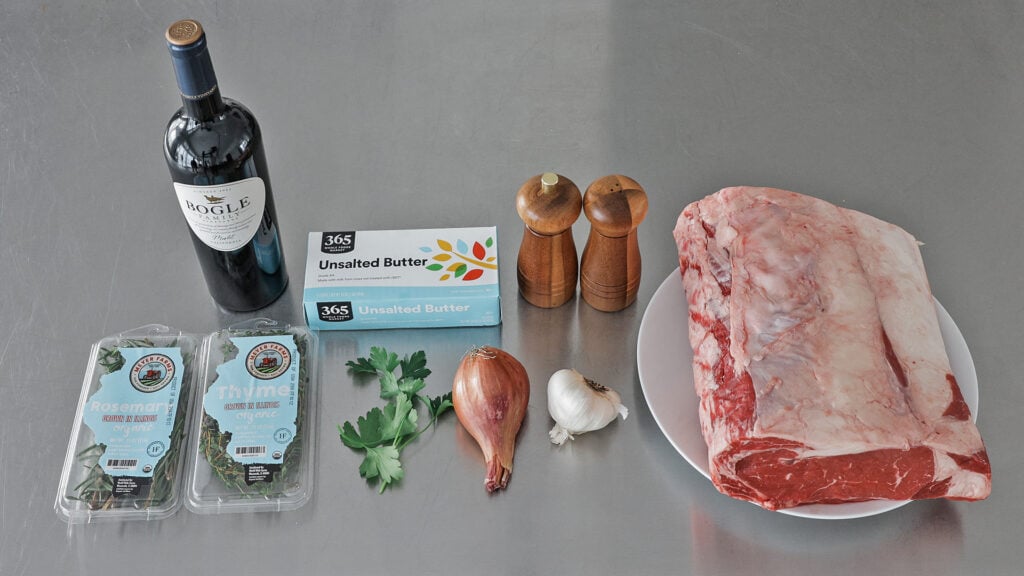
- Prime Rib – I used choice-grade beef for this recipe because it seems to be the most reasonable option from a price perspective. It has decent intramuscular (marbling) and intermuscular fat for flavor. I’ve found great prices on USDA prime at Costco and Sam’s. You can also choose by how it was fed, like grass-fed and finished or grain-fed.
- Butter – I almost exclusively use unsalted butter so I can control the sodium content. It’s important that it be at room temperature so that it whips appropriately.
- Wine – Any lower-tannin red wine like a Merlot, Pinot Noir, or a Sangiovese. The more tannic the wine, the more bitter it can become as it reduces. My personal opinion, and what I was always taught in culinary school, is to cook with what you would also drink. If alcohol isn’t an option, I recommend using my herb and garlic compound butter.
- Herbs – I like to use the combo of fresh rosemary, thyme, and parsley. They give the roast complementary bright and savory flavors. If you only want to use 1 or 2, I’d go with thyme first and rosemary second.
- Garlic – This is probably my favorite addition to any cut of beef. Always fresh cloves, never jarred garlic.
- Shallot – I personally like a bit of onion flavor to add more umami to the butter and beef. Substitute with sweet or red onions.
- Salt and pepper – These are two of the most important ingredients to the prime rib. You need to season this well. If using diamond crystal kosher salt, use 1 ¼ to 1 ½ teaspoons per pound. When using Morton kosher salt, use 1 teaspoon per pound. Also, don’t shy away from the pepper. Beef loves pepper, and I recommend between ¼ to ½ teaspoon per pound.
How to Cook Prime Rib in the Oven
The First Cook (Low and Slow)
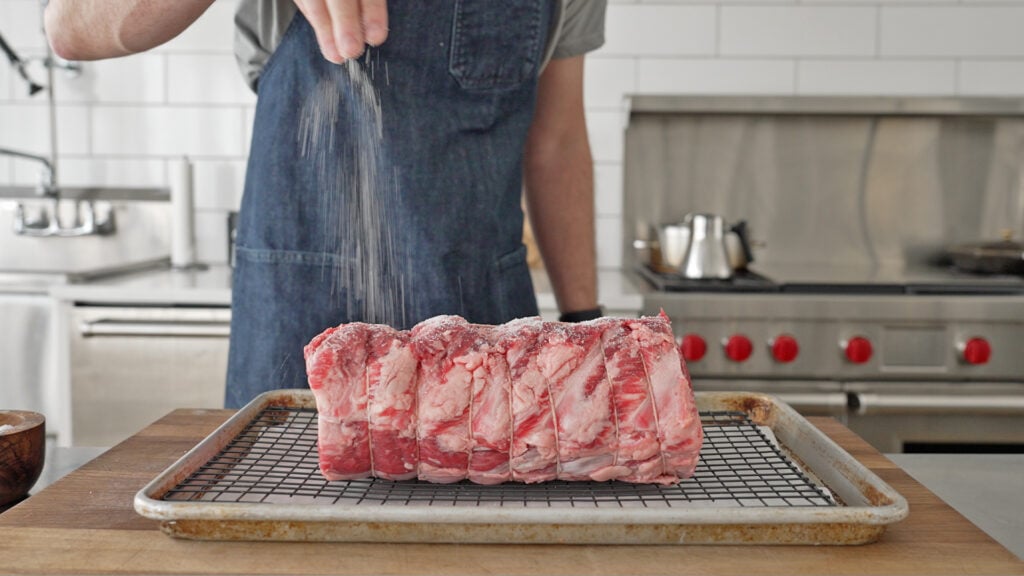
Truss and Season: I start by trussing the beef to help it hold its shape and cook more evenly. Check out my tutorial for how to truss beef. Then pat it dry on all sides with paper towels. Remember, moisture is always the enemy of a good sear. From here, I season it with salt on all sides and place it over a rack on a sheet tray. Every square centimeter should be seasoned. It’s going in the fridge uncovered for 6 to 48 hours.
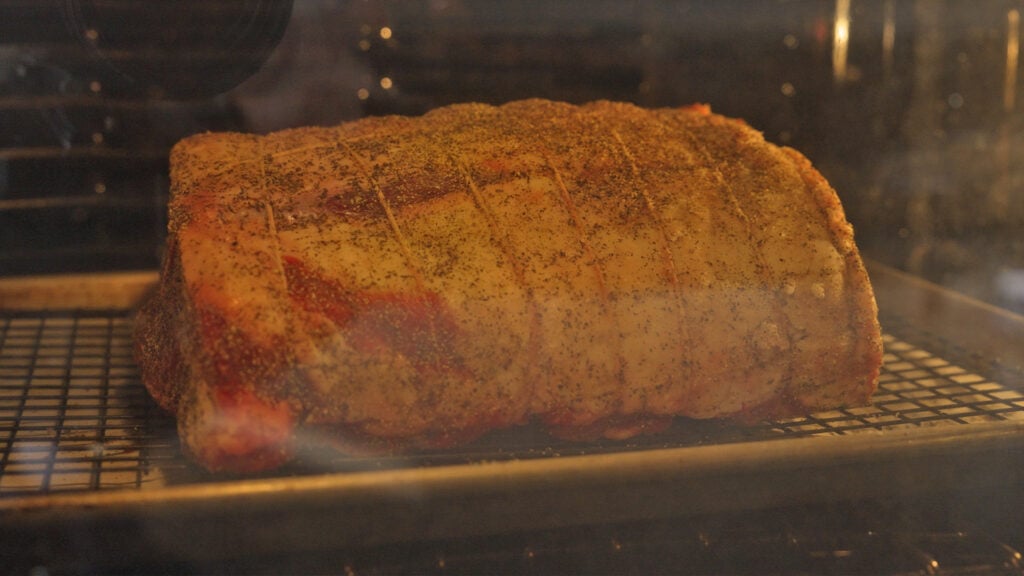
Slow Roast: When it comes time to cook, remove it from the fridge. You’ll notice a sticky, shiny film on the outside. This is known as pellicle, and it will help the roast get a deep brown crust. Season it with pepper, add a thermometer for foolproof guidance, and slowly cook in the oven until it reaches your desired internal temperature (almost finished).
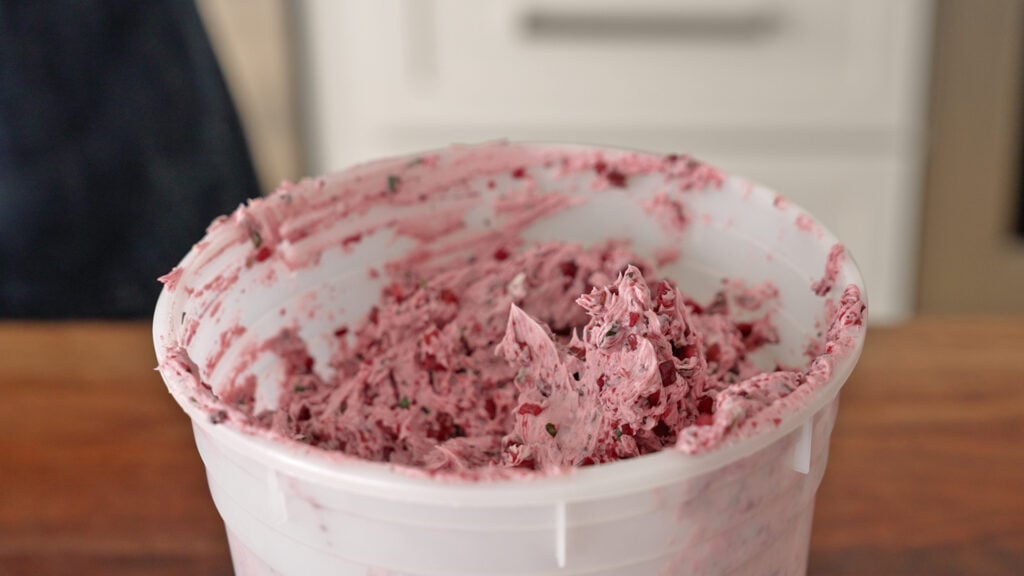
Make the Butter: While this is going on, I make the red wine garlic and herb butter. Reduce the wine to concentrate the flavor, then fully incorporate it into the whipped, softened butter with caramelized shallots and garlic. The butter will be almost burgundy. I usually just set it to the side at room temperature until I need it.
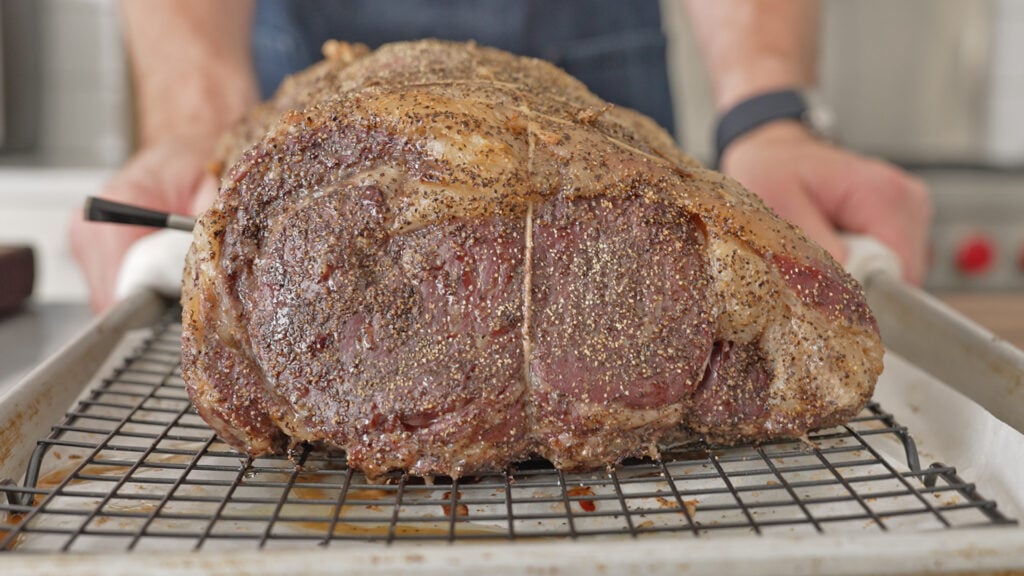
Rest: Once the prime rib is almost at your desired temperature, remove it and rest it for 35-40 minutes. It will look dried out at first, but that’s normal. You’ll notice the internal temp may rise 3 to 4 degrees during the rest, which is what we want. If you slice into your prime rib and you notice a thick gray band between the crust and the center, that means you didn’t rest it long enough. Be sure to give the full 35-40 minute rest, but it can go up to 1 hour.
The Second Cook (The Sear)
Preheat and Roast: While it rests, I boost the oven heat. I then roast it at high heat until it browns and forms a Maillard crust. The roast will have a deep brown crust on it when it’s done. If you cook it too long, it will be overly dark, charred, and go past your target temperature of 128° F for medium-rare. You can absolutely pull this off.
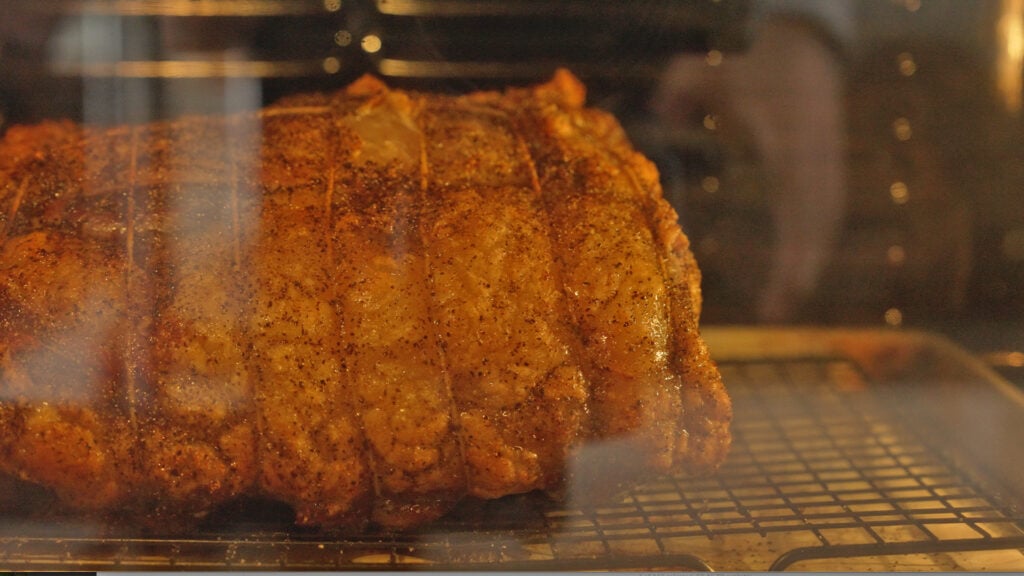
Butter it: With about 5 minutes left in the high-heat roasting process, I add a few tablespoons of the herb butter, so it crusts onto the beef for more flavor.
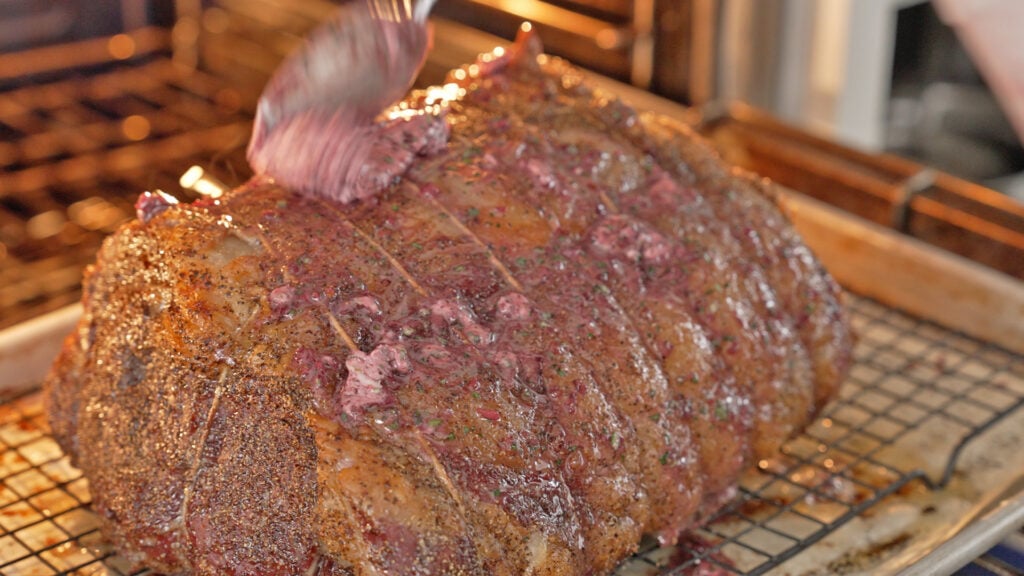
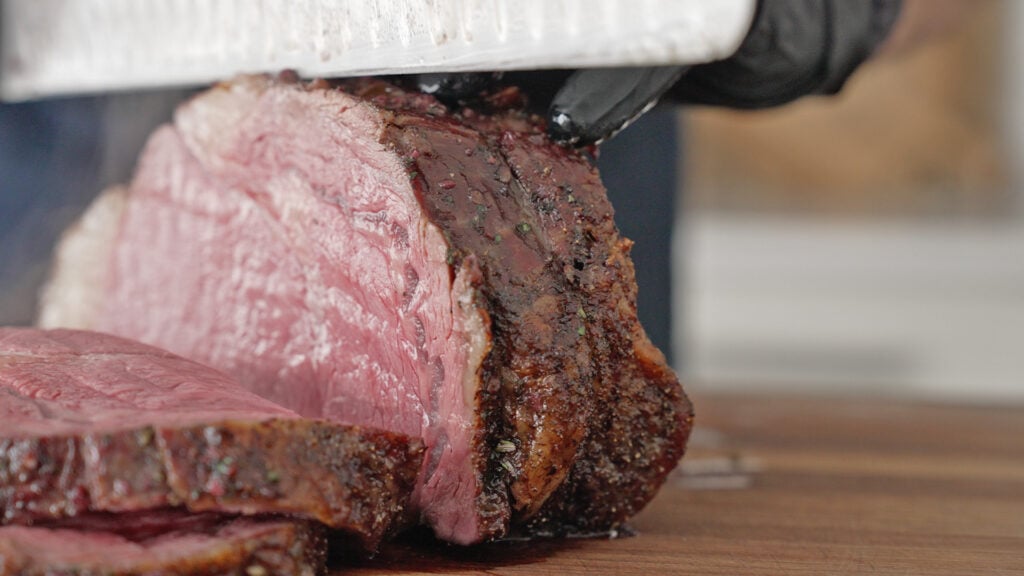
Slice it: No need to rest it further, so when it’s done, I add more herb butter, remove the twine, slice the beef about 1 to 1 ½ inches thick, and serve.
Chef Tips + Notes
Seasoning: I usually mop any salt or pepper that didn’t make it on the initial seasoning onto the sides of the beef, just to use it all up. Keeps me from needing to add extra.
Dry Brining: I always recommend it, but you can go straight to seasoning with salt and pepper and into the oven. If you skip this, it may not be as well seasoned or have the ability to get as dark of a crust as mine.
Thermometer: This is key to success, so the beef cooks to your desired doneness. I really like the Meater Pro thermometer as I’ve had great success with it.
Temperature: For medium-rare, it’s important that you pull the roast between 118° and 120° F, which is 5-7 degrees below the final 125° to 128° F and will account for carryover cooking. The surface cools enough that when you roast at 500° F, it barely impacts the internal temperature, and it does so, usually by 2 or 3 degrees.
Butter: You’ll likely have some extra butter leftover, which you can serve alongside the roast or freeze in an airtight container and use in things like pasta, on vegetables, pork, fish, chicken, or steak. It will last up to 6 months in the freezer.
Serving Suggestions
I’m going to give you the exact items we had on our prime rib Sunday supper menu that complemented and enhanced the experience. It all starts with a Caesar salad, then Yorkshire pudding (which I personally made every week), plus a simple side of scalloped potatoes and butter-glazed green beans.
As a side note, if you happen to have leftover prime rib, then I highly recommend making my French dip recipe. You won’t regret it. Of course, if you’re making this for the holidays, check out my Christmas recipes section to plan out your entire day.
More Main Dishes
- Garlic Herb Beef Tenderloin
- Smoked Prime Rib
- Braised Beef Short Ribs
- Braised Lamb Shanks
- Easy Glazed Ham
Prime Rib Recipe
Email this recipe!
Enter your email and I’ll send it to you, plus new recipes and tips each week.
Ingredients
For the Prime Rib:
- 8- to-9-pound boneless prime rib
- Salt, if using Diamond Crystal kosher 1 1/4 teaspoons per pound, or 1 teaspoon per pound with Morton kosher salt
- Pepper, ¼ teaspoon per pound for finely ground or ½ teaspoon per pound if cracked
For the Herb Butter:
- 4 sticks of softened unsalted butter
- 1 bottle of Merlot red wine
- 3 tablespoons finely minced fresh parsley
- 2 tablespoons minced fresh thyme
- 2 tablespoons of minced fresh rosemary
- 2 small-diced medium-sized shallots, about ¾ cup
- 8 to 10 finely minced garlic cloves
- salt and pepper to taste
Instructions
For the Beef:
- Truss the beef using butcher’s twine to help it keep its shape. Then pat the roast dry on all sides with a paper towel. Generously season it with salt on all sides. Transfer it to a rack over a sheet tray and place it uncovered in the fridge for 6 to 48 hours.
- When you’re ready to cook it, remove it from the fridge and season it on all sides with pepper. Place a thermometer into the thickest part of the roast in the center. Preheat the oven to 250° F.
- Add the roast to the middle rack and cook until it reaches 118° – 120° F internally, which takes about 3 ½ to 4 hours. Once it reaches that temperature, remove it from the oven and rest it at room temperature, uncovered, for 35 to 40 minutes, or up to 1 hour if things start to run late.
- In the meantime, turn the heat up to 500° F. After resting, place the roast back in the oven on a middle rack and roast at 500° F for 18 to 20 minutes. Make sure the internal temperature does not exceed 128° for medium-rare.
- With about 5 minutes left in the roasting process, I add 3 to 4 tablespoons of the herb butter to the top to help those flavors develop.
- When the roast is done, remove it from the oven, add several more tablespoons of the butter to the top and sides. Remove the twine, slice it 1 to 1 ½ inches thick, and serve.
For the Butter:
- While the roast is slow cooking, add the wine to a medium-sized pot and reduce it over medium heat until only 6 to 8 tablespoons remain. It will look syrupy and will loosely coat the back of a spoon. Chill it completely.
- Next, add 2 tablespoons butter to a large sauté pan and, over medium heat, add the shallots and a gentle seasoning of salt; sauté for 5 minutes, or until the edges start to brown. Turn the heat to low and cook for 10 minutes, stirring occasionally, or until caramelized. Stir in the garlic and cook for 30 seconds. Completely cool this mixture.
- Add the remaining softened butter to a stand mixer with the paddle attachment and whip the butter on medium to high speed for 5 minutes or until light and fluffy.
- Pour in the chopped rosemary, thyme, parsley, and cooled shallots and garlic. Once incorporated, turn the speed to slow and slowly pour in the chilled reduced red wine.
- Season the butter with salt and pepper. Stop and scrape it, then mix everything together for a few seconds over low to medium speed. Add the butter to an airtight container and store it or use it.
Notes
Nutrition
 Like this recipe? Rate & comment below!



Get the Latest Recipes
Join Chef Billy’s newsletter for the latest scratch-made recipes, cooking tips, and techniques.