
Pan Seared Halibut with Lemon Dill Butter

- Published
- 50 comments

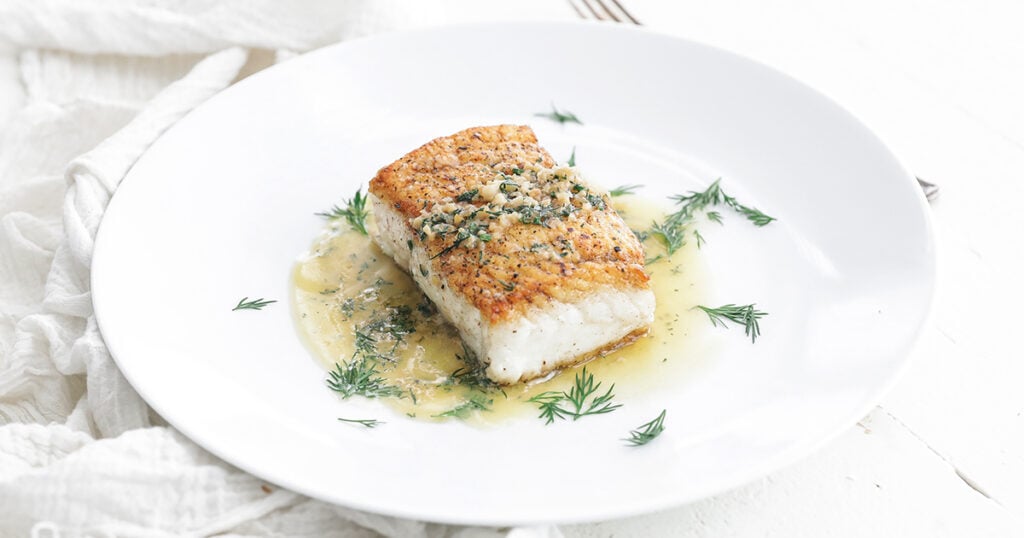
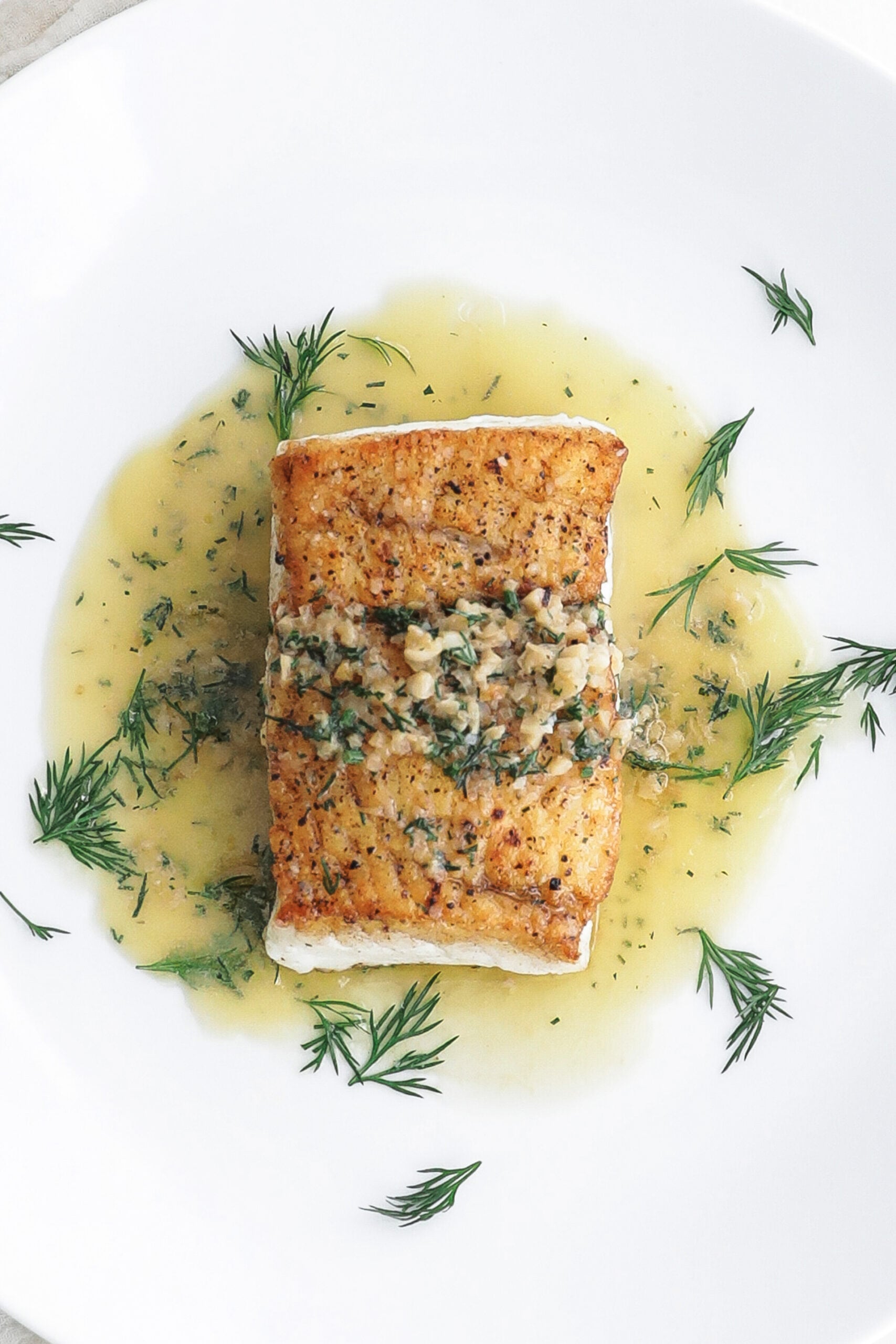
This pan seared halibut is golden brown on the outside, flaky and tender inside, and finished with a lemon dill butter sauce made right in the same pan. It is ready in just 20 minutes and tastes like a meal from a fine dining restaurant.
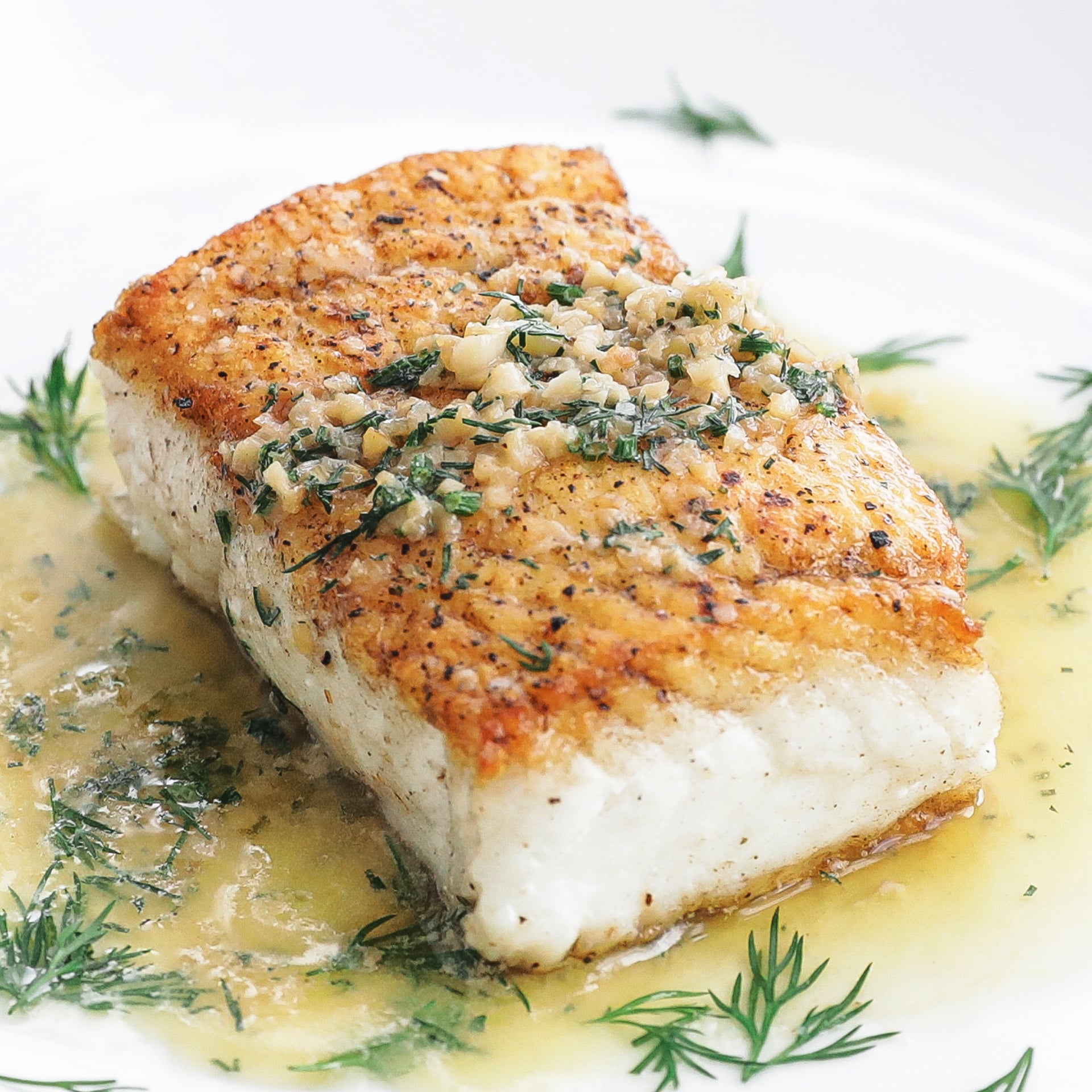
Halibut is one of my all time favorite fish. I used to serve it as a special every other week at a restaurant I worked years ago, and it would sell out every single time. That is how much people love this fish. If you want to try halibut prepared differently, my halibut with chimichurri sauce is a fresh, herby take, and my halibut with honey soy glaze with ginger and sesame is just amazing.
Halibut
Halibut is a cold water flatfish found primarily in the North Pacific and North Atlantic. It is the largest of the flatfish family, with some specimens weighing over 400 pounds, though market size fillets are typically cut from fish between 10 and 50 pounds. The word halibut comes from the Middle English “haly” (holy) and “butte” (flatfish) because it was traditionally eaten on holy days.
The technique for pan searing halibut is the same one I have used in professional kitchens for 15 years. I season the fillets simply with sat and pepper, get a pan ripping hot with oil until it just begins to smoke, lay the fish in, and immediately turn the heat down. I add butter to help brown the surface and release the fish from the pan. Three to three and a half minutes per side gives you a perfectly golden crust with a flaky moist center.
Once the halibut is done, I build the sauce in the same pan using shallots, garlic, white wine, cold butter, fresh dill, and lemon juice. The sauce comes together in minutes, which is why all of your mise en place has to be ready before you start cooking. If you stop to chop something, the sauce is ruined. Now, let me show you how to make a delicious dinner ready in just 20 minutes.
Ingredients and Substitutions
This recipe is built on technique, not a long ingredient list. Every ingredient plays a specific role in either the sear or the sauce.
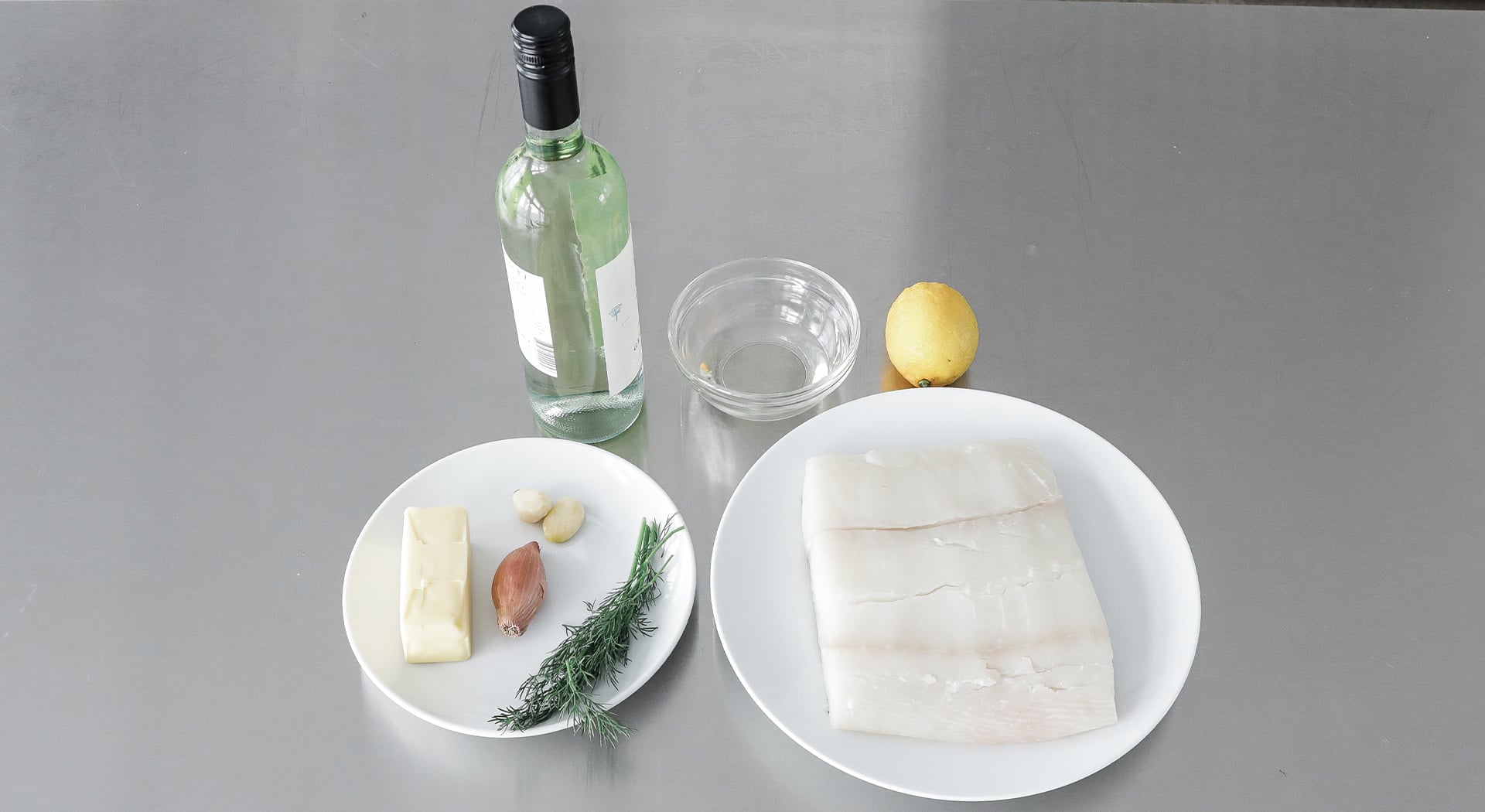
- Halibut – I use fresh, skinless halibut fillets. The skin is inedible and very rubbery, so I always remove it before cooking. If you can get halibut on sale for less than $25 a pound, absolutely pull the trigger. Frozen halibut works if it is completely thawed and patted dry. You can substitute cod, sea bass, or mahi mahi, but halibut has a firmer texture that holds up better to the high heat sear.
- Oil – Any neutral flavored oil with a high smoke point works. I use avocado oil or vegetable oil.
- Butter – I use unsalted butter in two stages. A teaspoon goes in the pan with the fish to help brown it and release it from the surface. The rest goes into the sauce at the end as cold butter, which is what creates the emulsified lemon dill butter.
- Shallots – I small dice half a shallot. Shallots are milder and sweeter than onion, which is why they are the standard in French pan sauces.
- Garlic – One clove, finely minced.
- White Wine – I use chardonnay, pinot grigio, or sauvignon blanc. The wine deglazes the pan and picks up all the browned bits from searing the halibut. Any drinking white wine works.
- Fresh Dill – Dill goes with fish like peanut butter and jelly. I use a tablespoon, finely minced. Dried dill works too at half the amount, but fresh is better.
- Lemon – The juice of half a lemon adds acid and brightness to the butter sauce.
- Salt and Pepper – I season the fish on both sides before searing and season the sauce again at the end.
How to Make Pan Seared Halibut
Prep your mise en place: I dice the shallot, mince the garlic, chop the dill, and squeeze the lemon before I turn on the stove. This sauce moves fast and there is no time to prep once cooking starts.
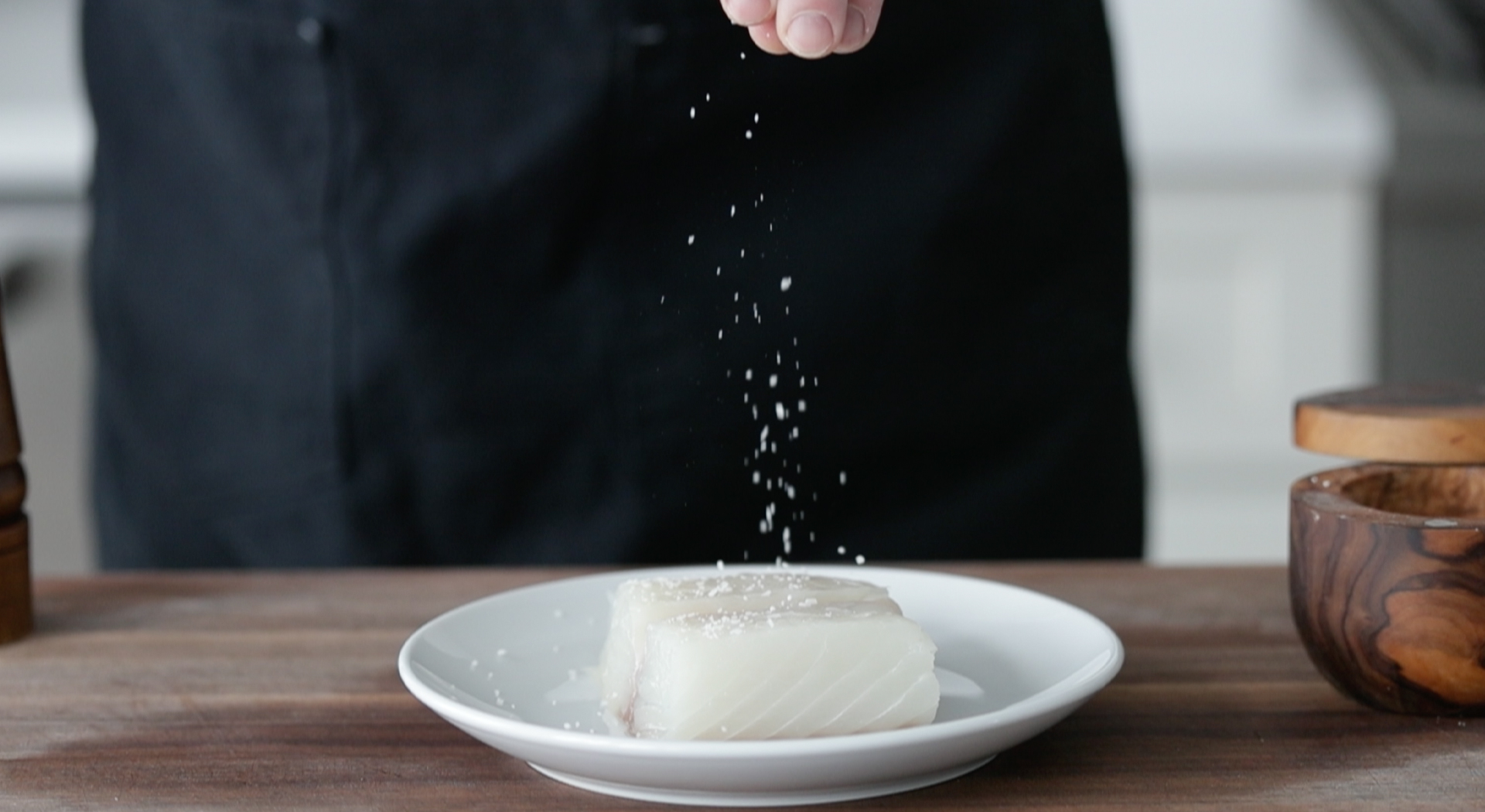
Season the halibut: I pat the fillets dry with paper towels and season both sides generously with salt and pepper.
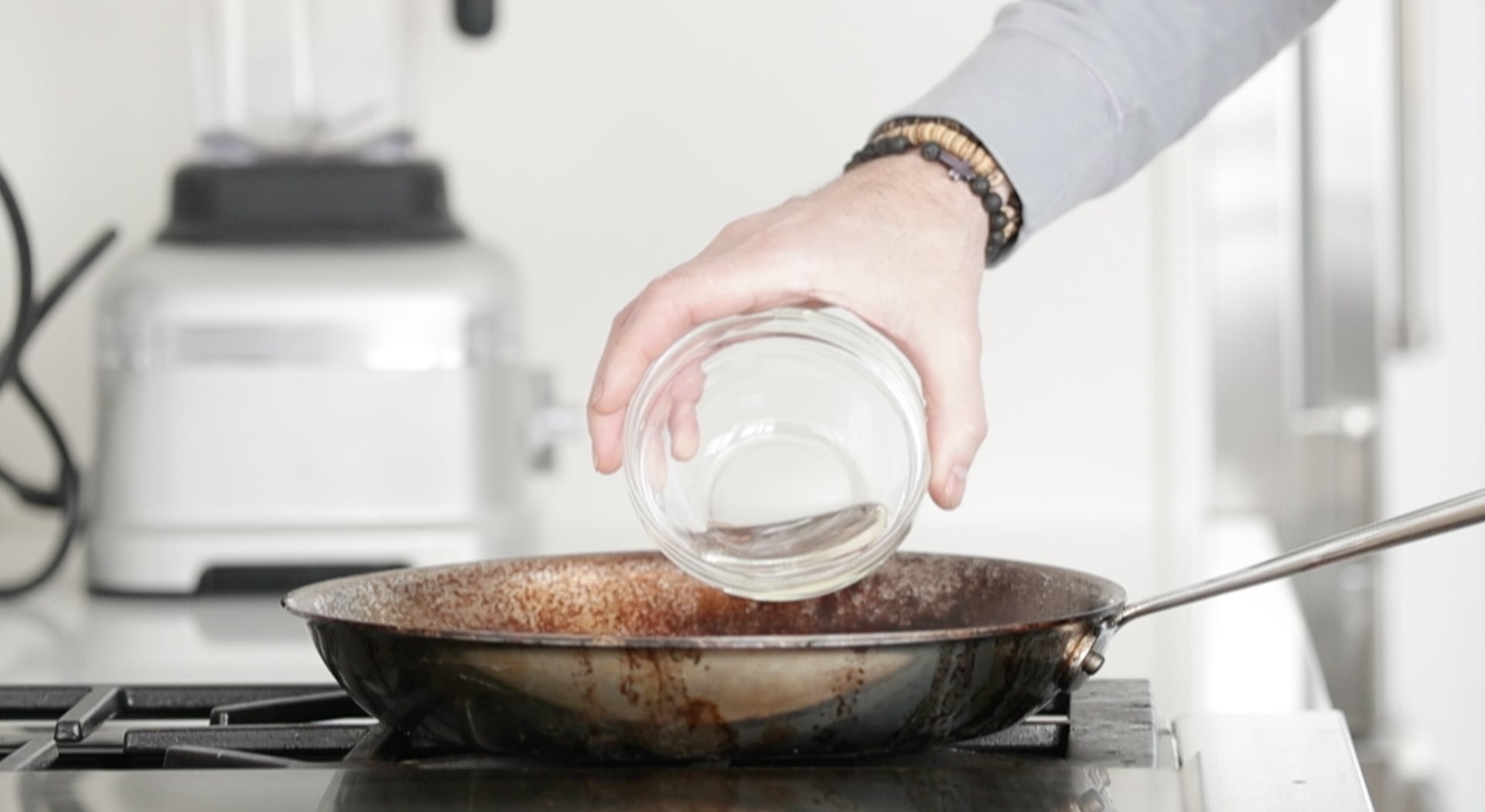
Heat the pan: I add oil to a large frying pan and heat over high heat until it just begins to lightly smoke.
Sear the halibut: I place the fillets in the pan and immediately turn the heat down to medium-high. I add a teaspoon of butter, which helps brown the surface and adds flavor. I cook for 3 to 3 1/2 minutes on the first side without moving the fish, making sure every part of the surface makes contact with the pan for an even golden crust.
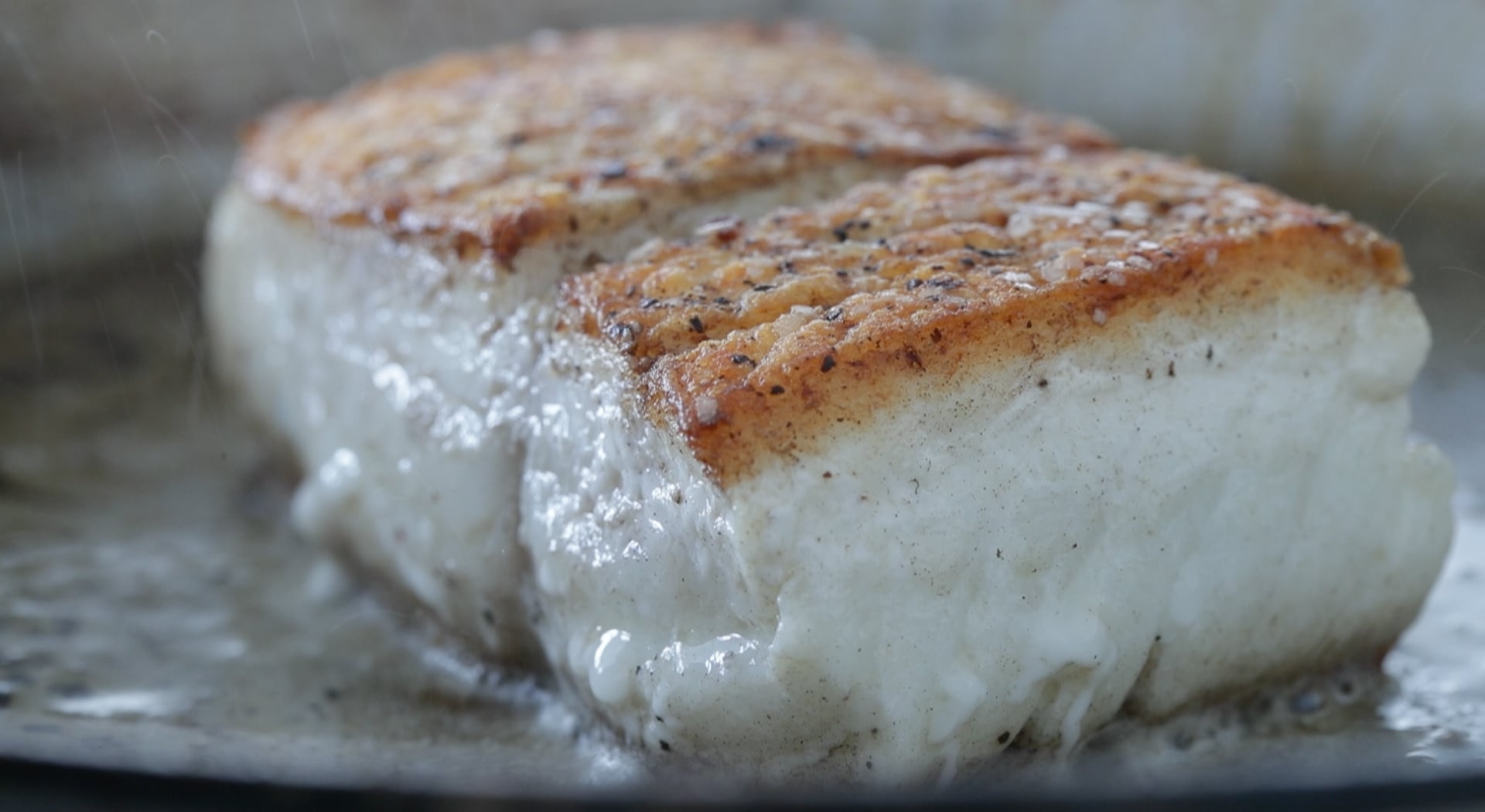
Flip and finish: I flip the fillets and cook for another three and a half minutes until golden brown on the second side and cooked through. The fish should be opaque and flaky throughout. I remove the halibut and set it aside on a plate.
Build the sauce base: I pour out most of the oil from the pan, add a tablespoon of butter, and return the pan to medium heat. I add the diced shallots and minced garlic and cook for about 30 seconds to 1 minute until they just start to soften.
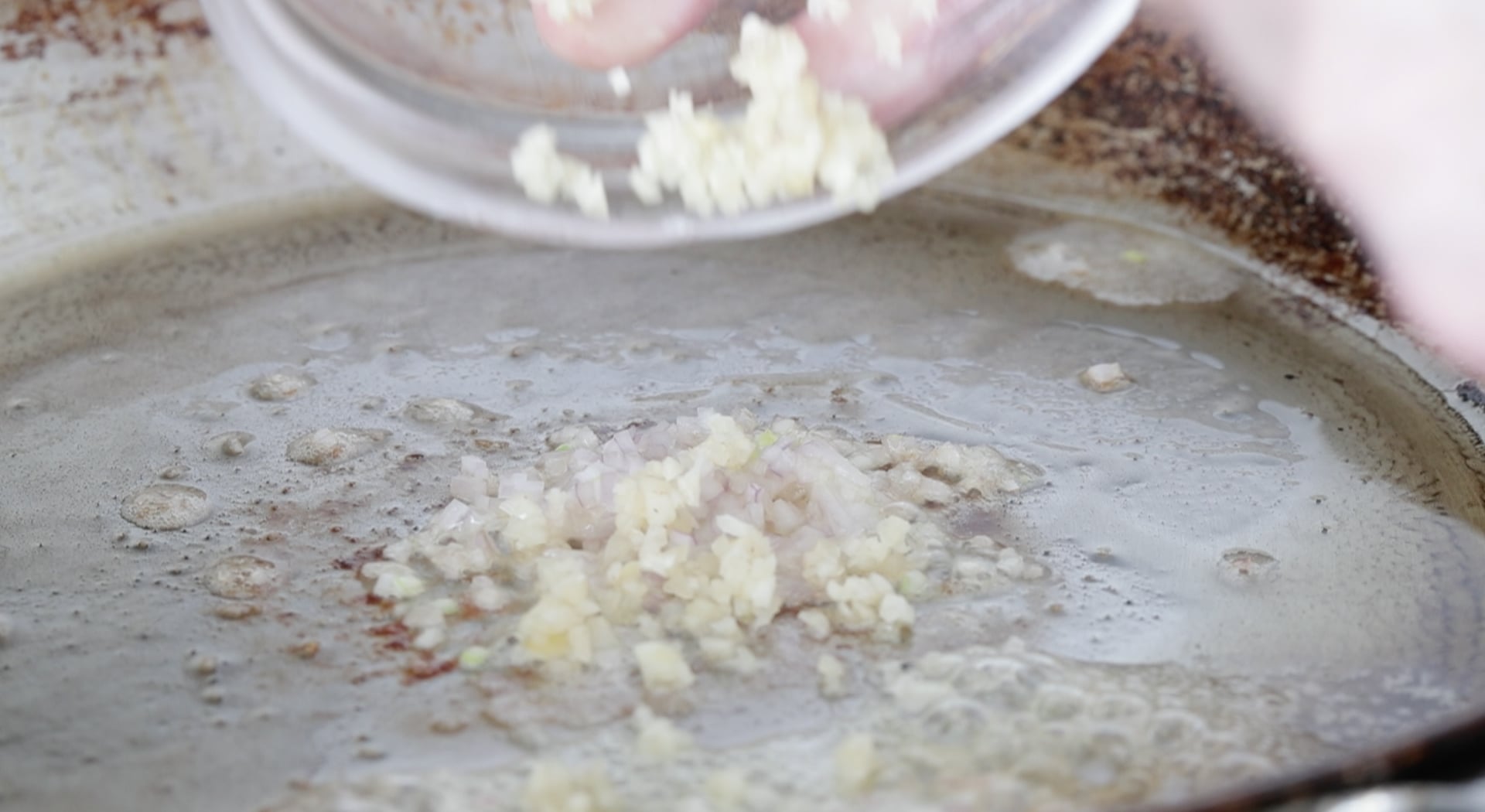
Deglaze with wine: I pour in the white wine and scrape up all the browned bits from the bottom of the pan. I cook until the wine reduces down to about 1 to 2 tablespoons of liquid.
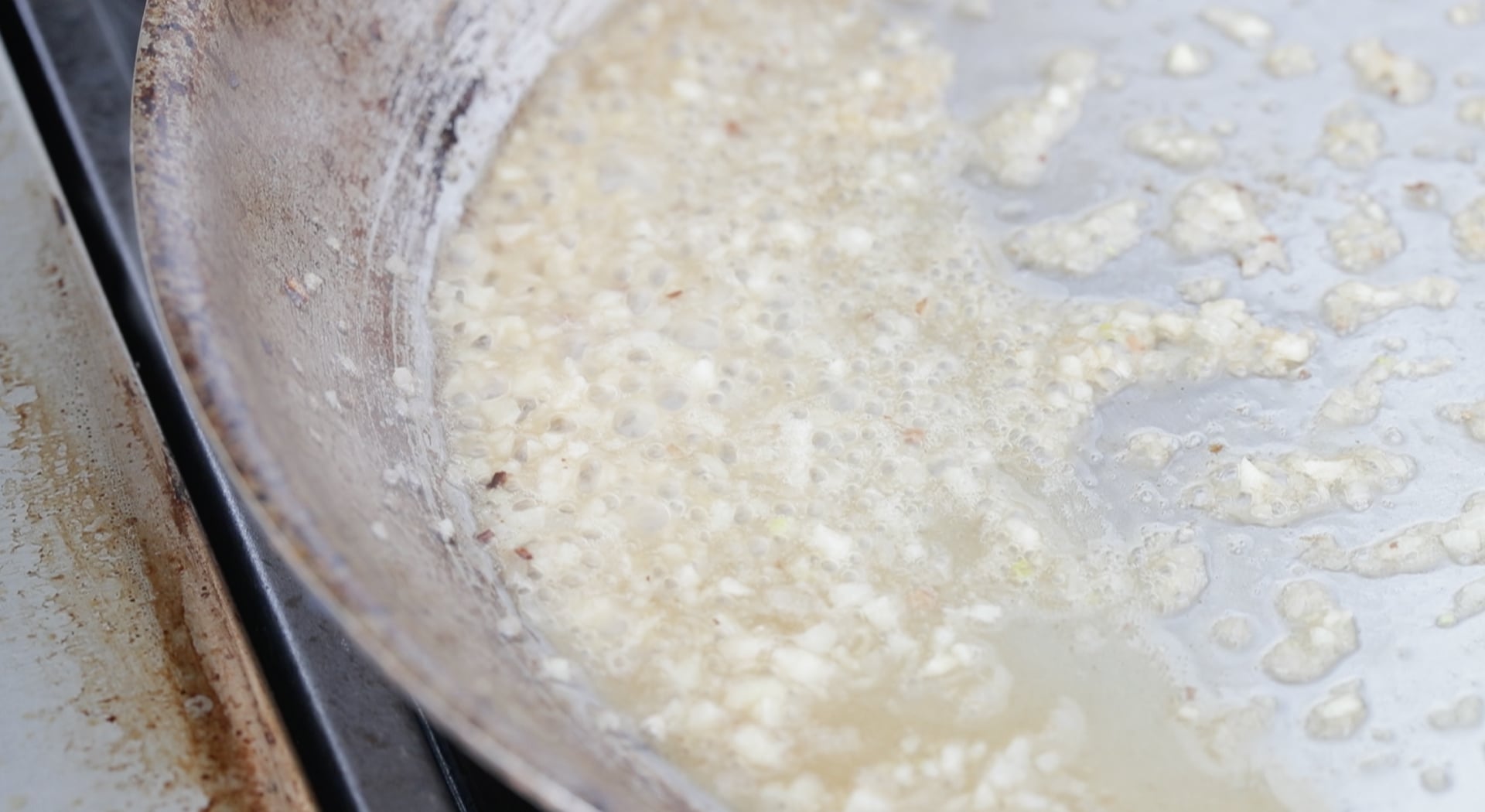
Finish the butter sauce: I turn the heat completely off and let the pan sit for 1 to 2 minutes to cool slightly. Then I add the cold butter and swirl the pan, stirring with tongs or a whisk until the butter melts into a smooth, creamy, emulsified sauce.
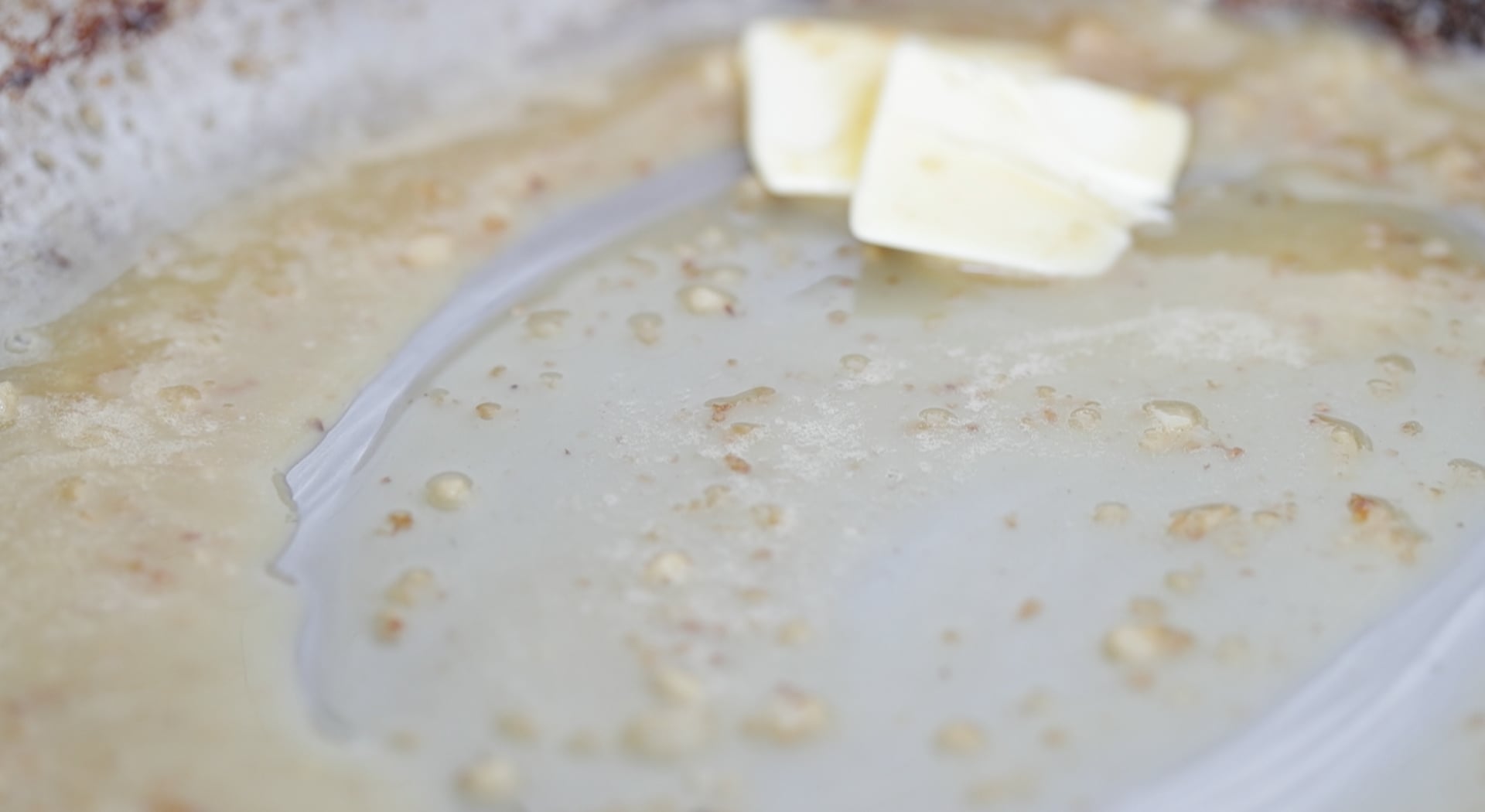
Add the dill and lemon: I stir in the fresh dill and lemon juice, then season with salt and pepper. I give it one more swirl to combine.
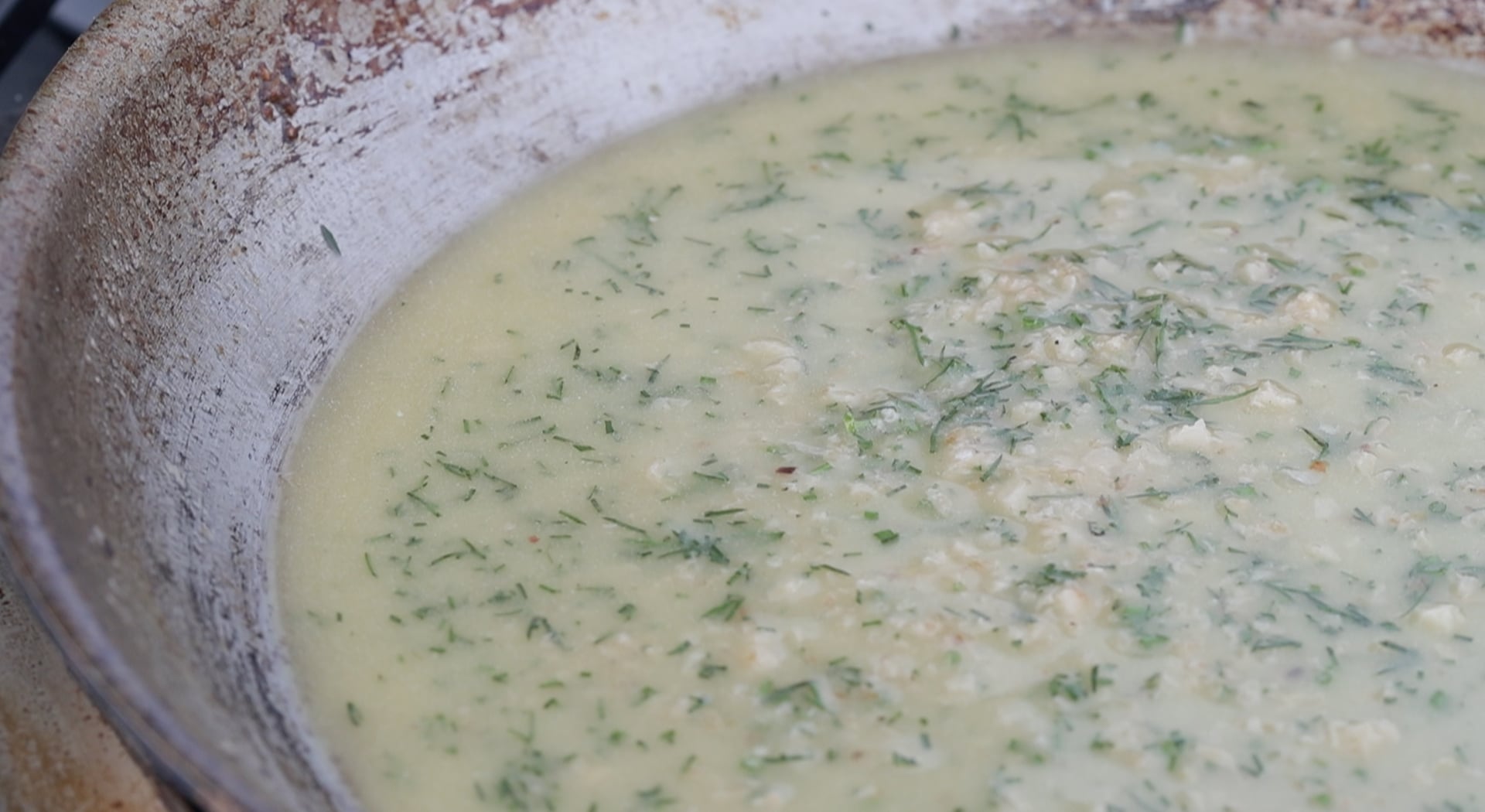
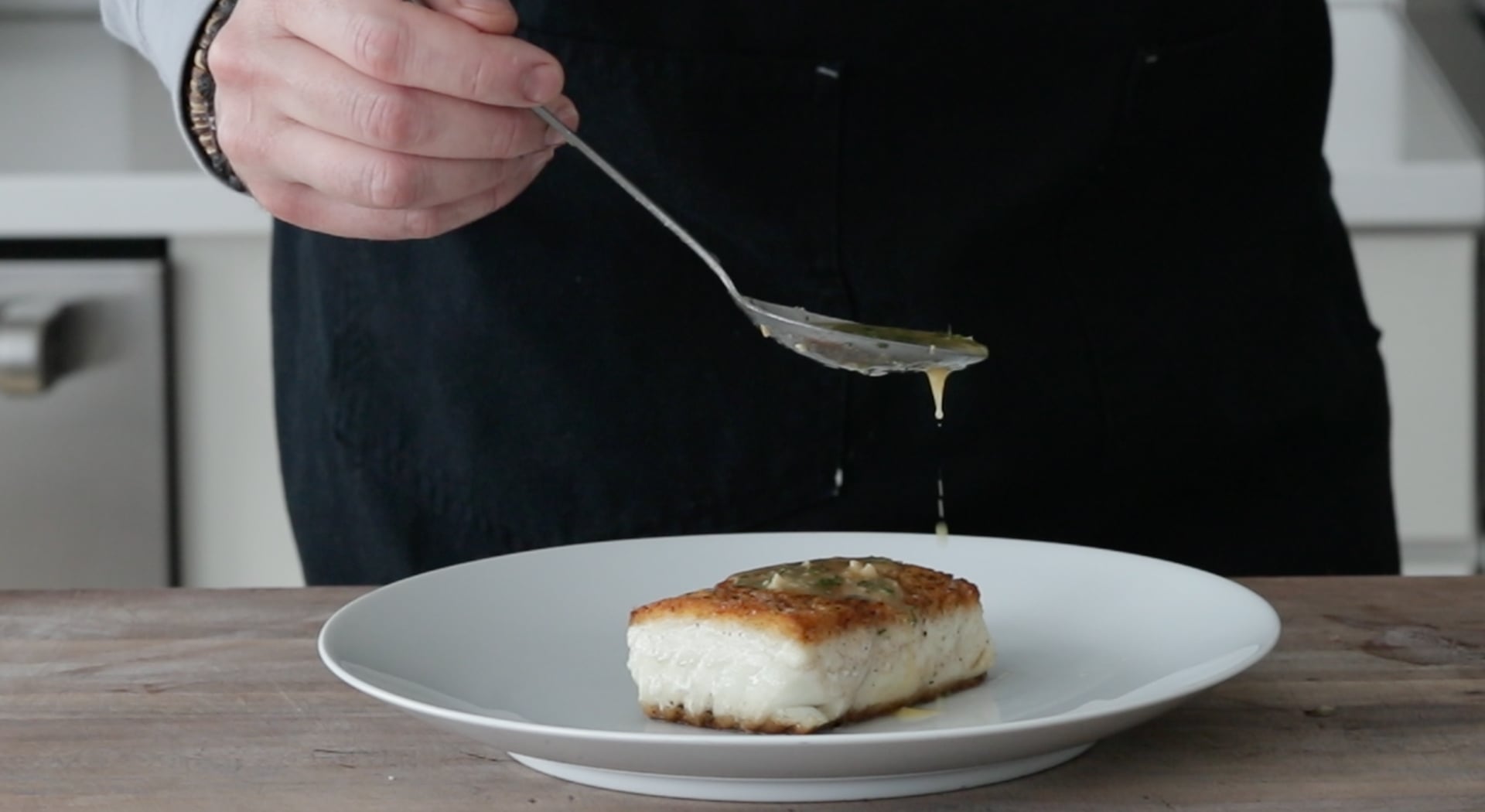
Plate and serve: I place the halibut on plates and spoon the lemon dill butter sauce directly over the top. I garnish with extra dill and lemon slices.

chef tip + notes
I learned this style of butter sauce early in my career, and the one thing that separates a restaurant version from a broken mess on a home stove is temperature control at the end. The pan cannot be screaming hot when you add the cold butter. If it is, the butterfat separates from the milk solids and you get a greasy, thin liquid instead of a smooth creamy sauce.
- If the sauce breaks, do not panic: I whisk in 1 to 2 tablespoons of cold heavy cream and it will usually bring the sauce back together.
- Pat the fish dry: Moisture on the surface of the halibut is the enemy of a good sear. Paper towels pressed firmly against both sides removes excess water and gives you a golden crust.
- Do not move the fish once it is in the pan: Resist the urge to check it or slide it around. Let it sit undisturbed for the full 3 to 3 1/2 minutes so the crust develops. When it is ready to flip, it will release from the pan on its own.
- Use cold butter for the sauce: The cold temperature is what allows the butter to emulsify into the warm wine reduction instead of melting too fast and separating. Room temperature butter will not give you the same result.
- This sauce works on any protein: I have made this same lemon dill butter on salmon, chicken breast, and even pork chops. The technique is identical regardless of what you sear in the pan first.
Serving Suggestions
I like serving the halibut over a bed of perfectly cooked rice with sauteed green beans on the side, and the lemon dill butter sauce pools into the rice in a way that makes you want to scrape the plate clean. For a more composed plate, I set the halibut next to roasted baby potatoes and my glazed carrots, which turns it into a proper restaurant quality dinner at home.
When I want to keep it simple, I plate the halibut on a bed of greens with my lemon vinaigrette drizzled over a simple Italian salad and let the butter sauce handle the fish.
Make-Ahead and Storage
Make-Ahead: This recipe is meant to be eaten immediately after cooking. The halibut and the sauce are both at their best right out of the pan. I can keep it warm, covered loosely in the pan, for up to 15 minutes if dinner is not quite ready, but beyond that the fish starts to overcook from residual heat.
How to Store: I cover and refrigerate leftover halibut with the sauce for up to 3 days. It freezes covered for up to 3 months. I thaw in the refrigerator for 1 day before reheating.
How to Reheat: I place the halibut with sauce in an oven-safe dish and heat at 350°F for 5 to 6 minutes until warmed through. I avoid the microwave because it dries the fish out quickly and can break the butter sauce.
More Fish Recipes

Video
Pan Seared Halibut with Lemon Dill Butter
Ingredients
- 2 8- ounce fresh skinless halibut fillets
- 2 tablespoons oil
- 5 tablespoons + 1 teaspoon unsalted butter
- ½ peeled and small diced shallot
- 1 finely minced garlic clove
- ¼ cup white wine
- 1 tablespoon minced fresh dill
- Juice of ½ lemon
- Salt and pepper to taste
Instructions
- Season the halibut on both sides with salt and pepper.
- Add the oil to a large frying pan and heat over high heat until it begins to lightly smoke.
- Place in the halibut, turn the heat down to medium-high, add in 1 teaspoon of butter and cook for 3 to 3 ½ minutes per side or until golden brown and cooked throughout. Remove the cooked halibut and set aside.
- Remove most of the oil from the pan and add 1 tablespoon of butter to the pan and cook the shallots and garlic over medium heat for 1 to 2 minutes or until very lightly browned.
- Deglaze with the white wine and cook until there are about 1 to 2 tablespoons of liquid left.
- Turn the heat off completely and let sit for 1 to 2 minutes before adding in 4 tablespoons of cold butter and mixing until the butter is melted, but not broken. See note on helping to re-emulsify the sauce.
- Stir in the dill, lemon juice, salt, and pepper, and mix until combined.
- Pour the sauce over the fish and garnish with more dill and lemon slices.
This recipe is phenomenal. My only issue after taking halibut out of pan finishing sauce then letting cold butter melt everything is cold. Other than that I highly recommend this recipe.
Why is the butter be cold after melting in the pan?
I bet the fish might have cooled off while this person was making the butter lemon dill shallot sauce is my guess??
I am making your recipe tonight with fresh halibut. I might have my warming draw set on low and keep the fish on a warm plate as i make the sauce.
I had pre+cut fillets without skin from a company I ordered from, will order again. This was amazing! It was linked to the rice pilaf recipe I was making for the first time. Yummy! Will make again, again and again! Thank you for sharing!
Appreciate you giving it a try!
Hello. Chef. I was hoping you would have some recipes for treating fillet of sole. I am having some trouble flipping the fish without breaking it. Some techniques working with sole would be much appreciated. I love your website & appreciate all the work you are doing here. Many thanks for your consideration. Best regards.
I do not, sorry.
Hi, a little late to the party, but I would pan sear on one side and then finish for a minute or two with a lid on to cook the top! Sole is much thinner and more fragile than halibut, so I wouldn’t try to flip it or it will probably fall apart. Take the fish out, make the sauce and top the fish off and it will warm it right back up again!
We can’t get halibut where we live. What fish could I substitute?
Anyone you want.
Fabulous aslook through your tasty recipe getting brave explore ….thank you ChefBilly 🤤😁😋
Delicious & easy skill level recipe. Made this for my husband and he loved it. Adding it to my recipe book.
I made this tonight along with Chef Biily’s Greek salad. What an amazing way to cook the halibut!! Very few ingredients so pulls together quickly and boy was it tasty!! That fish with the green salad was over the top. My husband could not believe what a wonderful dinner I served on a weeknight. Highly recommend!
amazing!
Always been a bit hesitant to cook fish. Came out just great!
excellent!
This was easy and delicious. I used the other half of the shallot in a mushroom risotto to serve with the halibut.
perfect!
I had planned on fish tonight so I thought would give it a try. I had everything but the shallots so I used the white of a green onion then added the green at the end… I like onions. I used sole, not the best choice for sure but what I had. I should have reduced the wine just a bit more I think but I just poured it over everything. It was fantastic! Served with green and yellow beans and quinoa. Such a simple change from what I usually do and what a difference!
Pam
appreciate you trying it