

Halibut with Honey Soy Glaze

- Published
- 62 comments
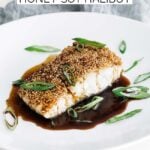
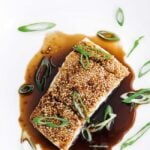
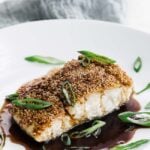
My halibut with honey-soy glaze is sesame crusted on one side, pan seared until golden, and finished with a sticky sauce made from soy sauce, honey, fresh ginger, and garlic. It is ready in about 15 minutes and is the fastest impressive dinner I know how to make.
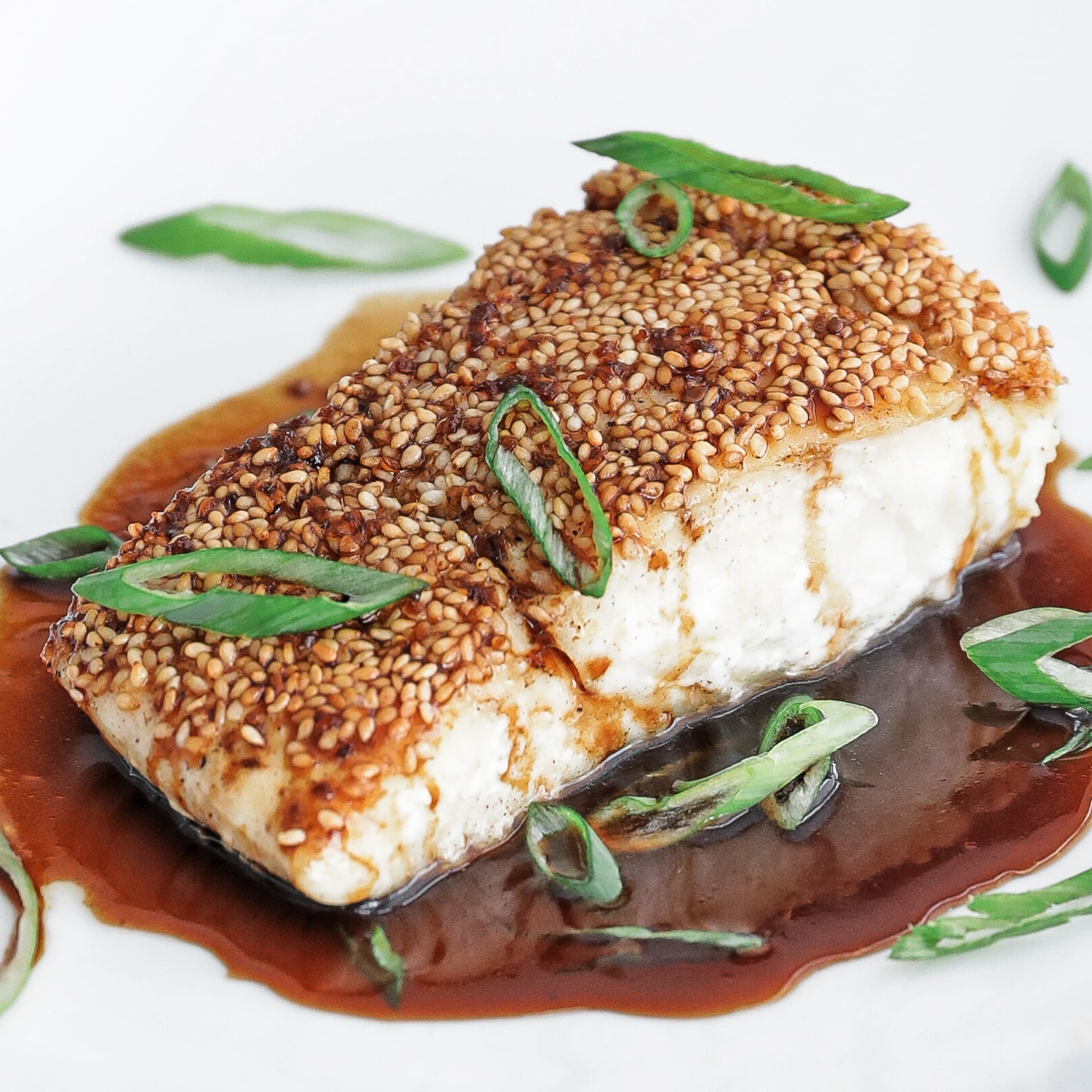
I tested this recipe side by side against two other halibut preparations and this one won. The ginger, the garlic, the umami from the soy, the sweetness from the honey, it all comes together in a way that is so good it is hard to describe until you taste it. If you want to try halibut with a completely different profile, check out my pan seared halibut with lemon dill butter for a French-style approach, or my blackened salmon if you want something with Southern heat.
Halibut with Honey Soy Glaze
The combination of soy sauce with honey has deep roots in Asian cooking, where balancing salty, sweet, and umami flavors is a foundational technique. Teriyaki, which follows a similar flavor logic of soy and sweetness, has been a staple in Japanese cuisine for centuries. The addition of ginger and garlic to a soy-honey base is a natural evolution found across Chinese, Japanese, and Korean kitchens. Pairing this style of glaze with a firm white fish like halibut is a more Western adaptation that gained popularity as Asian fusion cooking spread through American restaurants in the 1990s and 2000s.
The technique here is different from my other halibut recipes because of the sesame seed crust and the way the glaze is built. I whisk together soy sauce, rice wine vinegar, honey, freshly grated ginger, and garlic in a bowl and set it aside. Then I press one side of each halibut fillet into sesame seeds so it is coated on that side only. I sear the fish in sesame oil instead of a neutral oil, which adds another layer of nutty flavor.
After the halibut is cooked and set aside, I pour the sauce into the same pan and cook it over low heat for about a minute until it concentrates and thickens on its own with no corn starch needed. The sauce goes right over the fish and I finish with sliced green onions. My daughter tried this for the first time and immediately asked if she could have the leftover sauce on her rice, which told me everything I needed to know about how good it is. Grab your skillet and let’s make this.
Ingredients and Substitutions
This recipe leans into Asian pantry staples that you probably already have. The flavor comes from the sauce, the sesame crust, and the oil you cook with.
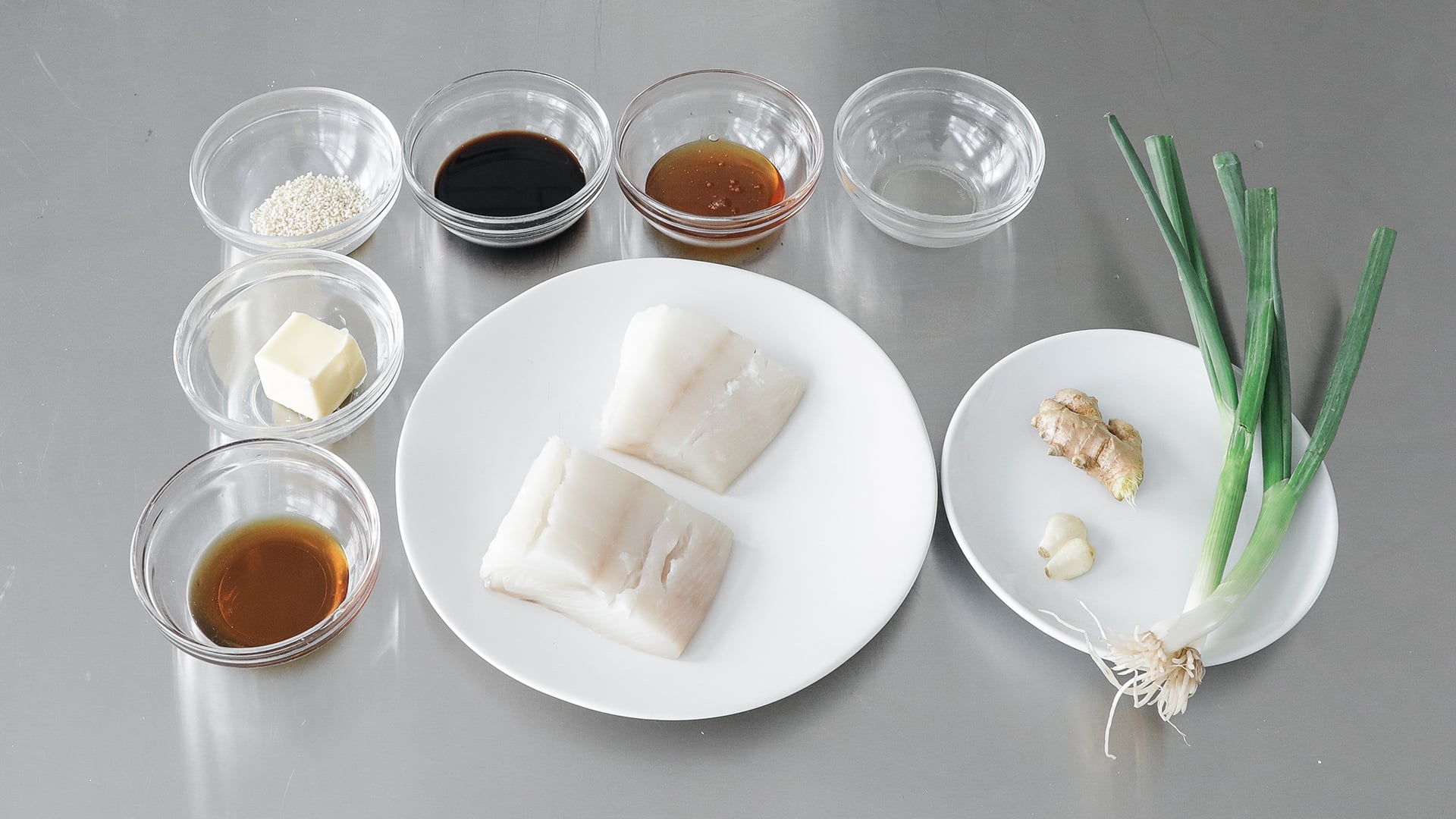
- Halibut – Fresh, skinless fillets. Halibut is firm enough to hold up to the sesame crust without falling apart during the flip. You can substitute cod, mahi mahi, or salmon. Frozen halibut works if completely thawed and patted dry.
- Sesame Oil – I use sesame oil instead of a neutral oil for searing because it adds a nutty depth that ties into the Asian flavor profile of the sauce. If you do not have sesame oil, any neutral high smoke point oil works, but you will lose that extra layer of flavor.
- Butter – A teaspoon of unsalted butter goes in during searing. It helps brown the surface and release the fish from the pan.
- Sesame Seeds – I press one side of each fillet into sesame seeds before searing. The seeds toast in the pan and create a nutty, crunchy crust. I use white sesame seeds, but black sesame seeds or a mix would look great too.
- Soy Sauce – The umami base of the glaze. Any good soy sauce, tamari, or shoyu works. If you are watching sodium, use reduced sodium soy sauce and skip the extra salt.
- Honey – I use light amber honey, but any variety works. The honey offsets the saltiness of the soy sauce and creates the sticky glaze consistency when the sauce reduces in the pan.
- Rice Wine Vinegar – A small amount that balances the sweetness of the honey and the saltiness of the soy. It adds brightness without being as sharp as white vinegar.
- Fresh Ginger – I peel and finely grate about a teaspoon directly into the sauce. The ginger brings warmth and fragrance that elevate the entire glaze.
- Garlic – One clove, finely grated into the sauce alongside the ginger.
- Green Onions – Sliced thin for garnish. They add color, freshness, and a mild onion bite that complements the rich glaze.
- Salt and Pepper – I season the fish on both sides before searing. I go easy on the salt because the soy sauce in the glaze is already salty.
How to Make Halibut with Honey Soy Glaze
Make the glaze: I whisk together the soy sauce, rice wine vinegar, honey, freshly grated ginger, and minced garlic in a small bowl until combined. I set it aside while I prep the fish.
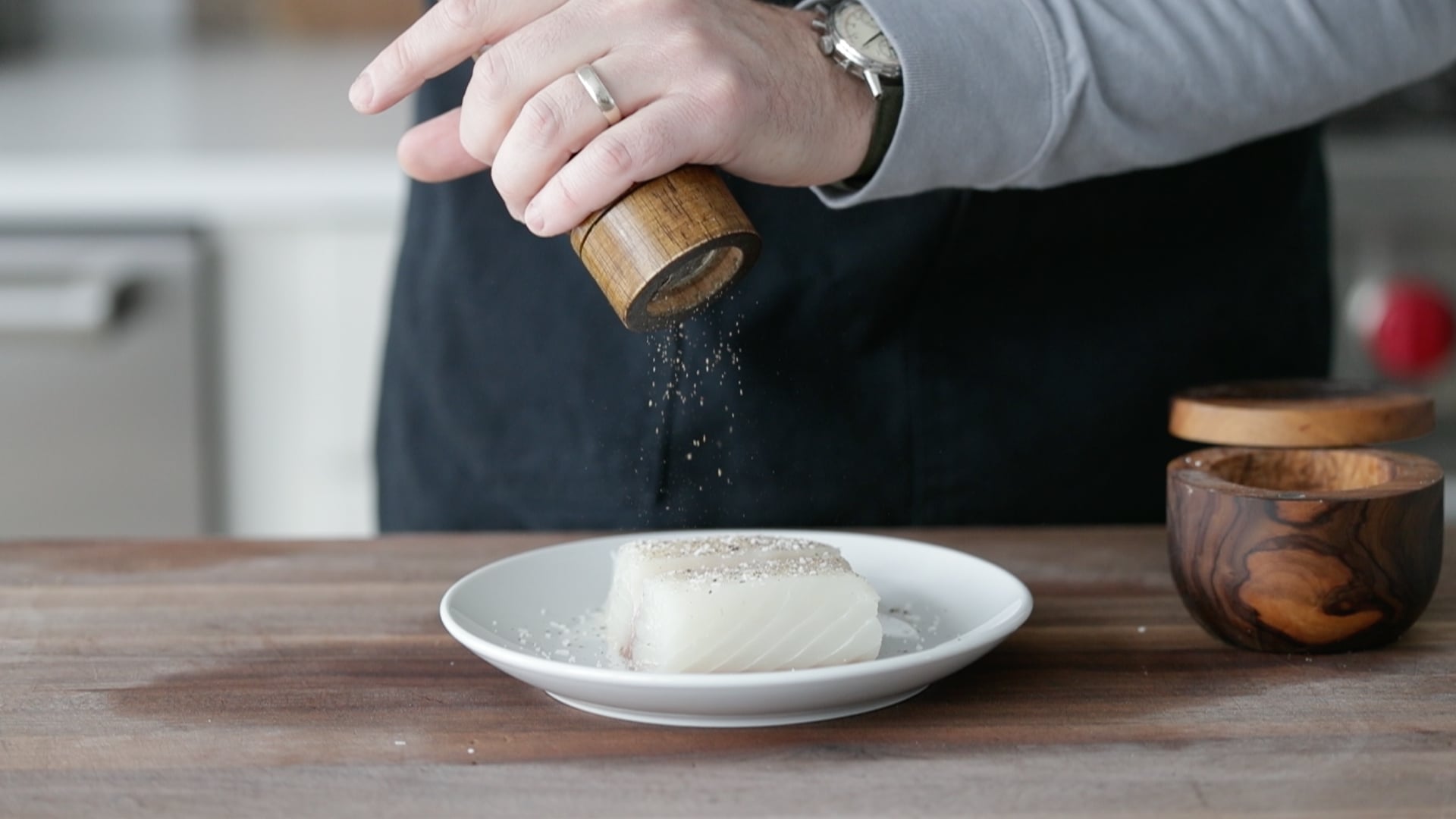
Season: I pat the fillets dry with paper towels and season both sides with salt and pepper.
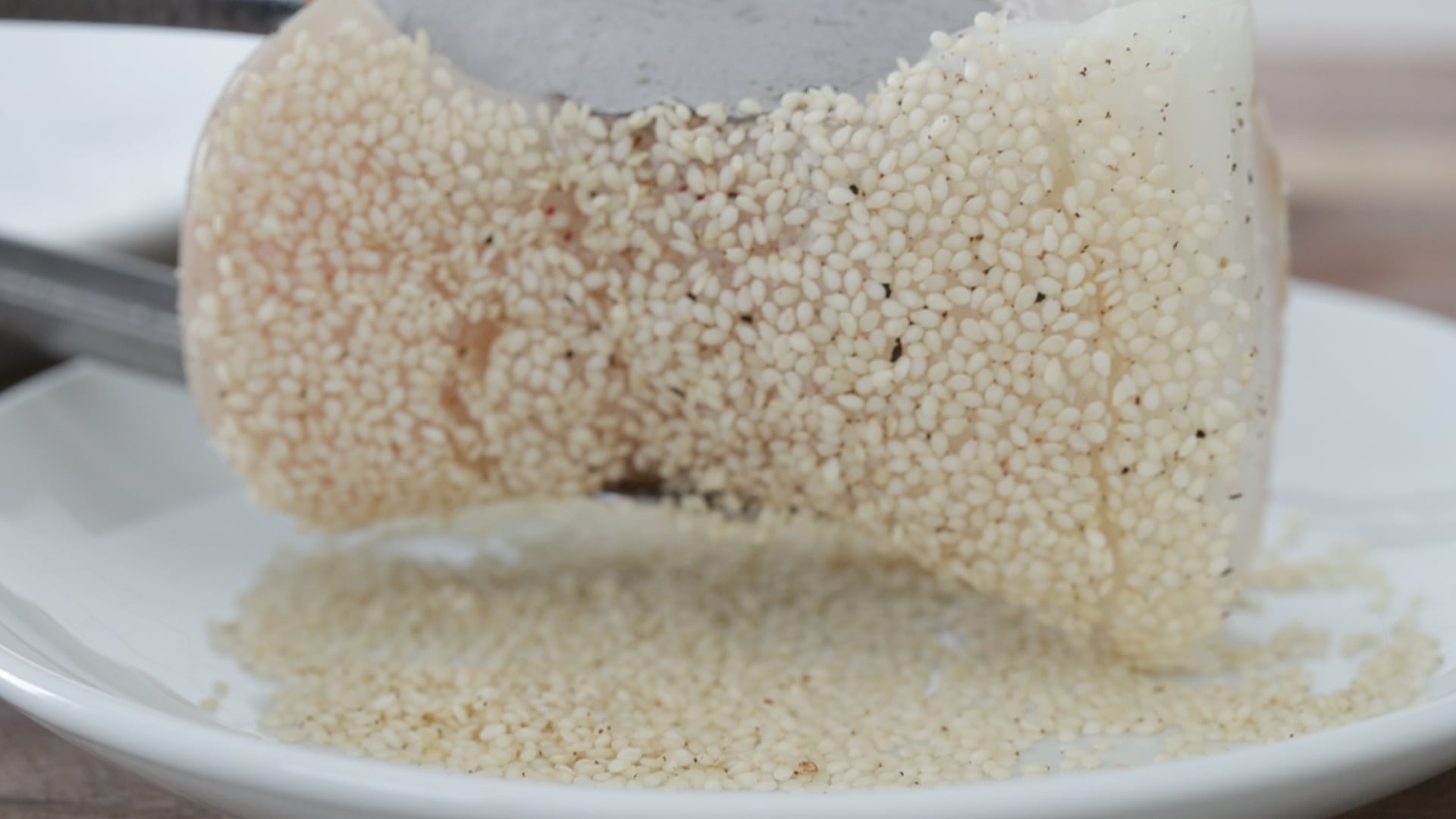
Crust: Then I press one side of each fillet down into a plate of sesame seeds so the seeds coat just that one side evenly.
Heat the pan: I add sesame oil to a large frying pan and heat over high heat until it just begins to lightly smoke.
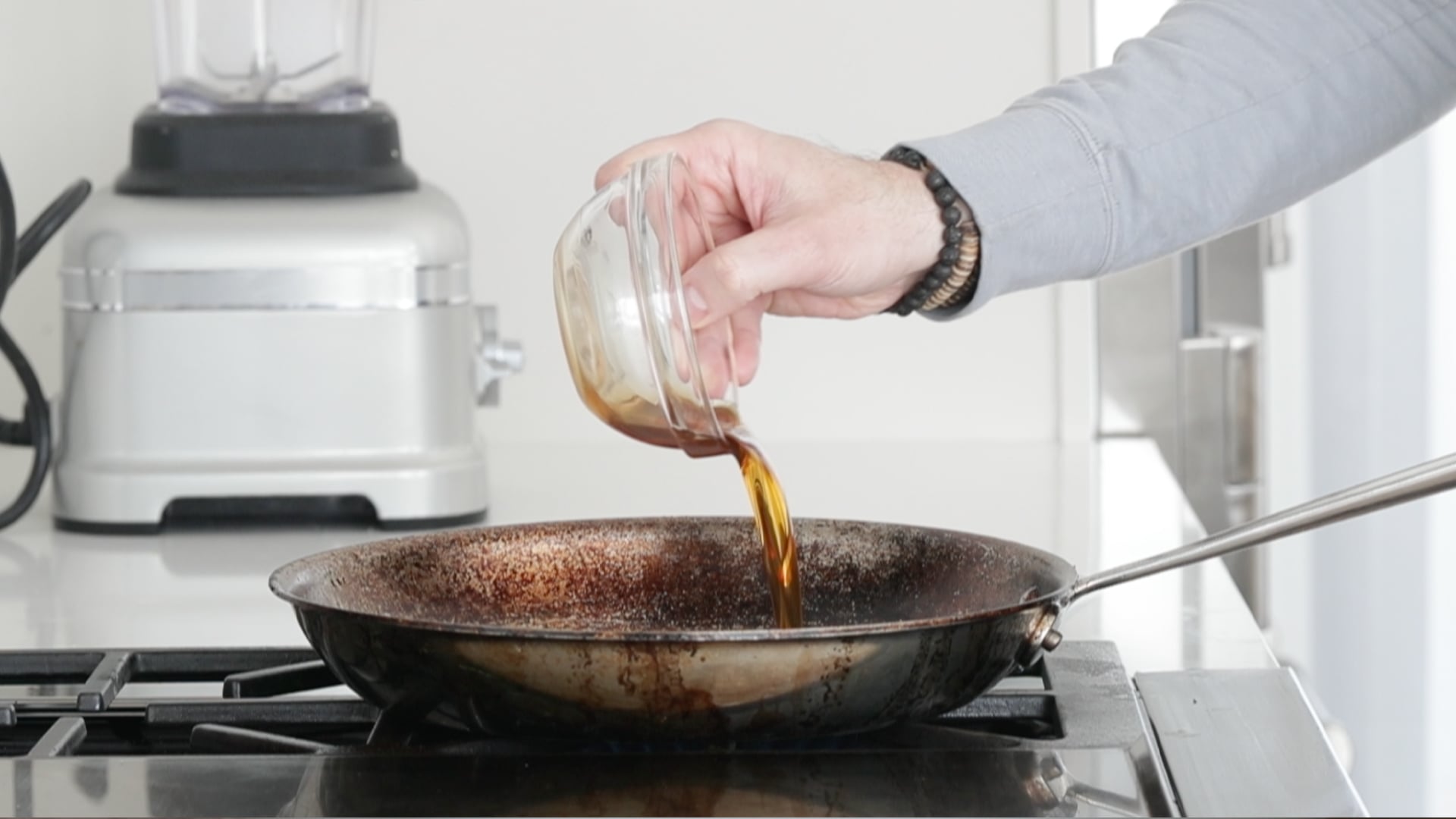
Sear the halibut: I place the fillets in the pan sesame-side down and immediately turn the heat down to medium to medium-high. I add butter and cook for 3 to 3.5 minutes on the first side. I keep the heat moderate because sesame seeds can burn quickly at high temperatures.
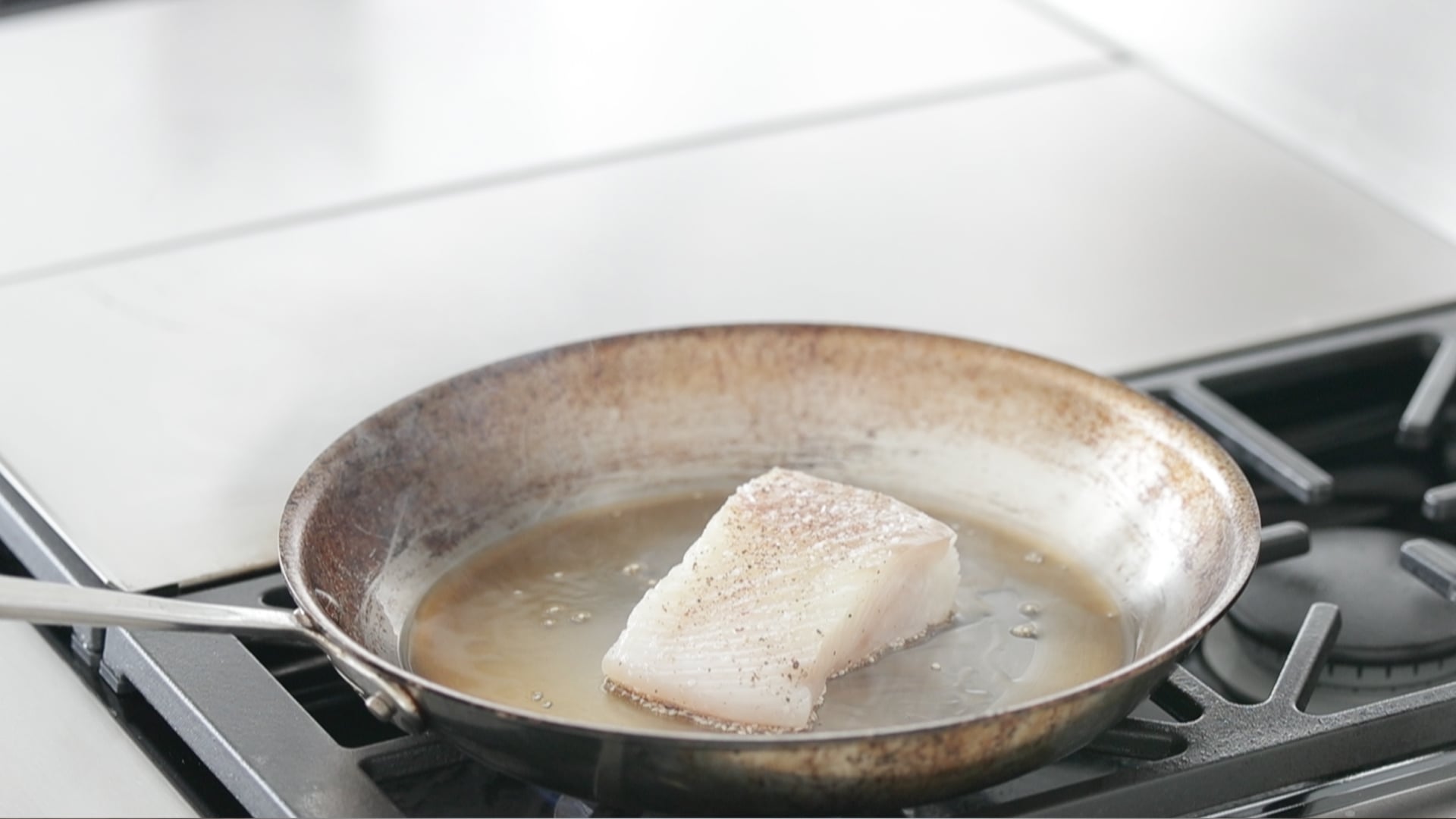
Flip and finish: I carefully flip the fillets and cook for another 3 to 3.5 minutes until golden brown and cooked through. I remove the halibut and set it aside on a plate.
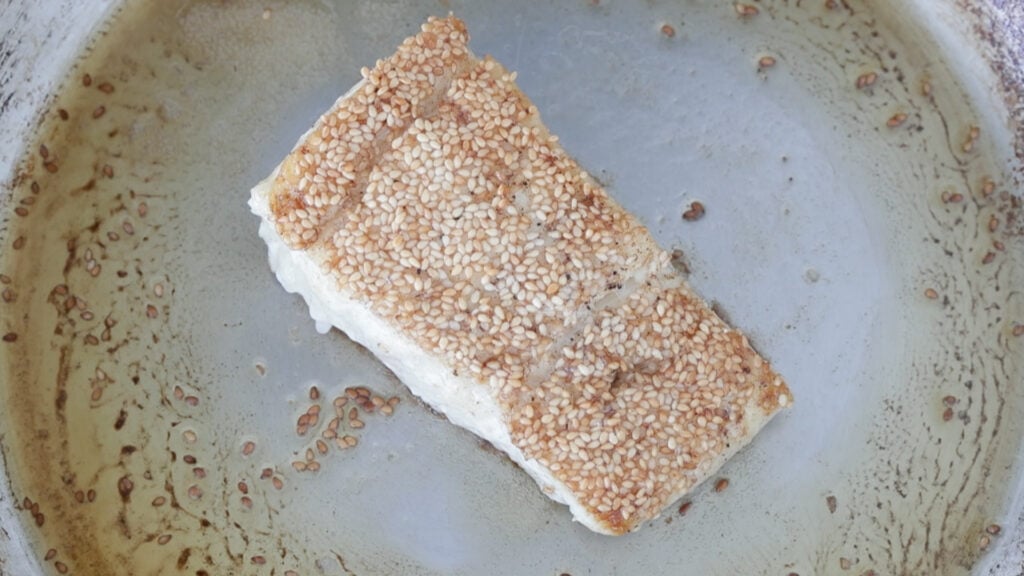
Build the glaze in the pan: I pour out any excess oil from the pan, then pour in the honey-soy sauce mixture. I turn the heat to medium-high and cook for about 1 minute, stirring occasionally, until the sauce concentrates and thickens slightly. There is no need for corn starch because the honey naturally thickens as the sauce reduces.
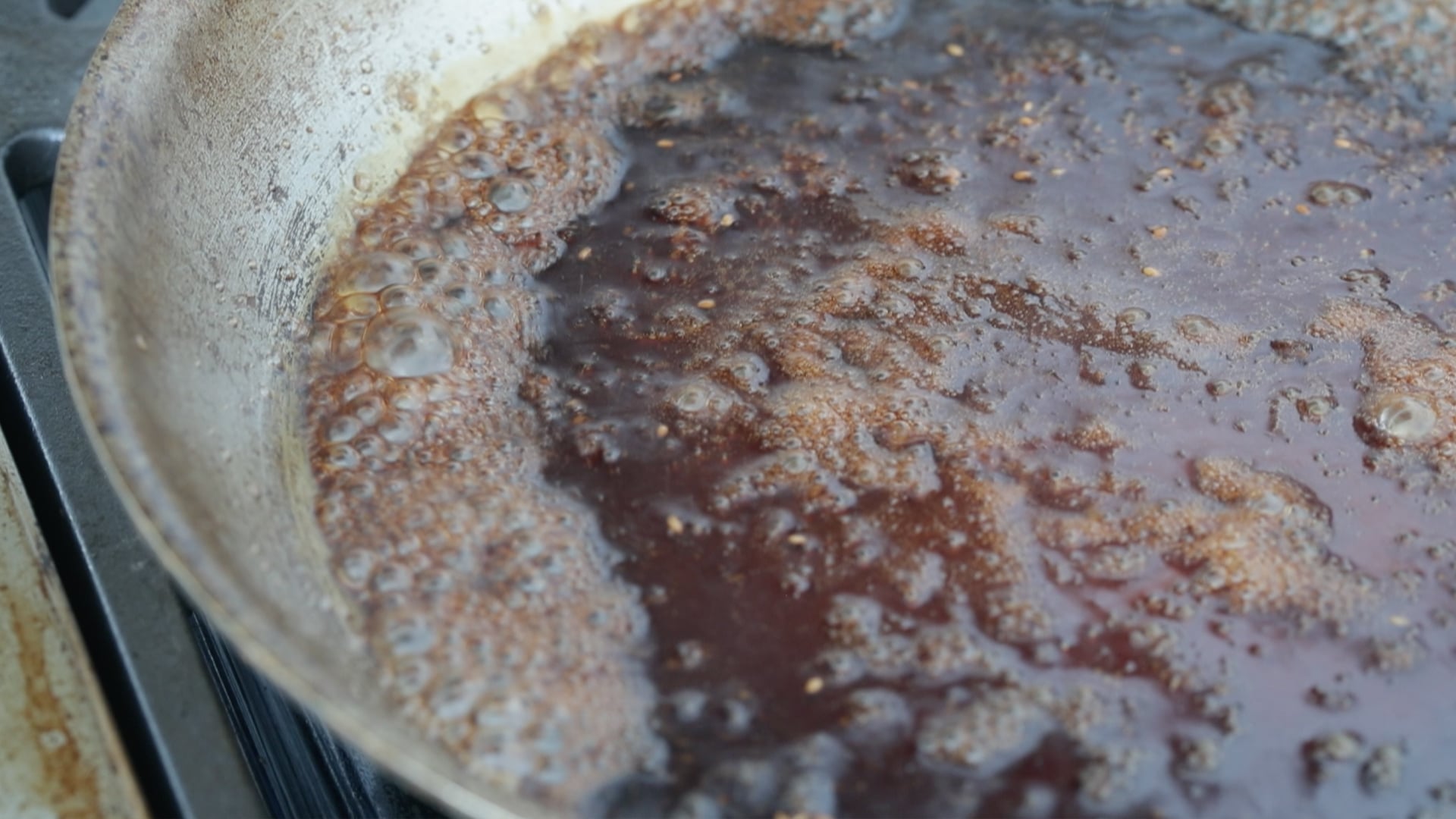
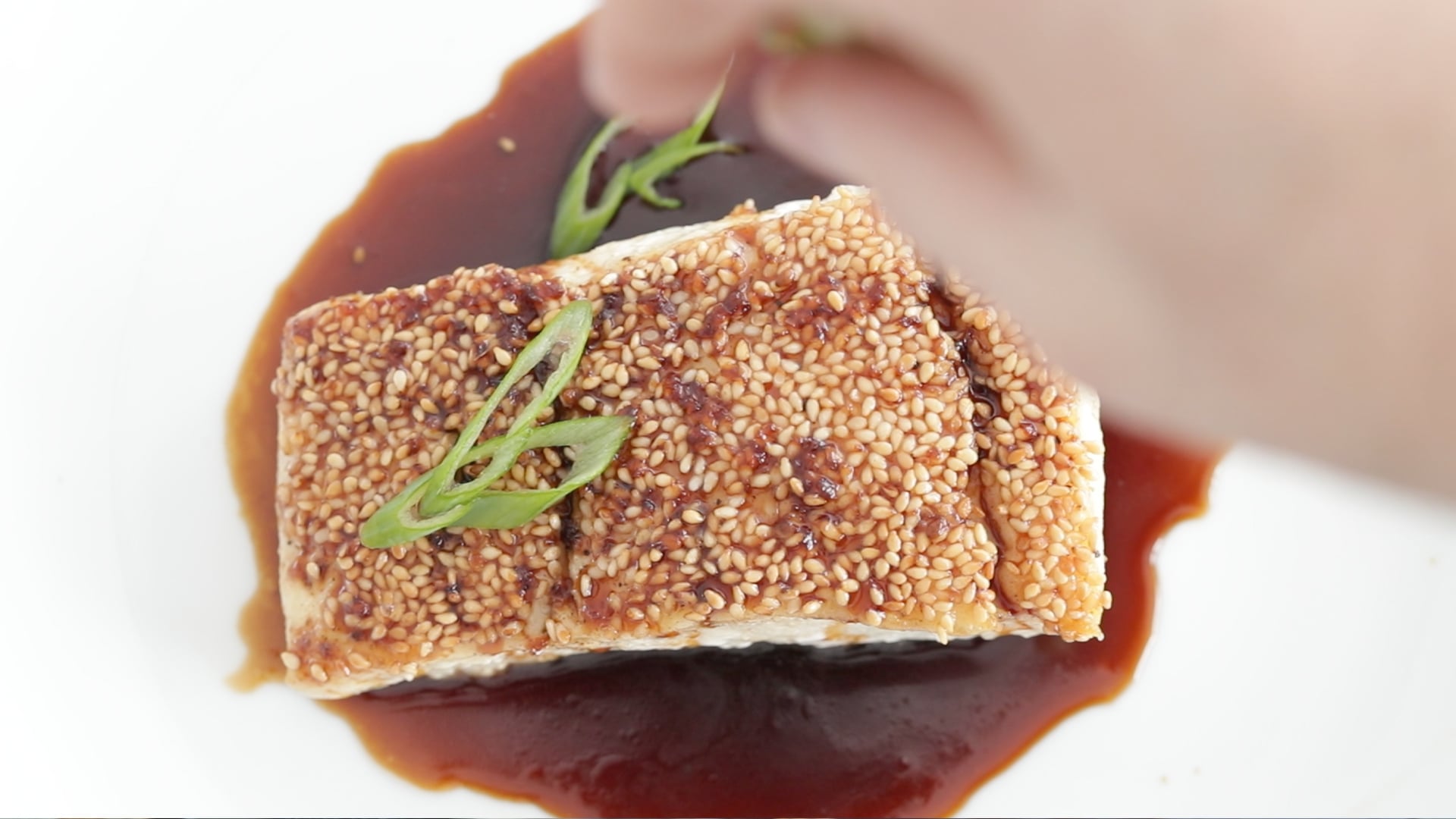
Plate and serve: I place the halibut on plates and spoon the warm glaze directly over the top. I garnish with sliced green onions and serve immediately.

chef tip + notes
My best tip after making this recipe many times at home for my family and friends is to pay close attention to the sauce balance. I rely on the soy sauce for salt and umami, the honey for sweetness, the vinegar for sharpness, and the ginger for warmth. When I get those 4 elements in balance, the sauce coats the dish with the right mix of savory, sweet, sharp, and warm notes without letting any one part take over.
- Watch the sesame seeds: They go from perfectly toasted to burnt in about 30 seconds. If you notice them getting too dark too fast, pull the pan off the heat briefly to cool it down, then return to medium heat. This happened to me the first time I made this and I learned to keep the heat lower than I would for a plain sear.
- Grate the ginger, do not chop it: Grating on a Microplane releases the juice and pulp, which dissolves into the sauce. Chopped ginger leaves chunks that do not integrate and can overpower a single bite.
- Sesame oil has a lower smoke point: It burns faster than neutral oils, so I start on high to get the initial sear going but immediately drop to medium-high. If I see the oil smoking heavily, I pull the pan back.
- The sauce thickens on its own: I do not add corn starch. The honey and the natural reduction from cooking concentrate the sauce in about a minute. If it gets too thick, a splash of water loosens it right back up.
- Season lightly before searing: The soy sauce glaze is salty, so I go lighter on the salt when seasoning the raw fish than I would for the other halibut recipes. I can always adjust at the end.
- Try this glaze on other proteins: I have used this exact same sauce on salmon, chicken thighs, and pork tenderloin. It works on anything that benefits from a sweet, savory, sticky coating.
Serving Suggestions
I serve the halibut over a bowl of perfectly cooked rice and spoon extra glaze over everything so the rice soaks it up. My daughter does not even wait for me to plate it. She just asks for the sauce on the side so she can pour it on her rice herself, and honestly that is the highest compliment. For a more complete spread, I add a side of garlic green beans recipe or garlic mashed potatoes.
For a bigger Asian-inspired dinner, I set this alongside my beef stir fry or chicken fried rice. The honey-soy glaze pairs with practically anything on the table, and the sesame crust gives the halibut enough texture to stand up next to bolder dishes. If you have my teriyaki sauce in the fridge, drizzle a little of that on the rice for an extra layer.
Make-Ahead and Storage
Make-Ahead: The glaze can be whisked together up to 2 days ahead and stored covered in the refrigerator. The halibut is best cooked and served immediately. I do not recommend searing the fish in advance because the sesame crust loses its crunch.
How to Store: I cover and refrigerate leftover halibut with the glaze for up to 3 days. It freezes covered for up to 3 months. I thaw in the refrigerator for 1 day before reheating.
How to Reheat: I place the halibut in an oven-safe dish and heat at 350°F for 5 to 6 minutes until warmed through. I make a fresh batch of the glaze to pour over the reheated fish since the original glaze gets absorbed into the halibut overnight.
More Seafood Recipes

Video
Halibut Recipe with Honey-Soy Glaze
Ingredients
- 1/3 cup soy sauce
- 2 teaspoons rice wine vinegar
- 3 tablespoons honey
- 1 teaspoon peeled and finely grated fresh ginger
- 1 finely minced garlic clove
- 2 8- ounce fresh skinless halibut fillets
- 2 tablespoons sesame seeds
- 2 tablespoons sesame oil
- 1 teaspoon unsalted butter
- Sliced green onions for garnish
- salt and pepper to taste
Instructions
- In a small bowl whisk together the soy sauce, vinegar, honey, ginger, and garlic until combined. Set aside.
- Season the halibut on both sides with salt and pepper.
- Next, press one side of the halibut fillet down into the sesame seeds to encrust the fish.
- Add some oil to a large frying pan and heat over high heat until it begins to lightly smoke.
- Place in the halibut, turn the heat down to medium to medium-high, add in some butter and cook for 3 to 3 ½ minutes per side or until golden brown and cooked throughout. Make sure to not burn the sesame seeds. Set aside.
- Pour in the sauce and cook over low heat for 1 to 2 minutes or until it has slightly thickened up.
- Serve the fish with the sauce and garnish with sliced green onions.
One of the best dishes I’ve made in under 20 minutes. Thank you!
My pleasure!
Can you show how to make more than one at a time? I love the recipe, but I’m unsure how to make three servings without the fish going cold waiting for the other ones to cook.
Love all the recipes.
For sure, just use a bigger pan.
One of the BEST halibut recipes around!!! Made it several times
Fantastic!