



My homemade English Muffins remind me of the ones I ate as a kid. They’re soft and fluffy, with plenty of nooks and crannies for catching melted butter, peanut butter, or jam. Once you try my easy no-knead, stovetop technique, you’ll never go back to store-bought.
I’m a homemade bread kind of guy, plain and simple. I’ve been making my own Sourdough Bread since before the pandemic, and my Homemade Dinner Rolls have been a holiday staple for years. It’s more work than strolling through the bread aisle, but the effort is worth it when I see how happy it makes my family.
English Muffin Recipe
I had so much fun making these English muffins. I loved eating them as a kid, and now I’m obsessed with the homemade version. English muffins evolved from griddle cakes and crumpets in the UK, but the modern version we love today was actually popularized in 19th-century New York.
I’ve made these a few times, and every time I’m shocked at just how easy English muffins are to make. I used a high-hydration dough for a great, buttery-soft texture, then cooked them on the stovetop to conduct heat directly into the dough. This creates a burst of steam within the dough, forcing the air pockets to expand.
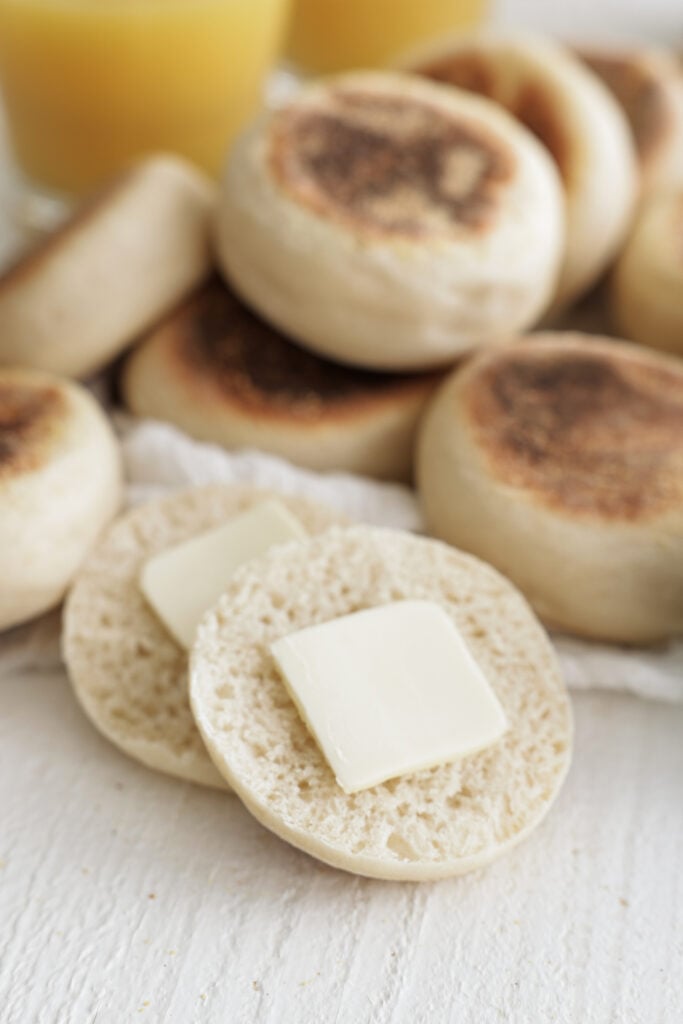
The result? A golden brown, slightly tangy muffin with iconic craters that are perfect for catching melted butter or jam. We can’t stop eating them, and I’m honestly already thinking about making a second batch for our breakfasts.
Ingredients and Substitutions
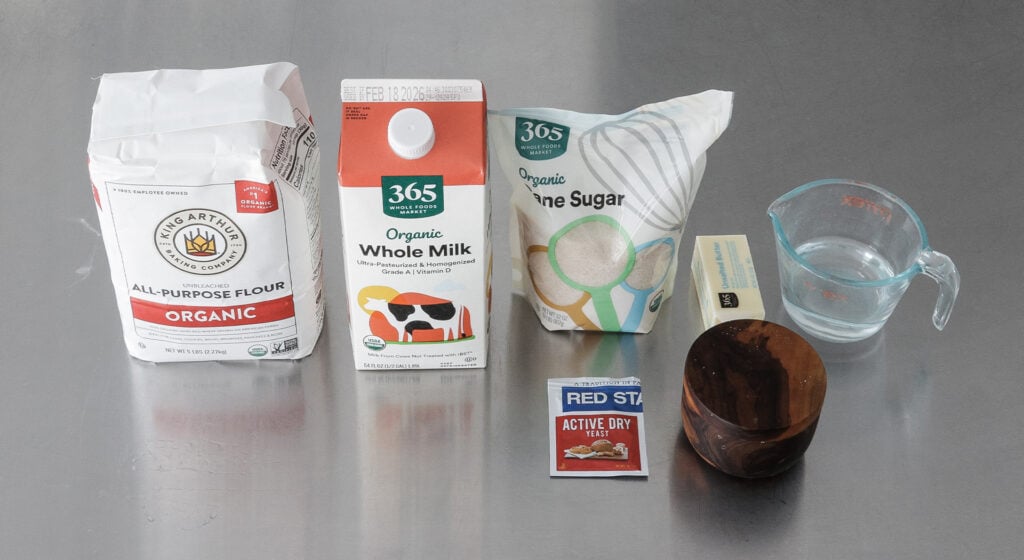
You only need a handful of baking staples to make these English muffins. Here’s what I used:
- Milk – I like using whole milk. It’s fatty, but that just means there will be more flavor in the muffins.
- Warm Water hydrates the dough without making it too heavy.
- Yeast, use active dry yeast because it loves slow fermentation.
- Flour – I always use all-purpose flour. A 1:1 mix of whole wheat flour and all-purpose flour might work as a substitute, but I haven’t tested it.
- Sugar feeds the yeast and helps the crust turn golden brown.
- Butter – I use unsalted butter in my cooking because it gives me more control over the sodium content.
- Salt brings all the flavors together.
- Oil – I’ll use whichever cooking oil I already have on hand, like vegetable oil or canola oil.
- Cornmeal for lightly dusting each English muffin before cooking. This prevents sticking to the griddle.
How to Make English Muffins
Prep the sponge: Start by whisking together the warm milk, water, half of the yeast, and 2 cups of flour in the bowl of a stand mixer. Cover the bowl and set it aside for 1 to 8 hours (the longer the dough sits, the more flavorful it becomes).
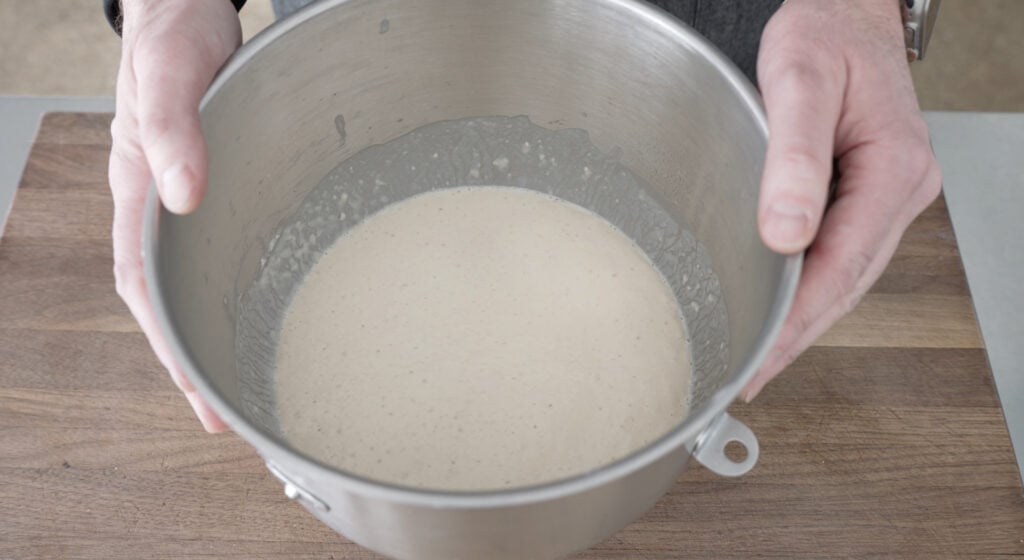
Mix the dough: Next, attach the hook to the stand mixer and mix on low speed for 1 to 2 minutes.
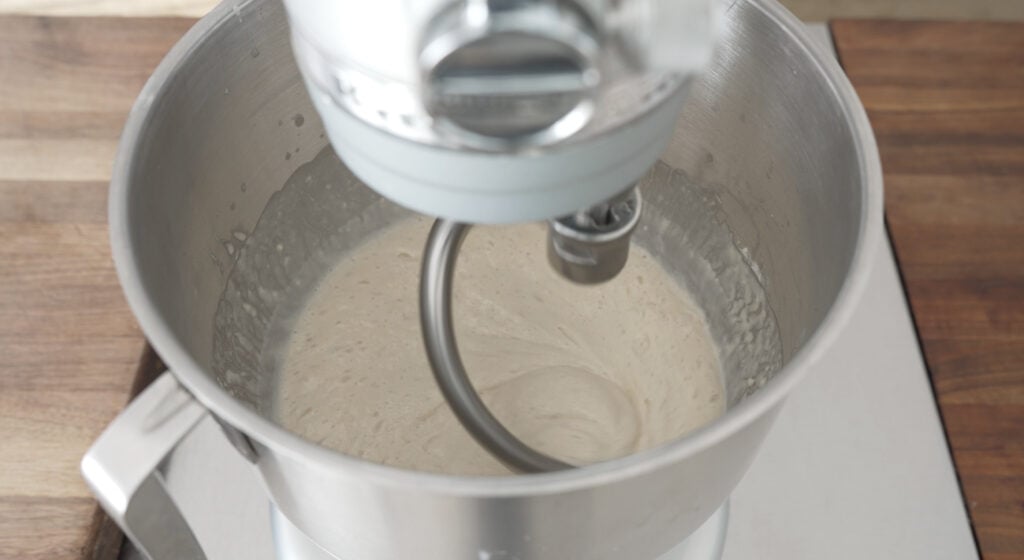
Add the rest: Add in the sugar, the remaining yeast, melted butter, salt, and the final 3 cups of flour. Mix the dough again on low speed for 2 to 3 minutes.
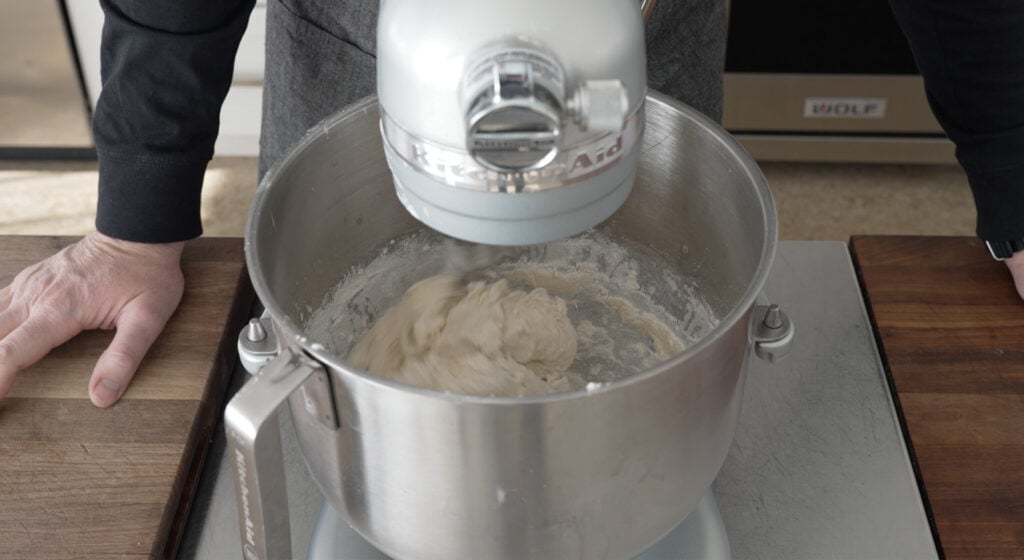
First proof: Transfer the dough to a lightly oiled container, cover it, and let it proof for 2 hours. It should be at least doubled in size or tripled in size for the best texture.
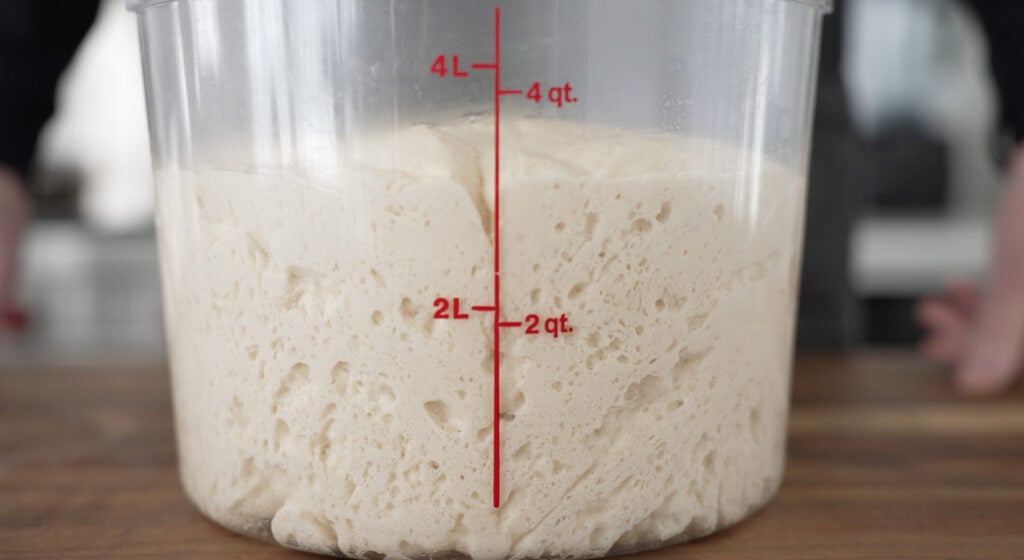
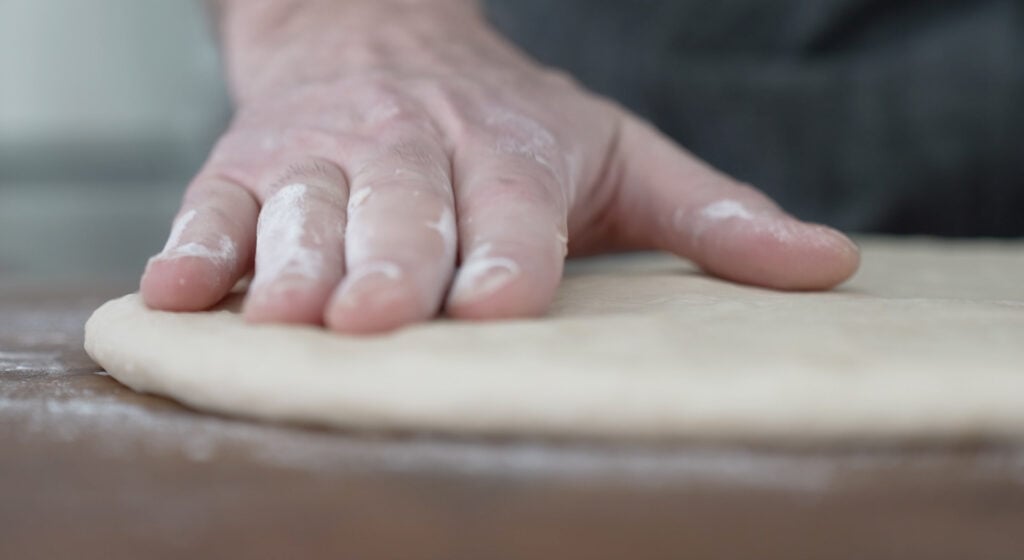
Press the dough: Remove the lid and gently fold the dough over and onto itself. Then, invert it onto a lightly floured surface and use your hands to gently press it down.
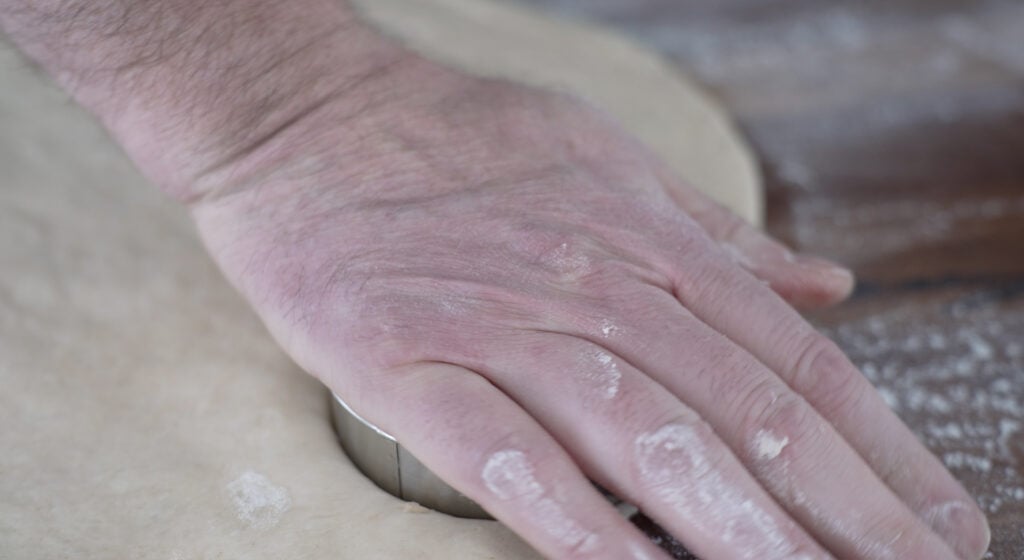
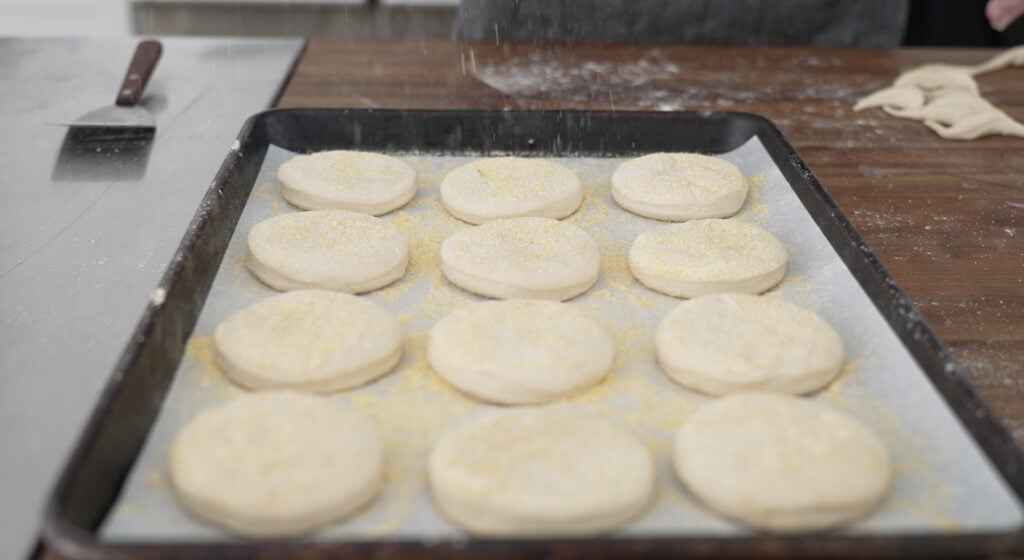
Shape the rounds: Next, use a ring mold to cut out rounds from the dough. Place them on a parchment-lined and cornmeal-dusted sheet tray, then flip them over so both sides are lightly coated with cornmeal.
Final proof: Cover the tray, let the dough rounds rest and puff up for another 30 minutes.
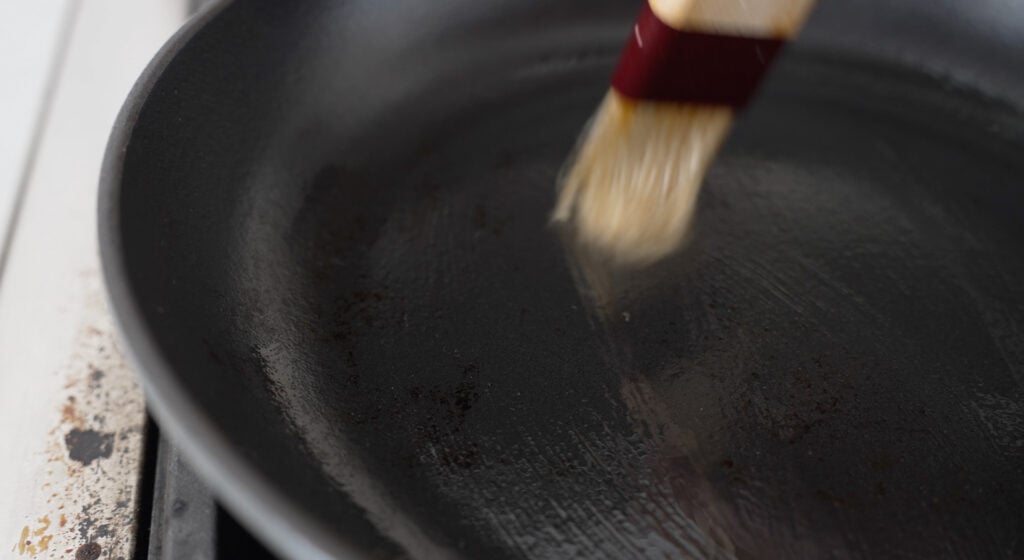
Prepare the griddle: Meanwhile, brush a thin layer of cooking oil onto the griddle, then preheat it over medium-low heat.
Cook: Place some of the muffins on the preheated griddle and cook them for 5 minutes per side or until they’re golden brown.
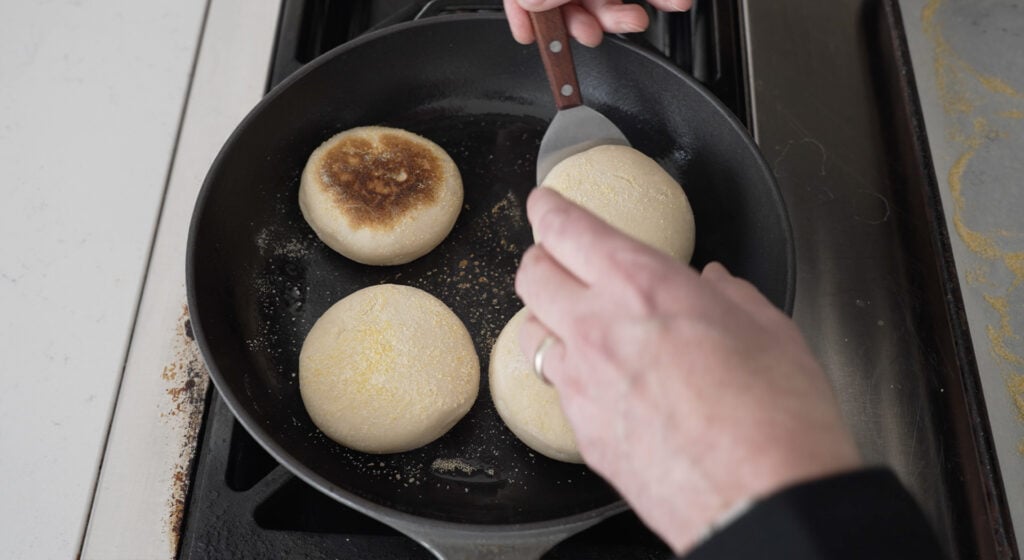
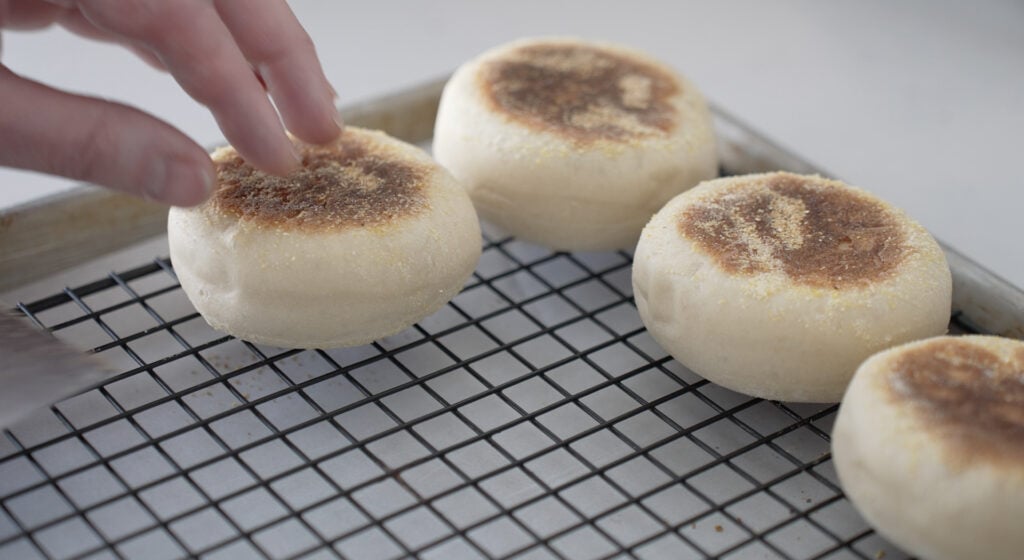
Cool and repeat: Move the finished muffins to a wire rack to cool, then repeat the process with the remaining dough.

Chef Tip + Notes
As you can probably tell, making English muffins from scratch is a lot simpler than other types of homemade bread. I’ve been making my own bread for years and feel confident using dry yeast here because it develops a deeper flavor in the sponge. Instant yeast will also work if you’re in a rush (you can mix it right into the flour), but you’ll still need to use warm milk and water to get fermentation going. Somewhere between 105°F and 110°F is the sweet spot.
- The “fork-split” rule: I never cut into a fresh English muffin with a knife because it compresses all those air pockets. Instead, I poke a fork around the edges and gently pry it open to preserve the texture.
- Sticky dough: This recipe uses a high-hydration dough, which means it’s sticky. Just go with it—if it’s dry or too much flour is added, the muffins will be dense instead of puffy.
- Handle with care: I’m always gentle when cutting and shaping the dough rounds. Pressing too hard or kneading the dough will pop the bubbles I worked so hard to create during the proofing phase.
- Manage the heat: I do my best to keep the griddle on medium heat. Sometimes, I’ll place a lid over the muffins during the last 2 minutes to make sure they’re perfectly cooked in the middle (like a mini oven).
- Cook in cast iron: A preheated, lightly greased cast iron skillet works just as well as a griddle here.
Serving Suggestions
I make homemade English muffins often because I’m always using them for my fried egg and bacon breakfast sandwiches. They’re one of my favorite make-ahead breakfasts and just the right amount of food in the morning.
My wife and daughter like toasting the rest of the batch for their breakfasts. An English muffin topped with honey butter, strawberry jam, or peanut butter is a great way to start the day.
When I want to go a bit outside the box, I’ll top the muffins with marinara and mozzarella for mini pizzas or use them for Eggs Benedict when I’m making brunch. The slightly stale leftovers are great for English muffin French toast, too.
Make-Ahead and Storage
Make-Ahead: When I know I won’t have time to cook the muffins, I’ll prepare the dough a day in advance and keep it covered in the fridge. The next day, I’ll take the dough out of the fridge and set it on the kitchen counter for about 30 minutes before shaping and cooking the muffins.
How to Store: I store my leftover English muffins in a covered container on the kitchen counter for up to 3 days. When I want them to last longer, I’ll store them in a ziplock bag in the freezer.
More Bread Recipes

Video
English Muffins
Ingredients
- 1 ½ cups whole milk, 110° F
- ¾ cup water, 110° F
- 1 packet active yeast
- 5 cups all-purpose flour
- 2 tablespoons sugar
- 4 tablespoons melted unsalted butter
- 2 teaspoons salt
- oil for coating and cooking
- cornmeal for dusting
Instructions
- In the bowl of a stand mixer, add in the warm milk, water, half the yeast, and 2 cups of flour. Whisk until combined.
- Cover and let stand for 1 to 8 hours to form a sponge. The closer to the 8 hours, the more flavorful it will become. You will see it become bubblier during the process.
- Next, add it to the stand mixer fitted with the hook attachment and mix on low speed for 1 to 2 minutes, until everything starts to move.
- Then, add in the sugar, the remaining yeast, melted butter, salt, and the remaining 3 cups of flour.
- Mix on low speed for 2 to 3 minutes or just until combined. No need to knead the dough for an extended period of time.
- Transfer the dough to a lightly oiled container. Cover with a lid and proof for 2 hours, or until doubled in size. It’ll be even better if you can triple the size.
- Remove the lid and fold the dough from the outside to the inside on all corners.
- Invert the dough on a lightly dusted surface and press down with your hands until it is about ¾” thick.
- Using a 3” to 3 ¼” ring mold, cut the dough into circular rounds. Place them on a sheet tray lined with parchment paper lightly dusted with cornmeal, then flip them over immediately.
- Cover and let them rest for 30 minutes. They should puff up a bit more.
- To cook, brush a thin layer of cooking oil onto a griddle or an extra-large cast-iron skillet over low to medium heat, closer to the medium side.
- Add in as many English muffins as you can without touching each other and cook for 5 minutes per side. They should be browned on each side. While not necessary, feel free to cover them with a lid to help them steam a little more.
- Cool them on a rack and then repeat the process until they’re all cooked.
The first time I made these, they turned out great but it was just missing that little bit of tang. This last batch, I utilized a technique I’ve used for pizza dough: cool rise. Once I made the dough, I let it sit in the fridge for a couple of days for a slower ferment. It definitely provided the additional tang I was looking for. Next iteration, I’ll likely spread the dough down to about half an inch, let it proof, and see if I can get more nooks and crannies. 🫶🏼
Thank you for giving it a shot!
Question: Can you make this recipe if you don’t have a stand mixer. I really want to try these.
Love your recipes! Great directions, lots of variety.
Yes, you can.
Thank you for replying. Have a great day!
Made this two weekends ago and forgot to add butter for most of the mixing and didn’t want to overmix so it came out…ok. Made it again this last weekend, and let the sponge sit overnight, and yum! I would like to make it a little richer by adding an egg but not sure when where. Not in the sponge if I’m going to leave it overnight. Seriously good though as is.
Fantastic! Thanks for trying the recipe!
Weight in grams for flour please. Much more accurate.
Grams are available by clicking the “US Customary” button in the recipe card and choosing Metric.
First time making English muffins, started the dough before bed and finished in the morning. Substituted Barista Oat milk and vegan butter, they turned out perfect! Next time I’ll use a biscuit cutter so the shape is better, but the taste and texture were spot on.
Excellent! Thanks for giving them a try!