
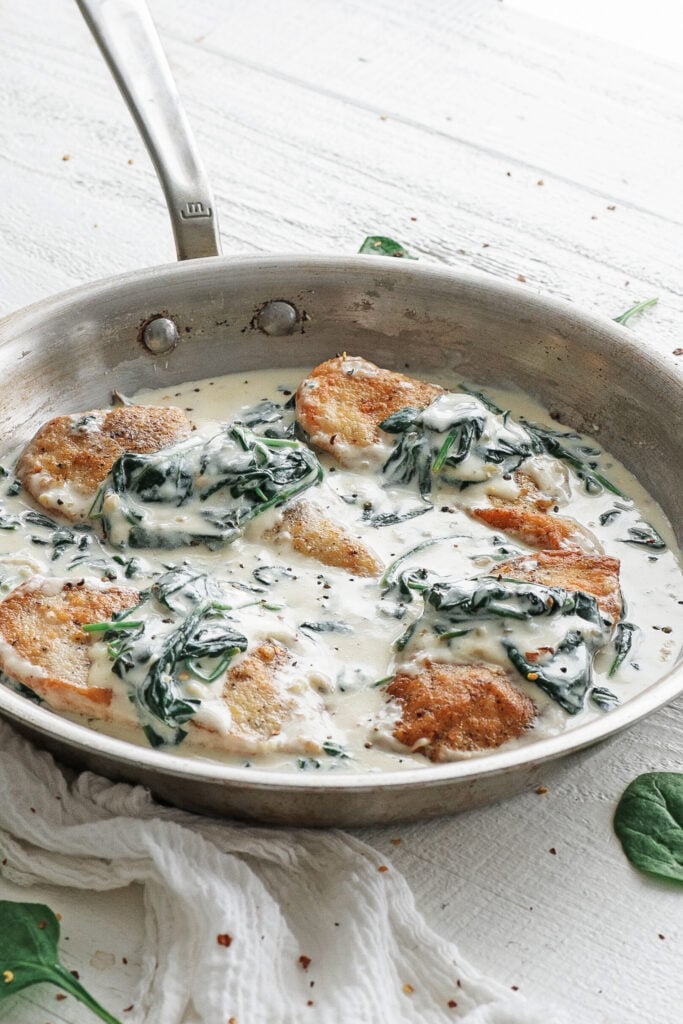
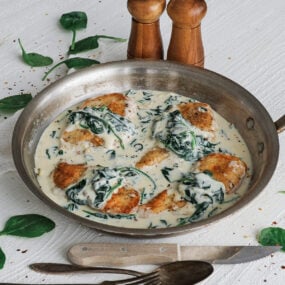
Chicken Florentine brings timeless French-Italian fusion to your kitchen. Juicy pan-seared chicken and wilted spinach are enveloped in a velvety Mornay sauce for a fancy meal that’s surprisingly simple to make.
Chicken is my family’s and my favorite protein to transform into a million different dishes, depending on what we’re craving. On busy nights, there’s nothing better than a perfectly golden brown Roast Spatchcock Chicken. I make my Classic Italian Chicken Piccata for many of our Sunday dinners because it’s incredibly comforting and made with simple ingredients.
Chicken Florentine
Legend has it that we owe chicken Florentine to Catherine de Medici, a Florentine Italian aristocrat who moved to France to marry the future king, Prince Henry II. As the story goes, Catherine loved spinach so much that she brought her own cooks along to share her favorite spinach dishes with the French court, creating the “à la Florentine” dishes we know today.
I know “a la Florentine” may sound a little pretentious, but it’s a simple term for dishes from Florence that are served on a bed of spinach and topped with Mornay sauce, a Béchamel sauce’s cheese-enriched cousin.
Chicken Florentine is one of the most popular “a la Florentine” dishes, especially here in the US. The easiest way to make it is to smother pan-fried chicken in a creamy spinach sauce made with reduced cream or even canned soup. That’s not my style, so I stuck as close to the Italian methods as possible, serving pan-seared chicken cutlets and wilted spinach with a hand-whisked Mornay sauce.
Trust me, it’s a million times more impressive than the modernized American versions could ever be. You’ll even be surprised at how quickly and easily it comes together—no complicated French or Italian techniques needed here.
Ingredients and Substitutions
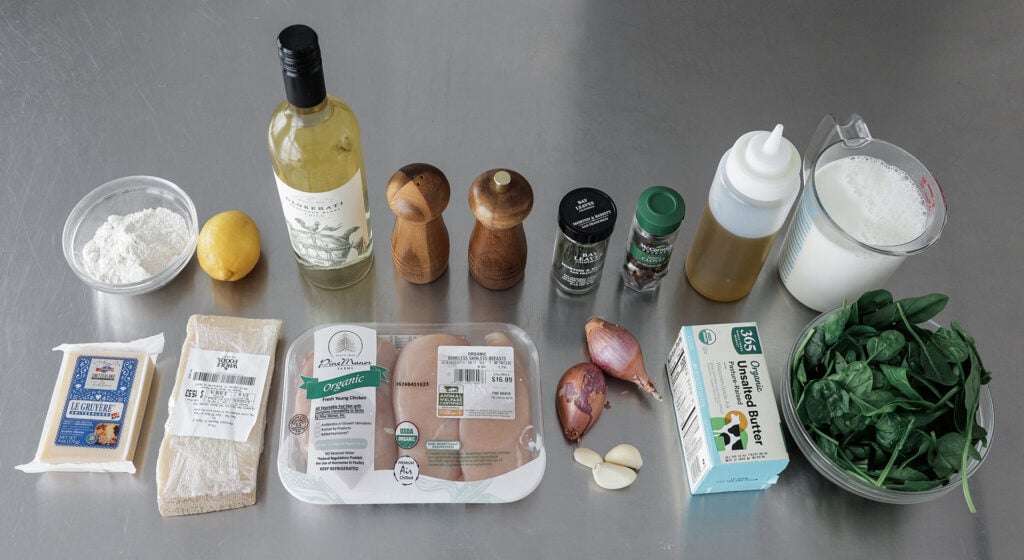
For the Sauce:
- Aromatics – I perfumed the simple Béchamel with a shallot, a bay leaf, and a garlic clove.
- Whole Milk
- Roux made with unsalted butter and all-purpose flour.
- Cheese – The Béchamel couldn’t turn into a Mornay sauce without Gruyère and Parmigiano-Reggiano. If you need a substitute, use Swiss, Gouda, or mild white cheddar instead of Gruyère, and Grana Padano or Pecorino Romano instead of the Parmigiano.
- Seasonings, salt, black pepper, and nutmeg. Sometimes, I’ll add a pinch of red pepper flakes for a kick.
For the Chicken:
- Chicken, 2 chicken breasts.
- Coating – Before searing, I coated the chicken breasts in a flour coating made from all-purpose flour, Parmigiano, and Italian seasoning.
- Oil – Olive oil or avocado oil works well.
- Aromatics, another shallot, and more minced garlic cloves.
- Spinach – I used fresh baby spinach leaves, but frozen spinach will also work. Just remember to thaw the leaves and squeeze out the liquid in advance.
- Wine to deglaze the pan. Sauvignon Blanc or Pinot Grigio are good options. Substitute with chicken stock and a squeeze of fresh lemon juice.
How to Make Chicken Florentine
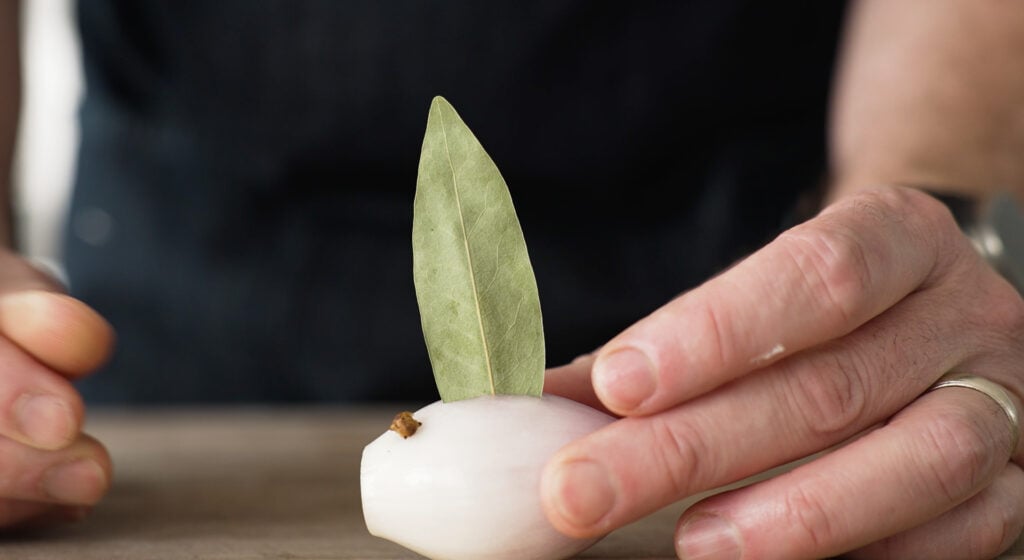
Prepare the oignon piqué: First, make a small incision in a half-shallot, then press a bay leaf and a clove into the slit. This trick makes it much easier to fish out the aromatics at the end.
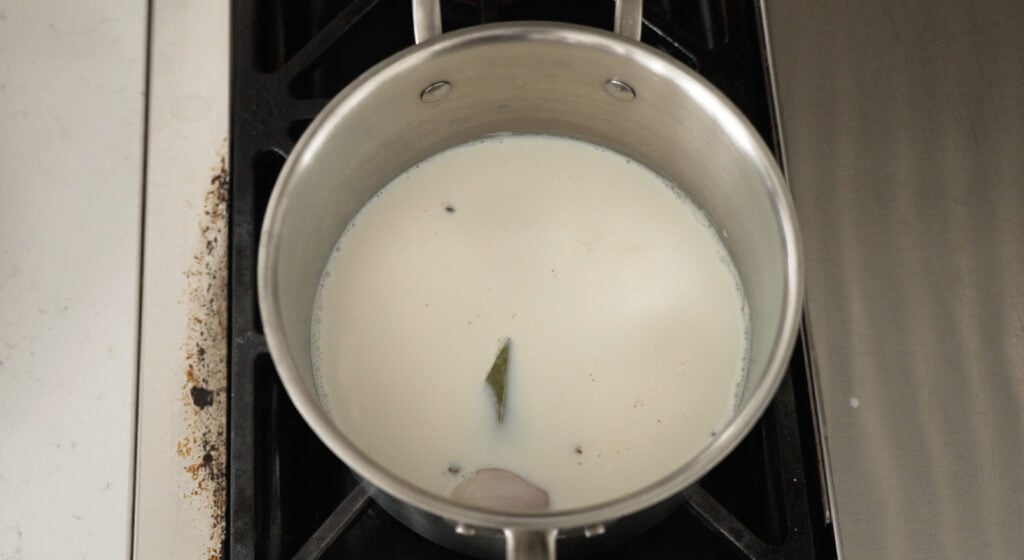
Infuse the milk: Next, scald the milk with the shallot in a medium pot over low-medium heat.
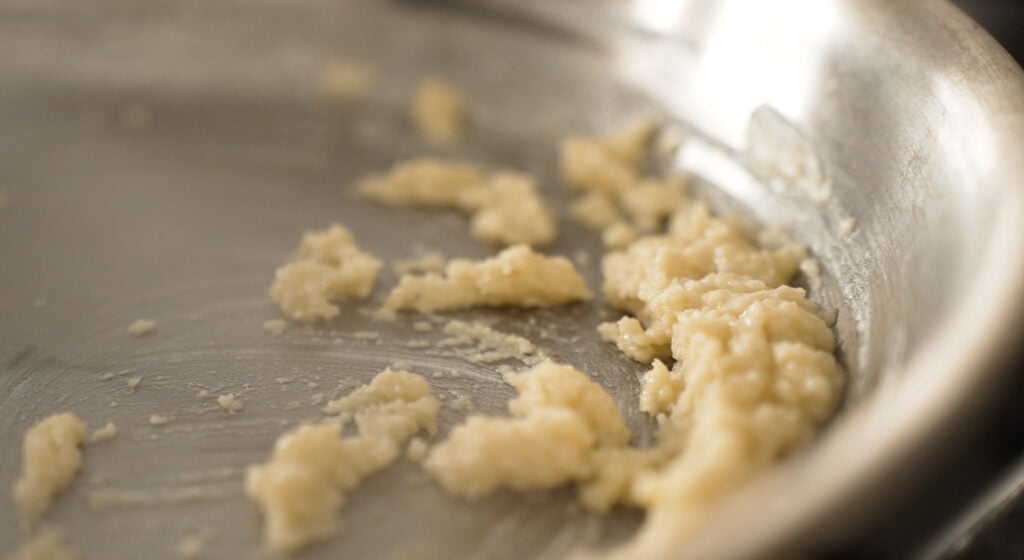
Prepare the roux: Meanwhile, melt the butter in a small pan, then whisk in the flour. Let it cook for 1 minute to remove the raw flour taste.
Thicken the Béchamel: Once the milk is scalded, slowly whisk the roux into the same pot until it boils. Next, reduce the heat and simmer until the sauce thickens and becomes velvety smooth.
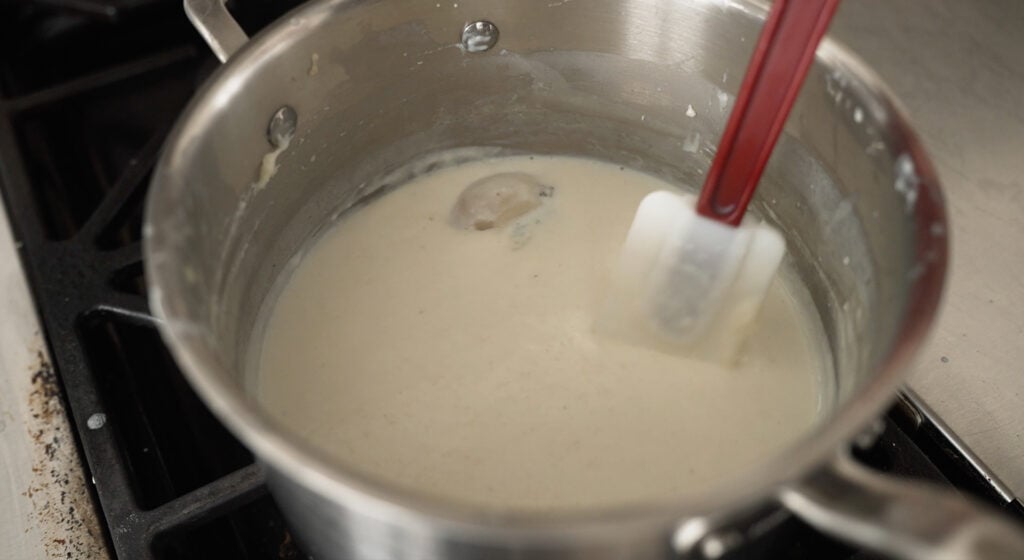
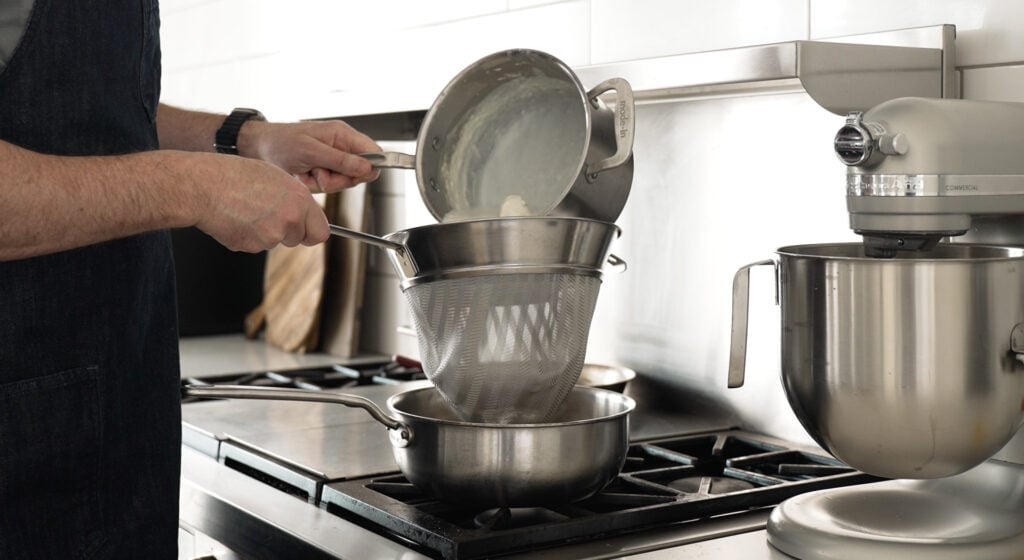
Season: Add a pinch of nutmeg, salt, and pepper to the Béchamel, then strain it through a fine-mesh strainer into a clean pan.
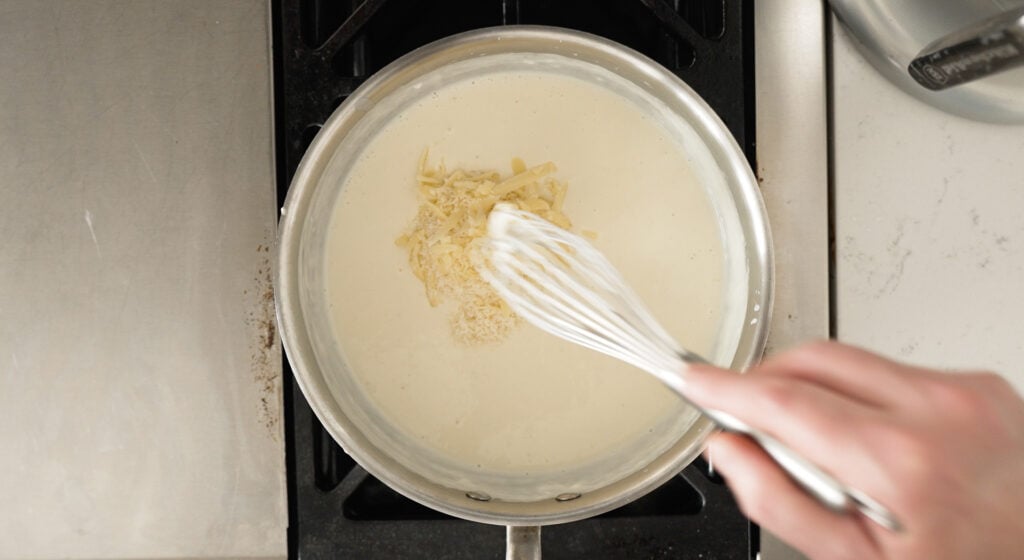
Finish the Mornay: To transform the Béchamel into a Mornay, whisk in the Gruyère, Parmigiano, and the remaining 2 tablespoons of butter. Set this aside.
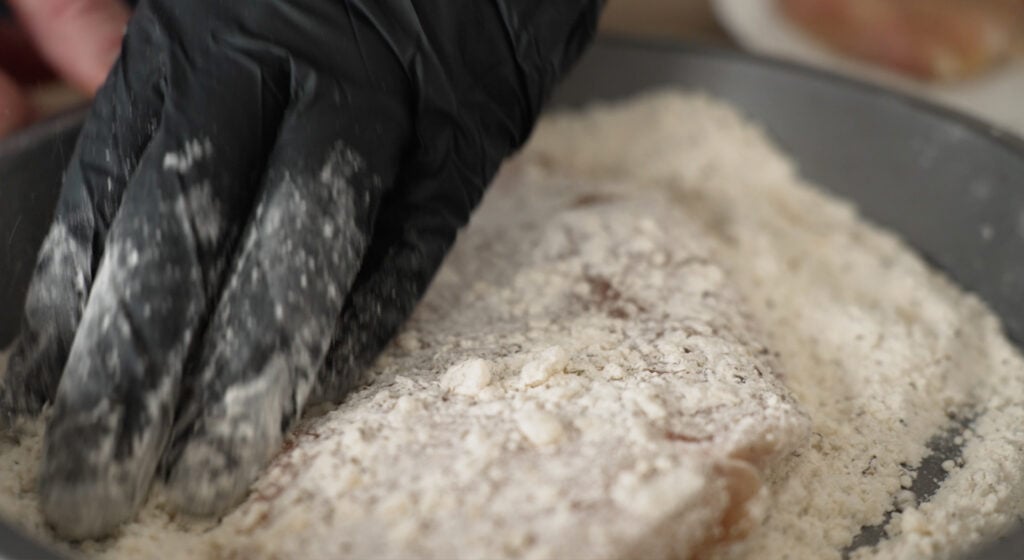
Dredge the chicken: After slicing the chicken breasts in half, whisk the flour, Parmigiano, and seasonings in a shallow bowl. Coat each piece of chicken in the flour coating.
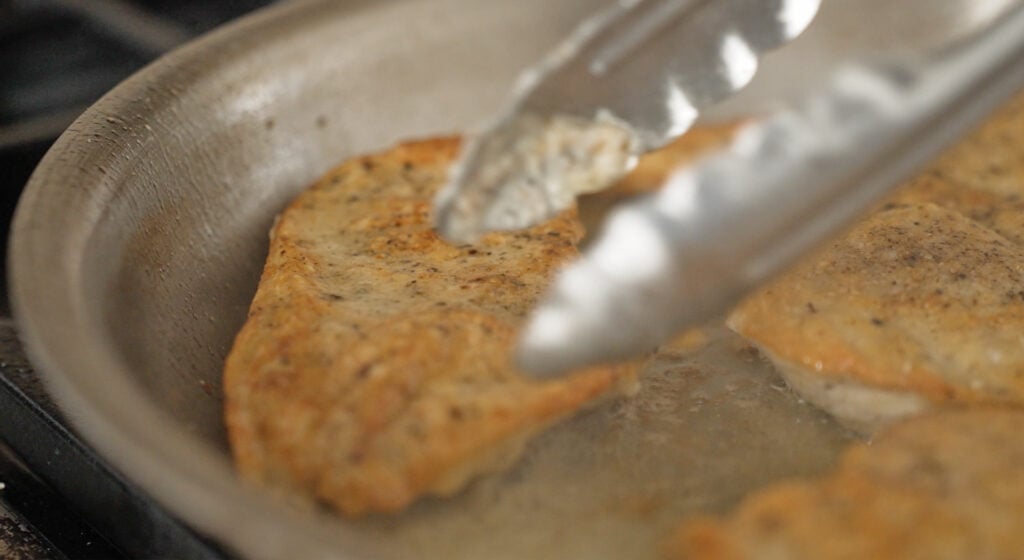
Sear: Next, sear the chicken in a large pan until each piece is golden brown and cooked through. Set the pieces aside on a plate.
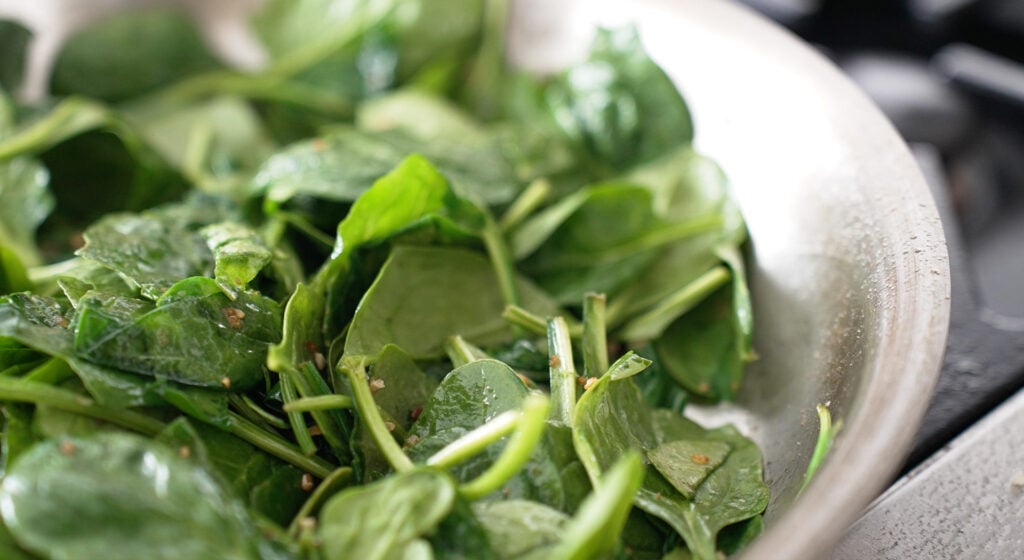
Wilt the spinach: Sauté the shallots and garlic in the now-empty pan. Next, add the spinach and stir until the leaves wilt.
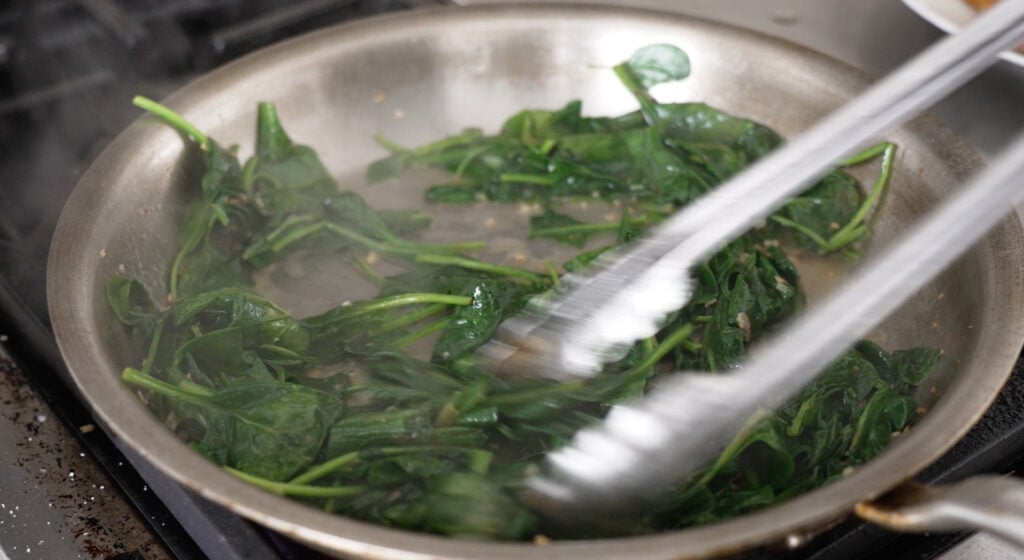
Deglaze: Now, pour in the white wine and let it reduce.
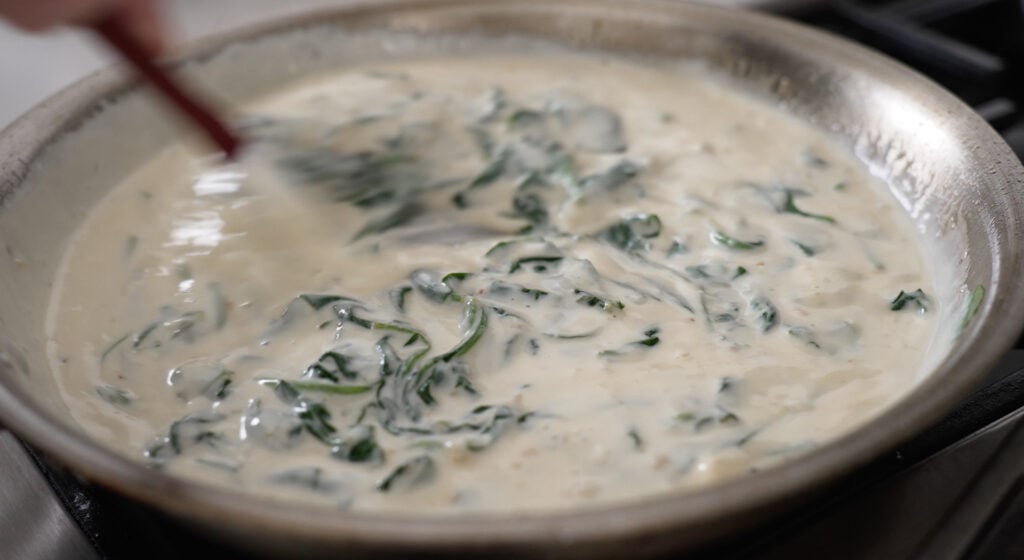
Assemble and serve: To finish, fold the prepared Mornay sauce into the pan with the spinach. Season it with salt and pepper to taste and then nestle the chicken back into the sauce before serving.

Chef Tip + Notes
Make a mental note to taste every element of this dish—particularly the Mornay sauce—as you go. I taste it before adding the cheese, after adding the cheese, and once more after combining it with the spinach. I always keep tasting spoons within reach for this reason.
- Nappe consistency: I know the béchamel is perfectly thickened when it completely coats the back of a spoon. This is known as “nappe.”
- Don’t break the Mornay: When making the Mornay, I keep the heat on low and whisk constantly to keep the sauce silky and lump-free. If I turn the heat up too high, the proteins in the cheese will clump and “break” the emulsion.
- Golden seared chicken: I have a few tricks up my sleeve when it comes to perfectly seared chicken. First, I pat the chicken breasts completely dry, and then I preheat the oil until it’s shimmering and lightly smoking. After I lay the chicken in the pan, I don’t touch it. This is when the Maillard reaction does its thing, developing that gorgeous golden crust.
- Add-in ideas: Add sliced mushrooms, sun-dried tomatoes, artichoke hearts, capers, or roasted red peppers with the aromatics (after cooking the chicken). Or, top the chicken with crispy bacon, prosciutto, or pine nuts at the end.
Serving Suggestions
Many Italian and French chefs like to serve chicken Florentine over a bed of pasta or mashed potatoes. To me, nothing beats the classic French approach: steamed, buttered baby potatoes (pommes vapeur) and a warm, crusty baguette on the side to sop up the white wine cream sauce.
When I want a little more green on my plate (something I love; my daughter not so much), I’ll add a side of arugula salad, steamed green beans (haricots verts), or sautéed asparagus.
And what could be better than finishing the meal with a classic French dessert, like chocolate mousse? Bon appétit!
Make-Ahead and Storage
Make-Ahead: You can prepare the Mornay sauce up to 2 days ahead and keep it covered in the refrigerator until you’re ready to use it. The chicken and spinach are always best served fresh.
How to Store: Cover the chicken and sauce, and store them in the fridge for up to 3 days. I don’t recommend freezing, as the sauce tends to break and become grainy after thawing.
How to Reheat: Place the chicken and sauce in a small skillet over medium-low heat, then add a splash of milk or broth. Cover and stir occasionally until it’s warmed through.
More Easy Chicken Recipes

Video
Chicken Florentine Recipe
Ingredients
For the Sauce:
- 1/2 peeled shallot
- 1 bay leaf
- 1 clove
- 4 cups whole milk
- 5 tablespoons unsalted butter
- 4 tablespoons all-purpose flour
- pinch of nutmeg
- 4 ounces shredded gruyere cheese
- 2 ounces finely grated Parmigiano Reggiano
- Salt and ground white pepper to taste
For the Chicken:
- 2 12-14 ounce chicken breasts
- ½ cup all-purpose flour
- 1/3 cup finely grated Parmigiano Reggiano
- 2 teaspoons Italian seasoning, optional
- 4 tablespoons olive oil
- 1 peeled small-diced shallot
- 2 finely minced garlic cloves
- 8 ounces baby spinach
- 1/3 cup dry white wine
- salt and pepper to taste
Instructions
For the Sauce:
- Make a 1” incision into the top of the half shallot and press in the bay leaf so that it is secure. Press the clove into the shallot right next to the bay leaf. This makes it easy to remove in the end.
- In a medium-sized pot, add the milk along with the shallot-bay leaf combination and scald it over low to medium heat.
- In the meantime, in a separate small pan over low heat, add 3 tablespoons of butter and heat until it’s melted. Whisk in the flour until combined to make a roux.
- Once the milk is scalded, whisk in the roux and bring the heat to high just until boiling. Then turn it down to low-medium and cook until thickened.
- Finish it with nutmeg, salt, and pepper. Strain it through a fine mesh strainer and return it to a medium-sized pan.
- Finish the sauce by whisking in the gruyere, Parmigiano, and the remaining 2 tablespoons of butter. Set it to the side.
For the Chicken:
- Slice the chicken in half width-wise and set it aside.
- In a shallow bowl, whisk together the flour, Parmigiano, optional Italian seasoning, salt, and pepper.
- Thoroughly coat each chicken breast in the flour mixture, then set it aside on a plate.
- Add the olive to a large frying pan over medium heat and heat for 90 seconds.
- Place the chicken breasts in the pan and cook for 3 to 4 minutes per side or until browned on each side and just cooked through. Set the breasts to the side on a plate.
- In the pan, add in the shallots and garlic and saute for 1 minute over low to medium heat.
- Add the spinach and stir continuously until about half of it is wilted.
- Deglaze with the white wine and cook until only 2 or so tablespoons of liquid remain.
- Add in the Mornay sauce. Season with salt and pepper.
- Place the chicken in the sauce and serve.
I made this recipe last night because my husband found you on a YouTube video. I have been looking for this my entire life! Where have you been? This was the most fabulous meal with the BEST sauce I have ever made. I appreciate you explaining that it takes time to put something this good together. With some planning and prep work it can come together quite nicely. I also made the roasted baby potatoes (that were fabulous and quite simple), as well as the chocolate mousse with your home made whipped cream. Cooking with healthy food that is not processed and frozen is our goal. It makes all the difference. We just finished our new kitchen remodel. We also have a Wolf Oven that I will now be cooking your recipes in every day! Love your content and your style. Thanks so much.
Thanks for giving it a shot!! Glad you all enjoyed it!
Hi Chef,
In the recipe instructions it says to finish the sauce with Gruyere, Parm and butter…but in the YouTube video there is no mention of butter…which way is best?
There is butter in the vid
Another fantastic recipe. Very yummy! Thanks
My pleasure.
This took a significant amount of prep, but I trusted your directions and the taste was restaurant-level quality. My family loved it. The nuance of the clove and nutmeg created such an umami with the bechamel and the coating for the chicken was fantastic and could stand on its own in a sandwich or an entree with any number of pairings.
As a longtime follower of yours, and also as a cook of more than 50 years, I appreciate very much the diligence you bring to recipes, making full instructions and including all ingredients for maximum impact; some chefs leave those details out, and what you get isn’t exactly how they’d make it.
I have a good friend who is also an experienced chef and even he was impressed with how it turned out. Thank you, Billy!! This one goes into the entertaining guests-level recipes.
Thank you! I’m glad you trusted the process and that it was worth the effort.
Could you include GF substitutions or options?
Sorry that’s not really my area of expertise.