
Turkey Brine Recipe

- By Chef Billy Parisi
- Published
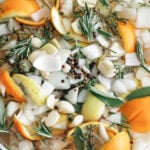
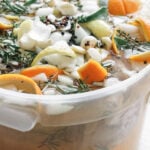
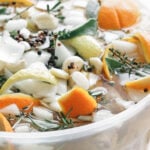

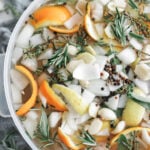
A wet turkey brine is one of the easiest and oldest ways to bring big-time flavor to a turkey. With its bold, salty, herby, sugary flavors, the brine surrounds the bird, and over the hours it sits in the fridge, the salt seasons the meat all the way through. To this day, it’s hands down my favorite way to prepare a turkey.
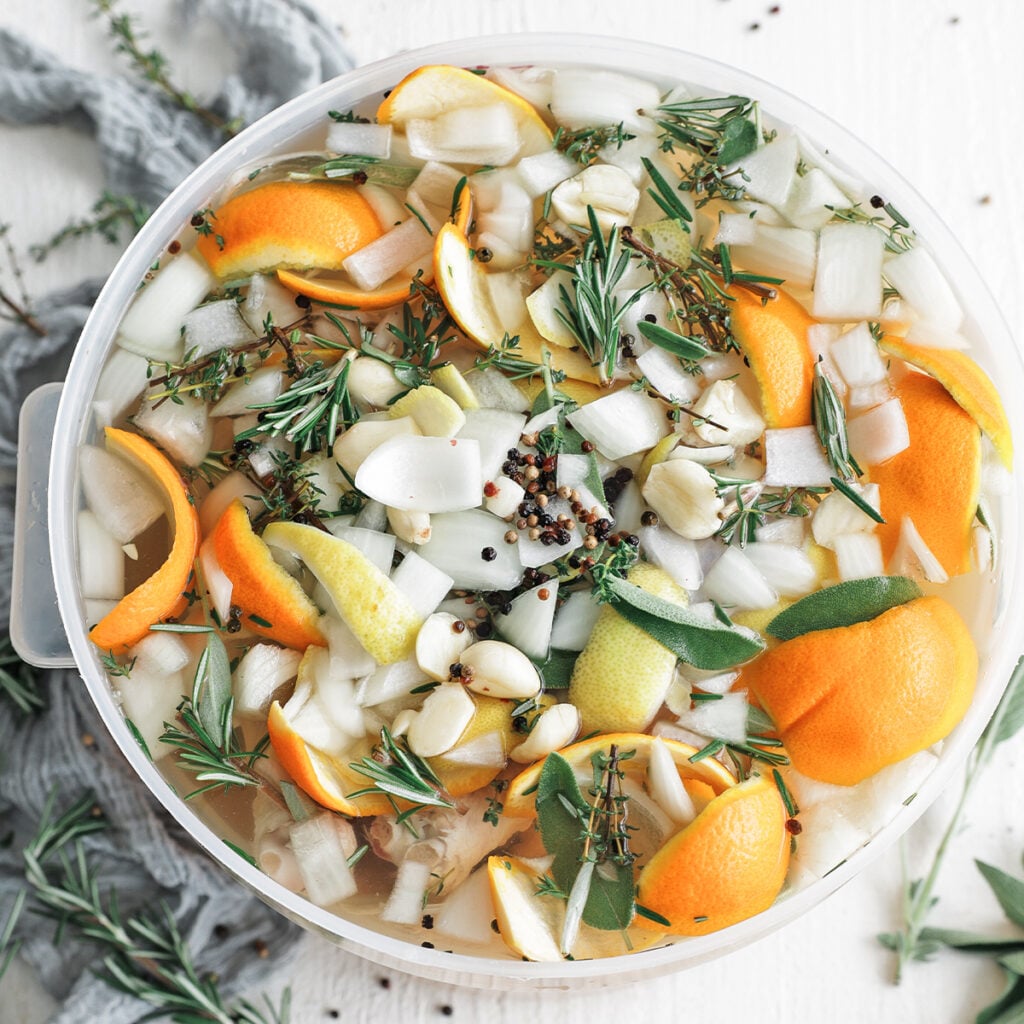
About 15 or so years ago, I made brined turkeys for my wife’s side of the family. They had never really had anything like it. About 10 minutes into Thanksgiving dinner with the entire family, which was about 40 people, my father-in-law asked, “Who here wants Billy to make the turkey every year?” Everyone raised their hand. Well, I’ve been on the hook ever since, and honestly, the secret is the brine.
And it doesn’t matter if you’re making a smoked turkey or a roast turkey. It has to be flavorful before either one, and this is definitely the way. Plus, there’s no cooking, so it comes together in about 15 minutes.
Why Wet Brine a Turkey?
One of my favorite aspects of brining is that because the turkey sits in a wet solution, it comes out so moist. The second I cut into it, I can see how juicy it is. The salt helps it to hold moisture and break down some muscle proteins, so the meat stays tender. I haven’t found another method that gives me this much tenderness and juiciness.
Don’t get me wrong, dry brining is fantastic, and I do that with my spatchcock turkey, but there is something about a wet brine that makes it that much better.
Ingredients and Substitutions
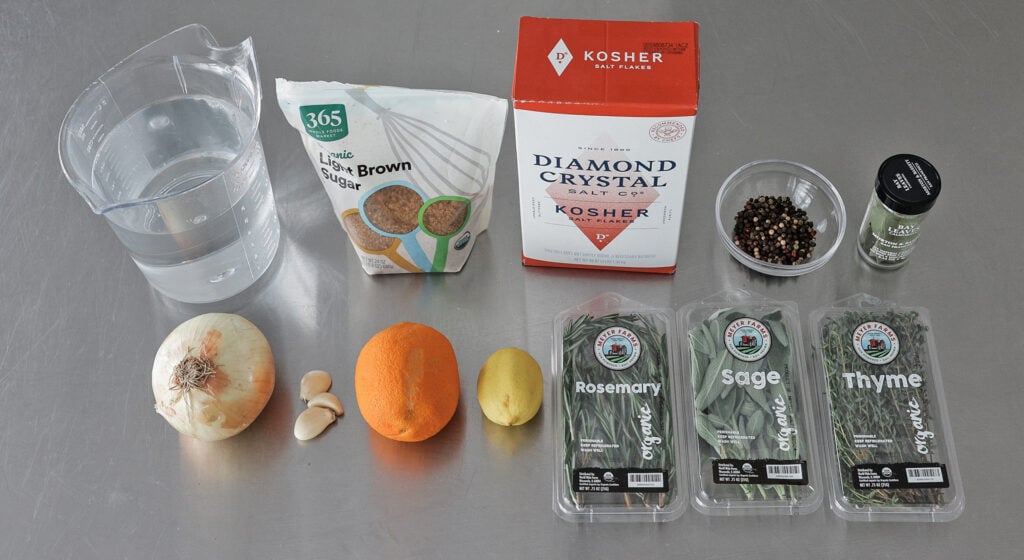
- Salt – To me, this is the backbone of this recipe. This naturally seasons the turkey. I used Diamond Crystal kosher salt in this recipe. I’ve also used Morton kosher salt, and when I did, I used 7/8 cup from this recipe.
- Sugar – I like to use light brown sugar. You get a little bit of those molasses flavors in there. It’s just a deeper sugar flavor for me, and I like that added sweetness and extra browning it gives the skin.
- Water – Simple tap water is all you need as the main liquid.
- Orange – I love the warm, sweet, floral-like flavors that oranges give in this.
- Lemon – Some nice sharp, bright citrus-like flavors to help give more aromatics to the turkey.
- Sage – This adds some great savory, earthy tones with some gentle hints of pepper.
- Thyme – This is absolutely my favorite herb, as it brings gentle lemony flavors into the turkey.
- Rosemary – It adds piney, lemon-like flavors you can taste in the meat. This has quickly become one of my go-to herbs.
- Bay Leaves – This gives a gentle, woody bitterness. Italians seem to add bay leaves to everything, so it just makes sense for me.
- Onion – Adds simple, savory sweetness, and you can use a yellow, white, sweet onion, or even a shallot.
- Garlic Cloves – I smashed the cloves to help them release their oils and flavors before adding them to the brine, so I could get those tasty garlicky flavors.
- Peppercorns – I like to round out the seasoning with a multi-colored peppercorn blend. Black peppercorns alone work just as well.
How to Brine a Turkey
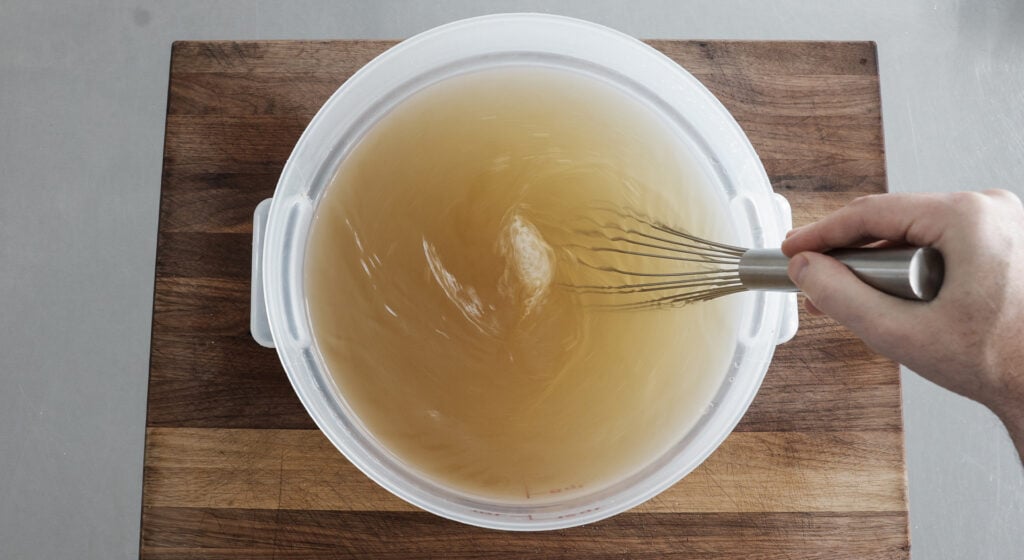
Dissolve the Salt and Sugar: The main goal here is to ensure the salt and sugar are completely dissolved in the water. Once this happens, you won’t feel or see any grit at all. The brine will essentially turn clear amber. If you still see some crystals at the bottom, keep whisking. When the salt and sugar aren’t fully dissolved, I know it’ll prevent the turkey from being seasoned evenly. Be sure to follow the ingredients exactly as written. I’ve accidentally mismeasured my salt before, and it became an overly salted mess.
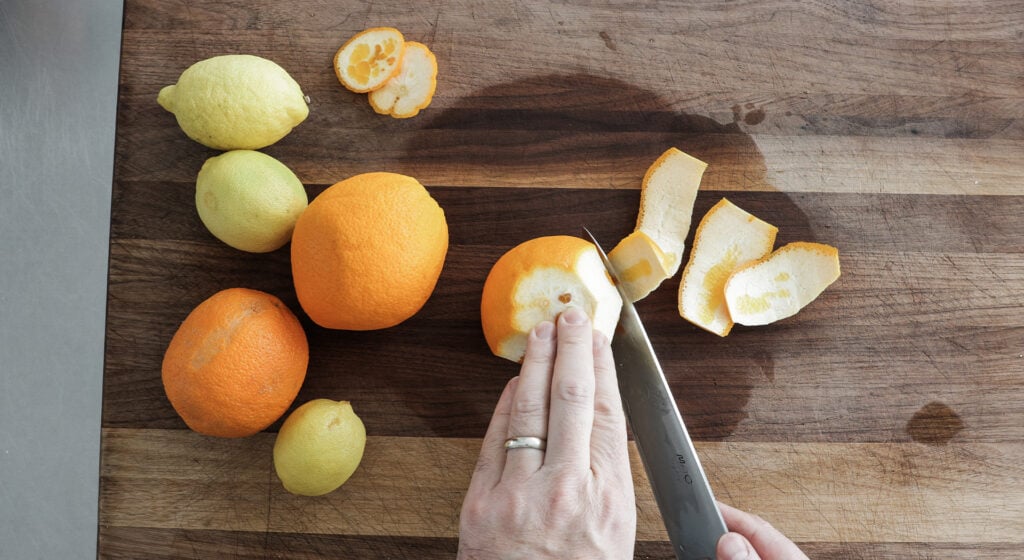
Add the Aromatics: When peeling the citrus, don’t get too much white pith in there, as it can make the brine bitter. For a shorter brine, I like to cut the onion, garlic, and herbs into smaller pieces or dice them. This lets their flavors extract more quickly.
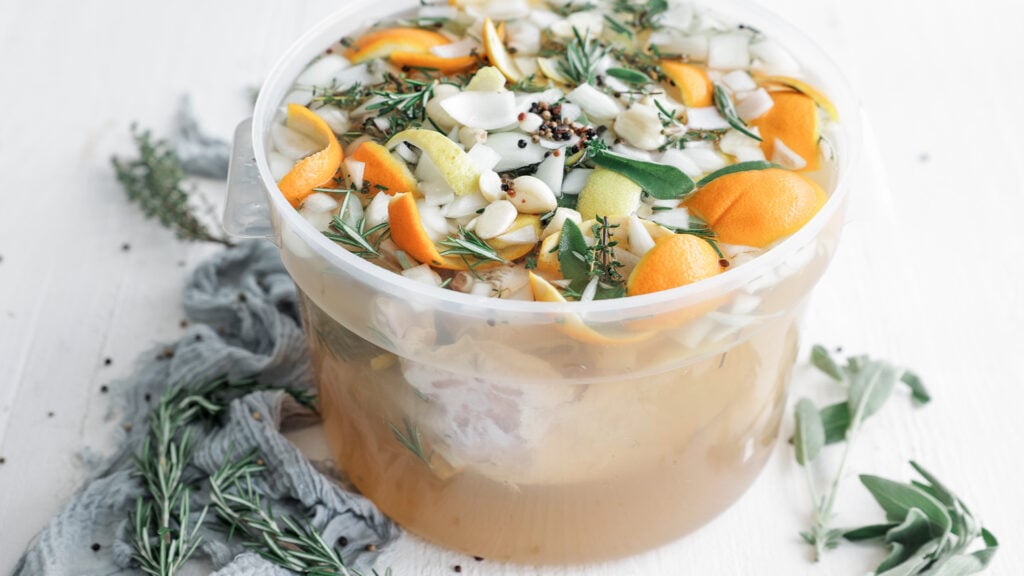
Submerge the Turkey: I make sure the giblets and neck are removed from the thawed turkey and that it is completely submerged in the brine in a food-safe container (I use this one). If it floats, which it most likely will, I add a few plates to help weigh it down. Also, keep it at 40°F or below in the fridge while brining.
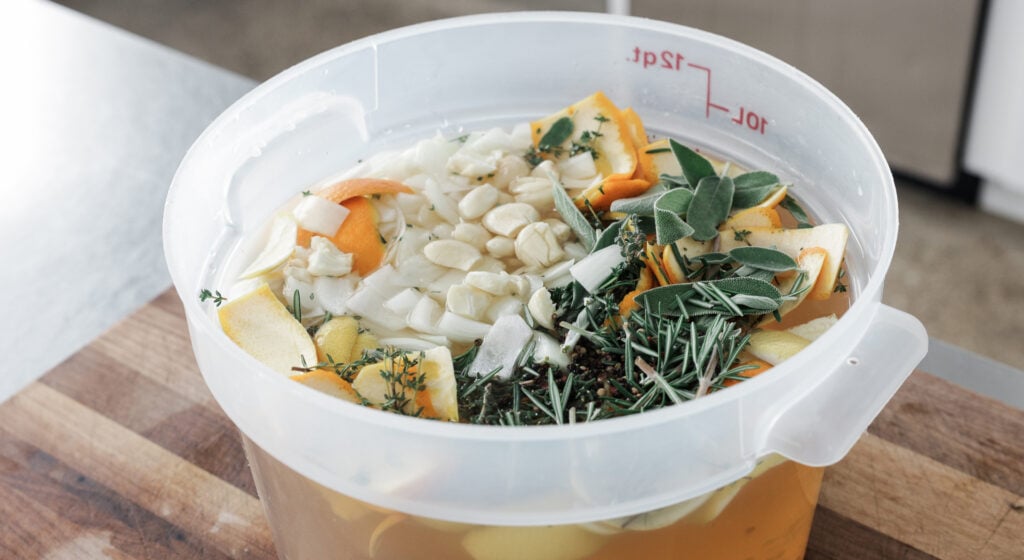
Brine It: This is where the flavor comes from. If you brine it for too short a time, it’ll only season the outside, not deep into the meat. Brine it too long, and you’ll end up with a salty, sponge-like turkey. See my recipe card below for brining times by turkey weight. You’ve got this, my friends.
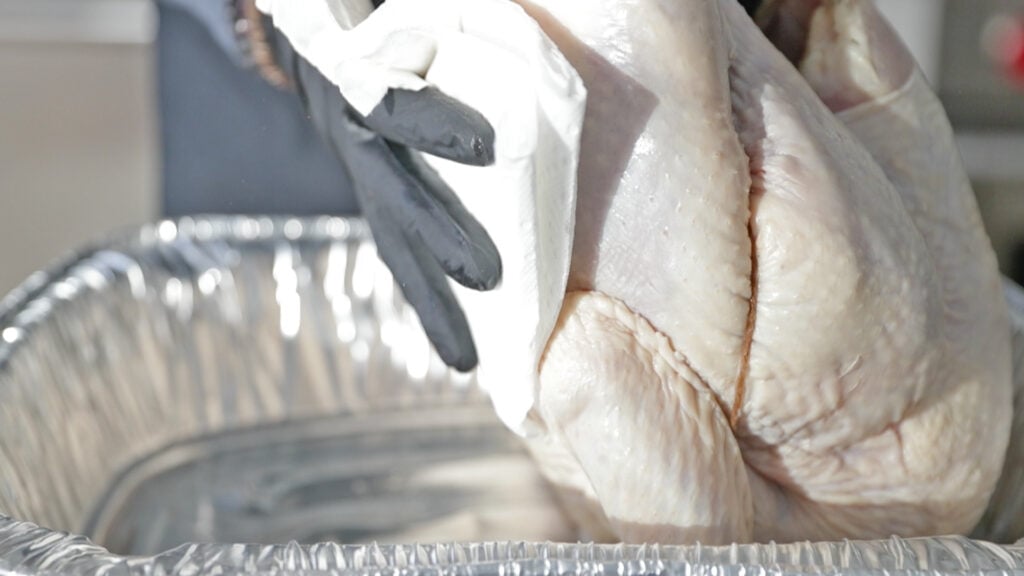
Dry the Turkey: Once the turkey comes out, I always throw away the brine. It has raw turkey in it, so you can’t reuse it. Be sure to remove the citrus peel, onions, garlic, or other aromatics from the cavity. Rinse the turkey well under cold water to remove any caked-on salt, sugar, or aromatics. I’ve made the mistake of skipping this step, and you won’t believe how salty it made the turkey. Then pat it dry thoroughly inside and out with paper towels. If you have time, and for the best golden-brown turkey results, let it air-dry over a rack on a sheet tray in the refrigerator for 12 to 24 hours. So, for Thanksgiving, I start the brine process 2 days before I cook it and serve it. Don’t add any more salt to it before cooking, because it’s already seasoned. Now, it’s ready to cook.
Chef Notes + Tips
Pre-Brined Label: Be sure your turkey isn’t labeled as enhanced, self-basting, or kosher, since those are already salted and will come out way too salty if you use this brine.
Leftover Citrus: You’ll see I used lemon and orange rind in the brine. Don’t toss the fruit. Instead, I cut up the peeled oranges and lemons and add them to the cavity of the turkey before roasting or smoking for extra citrus flavor.
Brined Drippings: The turkey will render out some drippings, and FYI, those are salty, so taste your gravy before giving it a final season because it may already be spot on.
Bigger Birds: If the turkey is over 20 pounds, I recommend making 1 ½ batches of this recipe.
More Thanksgiving Recipes

Turkey Brine Recipe
Ingredients
- 1 ½ cups Diamond Crystal kosher salt, or 7/8 cup of Morton kosher salt
- 1 cup packed light brown sugar
- 2 gallons of cold water
- Rind of 2 oranges, about 1-inch-wide strips
- Rind of 3 lemons, about 1-inch-wide strips
- 20 to 25 fresh sage leaves
- 20 fresh thyme sprigs, cut up into roughly 1-inch pieces
- 3 fresh rosemary sprigs, cut up into roughly 1-inch pieces
- 1 large yellow onion, peeled and diced
- 12 smashed garlic cloves
- 2 teaspoons peppercorns
- 2 bay leaves
- 12-20 pound fresh or frozen thawed turkey, giblets and neck removed
Instructions
- Add the salt and brown sugar to a large food-safe container or brining bag big enough to hold the turkey. Add the cold water and whisk until the salt and sugar are completely dissolved.
- Next, add in all the remaining ingredients and mix to combine.
- Place the turkey in the brine and make sure it’s completely submerged in the brining liquid. If it floats, weigh it down with a few plates. Cover it and refrigerate it at 40°F or below.
- For a turkey under 12 pounds, brine it for 12-16 hours. For a 12-16 pound turkey, brine it for 16 to 20 hours. For a 16 to 20 pound turkey, brine it for 18 to 24 hours. Finally, for a turkey over 20 pounds, brine for 24 hours. Do not brine any size turkey for over 24 hours. I recommend making 1 ½ batches of this recipe for birds over 20 pounds.
- Remove the turkey, discard the brine, and remove any aromatics from the cavity. Rinse the turkey thoroughly inside and out.
- Pat the bird dry on the surface and in the cavity with paper towels. If you have more time, air dry it on a rack over a sheet tray uncovered in the fridge for 12 to 24 hours. Do not add more salt to it before cooking.
Notes
Nutrition


Get the Latest Recipes
Join Chef Billy’s newsletter for the latest scratch-made recipes, cooking tips, and techniques.