




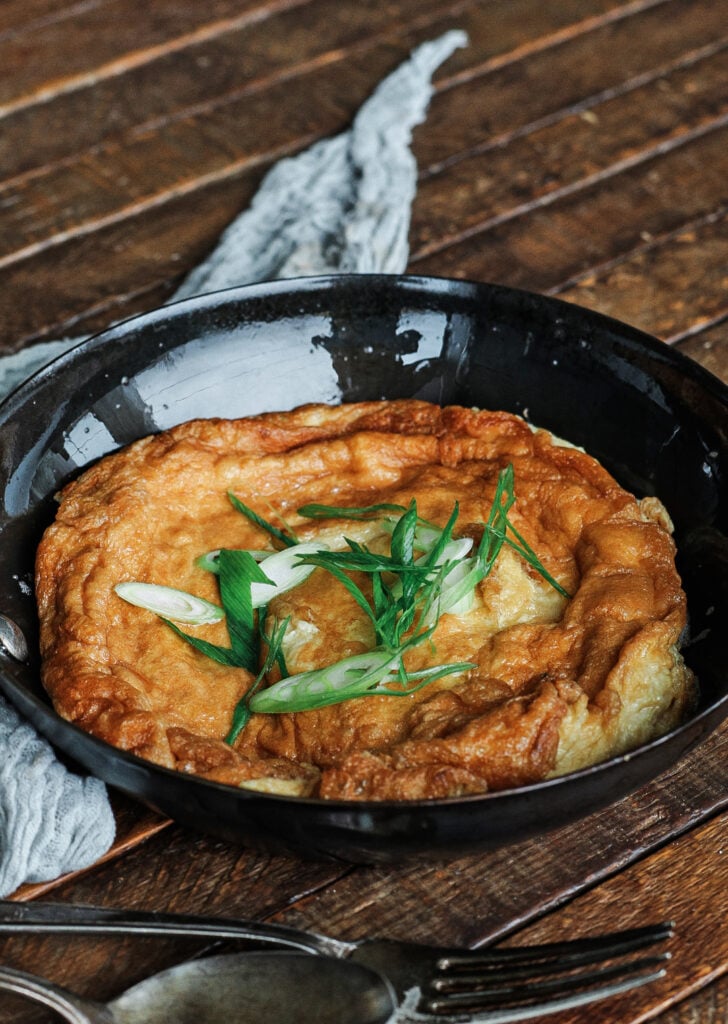
This Thai Omelette could be the fluffiest omelette of all time. Whisked eggs are combined with fish sauce and soy sauce, then deep-fried until puffy on the outside and soft on the inside. It’s like having authentic Thai street food at home.
I can’t spend all of my time travelling, so instead, I get creative in the kitchen and treat my wife and daughter to recipes from around the world. Our family dinners always feel extra special when I add these Korean Short Ribs or this Maduros Recipe to the menu.
Thai Omelette (Kai Jiew)
A Thai egg omelette, also called Kai Jiew or Khai Jiao (meaning “fried egg”), has been a favorite for generations. It’s one of those dishes that feels almost too simple but is somehow completely satisfying at the same time. You’ll see them at street stalls all over Thailand.
Unlike French or Western-style omelettes, Thai omelettes aren’t carefully cooked—they’re deep-fried! The hot, bubbly oil makes the eggs golden and crispy on the outside while keeping the inside soft, fluffy, and pillowy. It’s pretty similar to Chinese egg foo young, but with an unmistakable umami-forward Thai flavor from fish sauce and soy sauce.
What I love most is that this is a no-nonsense recipe. Just whisk the eggs, dump them in hot oil, and enjoy. It’s one of my favorites to serve alongside fluffy rice and tom yum soup for lunch or dinner.
Ingredients and Substitutions
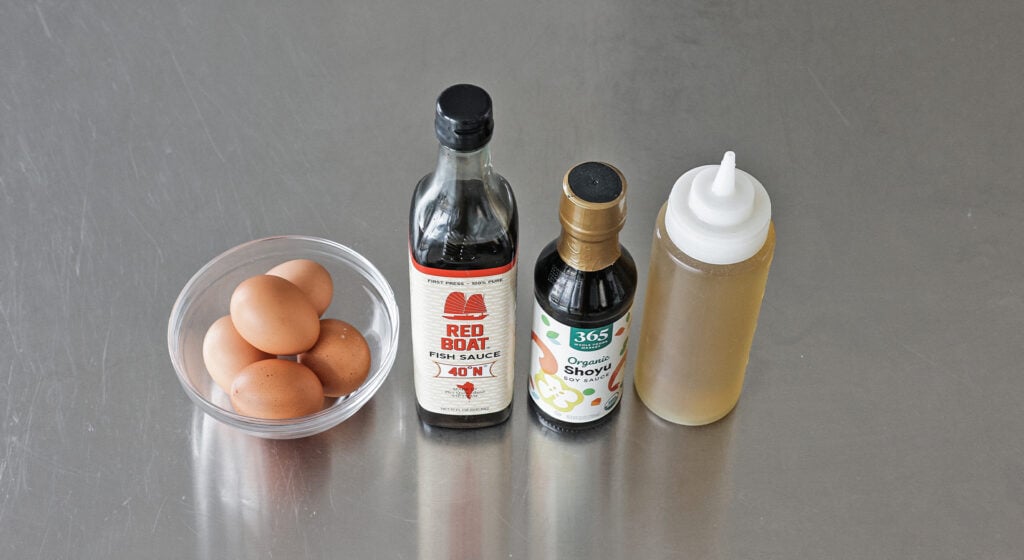
Just like a classic French omelette, my Thai omelette recipe makes whisked eggs the star. However, it’s the handful of authentic ingredients that make this street food copycat stand out.
- Eggs – I used 3 large eggs to make one big omelette (enough for 2 people).
- Fish Sauce – I only added a small splash to give the eggs that authentic boost of umami.
- Soy Sauce – Some Thai omelette recipes only combine the eggs with fish sauce, but I like adding a drizzle of soy sauce, too. It adds a little extra umami that I love. You can always skip it if you’d prefer.
- Oil – I’ll reach for any deep frying oil I have on hand, like vegetable or canola oil.
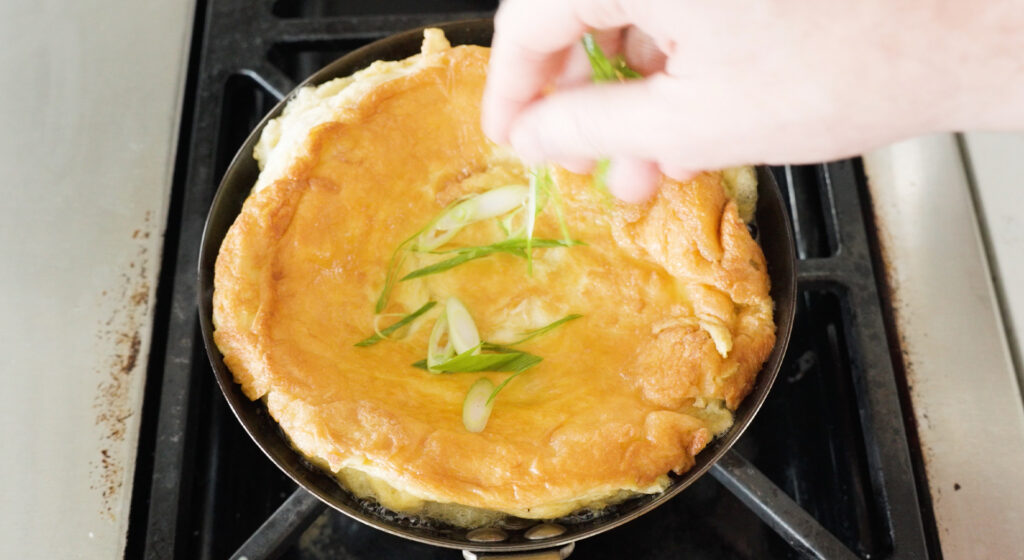
- Green Onions – I sliced them and sprinkled them over the cooked omelette for garnish. Other garnishes you can use are fresh cilantro, Thai basil, sesame seeds, sriracha, or chili oil.
How to Make a Thai Omelette
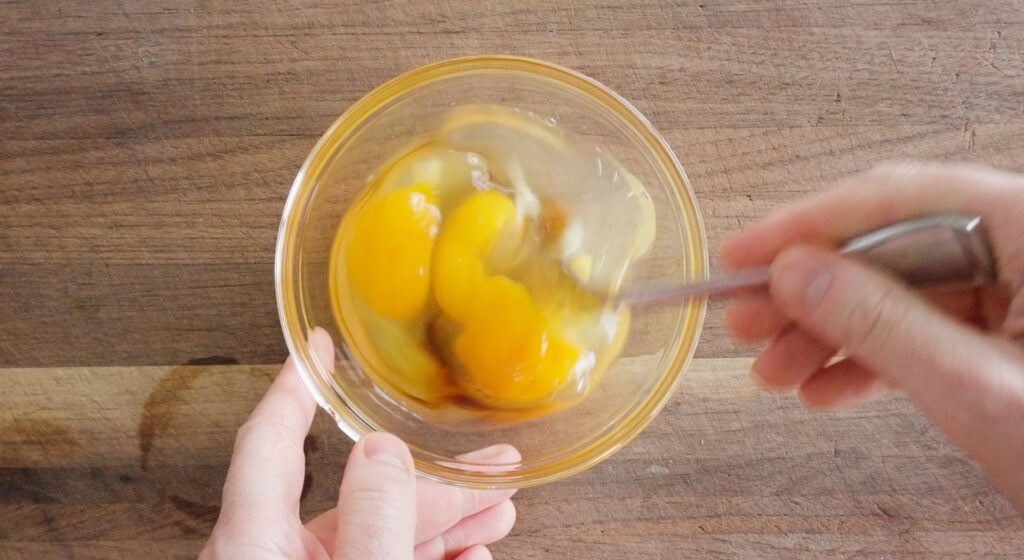
Whisk: To start, I crack the eggs into a medium bowl and whisk in the fish sauce and soy sauce. Whisking is crucial for a light, airy omelette.
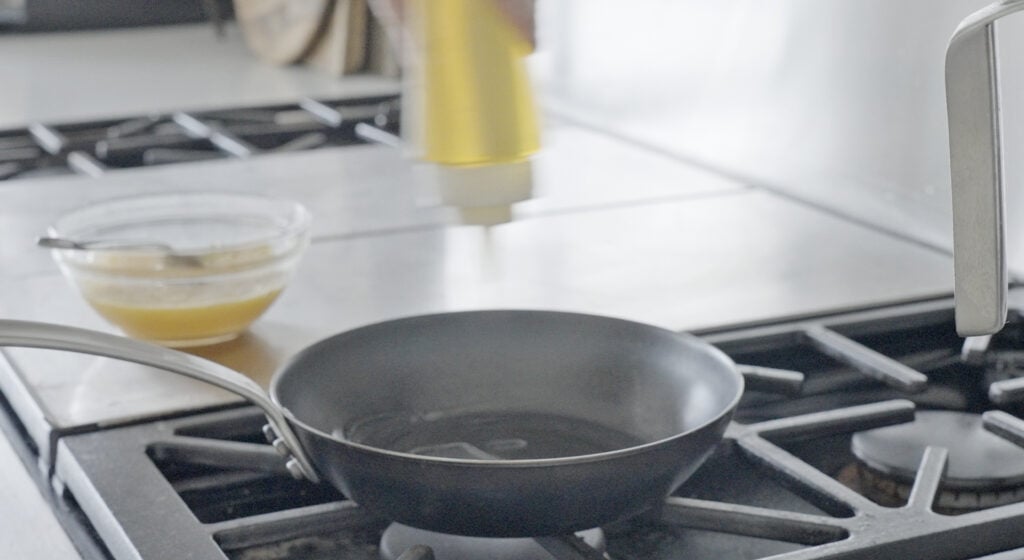
Heat oil: I heat my skillet over medium-high heat and add the oil. I let it heat until it’s just barely smoking.
Fry: Next, I carefully pour the egg mixture straight into the hot oil and let it fry undisturbed for 60 to 90 seconds. It will puff up dramatically and turn crisp and golden.
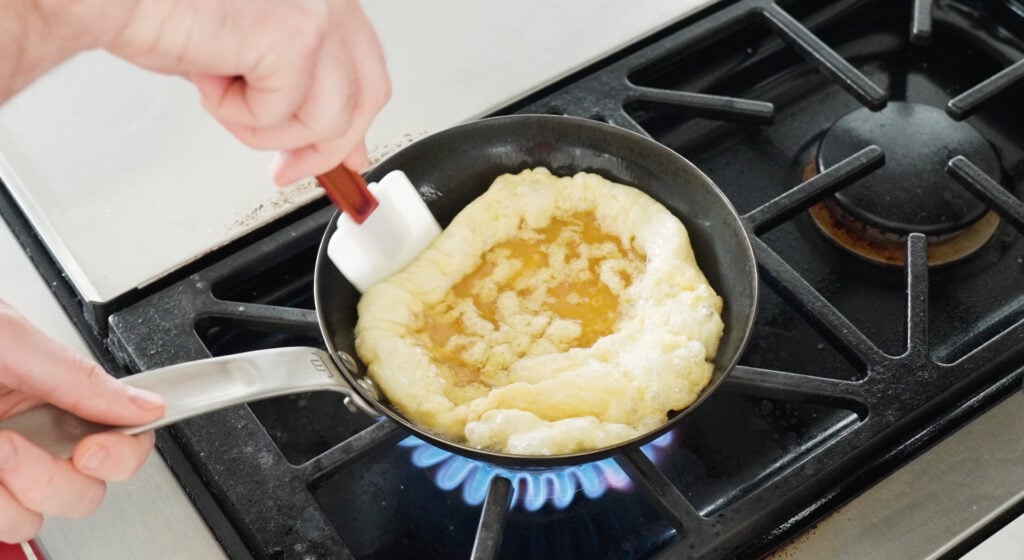
Flip: Once the bottom is firm, I flip the omelette and cook the other side until it has set.
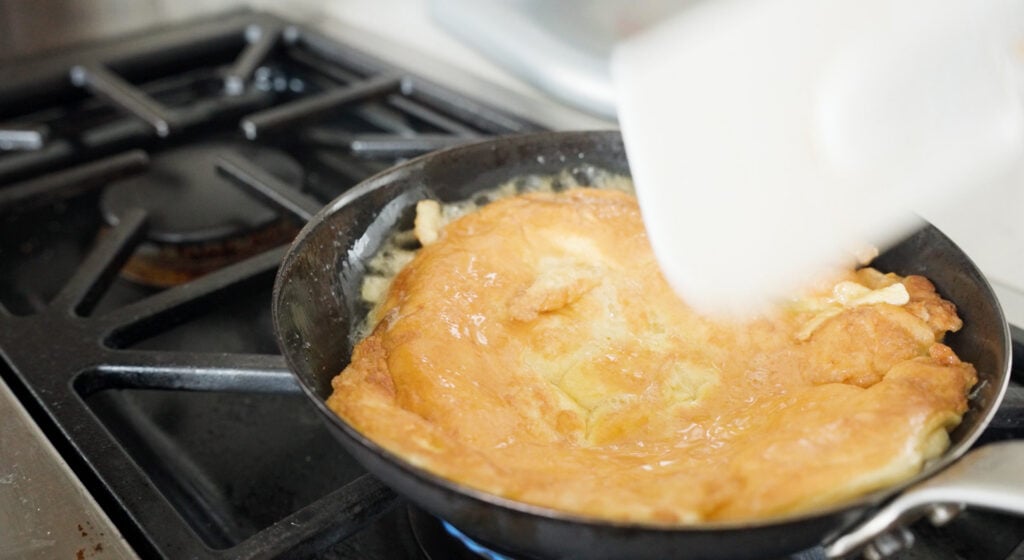
Serve: I serve the omelette straight from the pan, garnishing it with sliced green onions.

Chef Tip + Notes
I’m essentially deep frying the eggs when I’m making Thai omelettes, which means the oil needs to be hot hot hot. I know the oil is ready for frying when it’s very lightly smoking and a small amount of egg sizzles as soon as I drop it into the skillet. This high heat is what creates crispy, lacy puffed eggs while keeping the inside soft and fluffy.
- Whisk it well: Thai omelette recipes always start by whisking the eggs and fish sauce together until the mixture is very smooth and frothy. There shouldn’t be any gloopy egg whites in the batch!
- Cook one omelette at a time: I never overcrowd my pan because that lowers the oil temperature. I like to use an 8-inch nonstick or carbon steel pan, which is small enough for control but big enough to let the omelette puff up.
- Don’t poke or prod: Resist the urge to mess with the omelette while it’s frying. Just leave it alone, and you’ll get the crispy edges and fluffy inside.
- Too oily? If your deep-fried omelette feels greasy after frying, just drain it briefly on a paper towel-lined plate. Easy fix.
- Filling ideas: In Thailand, eggs are often combined with diced meat and veggies before being fried into an omelette. Sound good to you? Then go ahead and combine the egg mixture with shredded chicken, pork, shrimp, tuna, chopped bell peppers, sliced onions, or anything else you like. Just don’t overload it, or else it won’t puff or crisp.
Serving Suggestions
My favorite way to serve this fluffy omelette is alongside a bowl of tom yum soup. I’ll drizzle some Sriracha or Thai chili sauce over the egg, then dig into this cozy meal for lunch or a light dinner.
Thai omelettes are perfect for serving family-style with steamed rice, too. I’ll usually have some pork adobo on the side for extra protein.
Make-Ahead and Storage
Make-Ahead: The omelette should be eaten as soon as it’s done frying. That said, if you’re cooking more than one, you can keep the cooked omelettes warm on a baking sheet in a low oven while you finish the rest.
How to Store: Store the leftovers in an airtight container in the fridge for 2 to 3 days.
How to Reheat: I like to gently warm up the omelette in a skillet over medium heat for a few minutes to restore its crunchy texture. Microwaving works, too, but it will soften the edges, so it’s my last resort.
More Asian-Inspired Recipes
- Easy Chicken Satay
- Lumpia (Filipino Spring Rolls)
- Bok Choy with Garlic Sauce
- Shrimp Spring Rolls
- Soy Sauce Eggs

Thai Omelette Recipe

Ingredients
- 3 large eggs
- 1 teaspoon fish sauce
- 2 teaspoons soy sauce
- ¼ to 1/3 cup cooking oil
- sliced green onions for garnish
Instructions
- In a medium-sized bowl, add the eggs, fish sauce, and soy, and whisk until combined. Set to the side.
- In an 8” non-stick or carbon steel pan, add the oil and heat until just barely smoking.
- Pour in the egg batter and fry for 60 to 90 seconds. It will puff up a lot and start to harden.
- Flip the omelette over using a rubber spatula and cook for an additional 30 to 60 seconds.
- Remove from the heat and serve in the pan or plated, garnished with sliced green onions.
Thai Omelette Recipe