
Shrimp Spring Rolls Recipe

- Published
- 6 comments
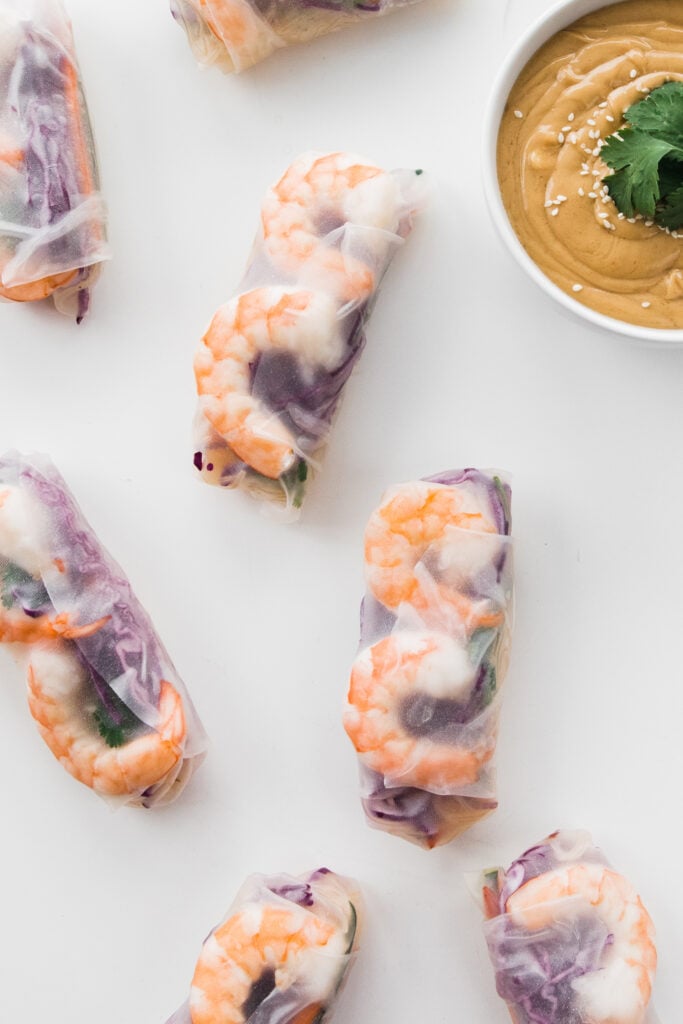
These shrimp spring rolls are fresh, not fried, and loaded with julienned vegetables, cilantro, rice noodles, and parboiled shrimp all wrapped in soft rice paper. I serve them cold with a homemade peanut dipping sauce and the best part they are ready in less than 40 minutes.
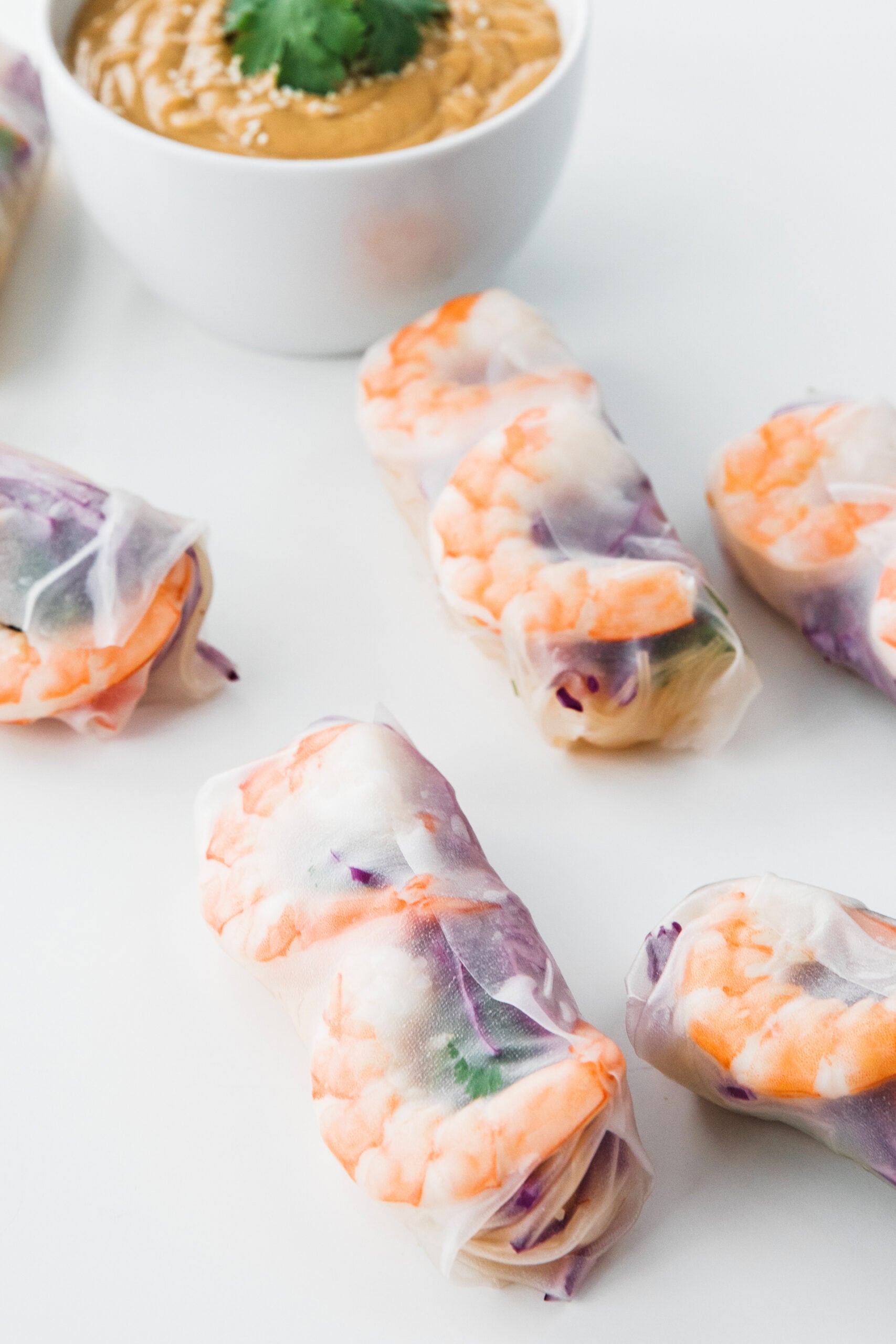
These spring rolls are one of my all-time favorite things to eat. I love cooking and serving shrimp because they are simple to prepare and cook in minutes, and wrapping them in rice paper with fresh vegetables makes for a light appetizer. If you love shrimp like I do, my shrimp bisque is rich and comforting, and my shrimp scampi is a classic that never gets old.
Shrimp Spring Rolls
Spring rolls are called spring rolls because they are traditionally served on the first day of the Chinese New Year in early spring. The version I make here is Vietnamese-style, which uses rice paper wrappers and serves the rolls fresh and cold, as opposed to the Chinese egg roll, which uses wonton wrappers and is fried. Vietnamese spring rolls, also known as gỏi cuốn, became popular in the United States through Vietnamese restaurants and are now a staple appetizer in homes and restaurants across the country.
The rolling technique is the part that trips people up the most, but it is really the same process as making a burrito. I soak one sheet of rice paper at a time in warm water until it is soft and pliable, lay it flat on a clean surface, and arrange the shrimp, vegetables, herbs, and noodles in the center with about an inch of space on each side. I fold the left side to the right and the right side to the left, then roll it up tight from the bottom. Super easy!
Once I make two or three of them, I get into the rhythm and the rest go fast. The rice paper becomes sticky as soon as it gets wet, so timing matters. Now let me show you step by step how I make these easy shrimp spring rolls so you can enjoy them this season.
Ingredients and Substitutions
This recipe is all about fresh ingredients and contrasting textures. The crunch of the vegetables, the softness of the rice paper, and the chew of the noodles all work together.
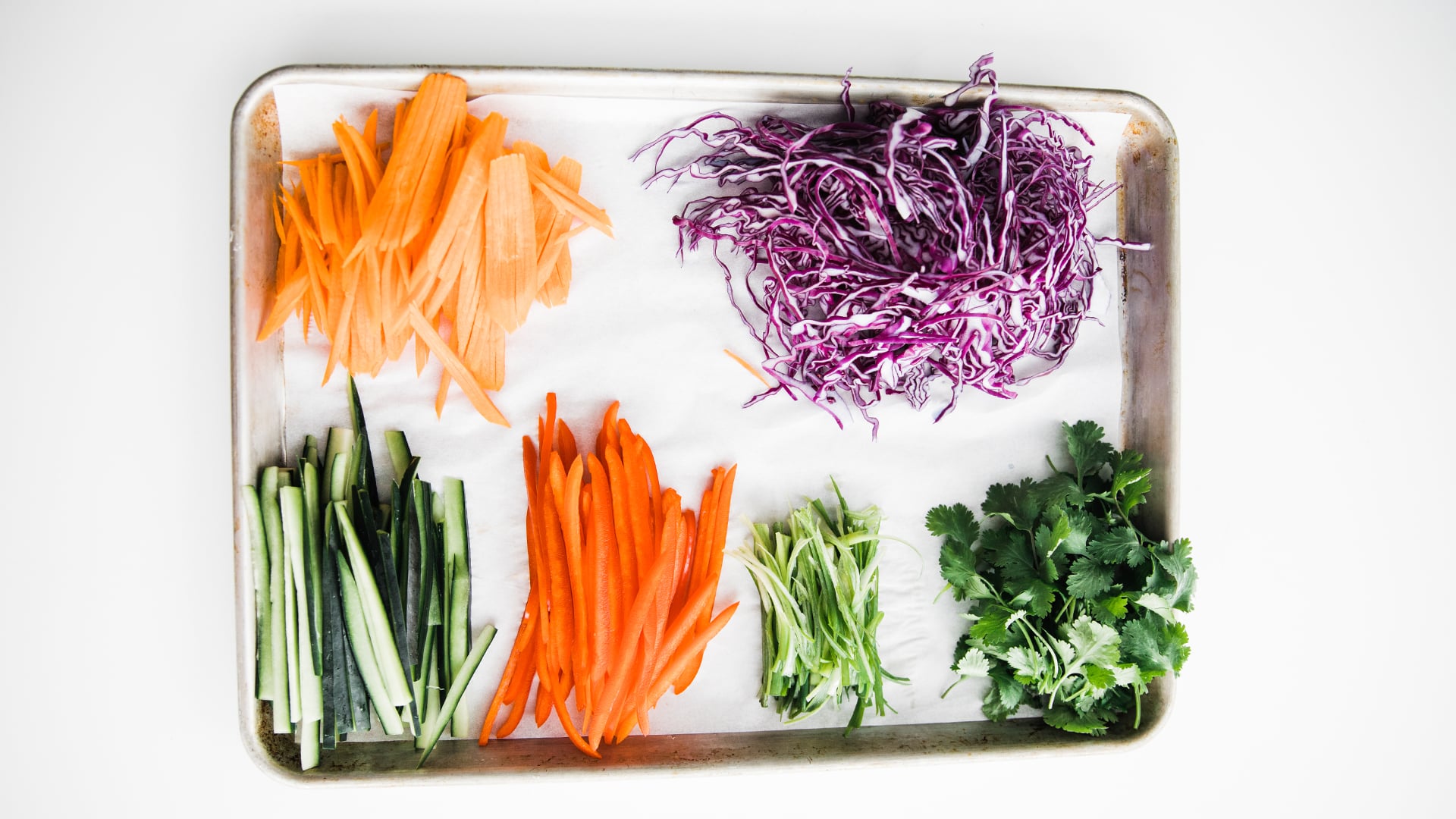
- Rice Paper – I use round rice paper sheets, which are available in the Asian aisle of most grocery stores.
- Shrimp – I use 16/20 count shrimp that are parboiled and completely cooled before assembling. Pre-cooked shrimp from the store work if you want to save time. Any size will work, but larger shrimp are easier to arrange in the roll.
- Vegetables – I julienne cucumber, carrot, and red bell pepper, and finely shred red cabbage. The julienne cut keeps everything uniform and makes the rolls easier to wrap.
- Green Onions – I julienne a few and lay them lengthwise in the roll for a mild onion flavor and a pop of green.
- Cilantro – I use fresh cilantro leaves and stems.
- Rice Noodles – I use thin rice stick noodles, cooked and cooled, tossed with a teaspoon of sambal for a little warmth. Wider noodles work too, though I prefer the angel hair-thin variety.
- Peanut Sauce – I serve these with my homemade peanut sauce for dipping. It is creamy, savory, and slightly sweet, and it complements the fresh vegetables and shrimp perfectly.
How to Make Shrimp Spring Rolls
Prep all the fillings: I julienne the cucumber, carrot, bell pepper, and green onions. I finely shred the cabbage, pick the cilantro leaves, and cook and cool the rice noodles. I parboil the shrimp, cool them completely, and peel and devein them. Everything needs to be prepped and arranged before I start rolling.
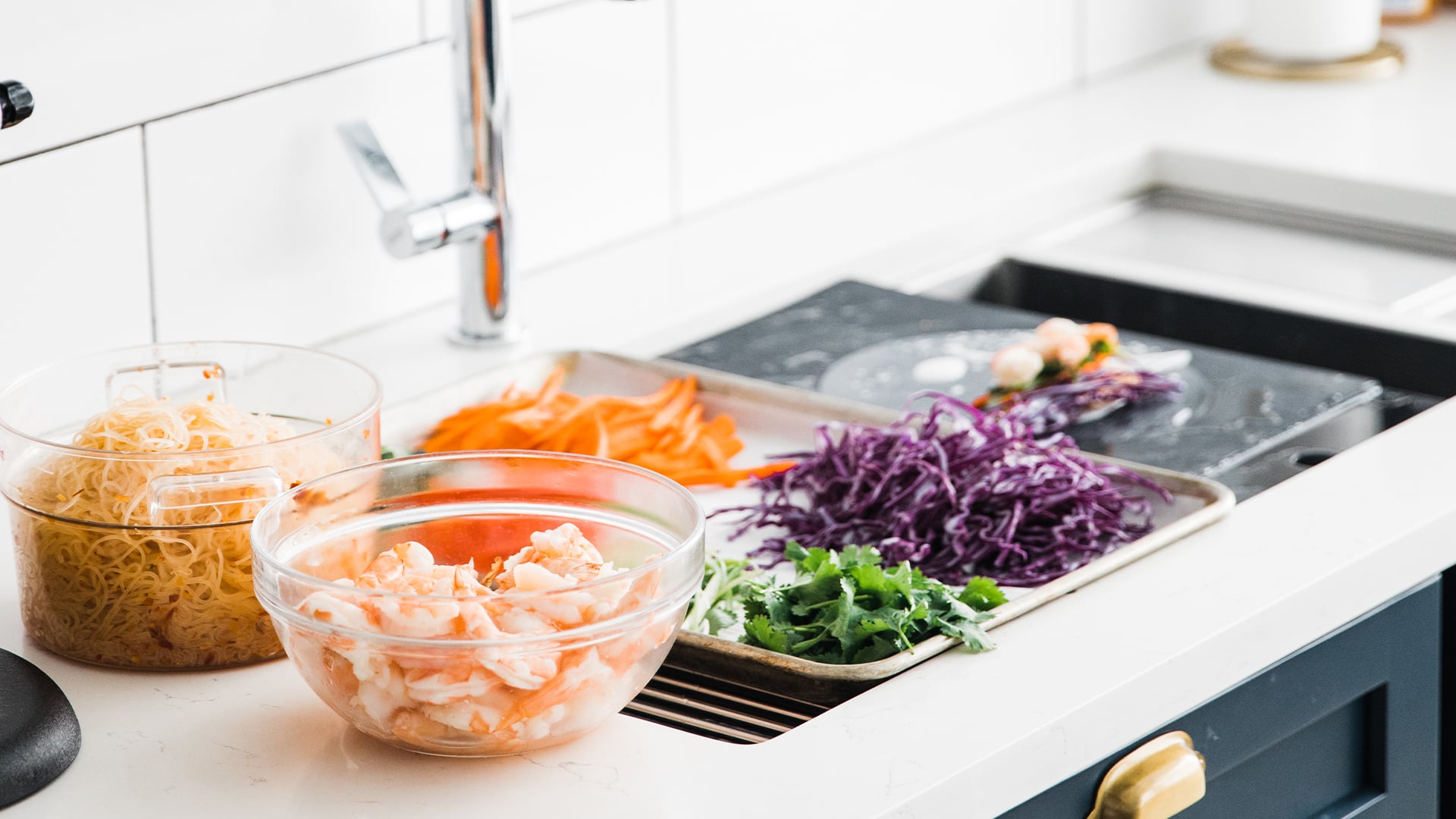
Soften the rice paper: I add one sheet of rice paper to a pan of warm water, between 110 and 120 degrees, and submerge it until it is soft and pliable. This takes about 15 to 20 seconds. I only soften one sheet at a time.
Fill the roll: I lay the softened rice paper flat on a clean surface. I place a few shrimp, some cucumber, carrot, bell pepper, cabbage, green onions, cilantro, and rice noodles in the center, leaving about 1 inch of space on each side.
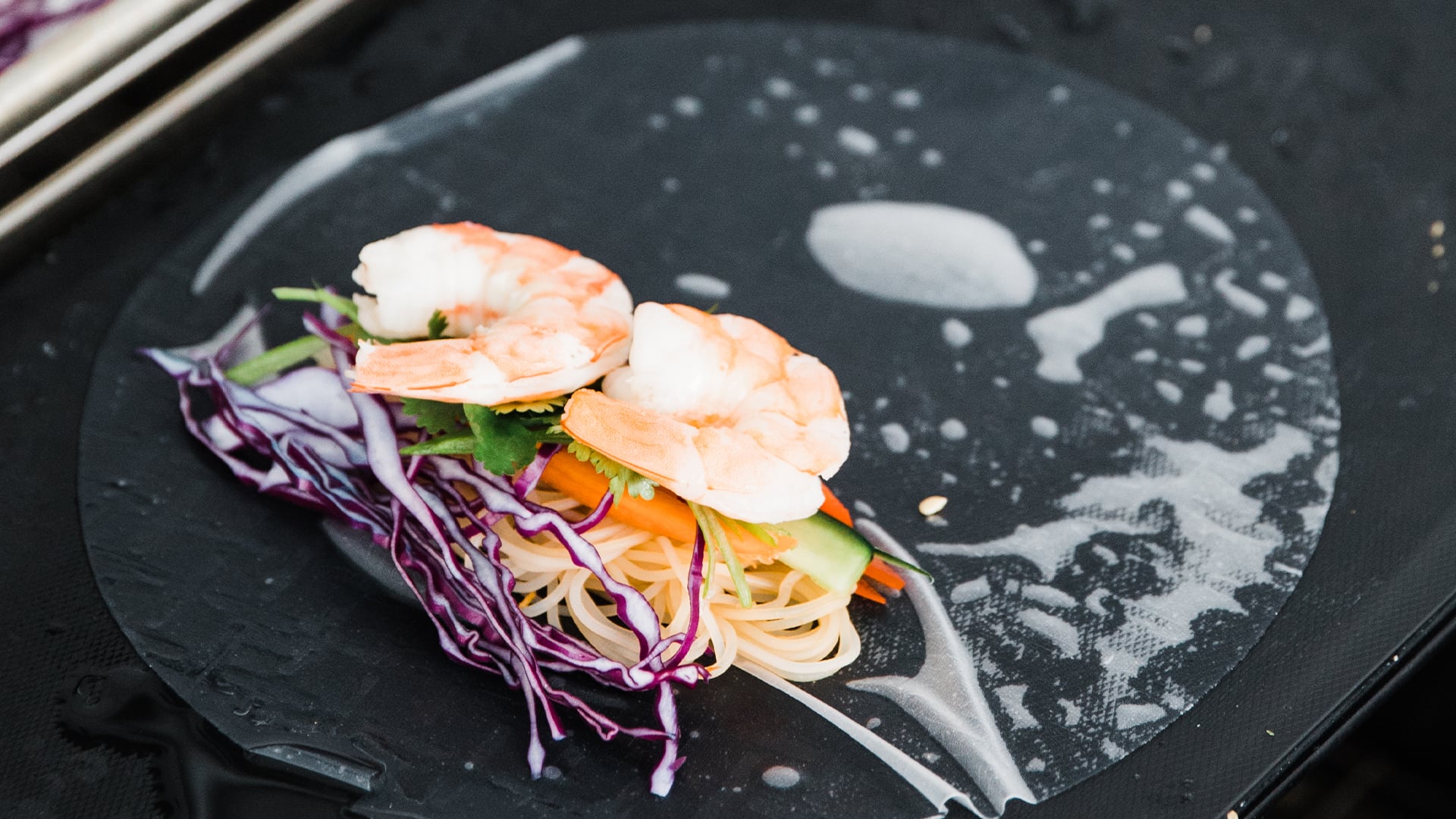
Roll it up: I fold the left side to the right and the right side to the left, then roll up from the bottom until the roll is tight and sealed. The rice paper sticks to itself once it is wet, so no additional binding is needed.
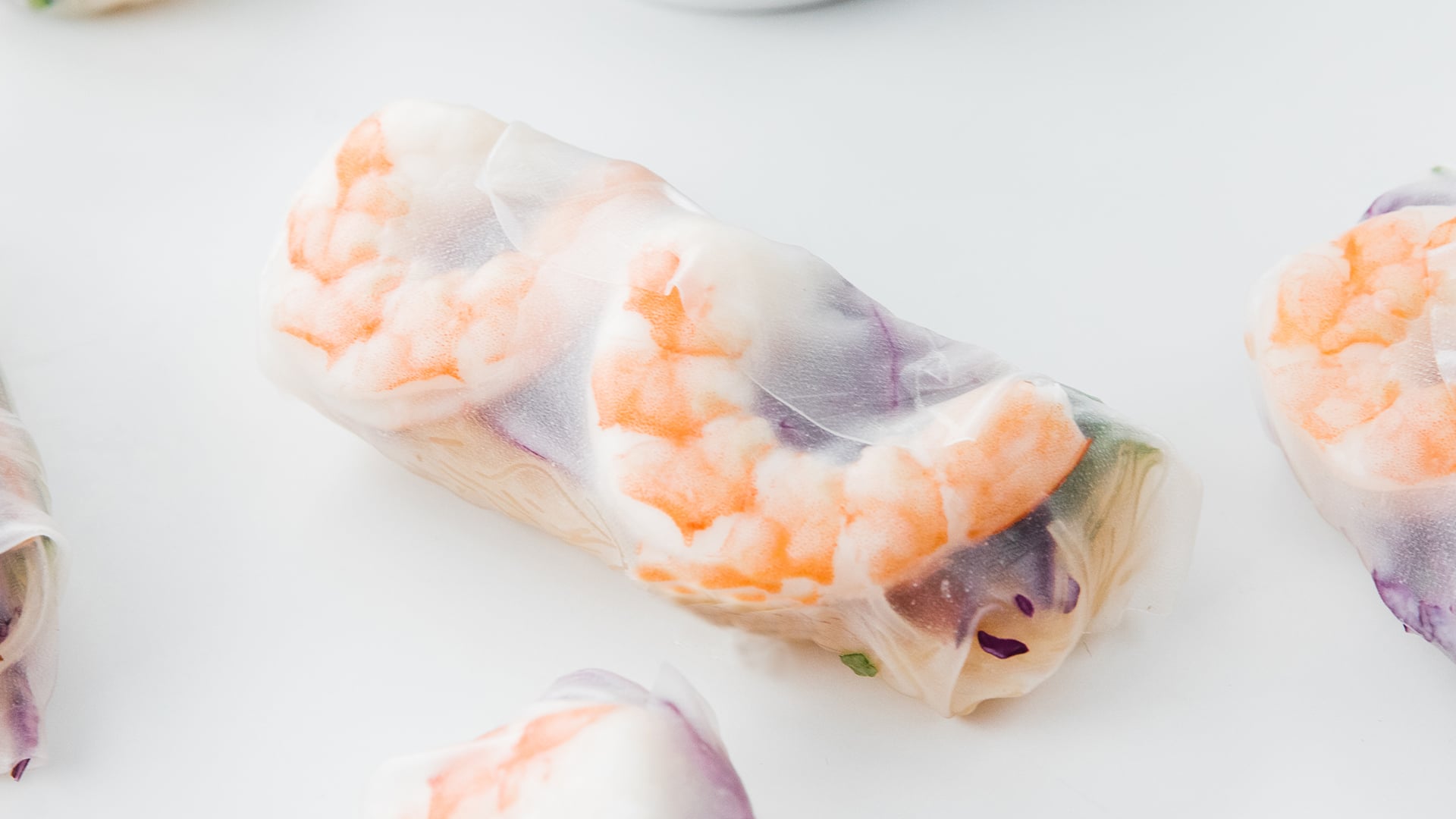
Repeat: I repeat with the remaining rice paper and fillings until all the rolls are made. I store finished rolls in damp paper towels to keep them from drying out.
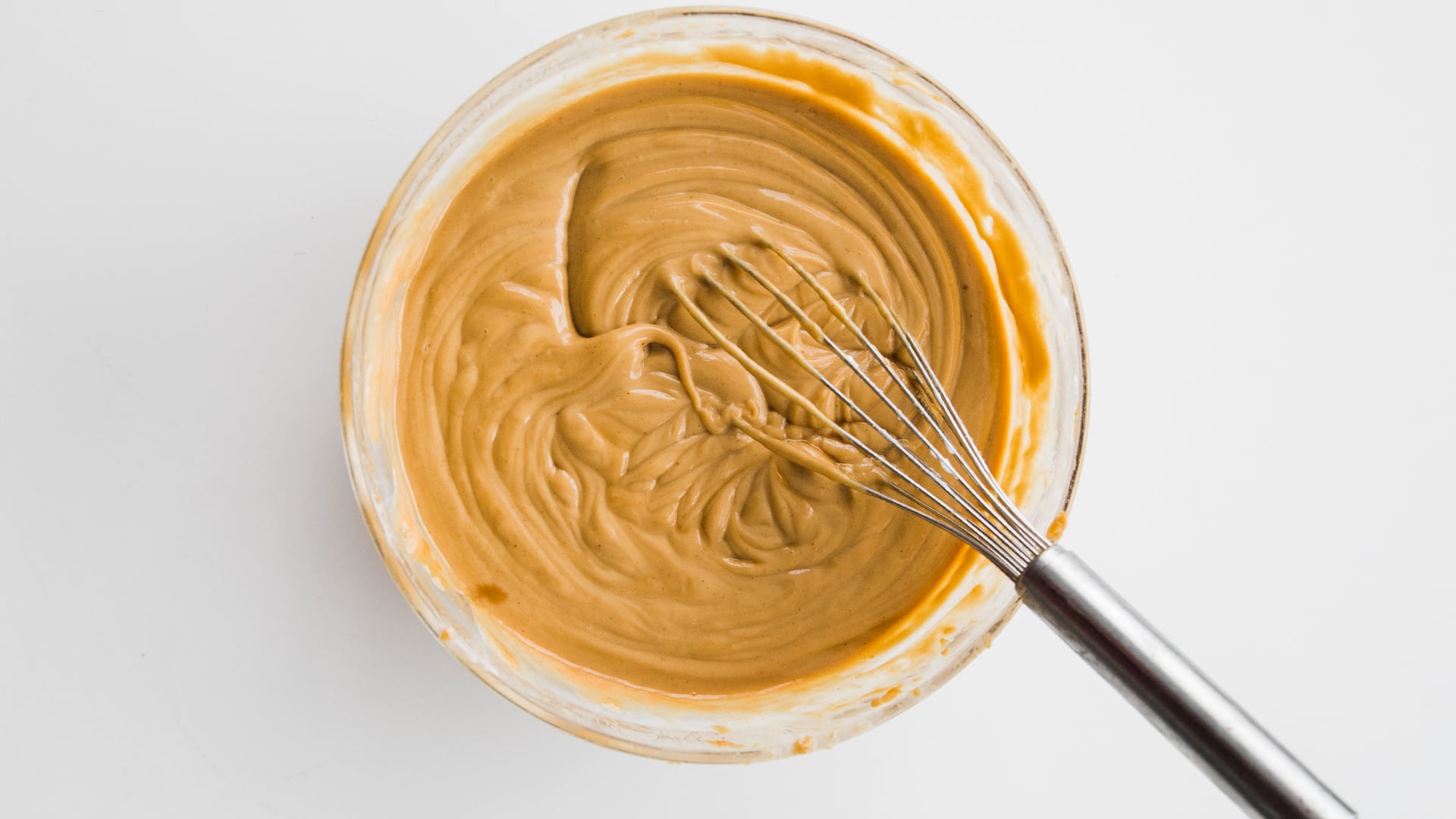
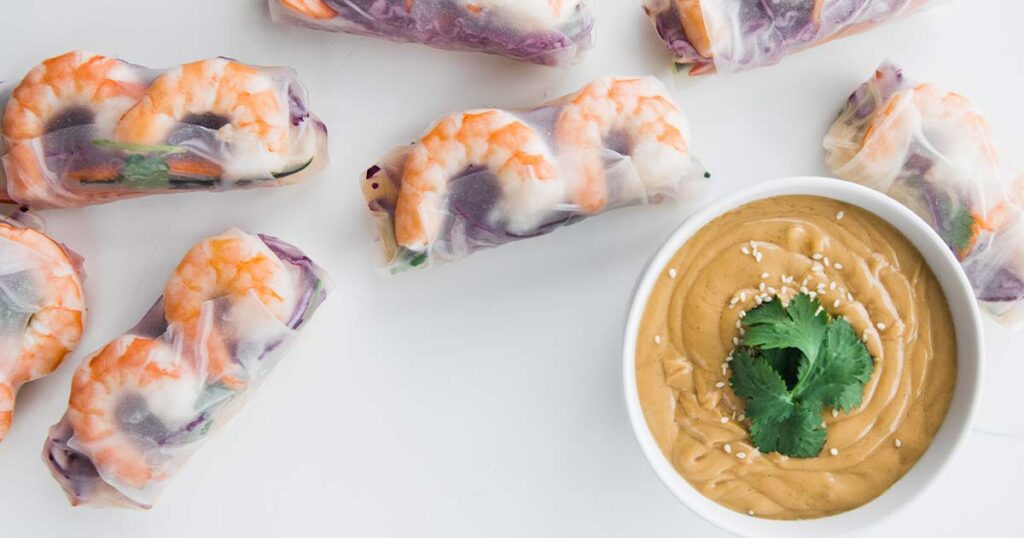
Serve with peanut sauce: I arrange the rolls on a platter and serve them with the peanut dipping sauce on the side.

Chef Tip + Notes
The biggest challenge with spring rolls is working with rice paper. It goes from stiff to sticky in seconds, so having all your fillings prepped and within arm’s reach before you start is the single most important step.
- One sheet at a time: I never soak more than one sheet of rice paper at once. If two sheets stick together, they are almost impossible to separate without tearing.
- Warm water, not hot: Water that is too hot will make the rice paper fall apart. I aim for 110 to 120 degrees, which is just warm to the touch.
- Keep it tight: A loose roll will fall apart when someone picks it up. I tuck the fillings in as tightly as I can when folding the sides and rolling from the bottom.
- Damp paper towels: After rolling, I lay the finished spring rolls on a tray covered in damp paper towels and cover them again with another damp towel. This keeps the rice paper from drying out and cracking.
- Get creative with fillings: I have also used mango, avocado, bean sprouts, and basil in these rolls. The recipe is very forgiving and can be customized to whatever you have on hand.
Serving Suggestions
I serve these as an appetizer when we have friends over, arranged on a long platter with the peanut sauce in a bowl. They also make a great light lunch when I pair them with a small side of fried shrimp: one fresh, one crispy.
When I am looking for a full meal, I serve the spring rolls alongside my Cajun shrimp pasta for a surf-and-surf spread. My wife doubles the peanut sauce every time because there is never enough. I also set out my bang bang sauce as a second dipping option because the creamy warmth pairs just as well with the fresh rolls.
Make-Ahead and Storage
Make-Ahead: I can make these up to several hours ahead of time. I place the finished rolls in a pan, cover them with a damp paper towel, and then wrap the pan tightly in plastic wrap.
How to Store: If I keep all the ingredients separate and the rolls unassembled, the prepped fillings will last 5 to 7 days in the refrigerator. Pre-rolled spring rolls keep in the refrigerator, covered in a damp paper towel and wrapped in plastic, for 3 to 4 days. These do not freeze well.
More Shrimp Recipes

Shrimp Spring Rolls Recipe
Ingredients
- 15 sheets of round rice paper
- 1 1/2 pound of cooked and cooled 16/20 shrimp
- 1 seeded julienne cucumber
- 1 peeled julienne carrot
- 1 seeded and julienne red bell pepper
- ½ finely shredded head of red cabbage
- 3 julienne green onions
- 1 cup of cilantro leaves
- 2 cups of cooked and cooled rice stick noodles mixed with 1 teaspoon of sambal
- 1 recipe for peanut sauce
Instructions
- Add 1 sheet of rice paper to warm water (110° to 120°) in a pan and submerge until soft and pliable.
- Place the rice paper down on a clean surface.
- Place a few shrimp, some cucumber, carrot, pepper, cabbage, green onions, cilantro leaves, and rice noodles to the center of the rice paper leaving about 1 inch to the left and the right of these ingredients.
- Fold the leftover to the right as far as you can and likewise the right to the left. From there, roll up until tight.
- Repeat until all ingredients have been used.
- Serve with the peanut sauce or store them covered in dampened paper towels.
I’ve tried making these twice and each time I run into a problem with the rice paper sticking to me and the cutting board. Any idea what I’m doing wrong? Otherwise, this is a very good recipe.
They are sticky, not sure theres a perfect way around that. Add a splash of water to the board first.
I happen to have a fennel bulb. Would that flavor be good in place of cabbage or is it too strong?
completely different flavor profiles. Can use a bit of it, but not in place of the cabbage.
Your recipe was so easy to follow. The dipping sauce is AMAZING! Thanks for sharing!
Oh awesome thanks for checking it out!