
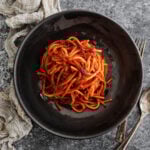
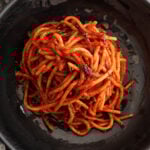
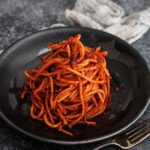
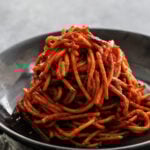
Spaghetti all’Assassina is the ultimate rule-breaker of the pasta world, combining charred spaghetti noodles with a fiery tomato sauce. I love how this iconic Southern Italian dish proves that you don’t need complicated ingredients or techniques to make something truly restaurant-worthy at home.
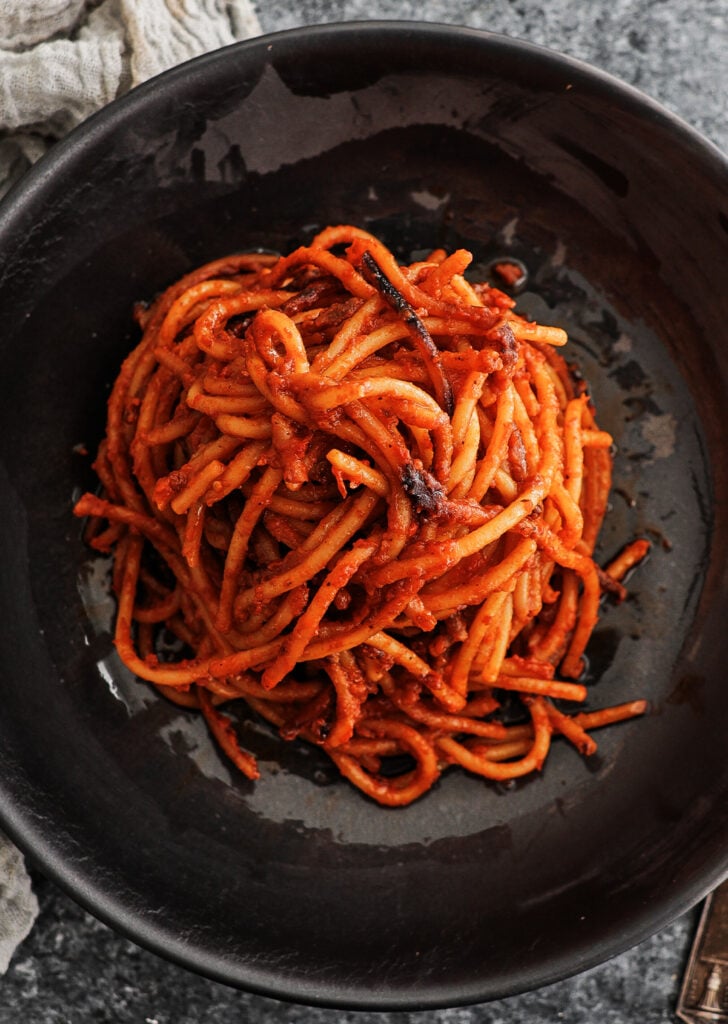
If you’re a fan of pasta dishes that come with a great story (as well as the garlic bread), then I know you’ll get a kick out of spaghetti all’assassina. It’s a little different from other Italian classics, like Pasta Puttanesca or Spaghetti Carbonara, but you’ll understand why I’m drawn to this rule-breaker as soon as you try it.
Assassin’s Spaghetti
Spaghetti all’assassina, or assassin’s spaghetti, is far from your average bowl of spaghetti and meatballs. This bold, unapologetically “burnt” pasta comes from Bari, the capital of Puglia, and is a standout example of Apulian cuisine.
According to local lore, back in the 1960s, a few guys stopped into a restaurant called Al Sorso Preferito and asked Chef Enzo Francavilla for something different. As the story goes, Enzo started adding ingredients to the pan but forgot about them, nearly scorching the whole dish.
Instead of starting over, he embraced that “burnt” flavor, unintentionally creating a pasta dish with dark color, crispy edges, and chili heat so intense that the diners joked he was trying to kill them. Hence, the name “Assassin’s Spaghetti.”
The name stuck, but don’t worry. This dish is more bold and rich than mouth-numbingly spicy. Once you taste it, you’ll understand why it’s everything great pasta should be.
Ingredients and Substitutions
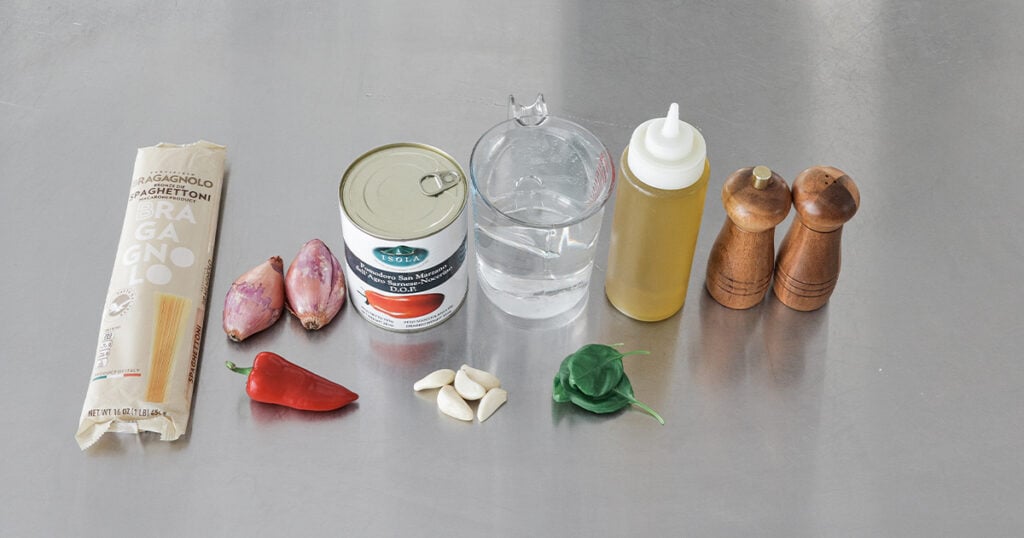
- Oil – I use a good-quality olive oil for the sauce and to toast the spaghetti.
- Aromatics – I used shallots and garlic cloves.
- Tomatoes – I always use San Marzano tomatoes when I’m making tomato sauce from scratch. They’re hands down the best.
- Herbs – Fresh basil is a must.
- Vinegar – A splash of balsamic vinegar adds acidity, balancing the sauce.
- Water – I reduced 4 cups of hot water in the tomato sauce to cook the pasta risotto-style.
- Spaghetti – Any dry spaghetti you have in your cupboard will do. Dry linguine or fettuccine will also work.
- Peppers – I added half of a Fresno pepper for just the right amount of heat.
- Seasonings – Just salt, white pepper, and black pepper.
How to Make Spaghetti all’Assassina
Caramelize the shallots: To start, I sauté the shallots and a pinch of salt in a saucepan over medium heat until they start to turn golden. After, I lower the heat to let them slowly caramelize.
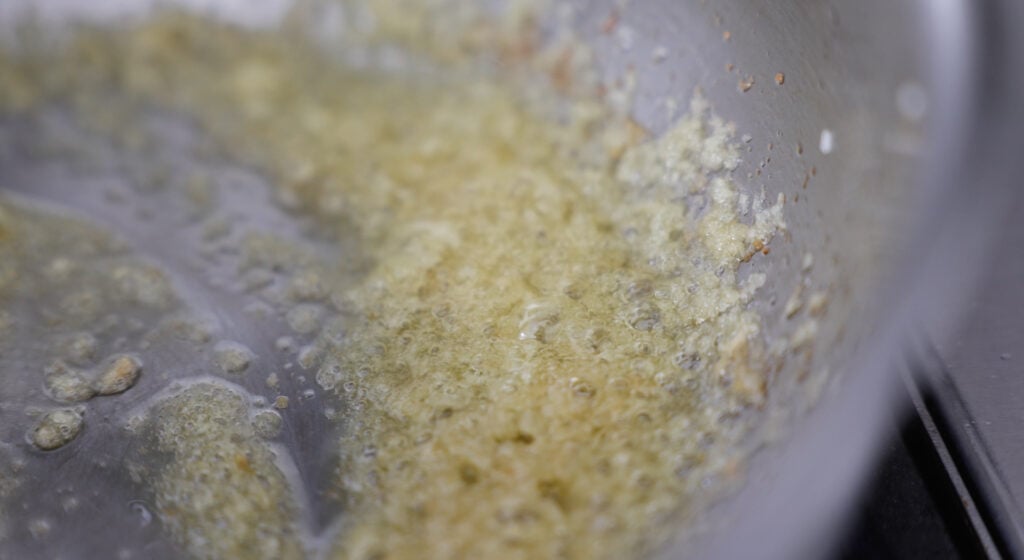
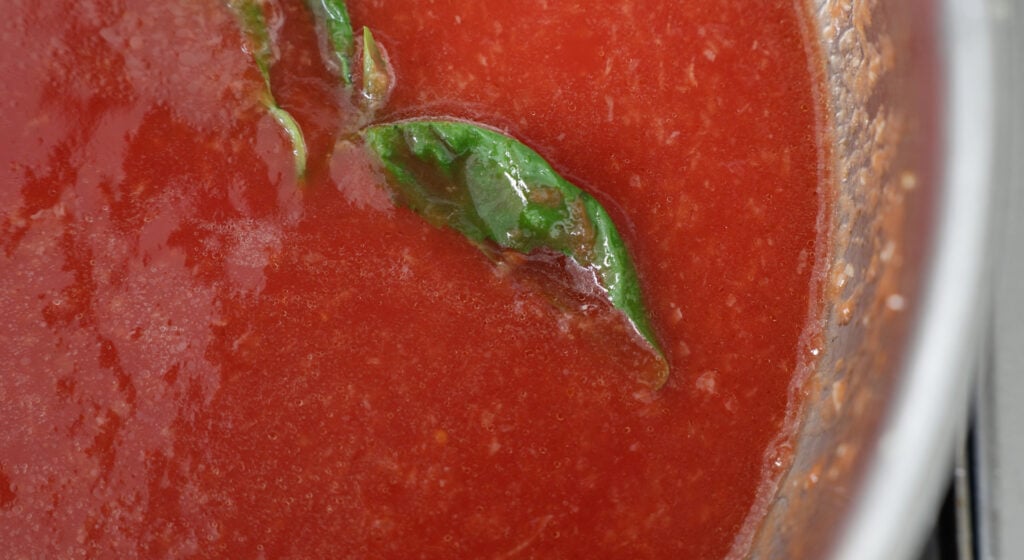
Build the sauce: I stir in the minced garlic, then add the tomatoes and basil. Once they’re smelling amazing, I finish the sauce with balsamic vinegar, salt, white pepper, and hot water.
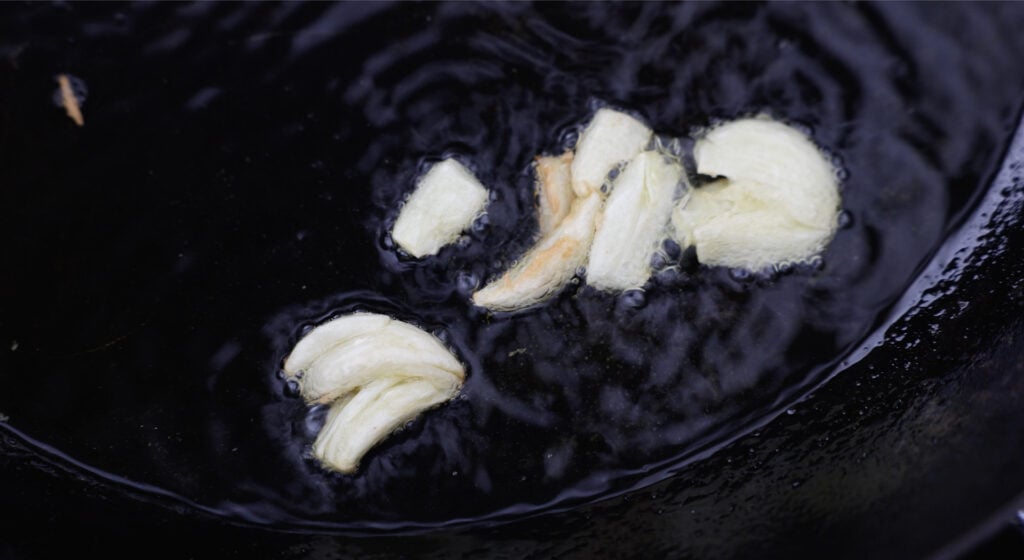
Perfume the oil: I heat the remaining olive oil in a cast-iron skillet over medium heat. I add the whole garlic cloves and let them cook until they begin to brown, and the oil smells incredible.
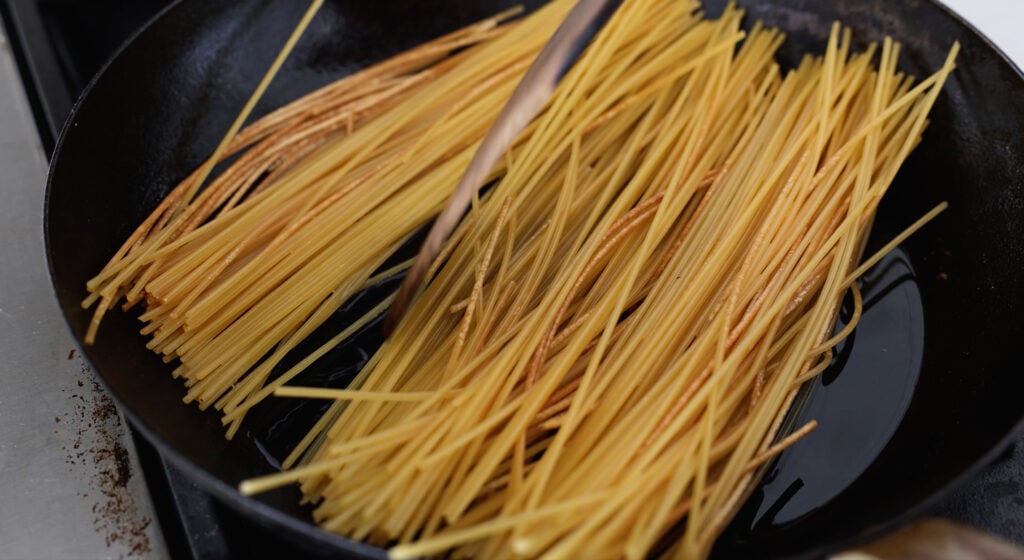
Toast the pasta: I set the garlic aside, then add the dry spaghetti to the now-empty skillet. I spread the noodles into an even layer to give them maximum contact with the pan. I turn up the heat and toast the spaghetti on both sides.
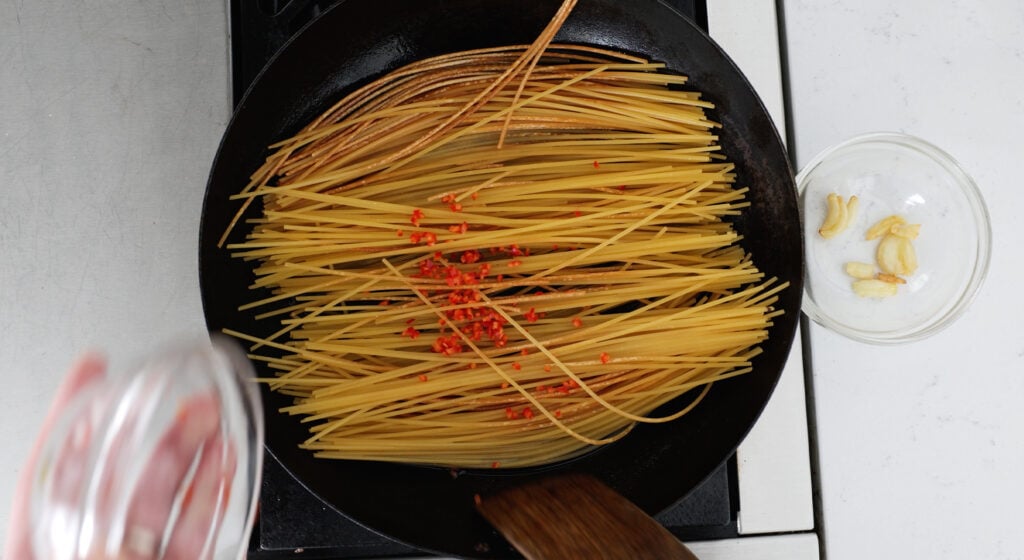
Add the peppers: Next, I sauté the chili peppers in the pan with the spaghetti, then return the browned garlic cloves to the pan.
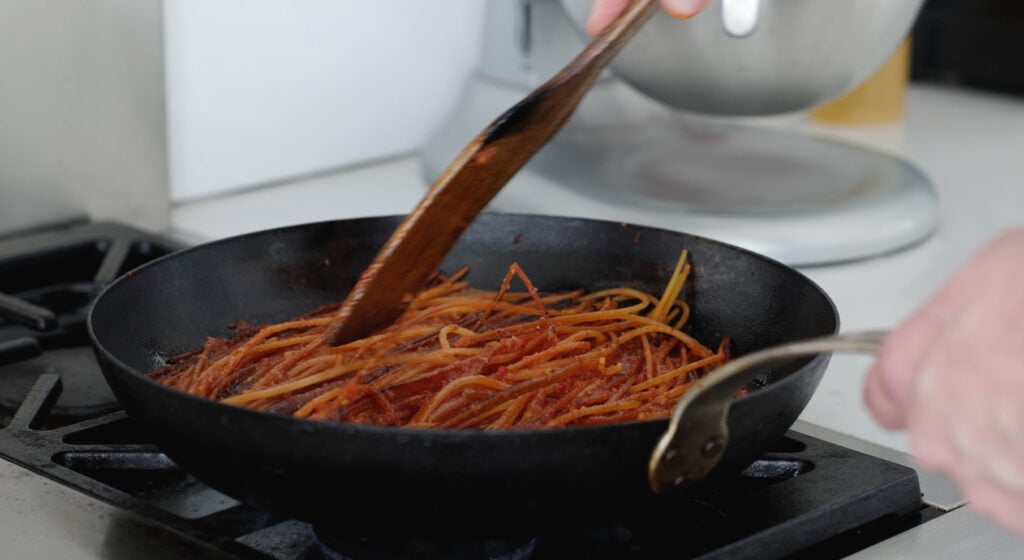
Caramelize the sauce: With the pasta still spread out in the skillet, I ladle in some of the hot tomato sauce and let it cook undisturbed for a few minutes.
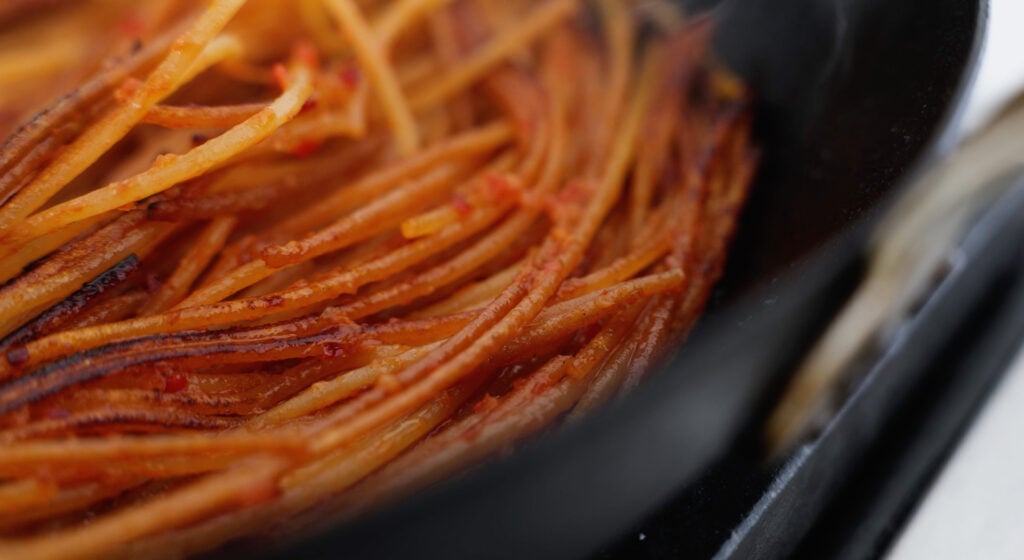
Flip and repeat: I flip the pasta, then add more sauce. I wait for it to reduce before repeating this process again and again until the pasta is al dente and dark brown (almost burnt) in spots.
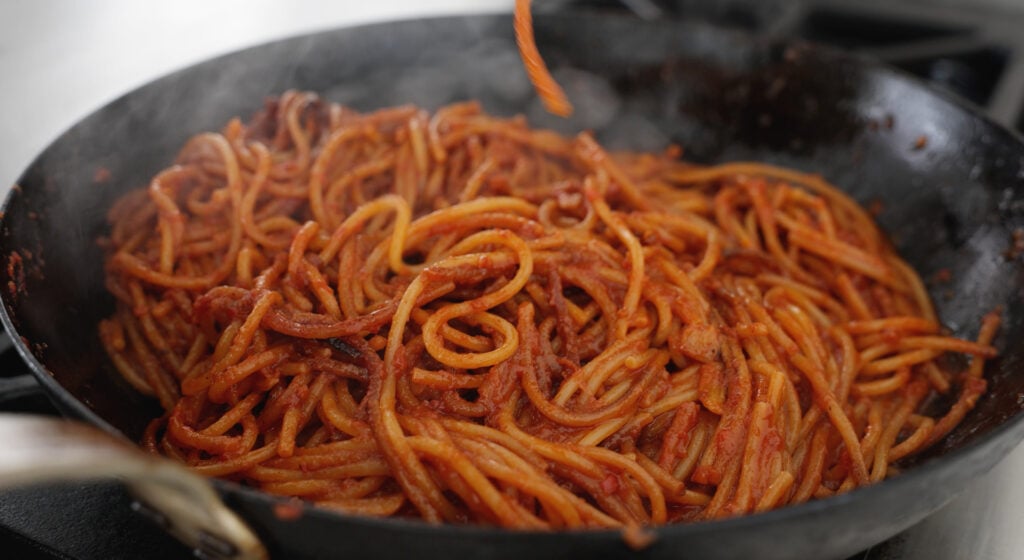
Finish and serve: I toss the pasta with the remaining sauce, adjust the seasonings to taste, and finish it with a drizzle of olive oil.

Chef Tip + Notes
I know it goes against all the rules, but lightly burning the spaghetti is encouraged here. I always get the best char on the noodles when I flatten them as much as possible on the bottom of the skillet, then wait for the tomato base to fully concentrate and caramelize before flipping them.
- Double garlic: Garlic is pulling double duty here. The minced garlic flavors the sauce, while the whole cloves perfume the oil before frying the spaghetti. If you mince all of the garlic, it will burn during frying.
- Use hot sauce: Just like in risotto recipes, I keep the tomato sauce on the stove over low-medium heat so it stays nice and hot. If it’s too cold, the cooking process will slow down, preventing the noodles and sauce from caramelizing.
- Leave it alone: I want the liquid to reduce, concentrate, and caramelize while the pasta chars and cooks through, so I avoid stirring the sauce or flipping the pasta too often.
- Customize it: Sometimes I like to bulk up this pasta by adding sliced Italian sausage, sliced bell peppers, sauteed mushrooms, or shredded chicken at the end.
Serving Suggestions
A popular way to serve assassin’s spaghetti is with a dollop of burrata or stracciatella cheese right on top. The rich creaminess is the perfect complement to the deeply caramelized, slightly smoky pasta. That, along with some fresh basil, a drizzle of extra-virgin olive oil, and a sprinkle of Pecorino or Parmigiano, acts as the cherry on top of this restaurant-quality meal.
I also like to serve this with a simple arugula salad dressed in my favorite lemon vinaigrette on the side, as well as some freshly baked tomato focaccia for sharing.
Make-Ahead and Storage
Make Ahead: This charred pasta is meant to be eaten as soon as it’s ready.
How to Store: Let the pasta cool completely, then cover and refrigerate for up to 3 days. The texture is best within the first day or two, but the flavors deepen overnight.
How to Reheat: Reheat the pasta in a covered skillet over medium heat with a splash of water for 1–2 minutes, then uncover and cook until heated through.
More Pasta Recipes

Video
Spaghetti all’Assassina Recipe
Ingredients
- 6-7 tablespoons olive oil
- 2 peeled, finely minced/grated shallots
- 4 finely minced/grated garlic cloves + 3 whole garlic cloves
- 56 ounces San Marzano tomatoes, crushed
- 3 fresh basil leaves
- ½ teaspoon balsamic vinegar
- 4 cups hot water
- 1 pound dry bronze-die cut spaghetti
- ½ seeded and small diced fresno pepper
- Salt and ground white pepper to taste
Instructions
- In a medium-sized sauce pot over medium heat, add the 3 tablespoons of olive oil. Add the shallots, gently season with salt, and sauté for 4 to 5 minutes, just until light brown. Turn the heat to low and cook for 8 to 10 minutes to further caramelize, stirring occasionally.
- Stir in the 4 finely minced garlic cloves and cook just until fragrant, which takes 30 to 45 seconds. Add in the tomatoes and basil, and cook over low heat for 6 to 8 minutes. Finish with balsamic vinegar, salt, ground white pepper, and 4 cups of hot water. Keep hot over low heat.
- In a large 12” carbon steel or cast-iron skillet over medium heat with 4 tablespoons of olive oil, add in the 3 garlic cloves, and cook for just 2 to 3 minutes to lightly brown the garlic and perfume the oil.
- Remove the garlic and set it aside. Place the spaghetti in the pan and move it around until it is flat. Turn the heat up to medium-high. Toast for 45 seconds, or just until lightly browned. Then, do your best to flip it over to toast on the other side for 45 seconds.
- Add in the Fresno peppers and sauté for 30 to 45 seconds. Place the cooked whole garlic cloves back in. Make sure the spaghetti is as flat as possible and covers as much surface area of the pan as possible. Then add 3 to 4 ladles of the tomato-water sauce and cook, untouched, for 3 to 4 minutes, concentrating the sauce to caramelize the pasta.
- Using a spatula and tongs, flip the pasta over, add 3 to 4 more ladles of the sauce, and repeat the process to concentrate and caramelize.
- At this point, the pasta should be easier to move, so flip it and repeat the process. The goal is for the pasta to be dark brown, almost burnt in some areas, while concentrating the sauce as it cooks down. It is a similar technique to making risotto with less stirring. The entire process should take 16 to 20 minutes for the pasta to be al dente. You’ll continue on in this process until all but about a half cup of the sauce is left.
- Toss the pasta in the remaining half cup of sauce and adjust any seasonings with salt and pepper.
- Serve with a garnish of drizzled olive oil.
Different and tasty. I’ve had the luck of visiting Bari and eating at roadside restaurants as well as an incredible tucked out of the way grotto cave restaurant that served fresh fish right from the boats moored below.
The cuisine is unique as are the people so this dish just highlights how adaptable both are. This is not “plain” spaghetti ,it’s fragrant and addictive and so easy to make. San Marzano tomatoes are a must to get that intense flavor.
Really appreicate you trying it! Thank you!!