
Crème Anglaise Recipe

- Updated
- 15 comments



This crème anglaise is a French vanilla bean custard that is insanely creamy and rich, and the absolutely perfect accompaniment to any dessert. It’s served cold, and I highly recommend pouring it over fresh berries with whipped cream and mint. This is the perfect dessert to enjoy this season!
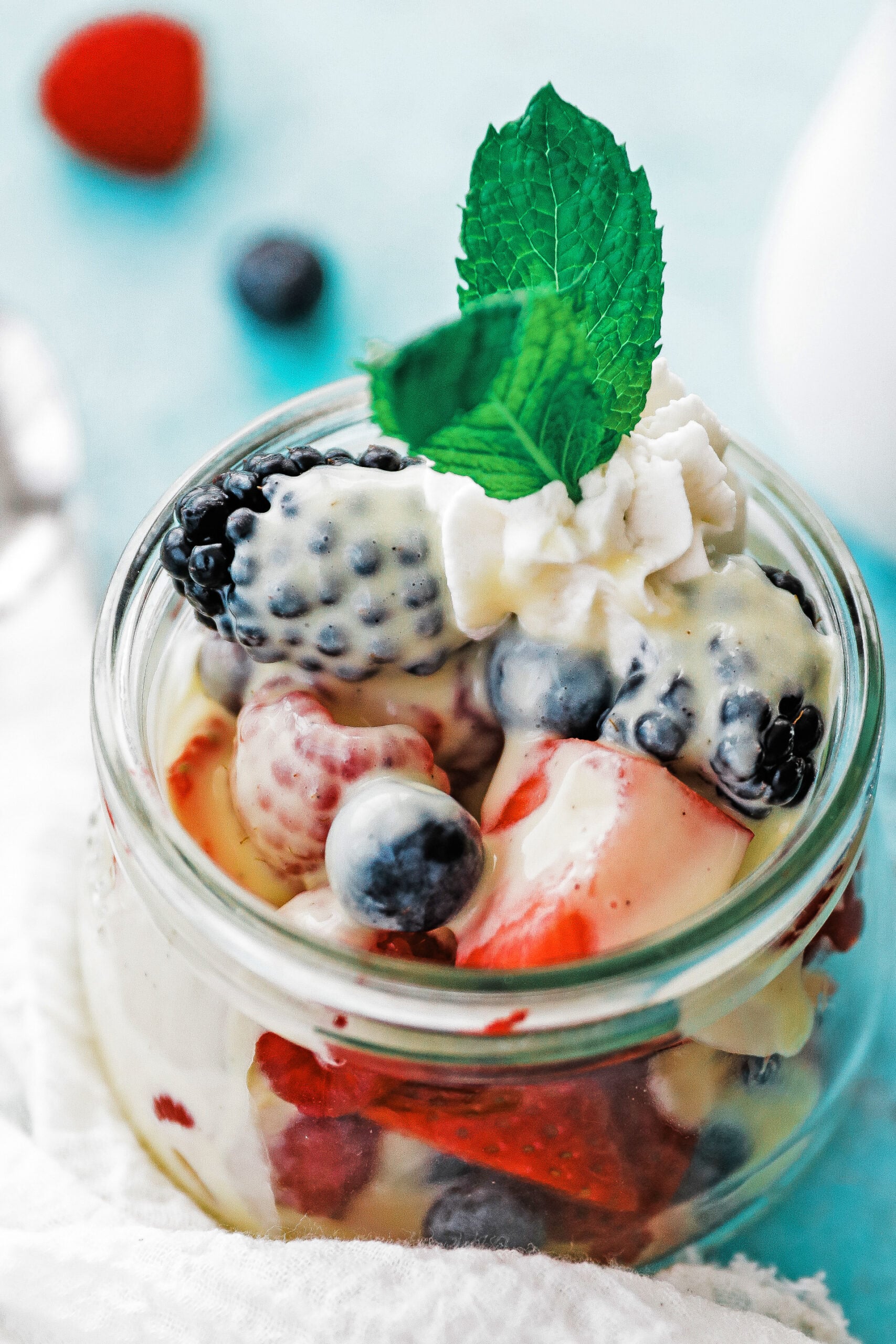

I made this sauce for the first time almost 30 years ago in one of the first restaurants I ever cooked in. I still remember tasting it off the spoon and thinking it was the most incredible thing I had ever eaten. It is the same custard base as my crème brûlée, with the same yolks, the same cream, and the same vanilla, finished a different way. Brûlée gets baked firm and torched. Anglaise stays loose, gets strained, and gets poured cold over fresh fruit. You will love it!
Featured Comment
This is the most perfect summer dessert! It was a hit with my whole family!
-Lauren
Crème Anglaise
Crème anglaise is French for English cream. It’s a classic pouring custard of heavy cream, egg yolks, sugar, and vanilla, thickened on the stove without flour or starch, so the yolks do all the work. It’s the same base used in classical ice cream and bavarian creams, and the recipe traces back to French and English pastry kitchens in the Middle Ages.
The ingredient list is literally just 5 pantry items where you probably already haveat least 3 or 4 already on hand. The technique comes down to one simple thing: controlling the eggs over low heat. I burnt the first 4 batches I ever made in front of my culinary school chef and walked all 4 straight from pan to trash. And let me tell you one thing; the lesson stuck. Low heat. Constant whisk. Watch the pot.
This sauce used to be on so many restaurant menus and once you try it you’ll see why. I highly recommend making this recipe when the berries at the market are at their best and you need a classic dessert for your next gathering. My family loves this one, and I hope yours will too. Follow my step-by-step instructions and chef tips, and you’ll have a decadent dessert everyone will be talking about.
Ingredients and Substitutions
Here are the ingredients I use to make crème anglaise and the fresh berries I serve it over:
- Cream – You will need to use heavy cream in this recipe. However, you can use half and half, but it will not be as rich in texture and flavor, although it will be lighter in calories.
- Sugar – Granulated sugar is what you use in this Crème Anglaise Recipe.
- Eggs – You will need 12 large egg yolks. It does not matter if they are chilled or at room temperature. It’s totally fine if you break a few yolks. Make and omelet with the leftover whites.
- Vanilla – Fresh vanilla seeds (pods) will give this sauce incredible flavors. For a substitute use 1 1/2 tablespoons of vanilla extract.
- Fruit – I personally like this with fresh berries such as strawberries, blueberries, raspberries, and blackberries.
How to Make Crème Anglaise from Scratch
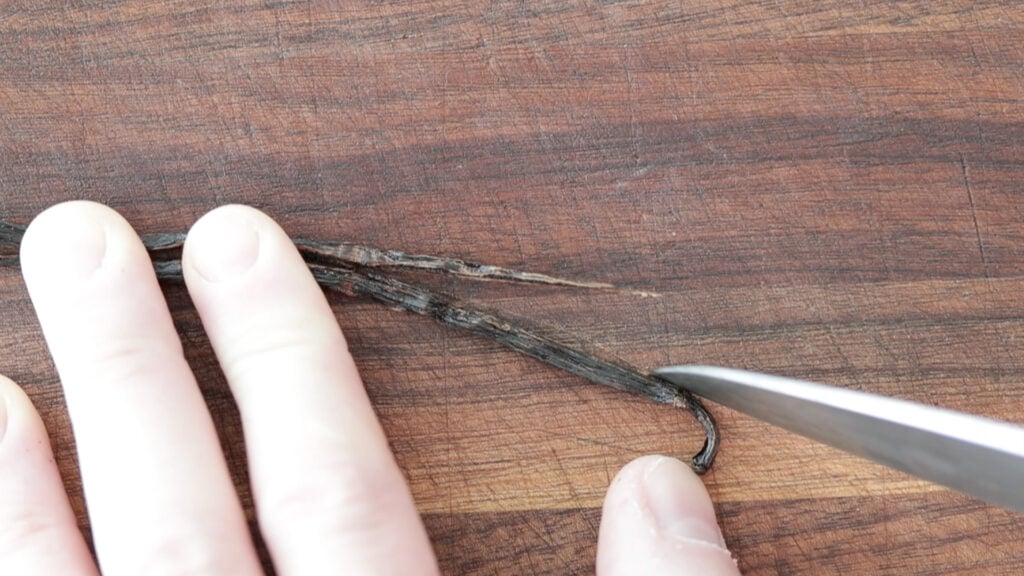
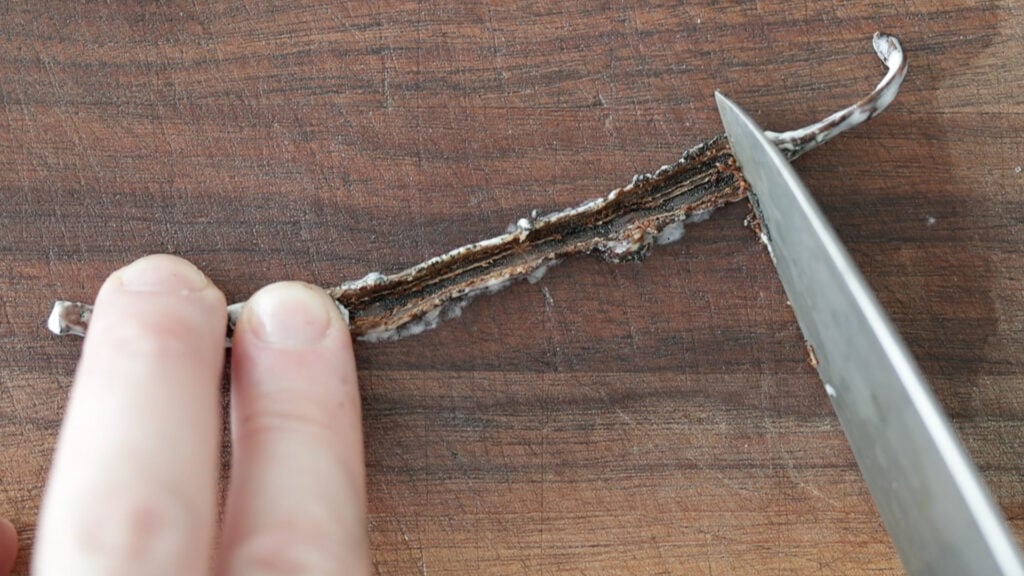
Split the vanilla beans: Split 2 vanilla bean pods lengthwise down the center with a sharp paring knife, all the way from tip to tip on each pod.
Scald the cream: Add the heavy cream and the split vanilla pods to a medium heavy-bottomed saucepan and set the burner to low. Cook until small bubbles form around the edge and along the bottom of the pot, about 6 to 8 minutes, then pull the pot off the heat. Do not boil the cream.
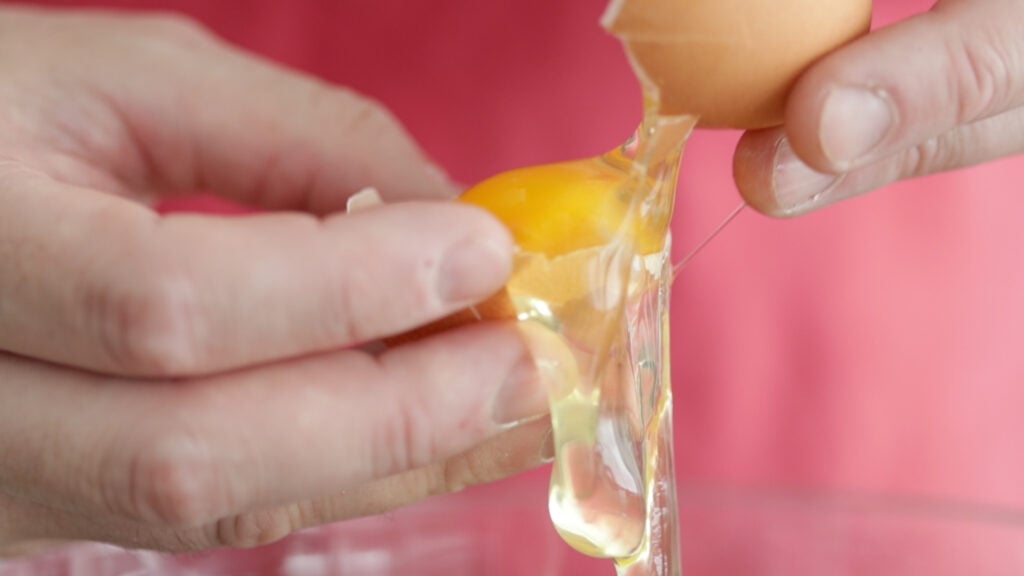
Whisk the yolks: Separate the yolks from the whites and drop the yolks into a large mixing bowl.
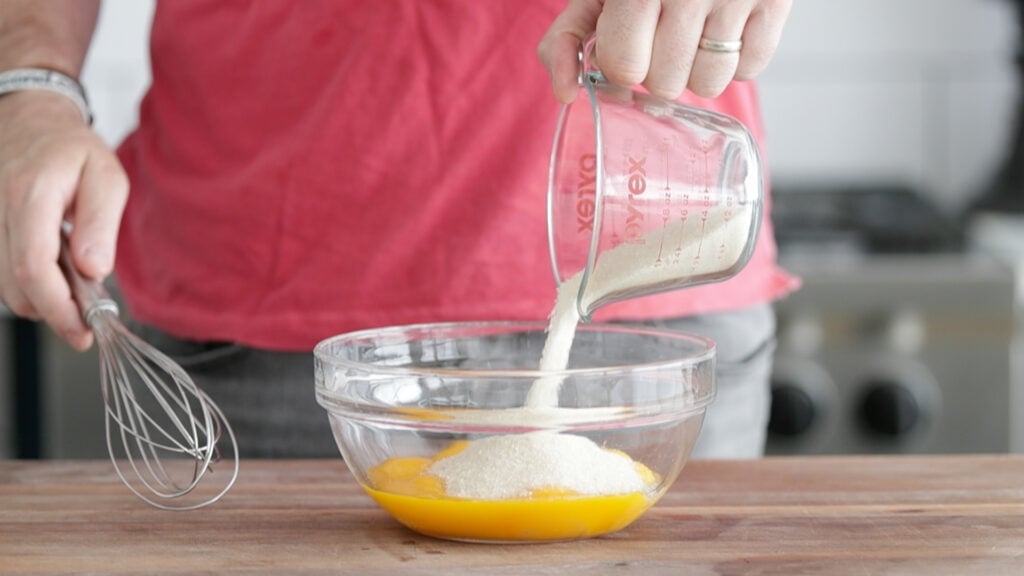
Add the sugar: Then, I whisk until the mixture goes pale and thick.
Scrape the vanilla beans: Lift the softened vanilla pods out of the hot cream onto a cutting board. Drag the back of the paring knife along the cut side of each pod to release the tiny seeds inside, then stir the seeds back into the cream and discard the pods.
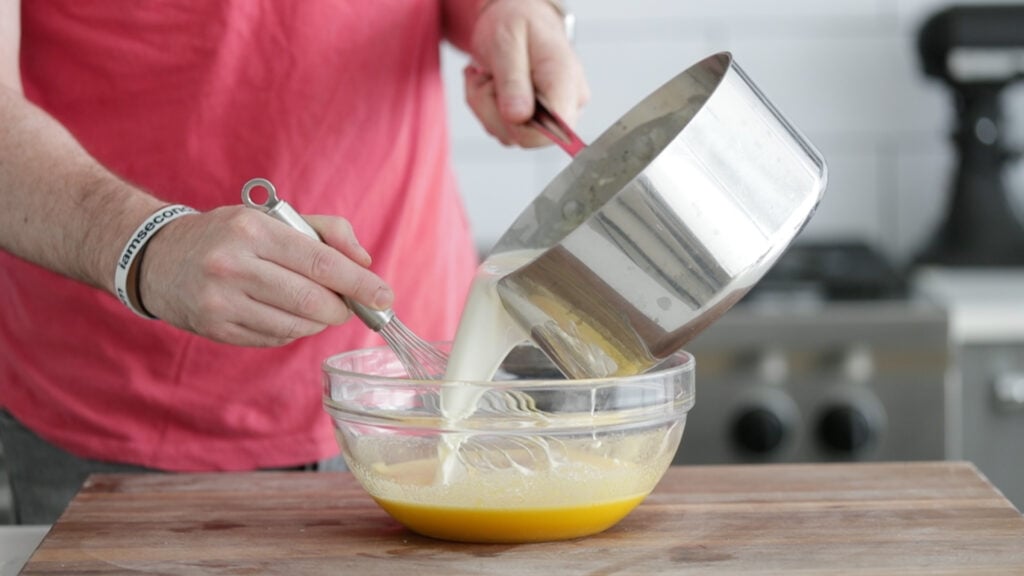
Temper the yolks: Pour about 1 cup of the hot vanilla cream into the yolks in a thin stream while whisking constantly. Slowly stream in the remaining cream once the yolks are up in temperature, whisking the whole time.
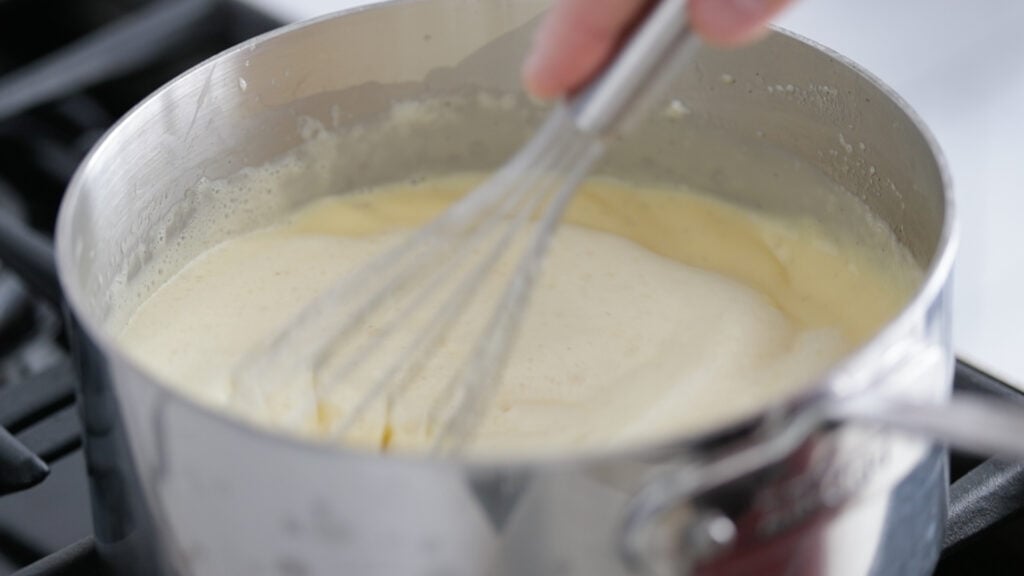
Cook the sauce low and slow: Pour the tempered mixture back into the saucepan and set the burner to low. Whisk in a slow figure-eight pattern for about 8 to 12 minutes, covering the whole bottom of the pot, until the sauce thickens enough to coat the back of a spoon. The finished temperature is 182°F to 185°F.
Strain and chill: Pour the sauce through a fine-mesh chinois or a strainer lined with cheesecloth into a fresh bowl. Refrigerate uncovered for about 90 minutes, until fully cold and thickened.
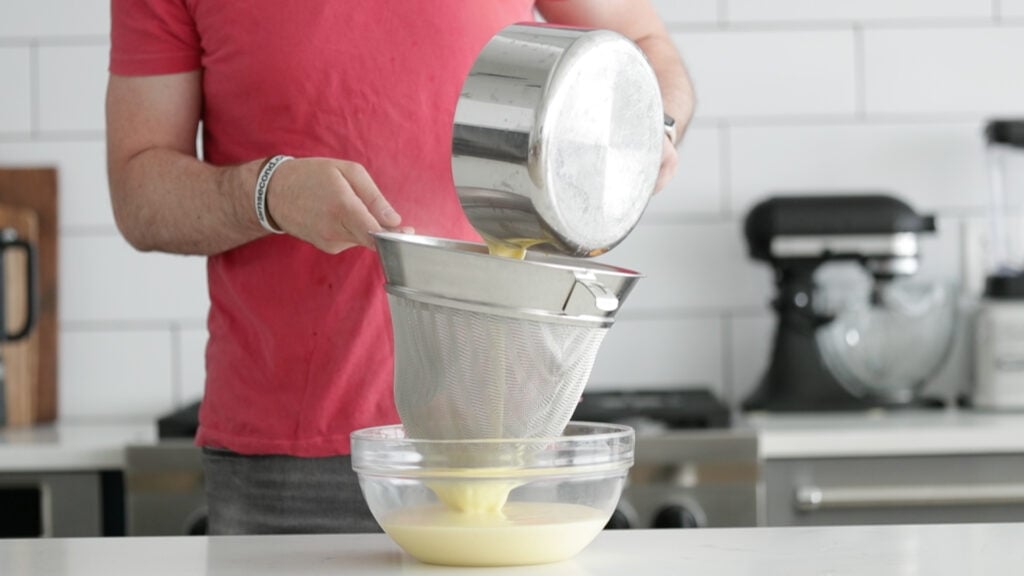
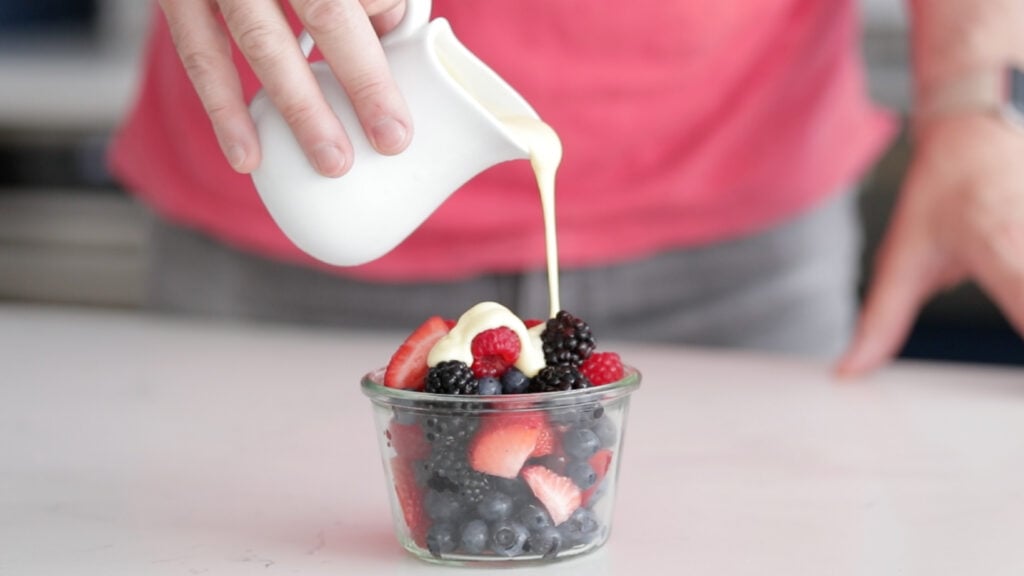
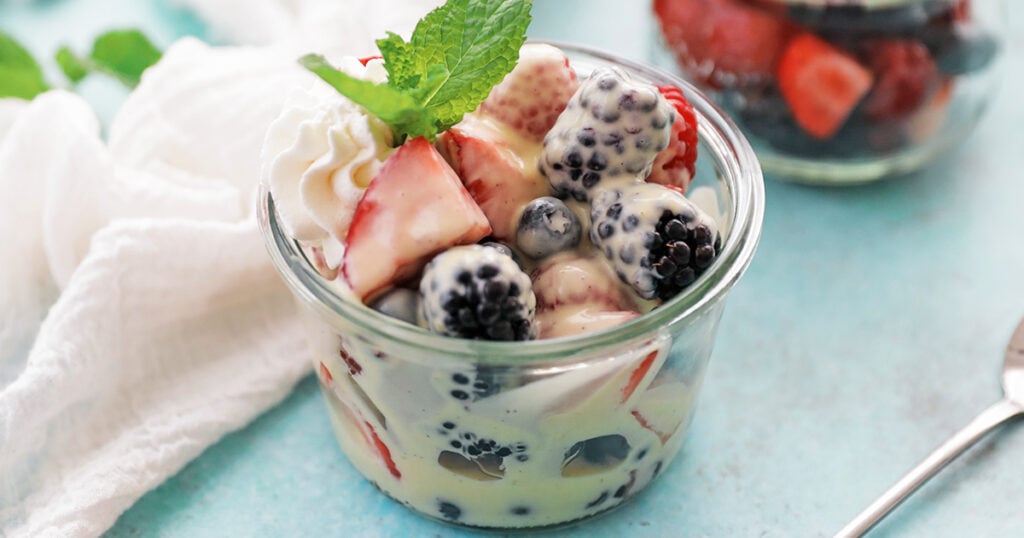
Plate with fresh berries: Slice the strawberries and rinse all of the berries in a colander. Divide the berries between bowls or wine glasses, pour the chilled crème anglaise over the top, and finish with a spoonful of whipped cream and a few fresh mint leaves.

Chef Tip + Notes
For making this anglaise recipe, I recommend buying the best vanilla beans the budget allows, because the entire character of the sauce is the vanilla. Madagascar beans are warm and rounded and the easiest to find. Tahitian beans are more floral and a little fruity. Mexican beans go smoky and woody. All of these beans are actually real vanilla. The supermarket bottle of imitation vanilla extract is not, and it will taste thin no matter how perfectly the custard is cooked.
- Scald, do not boil: Watch for small bubbles along the edges and bottom of the pot, no rolling boil. A boil scorches the cream and starts to cook the vanilla out.
- Temper slowly at the start: The first cup of hot cream into the yolks is where most cooks scramble the eggs. Pour it in a thin stream with the whisk already moving, and only stream the rest of the cream in after the yolks are warm.
- Read the nappe test: Dip a spoon into the sauce, flip it over, and drag a finger across the coated back. When the line holds crisp without the sauce dripping back over the edge, the sauce is done. If the line closes right back up, keep whisking. You’re looking for an Alfredo sauce-like texture when whisking the crème anglaise over the burner.
- Use a thermometer when in doubt: Between 182°F and 185°F is the finished window. Above 185°F and the yolks start to curdle. An instant-read thermometer takes the guesswork out.
- Cool the sauce fast: Strain into a fresh bowl and set it in the refrigerator uncovered so the sauce drops out of the danger zone quickly. A shallow bowl chills faster than a deep one.
- Worry about cooking safety? The same temperature window that thickens the sauce also pasteurizes the egg yolks, which is why anglaise has always been safe to serve cold on a buffet line. The cooking is the food safety. As long as the sauce hits that window before it comes off the heat, the yolks are safe even though they were never boiled.
Serving Suggestions
I love serving this with a big shallow bowl of mixed fruit in the middle, the chilled crème anglaise in a small pitcher next to it, and everybody pours their own. It plays the same role for a Sunday dessert that a good vinaigrette plays for a salad: it really elevates what is already on the plate. The cold sauce poured over a slice of classic cheesecake is a smart swap for fruit topping, and a warm pool of it under a chocolate brownies dessert is the plating move I learned in restaurants. So good!
When the sauce shows up next to something heavier than berries, I go in the other direction the next night. A spoonful over warm peach cobbler instead of ice cream, or a little chocolate whipped cream on top of the berries for anybody who wants both. Leftover crème anglaise almost never makes it past Monday at our house, because it goes straight into the ice cream maker and freezes into the smoothest vanilla ice cream the kitchen will see all summer.
Make-Ahead and Storage
Make-Ahead: I make the crème anglaise up to 4 days ahead, strain it into a lidded container, press plastic wrap directly against the surface, and hold it in the coldest part of the fridge until I need it.
How to Store: When storing it, be sure to keep it in a plastic container wrapped with plastic. Place it in the refrigerator and keep it for up to 5 days. It will freeze, making a very rich, delicious ice cream. With that being said, it does not thaw well because it will begin to separate.
How to Reheat: I warm the sauce back up in a small saucepan over low heat, whisking constantly. When it is just hot to the touch and pours smooth off the spoon, I stop. Skip the microwave, because a hot spot will curdle the yolks in a second.
More Dessert Recipes
- Key Lime Pie recipe
- Chocolate Mousse
- Panna Cotta
- Chocolate Swiss Meringue Buttercream
- Classic Cheesecake Recipe

Video
Crème Anglaise Recipe
Ingredients
- 2 vanilla bean pods
- 4 cups heavy whipping cream
- 12 egg yolks
- 1 cup sugar
- 1 lb fresh strawberries quartered
- 1 pint blueberries
- 6 oz raspberries
- 6 oz blackberries
- whipped cream, recipe
- fresh mint
Instructions
- Split the vanilla bean pods lengthwise down the middle. In a heavy saucepan, add 4 cups of heavy cream and the vanilla bean pods. Heat the cream over low heat until bubbles begin to form on the edges. Remove it from the heat.
- Remove the vanilla beans from the cream. Using the back of a paring knife, scrape the inside of the vanilla beans to remove the insides. Add the vanilla beans back to the heavy cream. Discard the pods.
- Separate the egg whites from the egg yolks and place the yolks in a large bowl. Reserve the egg whites for another recipe.
- Whisk the sugar with the egg yolks until combined.
- While whisking constantly, pour ¼ to 1/2 cup of the hot, heavy cream into the egg yolks to bring the yolks up in temperature. Add the remaining heavy cream and whisk quickly to combine.
- Place the heavy cream and egg mixture on a burner over low heat. Low heat is essential here. Whisk constantly until the sauce is thickened and coats the back of a spoon, about 8–12 minutes, see the notes below. Remove from the heat and transfer through a fine-mesh sieve or chinois. Refrigerate for 90 minutes or until cool.
- Serve by pouring some of the crème anglaise over top of fresh berries and serving with optional heavy whipping cream and mint.
My instructions using 2 Tbs vanilla extract instead of pods:
In a blender, add vanilla extract, heavy cream, 12 egg yolks & 1 cup of sugar.
Mix until combined. Transfer to a heavy bottom pot. On a burner over low heat. Low heat is essential here. Whisk constantly until the sauce is thickened and coats the back of a spoon, about 8–12 minutes,
Skip to step #8