
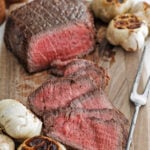
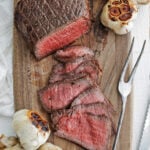
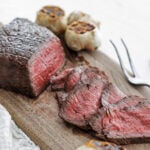
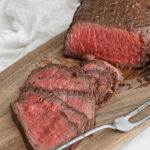
When I want to make a juicy steak, I turn to my London Broil Recipe. This method easily turns a humble cut of beef into a steakhouse-worthy experience. It begins with a marinade, moves on to a low-and-slow roast, and finishes with a reverse sear to deliver some ridiculously good beef.
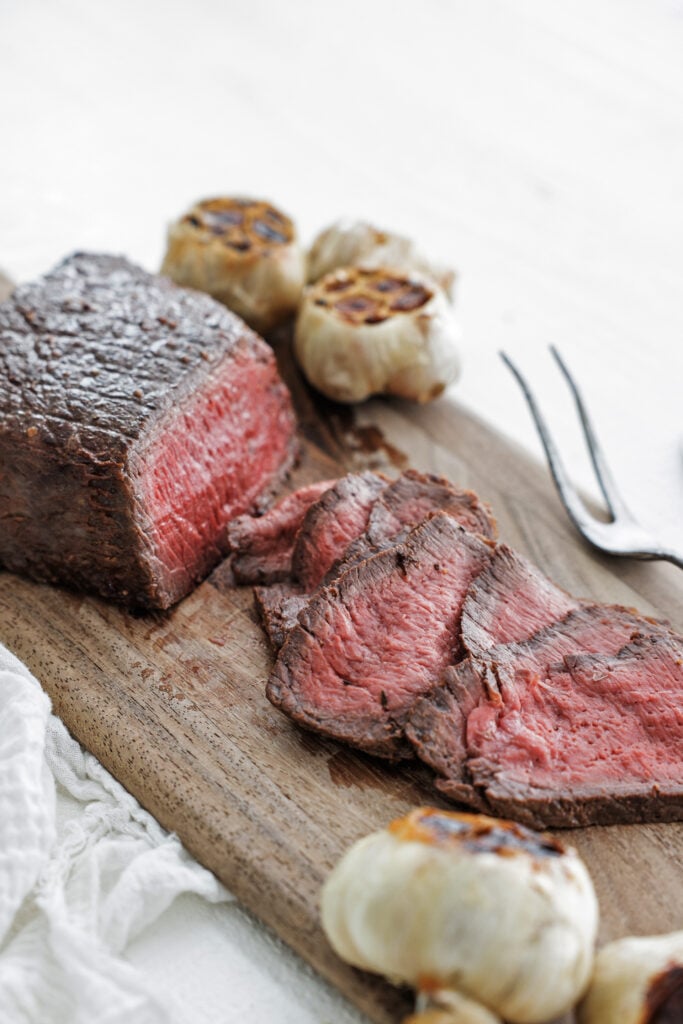
My family and I aren’t the world’s biggest steak eaters, but we do appreciate a good cut of beef every now and then. I’m a big fan of taking a tough cut and turning it into something juicy and flavorful, like in my tried-and-true Roast Beef Recipe and my Bottom Round Roast recipe.
London Broil
Did you know that London broil has absolutely nothing to do with England? It’s only called London broil because, just like “Vienna steak” or “Hamburg steak,” American restaurants in the early 1900s loved attaching European-sounding names to inexpensive dishes. These fancy-sounding names really worked because this steak was a huge money maker in New York and Philadelphia restaurants back in the day.
London broil isn’t a dish necessarily, but rather a steakhouse cooking method that turns tougher cuts of beef into flavorful, tender steaks. I love this method because it’s just plain simple. The steak is marinated, then cooked quickly under a broiler, in a hot oven, or on a grill. That high heat sears the outside of the steak, creating a golden crust while keeping the inside juicy and tender.
My only ‘beef’ with the original recipe is the marinade. Traditionally, it calls for harsh ingredients that overpower the beef’s natural flavor. That’s why, in my recipe, I combined aromatics and pantry staples with the foolproof reverse searing technique to make a truly delicious steak. Balanced flavors, amazing meat, and a steakhouse experience, all under your own roof… What could be better?
Ingredients and Substitutions
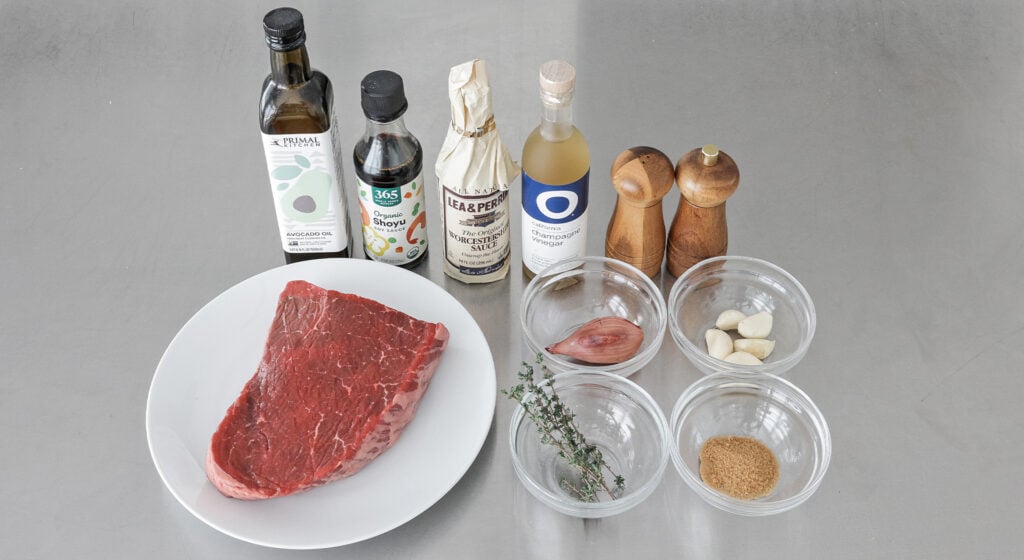
- Steak – I used top round steak because it’s inexpensive and the most common choice for London broil recipes these days. Flank steak was once the top choice before prices went up. If you need a substitute, go with bottom round or sirloin instead.
- Aromatics – I used garlic cloves and a shallot in the London broil marinade.
- Sauces – Just Worcestershire sauce and soy sauce.
- Vinegar – I went with champagne vinegar for its light, subtle flavor. Red wine vinegar is the traditional choice, but I don’t like how it overpowers the steak.
- Sugar – Light brown sugar keeps things simple.
- Thyme – A whole bunch of fresh thyme sprigs goes into the marinade.
- Mustard – I like Dijon mustard best.
- Seasonings – Just salt and pepper.
- Oil – Any neutral-flavored oil will work.
How to Make London Broil
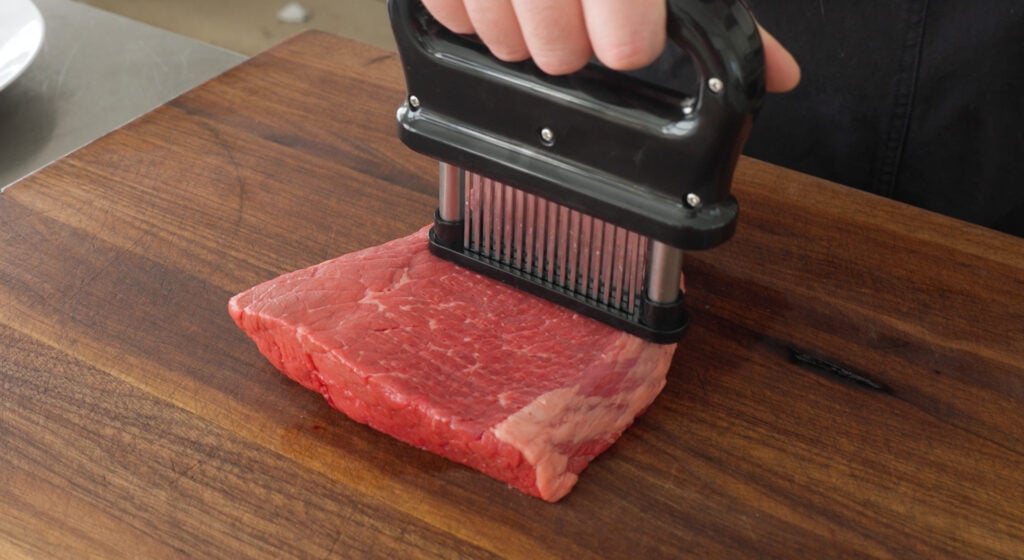
Tenderize: First, I tenderize the steak using a Jaccard or a meat mallet, then set it aside.
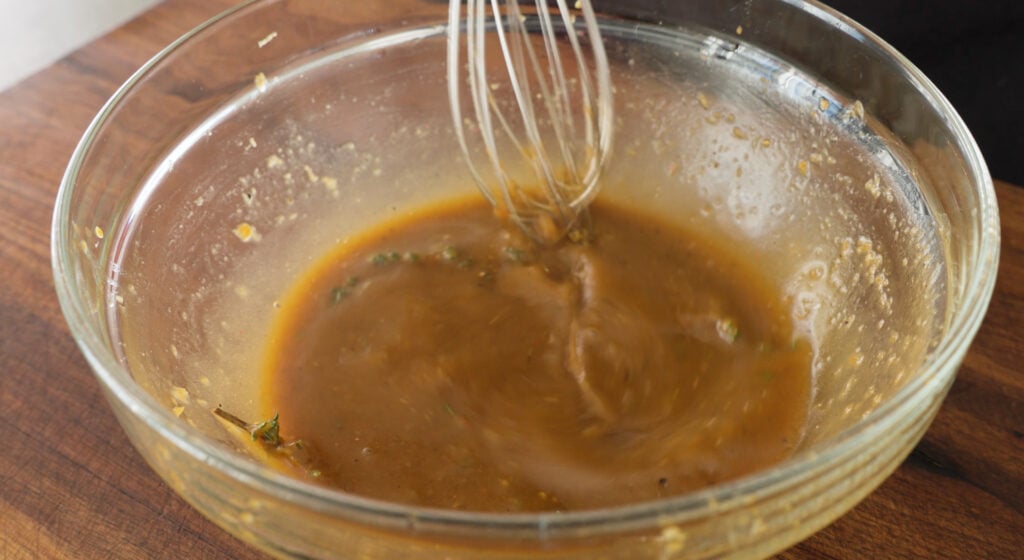
Mix the marinade: Next, I add the garlic, shallots, Worcestershire sauce, soy sauce, vinegar, brown sugar, thyme, Dijon, salt, and pepper to a large bowl. I slowly drizzle in some of the oil while whisking constantly to emulsify the marinade.
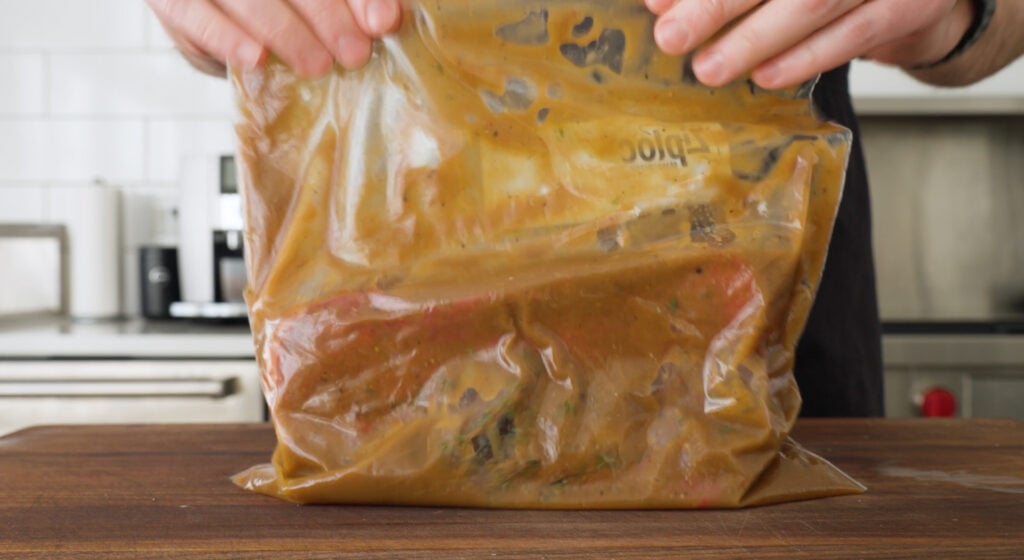
Marinate: I transfer the marinade to a casserole dish, submerge the tenderized steak, and cover the dish. I refrigerate the beef for 4 to 24 hours.
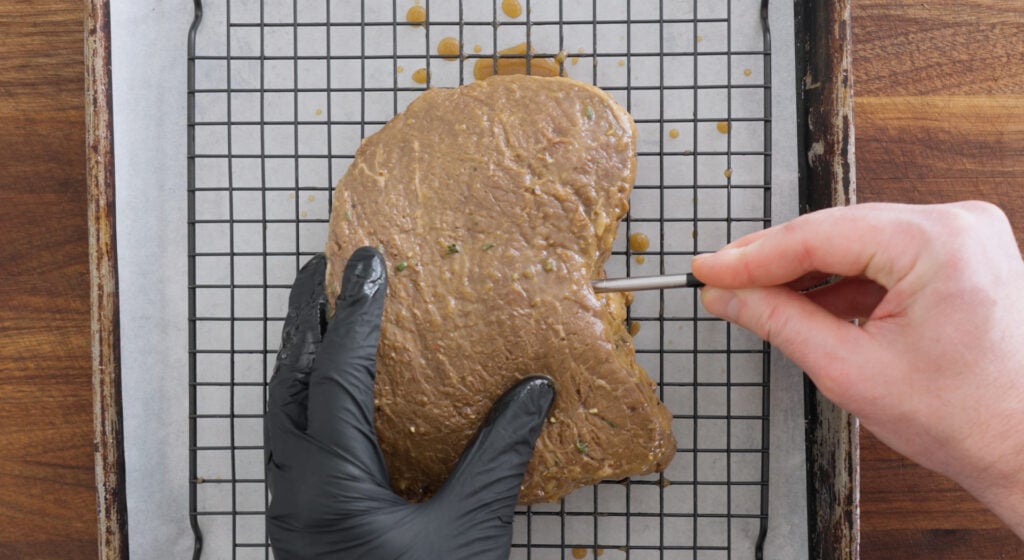
Roast: Now that it’s done marinating, I move the steak to a wire rack over a sheet tray, insert a thermometer into the thickest part, and roast it until the internal temperature reaches 110°F.
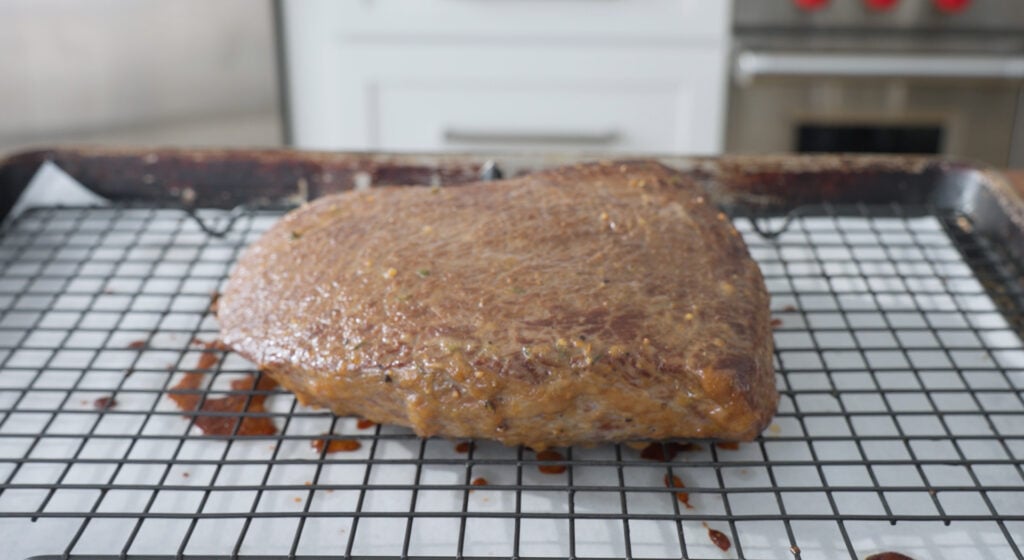
Sear prep: I remove the steak from the oven and set it aside. Meanwhile, I slide a large cast-iron pan into the oven and turn the broiler to high to get it smoking hot.
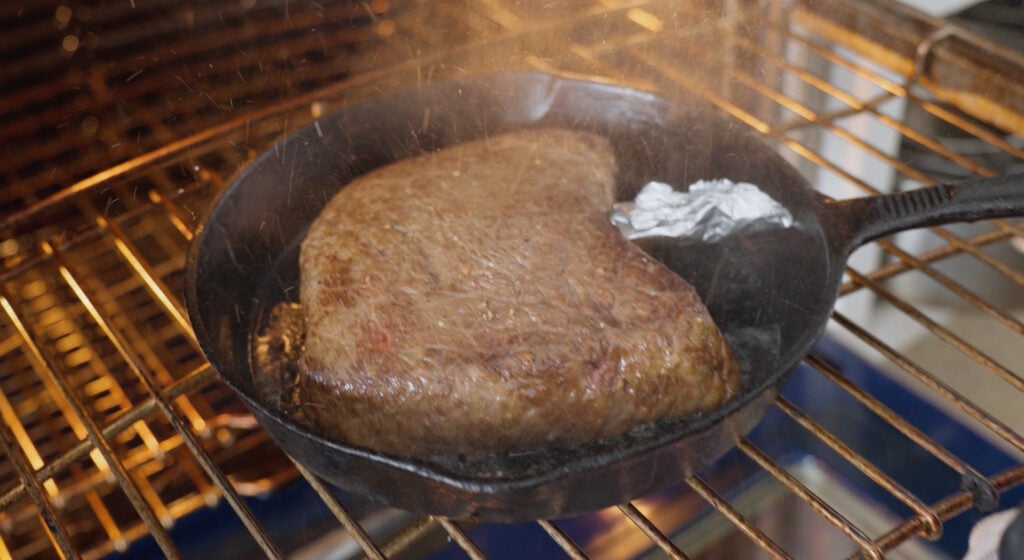
Sear: Next, I pour the remaining oil into the hot pan, then add the steak. I move the pan directly under the broiler and sear the steak for 2 minutes per side, making sure the internal temperature does not exceed 120°F
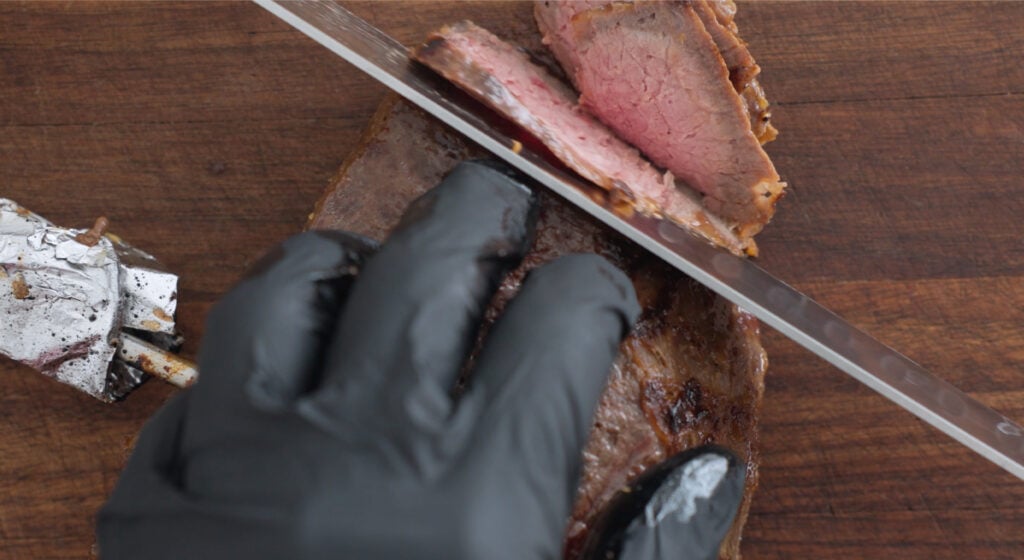
Rest, slice, and serve: I transfer the seared steak to a rack over a sheet tray and let it rest. To finish, I thinly slice the steak against the grain and serve it immediately.

Chef Tip + Notes
I’ve tested London broil in restaurants and at home, and the single most important thing I’ve learned is to always start by tenderizing the meat. It’s the #1 way to ensure your meat absorbs that delicious marinade and becomes super tender after cooking. I like to do this with a Jaccard, a tool with several fine blades that break down connective tissue.
- Marinating time: I always marinate the beef for at least 4 hours, up to 24 hours. Basically, the longer the soak, the better the steak.
- Rest the steak: I let it rest for 2 to 5 minutes after the low-and-slow roast. This brief rest slightly dries the surface, which helps the Maillard reaction proceed quickly during searing.
- Medium-rare is best: I aim for a final internal temperature of 125°F to 128°F. You can make it more well-done if you prefer, but you’ll lose that sweet spot where the steak is tender, juicy, and full of flavor.
- Slow cooker method: I haven’t tested the slow cooker method, but it could work. Start by searing the beef in a hot pan on the stove, then transfer it to the slow cooker with the marinade. Cook on low for 6 to 8 hours or on high for 3 to 4 hours, or until tender. If you still want that reverse-sear crust, finish the steak under the broiler for a few minutes.
Serving Suggestions
Back in the day, London broil would almost always be served with a loaded baked potato, buttery steamed green beans, and my homemade A1 steak sauce. This honestly sounds like a great meal to me.
But since my wife and daughter have different tastes, I’ll mix up the sides now and then. Whether I pair the steak with a pile of steak frites or some surprisingly impressive garlic butter glazed broccolini, their plates are usually empty by the end of the meal.
Make-Ahead and Storage
Make-Ahead: You can marinate the steak hours ahead of time, but cooked London broil should be sliced and served as soon as it’s done resting.
How to Store: Let the leftover steak cool to room temperature, then wrap it tightly or store it in an airtight container and refrigerate for up to 3 to 4 days.
How to Reheat: Place a skillet over medium-low heat, add the sliced steak with a splash of broth or water, and cook until warmed through. You can also reheat London broil in the oven at 250°F, loosely covered with foil.
More Steak Recipes

London Broil Recipe
Ingredients
- 2 ½ pound top round steak or flank steak
- 5 finely grated cloves of garlic
- 1 finely grated peeled shallot
- 3 tablespoons Worcestershire sauce
- 3 tablespoons soy sauce
- 3 tablespoons champagne vinegar
- 2 tablespoons packed light brown sugar
- 6 to 8 sprigs fresh thyme
- 2 teaspoons Dijon mustard
- pinch of salt
- 1 teaspoon ground black pepper
- ½ cup neutral flavored oil + 3 tablespoons
Instructions
- Start by tenderizing the steak using a jaccard or meat mallet. This will help soften the muscle tissues greatly. Set to the side.
- In a large bowl, add in the garlic, shallots, Worcestershire sauce, soy sauce, vinegar, brown sugar, thyme, Dijon, salt, and pepper. Using a whisk, slowly drizzle in the ½ cup of oil to emulsify the marinade.
- Once combined, transfer to a casserole dish or plastic zip bag. Add in the tenderized steak and ensure it is thoroughly coated.
- Cover and marinate in the fridge for 4 and up to 24 hours.
- When you’re ready to cook it, remove it from the fridge to take the chill off. In the meantime, heat the oven to 250°.
- Add the steak to a rack over a sheet tray. Be sure to insert a thermometer into the thickest part of the beef's center, and cook on an upper rack until it reaches 110°. This will take about an hour, aiming for a final internal temperature of 125°F for medium-rare.
- Once it reaches this temperature, remove the steak from the oven, add a large cast-iron pan to the oven, and immediately turn the broiler to high. We want that pan smoking hot.
- Once it is hot, 500° or more, pull out the rack and add in the remaining 3 tablespoons of oil.
- Place the steak directly into the pan and cook under the broiler for 2 minutes per side. It should not go past 120° internally. While I do keep the thermometer in, I usually wrap it in foil to protect it from the broiler's heat.
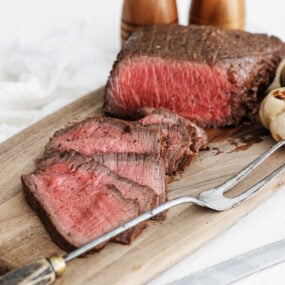
- Remove the steak and rest over a rack on a sheet tray for 10 minutes. During this resting time, the steak should push up to 125° to 128° internally, which is a beautiful medium-rare.
- Thinly slice the steak and serve.
London Broil Recipe