
Balsamic Vinaigrette Recipe

- Published
- 42 comments
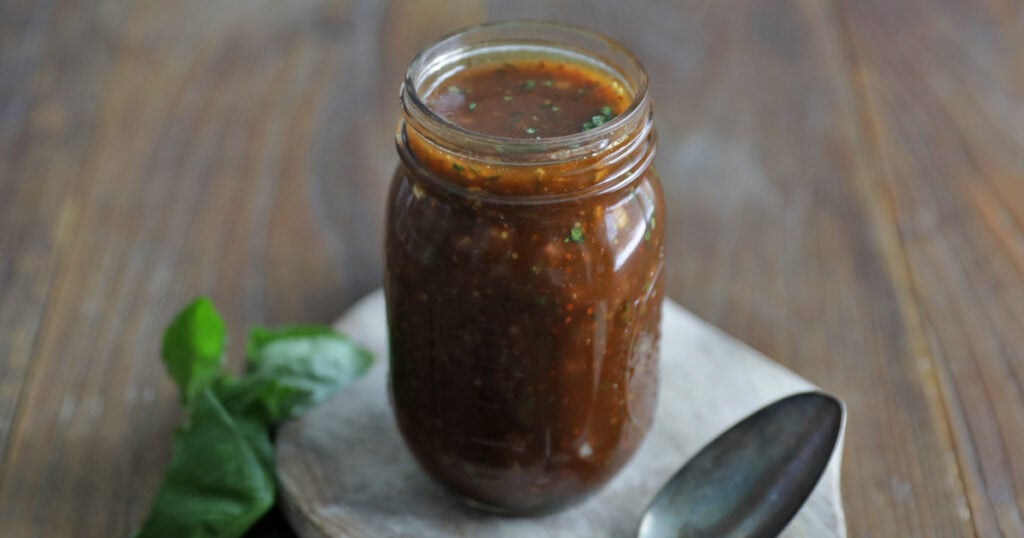
This easy balsamic vinaigrette recipe uses aged balsamic, fresh basil, and a small dice of shallot whisked into a slow drizzle of oil. Five minutes from cutting board to bowl, tangy and sweet at once, and ready for any salad I am building that week.
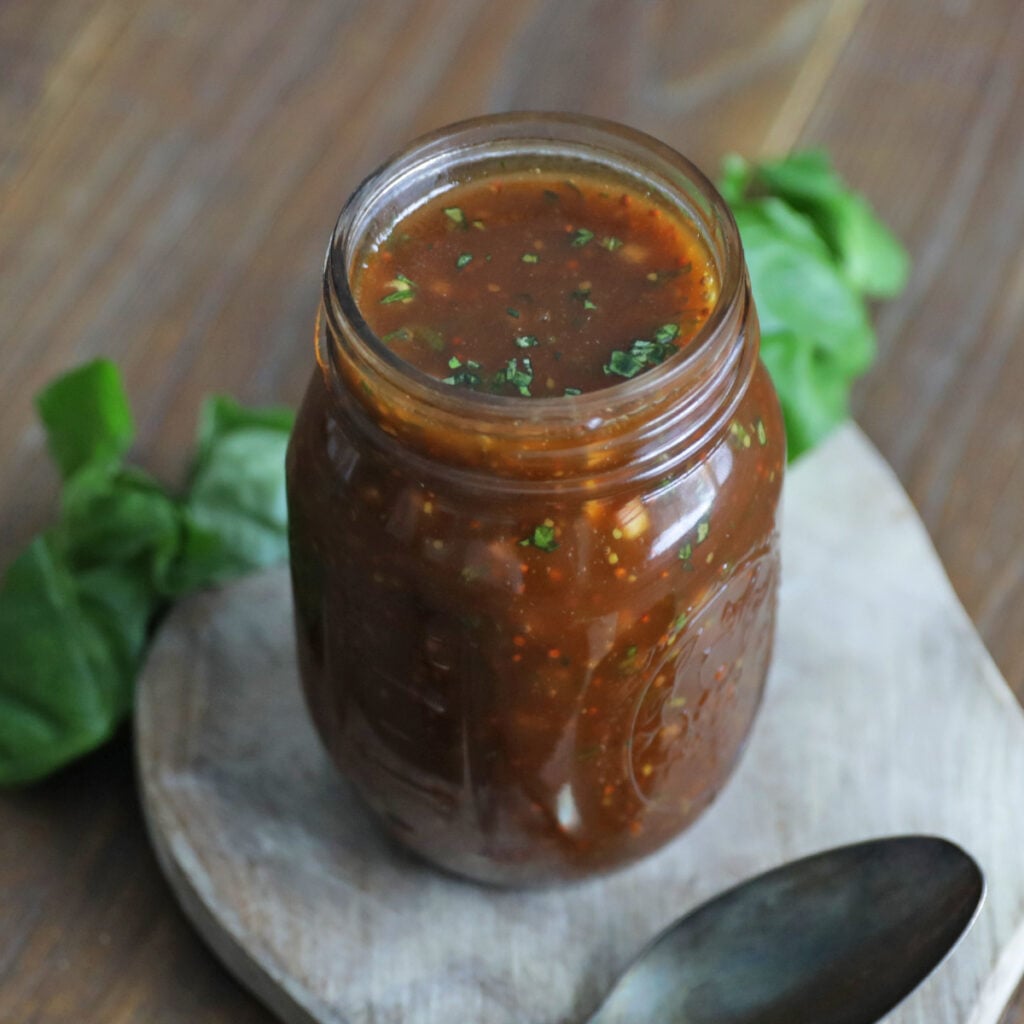
The first time I made a caprese salad on a restaurant line, the executive chef pulled the bottled balsamic glaze off the pass, handed me a whisk and a jar of his shallots, and the plate got better on the spot. The version I make at home keeps the same idea: a real vinaigrette, slowly emulsified, with fresh basil chopped into the bowl so the dressing tastes like the herb sitting next to the fruit. It belongs on a delicious Italian salad with pepperoncini just as much as it belongs on a bowl of mixed greens with shaved cheese.
Homemade Balsamic Vinaigrette
Balsamic vinegar comes out of Modena and Reggio Emilia in Italy’s Emilia-Romagna region, where the traditional version, Aceto Balsamico Tradizionale, ages in a stacked series of wooden barrels for 12 to 25 years and earns DOP protection on the label. Most bottles on a US grocery shelf are balsamic vinegar of Modena (IGP), which is wine vinegar blended with cooked grape must, a faster and more accessible cousin to the cask-aged version, and exactly the right tool for a daily vinaigrette.
The way I make this dressing at home is seriously so easy: I whisk together shallots, basil, Dijon, sugar, and balsamic in a medium mixing bowl while slowly drizzling in the oil. The basil is the move most home cooks skip, and it is what separates this from a pour-and-shake bottled version. My recipe also doubles as a marinade for chicken thighs or skirt steak, so I tend to prepare a double batch on a grilling afternoon and pull half into a zip bag with the meat before the coals are even hot.
I highly recommend making a jar this week by following my easy directions below. Drizzle it over your favorite salad, and I just know the bottled dressing aisle at the grocery store will lose one more customer.
Ingredients and Substitutions
Here are the basic ingredients to make a homemade balsamic vinaigrette:
- Shallot – Half a shallot, peeled and cut into a small dice. The shallot mellows fast in the balsamic and carries a softer onion taste than yellow or red onion. A small clove of garlic minced fine stands in if shallots are out of reach.
- Fresh Basil – Eight to ten leaves stacked, rolled tight, and sliced into a fine chiffonade. Fresh basil is the chef move on this dressing. Dried basil works too, fresh thyme or chopped rosemary slides in for a colder-weather version.
- Dijon Mustard – Smooth Dijon is the emulsifier that keeps the oil and vinegar from breaking. Whole-grain Dijon adds visible mustard seed and a coarser texture, which I like on heavier salads with meat.
- Sugar – Granulated white sugar sweetens the balsamic and balances the acid. Honey or pure maple syrup slides in one for one and both add an extra layer of flavor.
- Balsamic Vinegar – Look for balsamic vinegar of Modena with a short ingredient list, ideally just wine vinegar and cooked grape must.
- Oil – A neutral or mild oil is the better call here than a peppery extra virgin. A blended olive oil, avocado oil, or a soft Italian extra virgin all work. A heavy peppery oil will fight the balsamic and dominate the bowl.
- Sea Salt and Black Pepper – Fine sea salt and a few cracks of fresh pepper at the end of the whisk.
How to Make Balsamic Vinaigrette
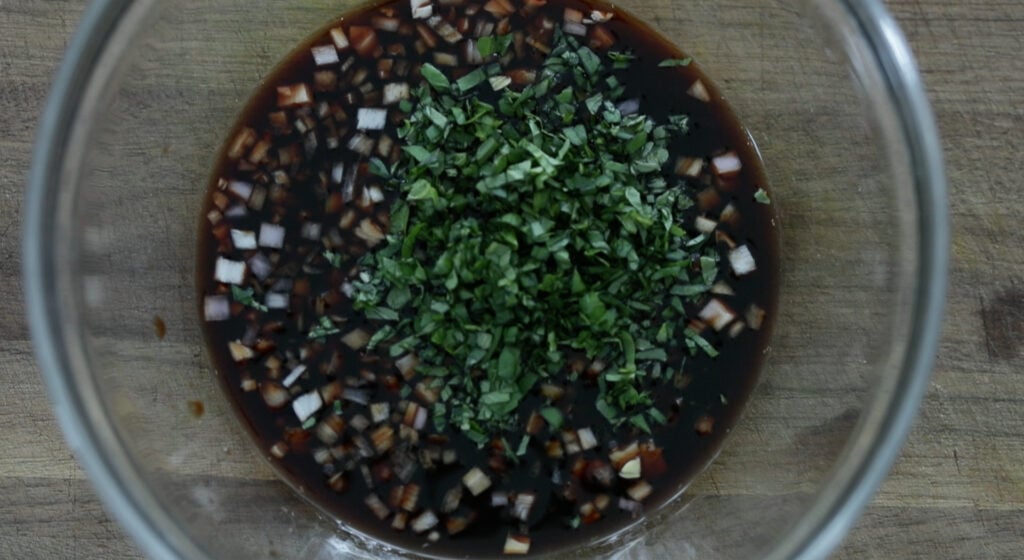
Prep the shallot and the basil: I peel and dice the shallot fine, then stack the basil leaves, roll them tight, and slice into a chiffonade. Both prep steps go straight into the mixing bowl.
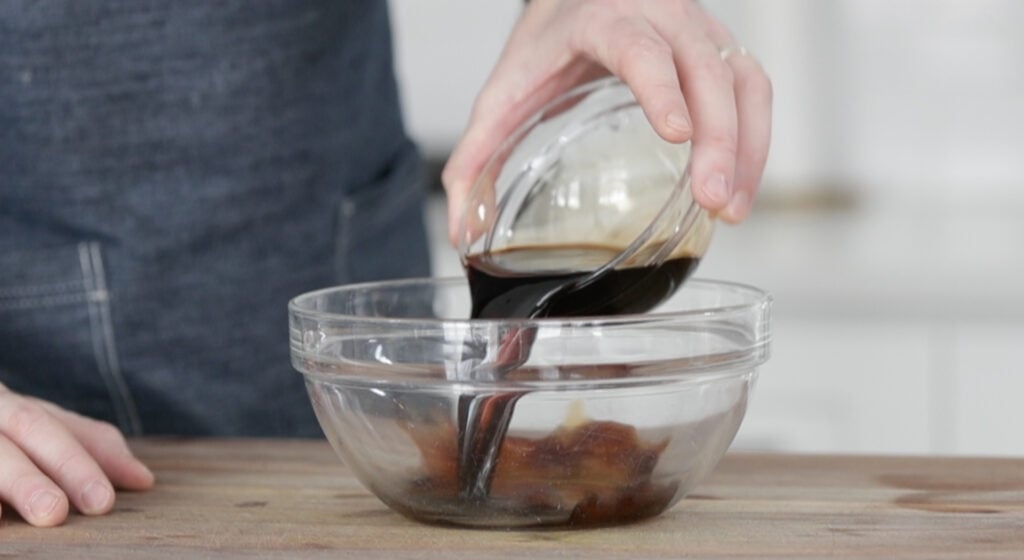
Build the base: Add the shallot, basil, Dijon mustard, sugar, and balsamic vinegar to a medium mixing bowl and whisk for 15 to 20 seconds to dissolve the sugar and break up the mustard into the vinegar.
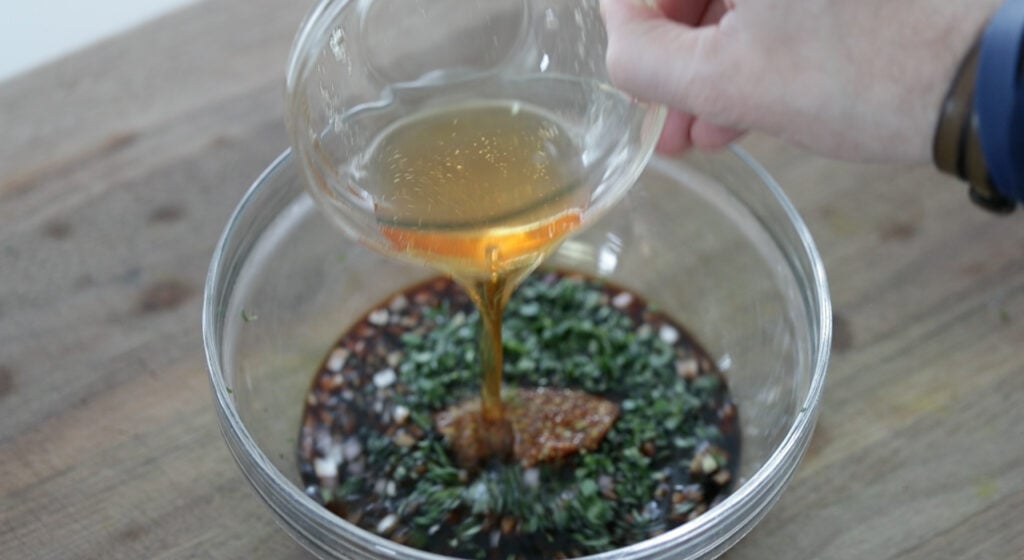
Drizzle in the oil: I keep the whisk in motion and pour the oil into the bowl in a slow, steady stream. The vinaigrette will pull together and thicken into one glossy dressing as the oil emulsifies into the vinegar.
Season and taste: I add a few pinches of sea salt and several cracks of fresh black pepper. Whisk once to integrate, then drag a leaf of lettuce or a wedge of tomato through the bowl and adjust the salt, sugar, or acid against what the dressing is going to land on.
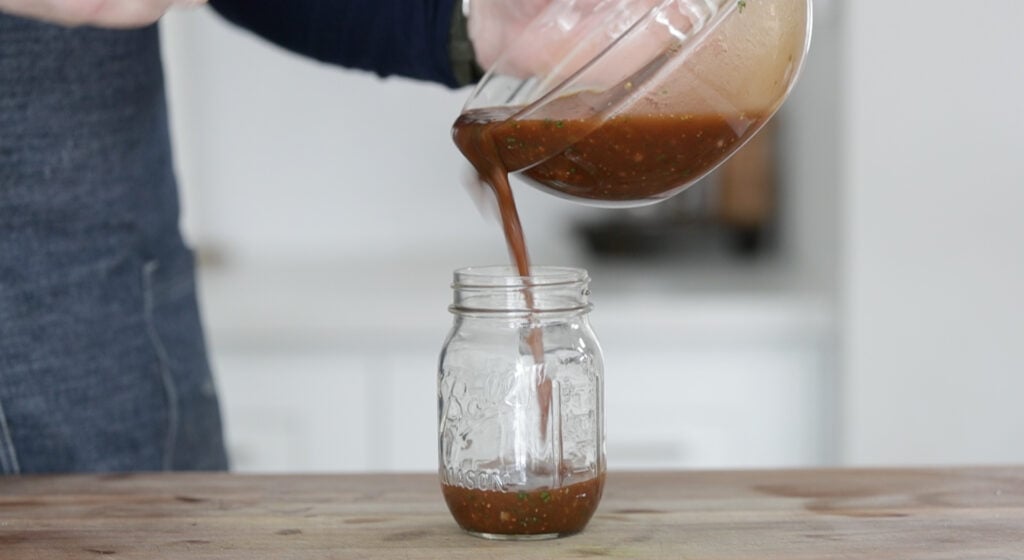
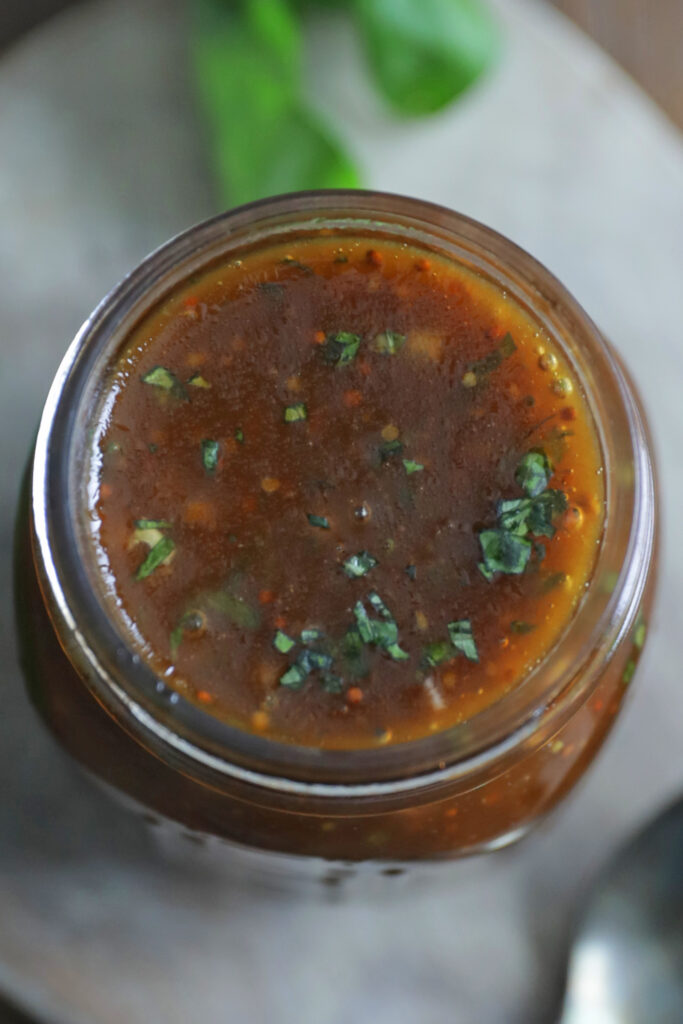
Bottle and rest: I pour the vinaigrette into a clean glass jar or squeeze bottle and let it sit at room temperature for 10 minutes before serving so the shallot and basil bloom into the oil.

chef tip + notes
Most home vinaigrettes split because the order is wrong. So this is the order I recommend: acid, mustard, and aromatics hit the bowl first. Oil goes in last, in a thin stream, with the whisk already moving. Stop whisking before the emulsion sets and you’ll watch it break in the jar an hour later.
- Slow drizzle, steady whisk: The oil should leave the bottle as a thin pencil of stream, not a glug. A fast pour breaks the emulsion before it ever sets up and the vinaigrette splits in the jar 20 minutes later.
- Mind the balsamic: A syrupy bargain-bin balsamic is usually caramel color and corn syrup talking, not real grape must. Spend a few extra dollars on a bottle that lists wine vinegar and cooked grape must on the label and the whole dressing tastes better.
- Use it as a marinade: Drop chicken thighs, flank steak, or pork tenderloin into a zip bag with the vinaigrette for 2 to 4 hours before grilling. The sugar caramelizes on the grates and the basil shows up on the finished plate.
- Taste with what you are serving: A leaf of romaine, a slice of tomato, or a chunk of cucumber pulled through the bowl tells you more than a spoon dipped into the dressing. Adjust salt, sweet, and acid against the actual dish, not in the abstract.
Serving Suggestions
This dressing is amazing on a peak summer table when tomatoes are heavy on the vine and basil is hanging out of the window box. Toss it through a strawberry spinach salad with goat cheese and the berries pull the balsamic toward dessert. Drag it through a torn-bread panzanella salad with grilled chunks of sourdough bread and the vinaigrette soaks into the bread the way the dish was built for, so good!
In the cooler months the same jar is great over a heartier bowl, especially a watermelon feta salad with grilled steak on a Saturday afternoon when the grill is already going, or a sweet mandarin orange salad on a weeknight when supper has to be ready in under 30 minutes. Hold a spoon over the bowl, whisk one more time to bring the layers back together, and pour.
Make-Ahead and Storage
Make-Ahead: I make the vinaigrette up to 3 days ahead. The basil will fade past day two, so a fresh batch the day of a dinner party is the better call when the basil is the loudest note on the plate.
How to Store: Refrigerate in an airtight jar or squeeze bottle for up to 7 days. Pull the jar out 15 to 20 minutes before serving and shake or whisk it back to one consistent pour.
How to Freeze: I skip the freezer. The dressing breaks on the thaw and the basil turns dark and bitter.
Salads to Use This In

Balsamic Vinaigrette Recipe
Ingredients
- ½ peeled and small diced shallot
- 8-10 finely minced fresh basil leaves
- 1 ½ teaspoons Dijon mustard
- 2 tablespoons sugar
- ¾ cup balsamic vinegar
- 2 cups oil
- sea salt and pepper to taste
Instructions
- Add the shallots, basil, mustard, sugar, and balsamic vinegar to a medium-size bowl.
- Using a whisk, whisk the ingredients together while slowly drizzling in the oil to make sure it stays emulsified.
- Finish by seasoning it with salt and pepper and serve.
Could I zip this together in a food processor, then whisk in the basil??
sure
Great dressing. The recipe does not specify what type of oil. I used olive oil for the first batch but it did not work. Taste was off and bitter. I remade with peanut oil and it was spot on.
Glad you gave it another try. The recipe notes does list several options for oils that work well. A neutral or mild oil is the better call.
Delish! I didn’t plan ahead to make this and I did not have shallots on hand so I used sweet onion. To reduce sugar (diabetic) I used a small amount of real sugar and a pack of Splenda, No fresh basil so I used dried. Only thing I might do differently next time is cut the recipe in half for our small family. I appreciated the mild flavor of this dressing. I will definitely make this again!
So glad you enjoyed the recipe!
I made this dressing for a salad
with fresh tomatoes, onions and banana peppers from my garden. I used the leftover dressing to marinate chicken thighs for the grill the next day. What a great recipe!
Thank you for giving it a try!