



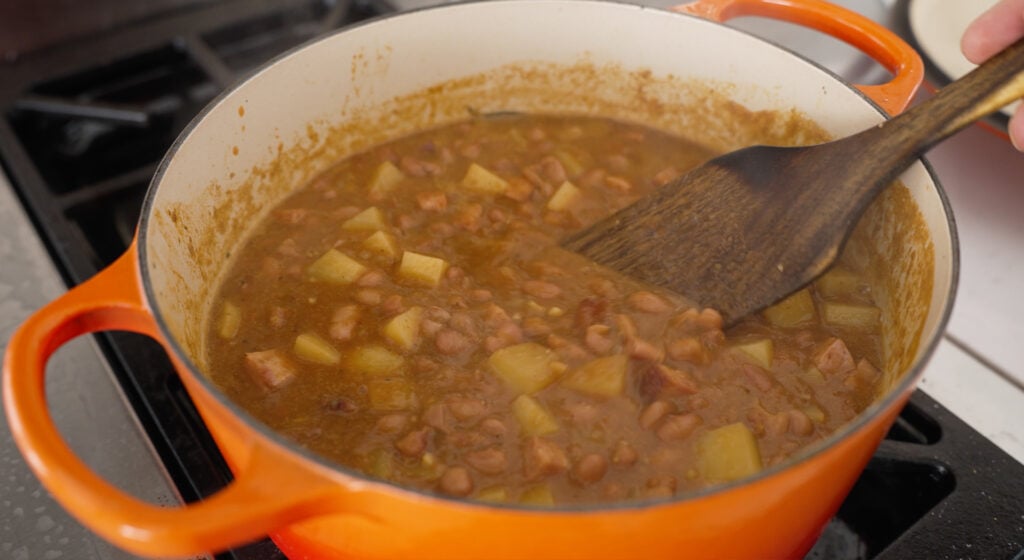
This Habichuelas Guisadas recipe slowly simmers dried beans, ham, potatoes, and seasonings in a thick stew loaded with tasty Latin flavors. You’ll love serving a scoop over rice as a full meal or alongside other Puerto Rican-inspired dishes.
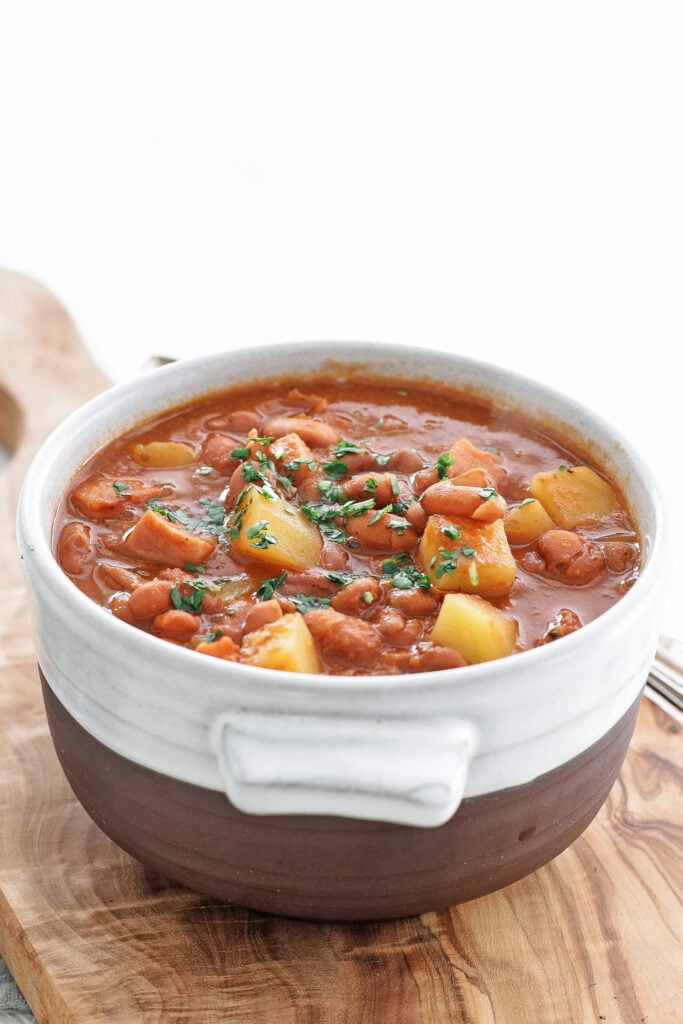
These have to be the best slow-cooked beans I’ve ever tasted. We love eating them with plain white rice, but I can’t help but sneak a few spoonfuls right out of the pot. If you’ve tried my Puerto Rican Jibarito Sandwich or my Maduros Recipe, then you know how much I love recreating Latin dishes. These beans are no exception, turning humble ingredients into something incredible.
Puerto Rican Beans
Habichuelas guisadas (meaning “stewed beans”) is a staple in Puerto Rican kitchens. It’s a hearty dish that slowly simmers pink or red beans, potatoes, and rendered pork in a tomato-based broth seasoned with sofrito and sazón. It only takes a few hours for the beans to become tender and the stew to thicken.
There are a few dishes similar to habichuelas guisadas throughout Latin America, but the recipes vary by family or region. For example, you could have a pot of beans made with pumpkin or sweet squash (the Dominican version) or black beans instead of red beans (AKA Cuban frijoles).
The first time I tried these Puerto Rican beans was in Chicago, from the same food truck where we ordered bistec encabollado. Between the tomato base and the creamy beans, I couldn’t get enough of their “simmered all day” vibe. My version is as close to that first batch I fell for, but still uses pantry staples and simple ingredients you can find at most Latin markets.
Ingredients and Substitutions
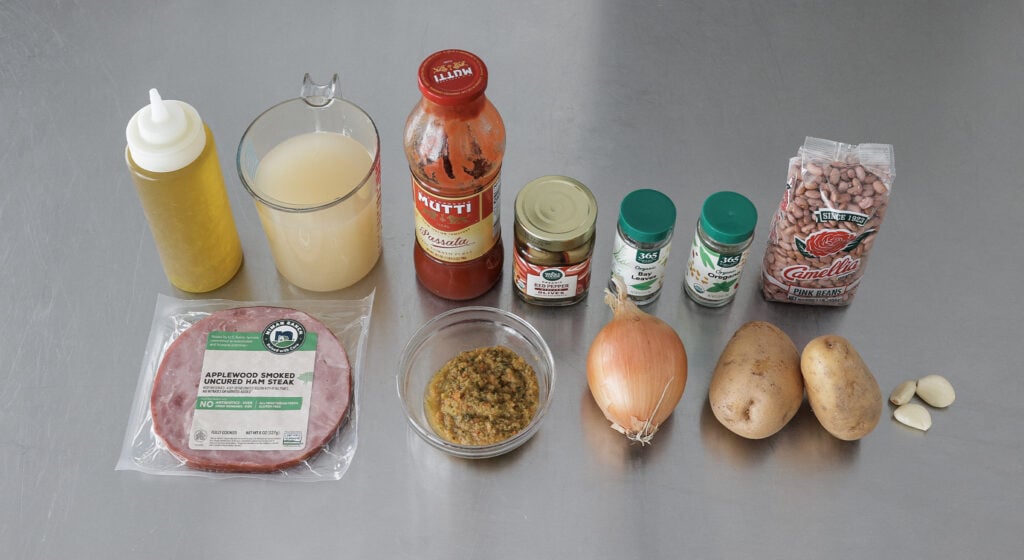
To keep these stewed beans as close to the authentic Puerto Rican version as possible, I used the traditional beans, added rendered pork, and seasoned the tomato stew with sofrito and sazón. I went shopping at my local Latin grocery store, but many of these ingredients can also be found in the international aisle of well-stocked grocery stores.
- Beans – I use traditional dry pink beans (habichuelas rosadas), but small red kidney beans or borlotti (cranberry beans) are popular substitutes.
- Stock for simmering the beans.
- Oil – Rendered lard will give you the best flavor, or you can stick with olive oil to keep things simple.
- Pork, even though it isn’t always included, I couldn’t resist making my habichuelas guisadas with diced ham. Pork belly or thick-cut bacon would be just as amazing.
- Aromatics – I used a diced yellow onion and plenty of minced garlic.
- Sofrito, made from a blend of mild, sweet peppers, onions, garlic, and culantro or cilantro, helps those bold Puerto Rican-inspired flavors shine through.
- Tomato Puree adds a slightly tangy, rich, velvety texture to the sauce.
- Potatoes – Yukon Golds are my go-to. Yellow or red potatoes also work.
- Seasonings – I seasoned the beans with my homemade sazón seasoning, plus dried oregano, a bay leaf, salt, and pepper. Check out my adobo seasoning recipe too.
How to Make Habichuelas Guisadas
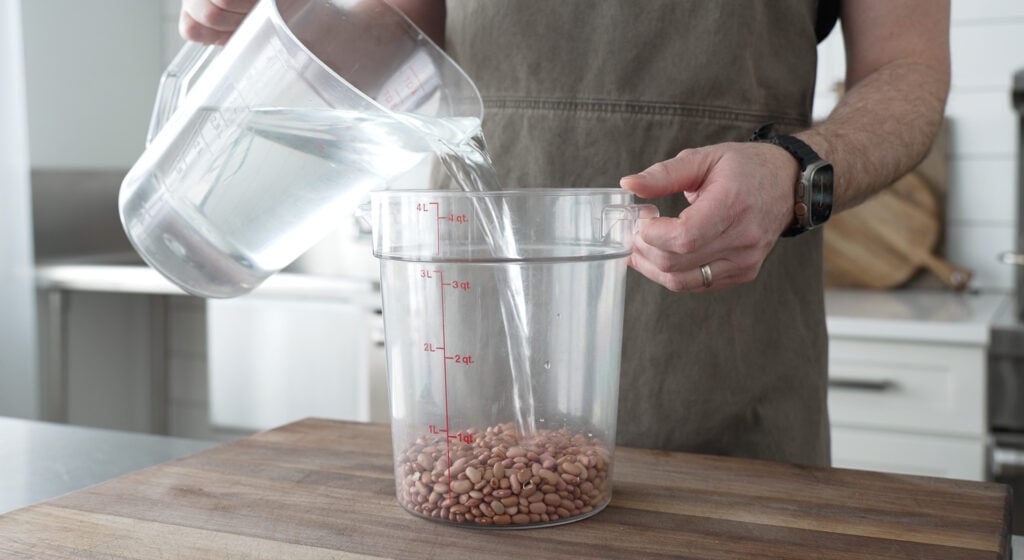
Soak the beans: First, soak the dried beans in water for several hours or overnight to help them cook faster.
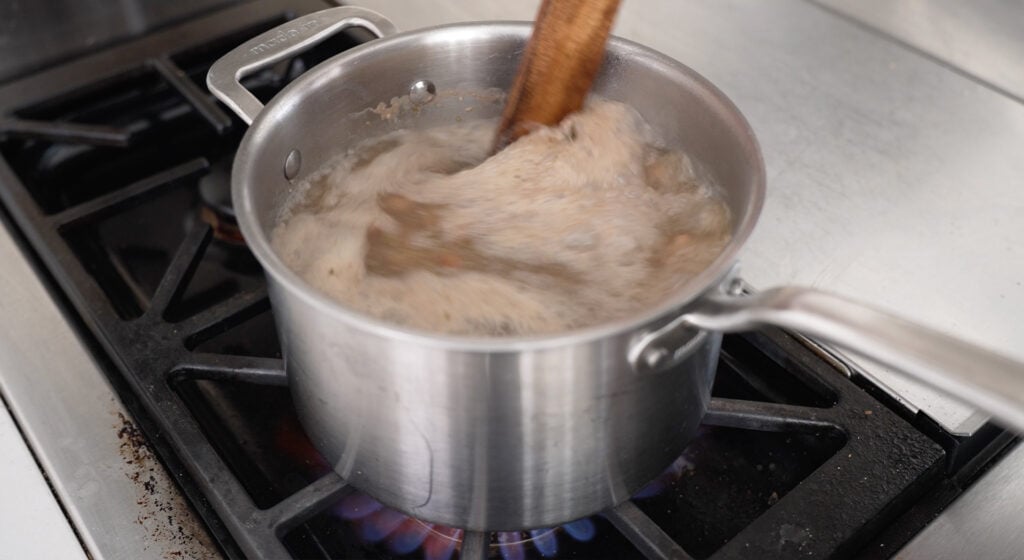
Simmer: Drain the beans, then add them to a medium pot with the chicken stock, oregano, bay leaf, salt, and pepper. Simmer the liquid until the beans are tender.
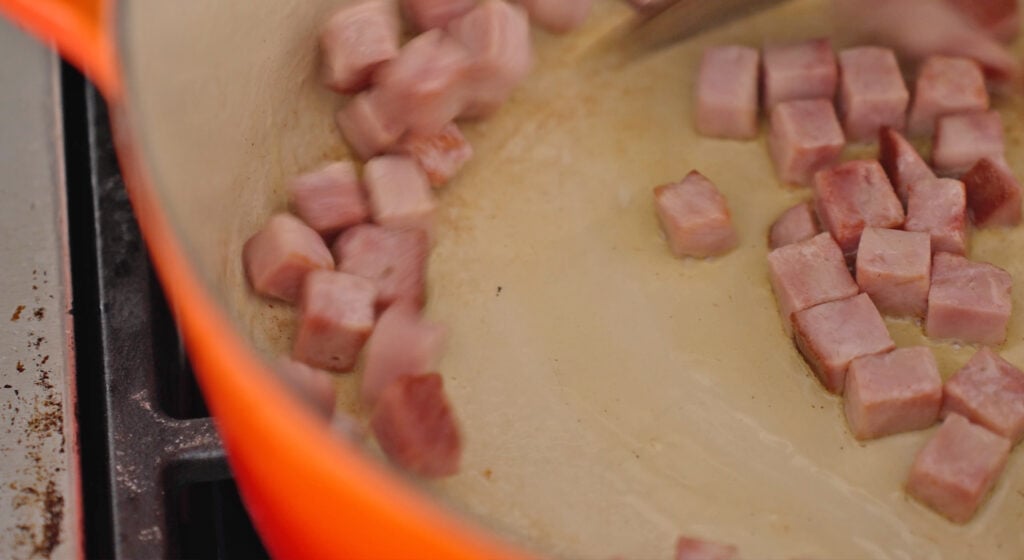
Brown the pork: Meanwhile, heat the oil in a large saucier pan over medium-high heat. When it’s hot, add the ham and let the edges brown. Remove it from the pan and set it aside.
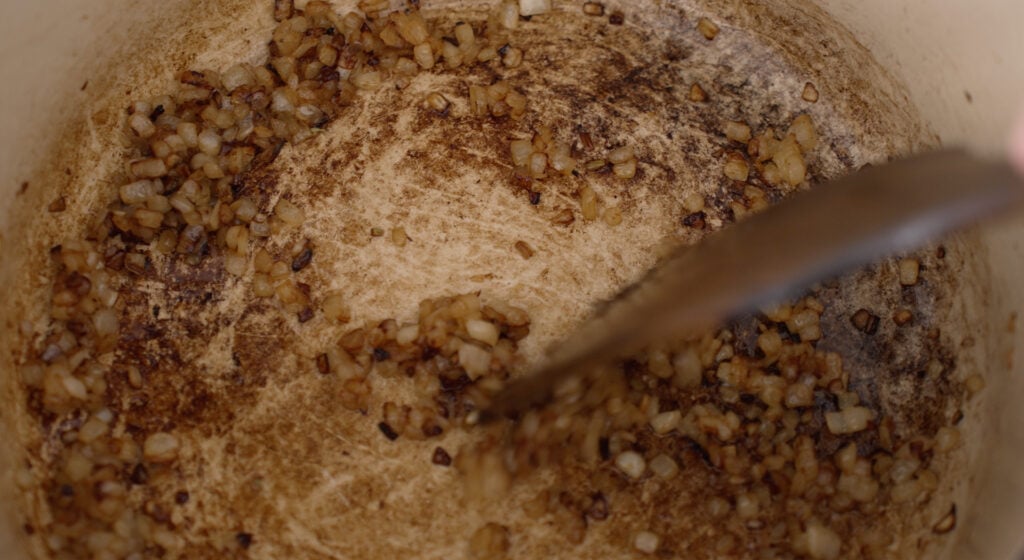
Caramelize the onions: Next, add the onions to the pan with the rendered ham fat and sauté them until they’re golden. Lower the heat and continue cooking until they’re caramelized.
Bloom the sofrito: Next, stir the sofrito and minced garlic into the pan with the onions.
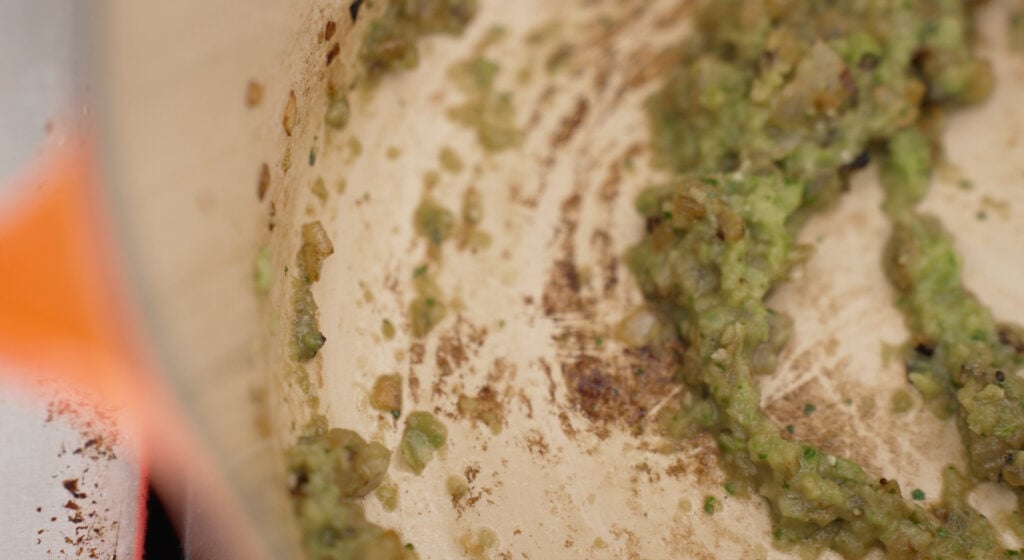
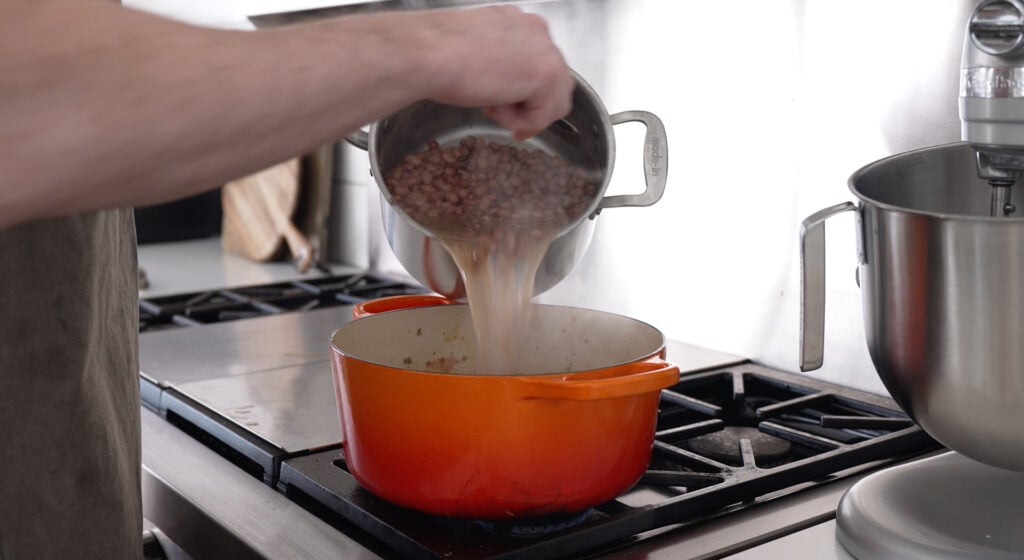
Season the sofrito and onions with the sazón, then stir in the tomato purée. If the beans are done, add them and their cooking liquid to the pan.
Cook the potatoes and serve: Stir in the seared ham, then add the potatoes, salt, and pepper, and continue simmering for 20 to 25 minutes. When the potatoes are fork-tender, the dish is ready to serve.

Chef Tip + Notes
I highly recommend making Puerto Rican-style beans with dried beans. I know, I know—canned beans are convenient. But using dry beans lets you control the texture and, more importantly, creates a “pot liquor” (the cooking starchy liquid), which plays a major role in the rich, gravy-like sauce. If all you have are canned beans, drain and rinse them well (skip the soak), and cut the initial simmer time to about 15 to 20 minutes.
- Bean shortcut: If I’m in a rush, I’ll pour boiling water over the dried beans and let them soak for 1 hour instead of waiting 8 to 24 hours.
- Don’t rush the sofrito: I always give it plenty of time to sauté with the onions, letting its vibrant flavors wake up. When it starts to smell sweet and aromatic, that’s my cue to add the garlic.
- Adjust the thickness: Sometimes, my sauce looks a little thin near the end. That’s when I use the back of a spoon to mash a few potatoes and beans against the side of the pot. This releases their starches, naturally thickening the stew.
- Potato swap: I sometimes swap half the potatoes with another starchy vegetable like pumpkin, kabocha squash, butternut squash, or sweet potatoes.
- Optional olives: If I have Spanish green olives or capers on hand, I’ll toss some in to add a briny contrast that cuts through the rich stew.
Serving Suggestions
Beans are usually a side dish, right? Not habichuelas guisadas. It’s a legit meal in itself, filling you up whether you eat them straight out of the pot or over a bowl of white rice.
I usually make sure I have room for the beans and my Bistec Encebollado. I like to swap the plain white rice for my Arroz con Gandules sometimes, too. The Latin flavors in every bite instantly bring back those treasured memories from our time in Chicago.
Make-Ahead and Storage
Make-Ahead: You can make this recipe up to 1 day ahead of time and reheat before serving.
How to Store: Store the beans in an airtight container in the fridge for 4 days or in the freezer for up to 3 months. Thaw overnight in the fridge, then reheat.
How to Reheat: Add as many stewed beans as you plan on eating to a saucepan over medium-low heat, stirring occasionally. Add a splash of water or stock to thin the sauce if needed.
More Bean Recipes
- Jamaican Rice and Beans
- Frijoles de la Olla
- Three Bean Salad
- Refried Beans (Frijoles Refritos)
- Red Beans and Rice

Video
Habichuelas Guisadas Recipe (Puerto Rican Beans)

Ingredients
- 1 pound pink or kidney beans
- 6 cups chicken stock
- 2 teaspoons oregano
- 1 bay leaf
- 2 tablespoons olive oil
- 8 ounces small to medium diced ham
- ½ peeled, small-diced yellow onion, about ¾ cup
- 2 finely minced garlic cloves
- ½ cup sofrito
- 2 to 3 teaspoons sazon
- 1 cup tomato puree
- 2 peeled and medium diced medium sized Yukon gold potatoes, about 1 1/2 to 2 cups
- salt and pepper to taste
Instructions
- Add the beans to a container and submerge them in water by 4 to 6 inches. Soak for 8 to 24 hours. To fast-track, cover the beans in boiling hot water and let them stand for 1 hour.
- Drain the beans and put them in a medium-sized pot along with the chicken stock, oregano, bay leaf, salt, and pepper. Bring them to a boil, then simmer, covered, on low heat for 60 to 70 minutes, or until tender.
- In the meantime, add olive oil to a large saucier pan over medium-high heat. Add the ham and sauté for 3 to 4 minutes, until it's a little browned. Set to the side.
- Next, add the onions to the pan, gently season with salt, and sauté over medium heat for 5 minutes or until lightly browned. Then turn the heat down to low and cook for 8 to 10 minutes, stirring occasionally until well browned.
- Add in the sofrito and cook for 3 to 4 minutes over low to medium heat. Then, stir in the garlic and cook for 30 to 45 seconds.
- Stir in the sazon and then add the tomato puree. At this point, check whether the beans are done; if so, add everything from the bean pot to the sofrito saucier pan. If they are not done, turn the heat off on the sofrito pan until the beans are done.
- Add back in the seared ham, the potatoes, salt, and pepper, and cook over low heat for 20 to 25 minutes, or until the potatoes are tender. Serve.
Oh shoot chef I love all your recipes. This one might take me to another dimension.😋🤗
It’s next level!