
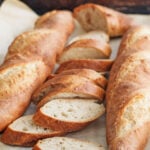
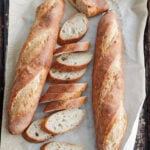
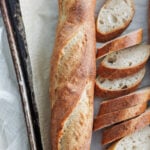
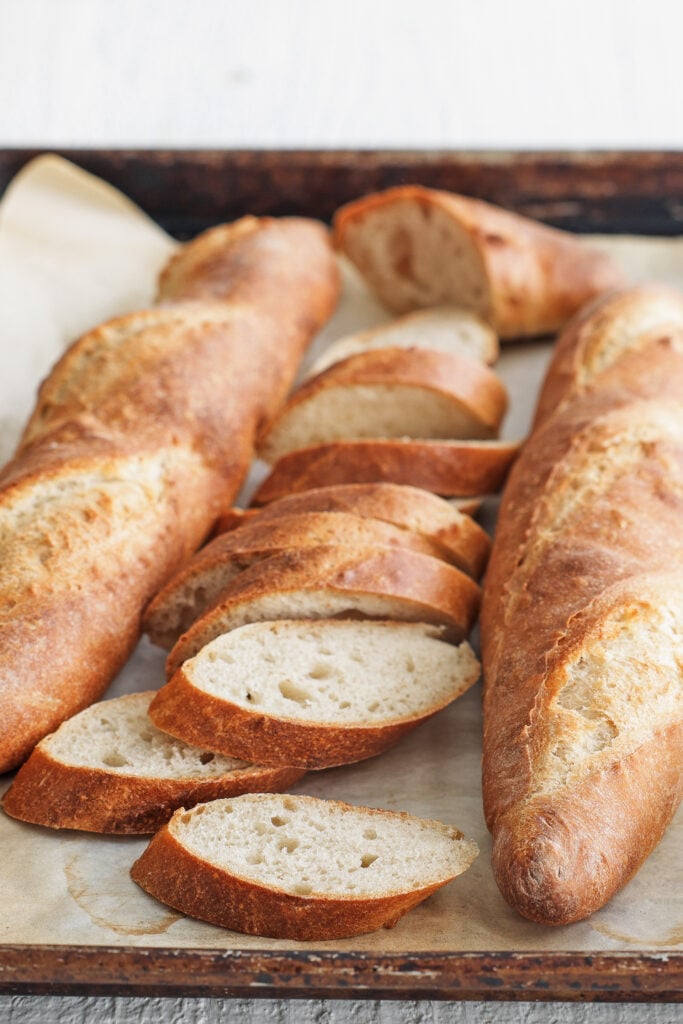
My classic French baguette recipe uses a traditional poolish pre-ferment for incredible flavor, a crispy, golden crust, and a light, airy crumb. It’s my favorite foolproof, bakery-style bread for sandwiches, crostini, or for enjoying fresh with butter. Makes 3 baguettes.
Even after spending years of my life in the kitchen, I still can’t get over how much better homemade bread is compared to what you’d get in a grocery store. My French Bread and my traditional French Boule are just two of my favorites. Both recipes are approachable enough for beginner and seasoned bread makers.
Baking Baguettes with a Poolish
French baguettes were actually one of the first breads I learned to bake in culinary school. I was pleasantly surprised by how easy it was! While the fermenting and proofing process takes some time, making fresh baguettes requires only 4 ingredients and about 15 minutes of hands-on work.
For this authentic French baguette recipe, you will use a poolish, a mix of flour, water, and yeast that ferments overnight. This long fermentation process doesn’t just give the bread more flavor; it also creates a crunchy, golden crust and a chewy interior with big, beautiful air pockets. It even helps extend the shelf life by a day or two!
I usually keep a few baked baguettes in my freezer for when I’m craving a sandwich piled with cold cuts. They’re also perfect when I need fresh bread for dipping into soups and stews. I love having them on hand to slice up as hors d’oeuvres when friends come over. Once you hear that first crunch, you’ll be just as hooked as I am.
Ingredients and Substitutions
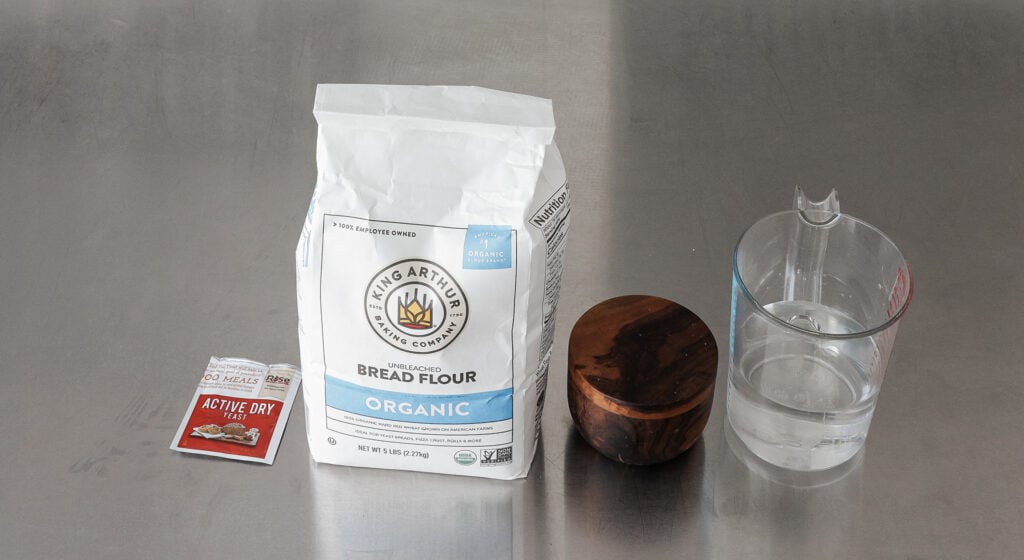
- Bread Flour has a higher protein content, which gives fresh-baked bread more structure and a light, chewy crumb. If you need a substitute, use an equal amount of all-purpose flour.
- Active Dry Yeast, but instant yeast also works. Just make sure it isn’t expired before you start baking.
- Sea Salt
- Water – Room-temperature water for the poolish and warm water for mixing the dough.
How to Make Classic French Baguettes
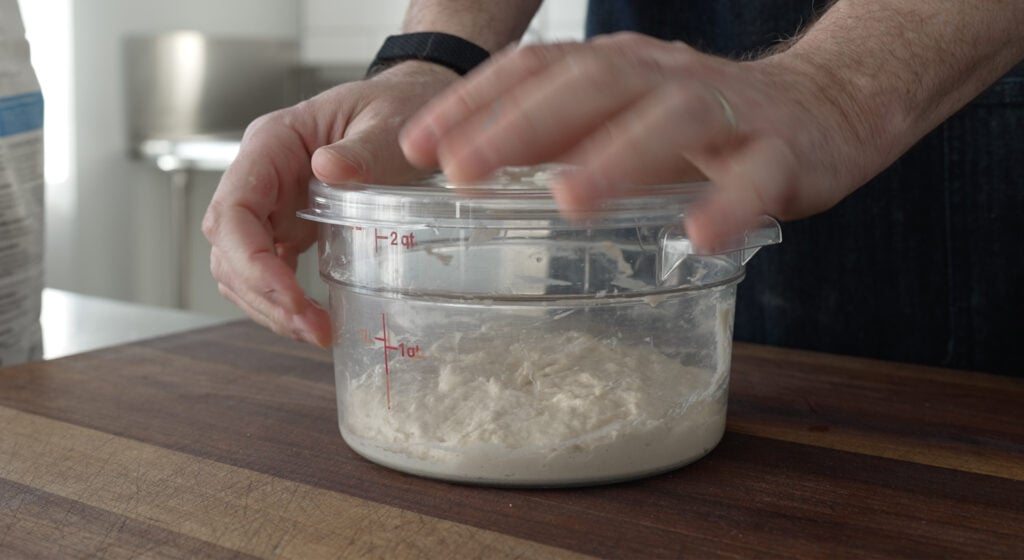
Prepare the poolish: The night before baking the bread, whisk the bread flour, water, and yeast together in a container. Cover it and move it to a warm spot in the kitchen overnight.
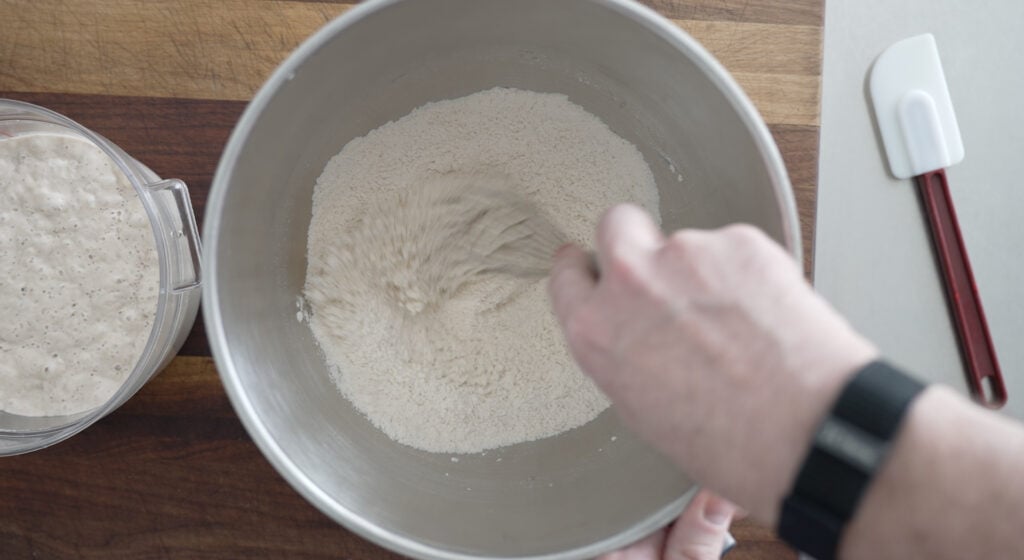
Mix dry ingredients: The next day, add the remaining bread flour, yeast, and salt to the bowl of a stand mixer and whisk everything together.
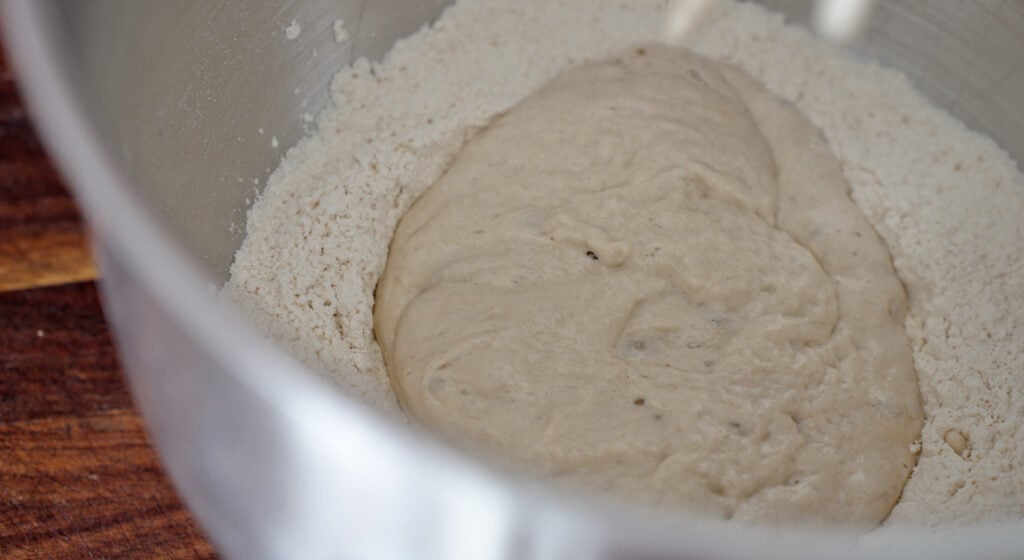
Add the poolish: Form a well in the center of the dry ingredients, then scrape the poolish right into the well. Then, mix on low speed using the dough hook attachment.
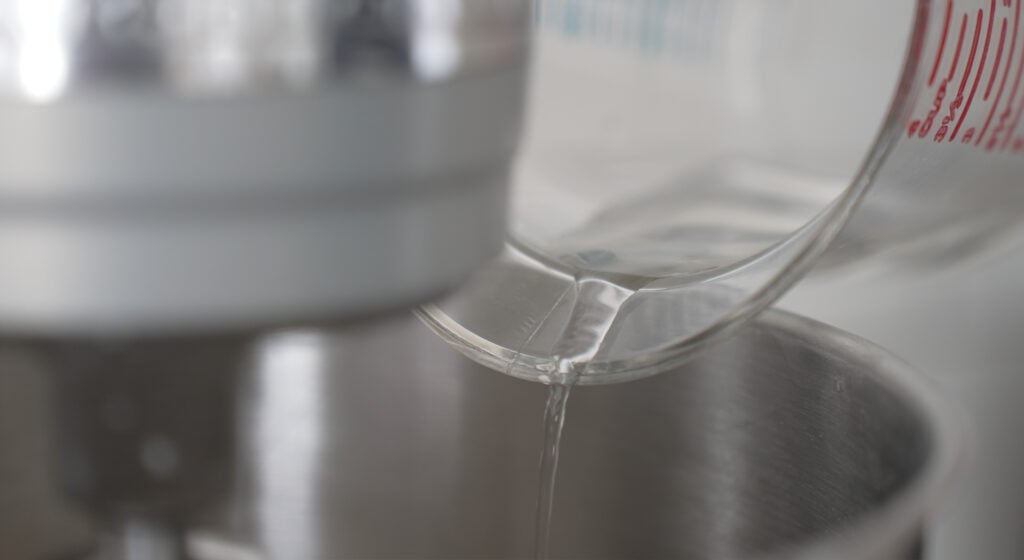
Add water: While the mixer is running, slowly drizzle in the warm water.
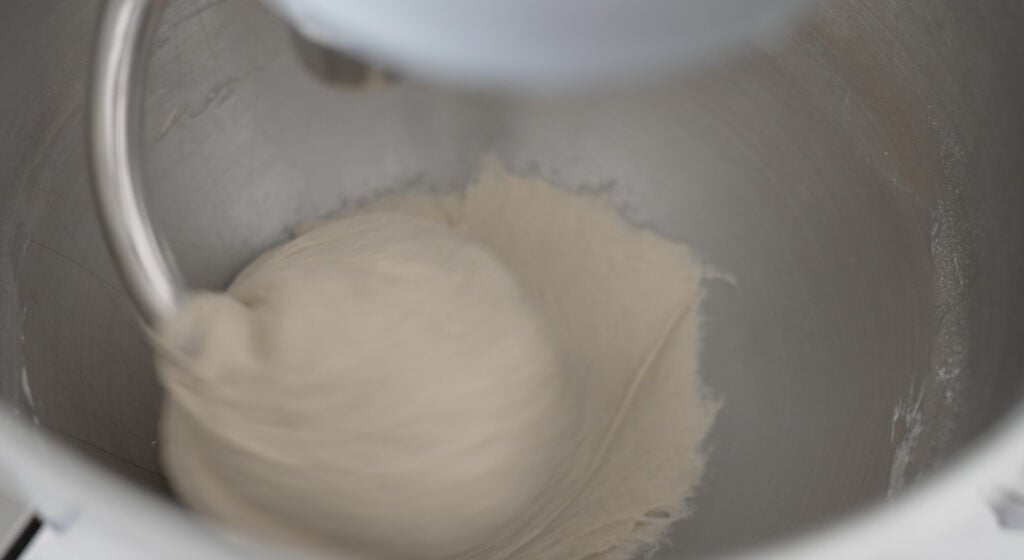
Knead: Increase the speed and let the mixer knead the dough for a few minutes. You will know it’s done when the dough pulls away from the sides of the bowl.
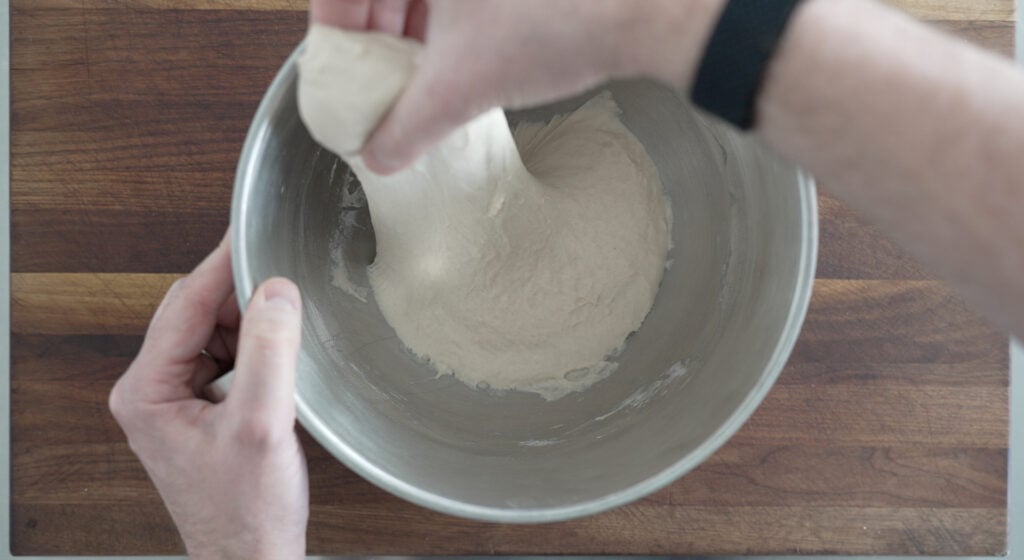
Autolyze and fold: Cover the bowl with plastic wrap and let it rest for 30 minutes. Then, stretch and fold the dough from the outside in for about 40 seconds. Do this one more time after another 30-minute rest.
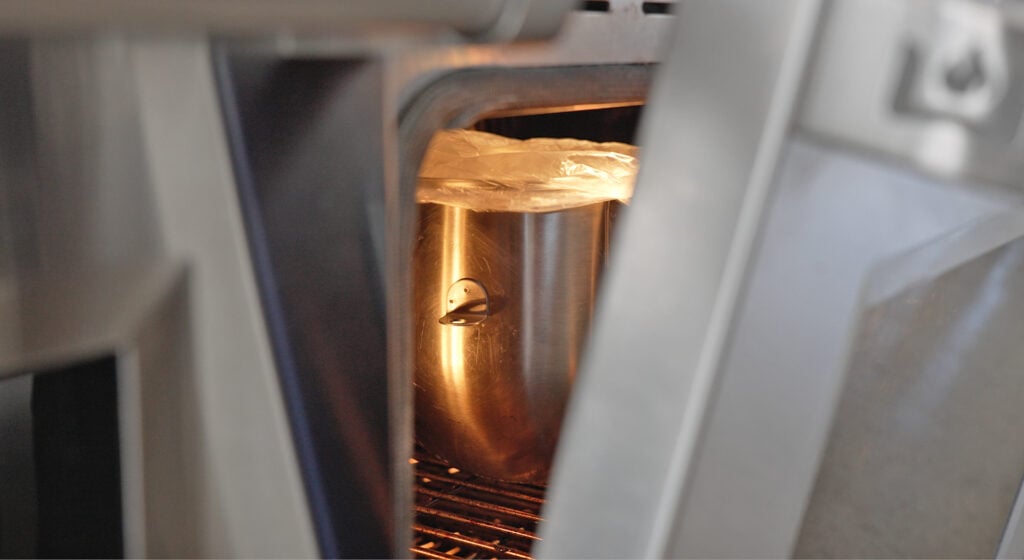
Bulk ferment: Proof the dough in a turned-off oven with the door cracked for 1 hour.
Divide: Next, divide the dough into three pieces and roll each one into a tight ball. Place them on a lightly floured surface and let them rest under a kitchen towel for 30 minutes.
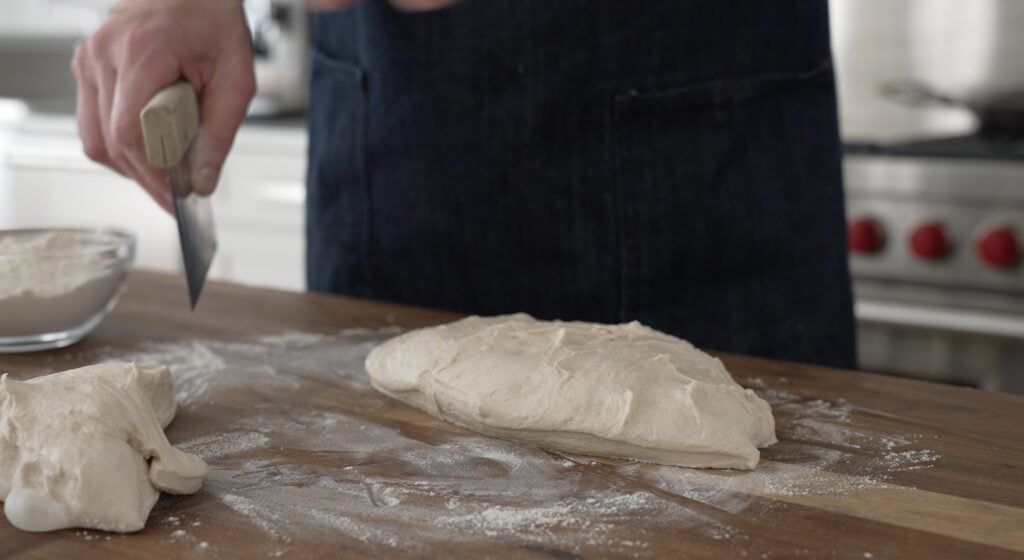
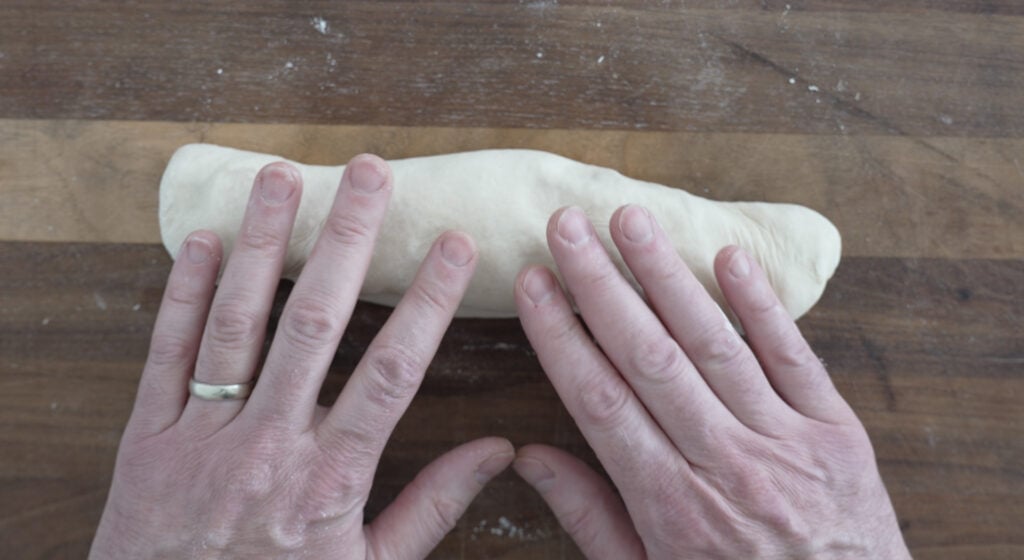
Shape: Shape one dough ball into a rectangle, then perform a series of folds: top to the middle, bottom over the top, and a final fold-and-seal. Then, roll the dough gently to get those classic tapered ends. If you want to master this method, watch my video on shaping baguette dough.
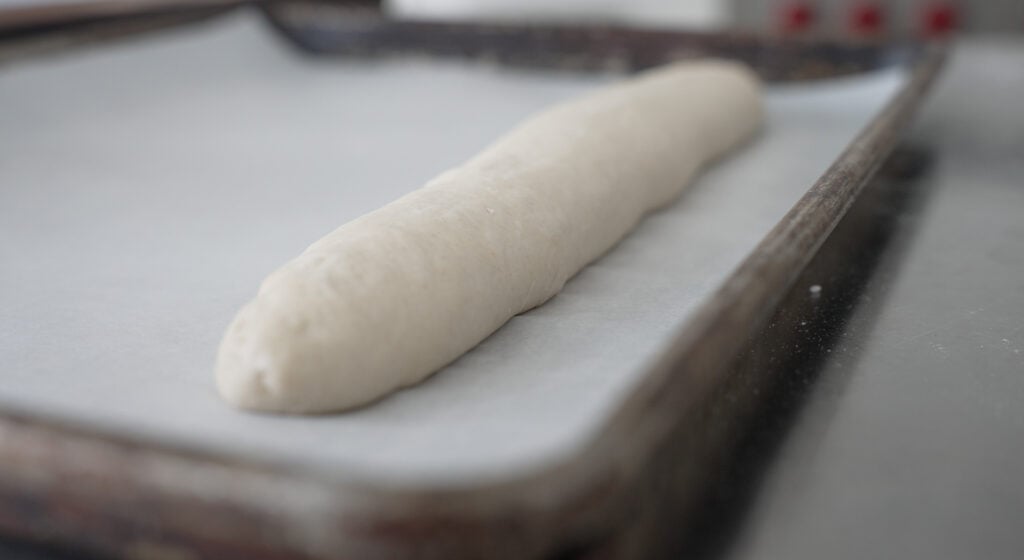
Final proof: Transfer the loaves to a parchment-lined tray, cover them with a kitchen towel, and let them rest for 30 minutes. Meanwhile, place a pan full of water into the very bottom of the oven.
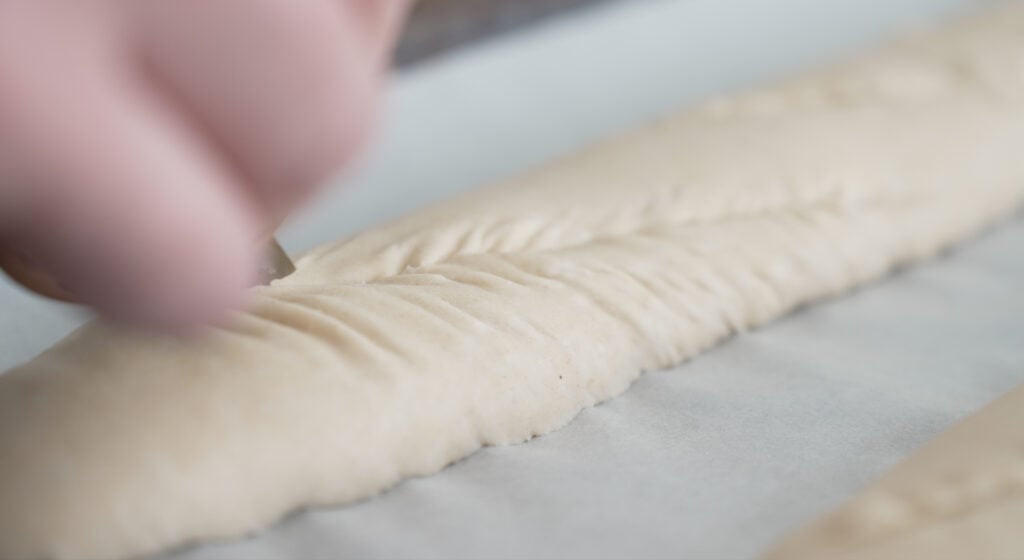
Score the surface: Right before baking, score the top of each baguette with three diagonal lines.
Bake: Bake the loaves in the oven until they have a golden-brown crust and an internal temperature between 205°F and 210°F.
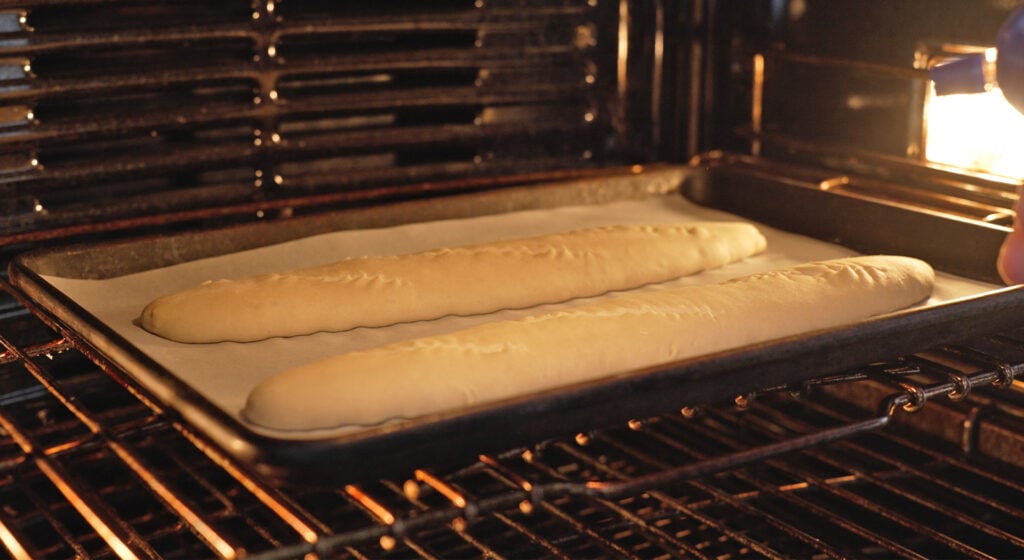
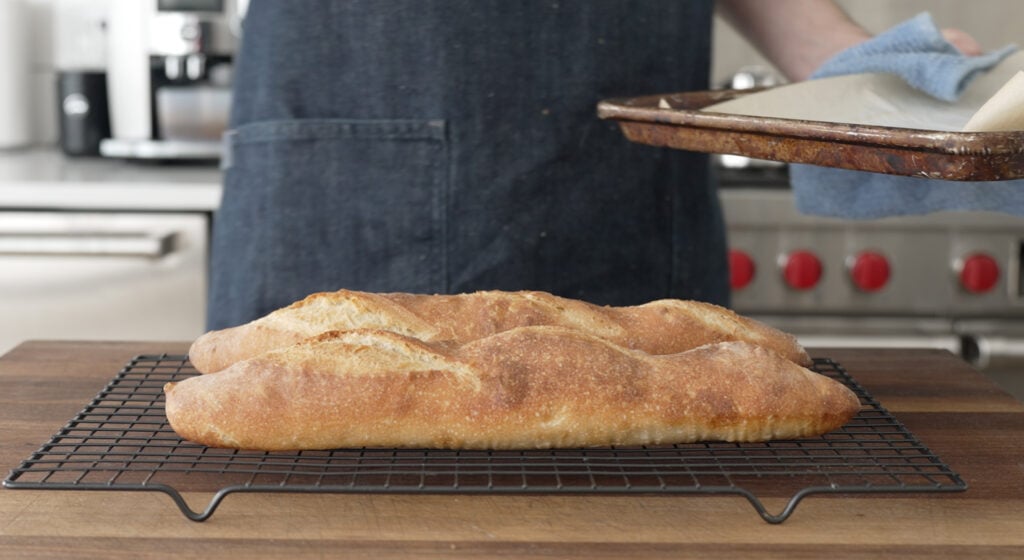
Cool: Finally, set the baguettes aside on a wire rack to cool to room temperature before serving.

Chef Tip + Notes
Baking bread with a poolish is simple in theory. However, the environment needs to be just right for the poolish to ferment and the dough to proof properly. I like to keep my poolish and baguette dough in a warm, draft-free environment (around 70°F to 75°F). In the winter, I’ll place them inside the oven with the oven light on (but not the oven itself).
- Kitchen scale: Weighing the ingredients with a kitchen scale is by far the most accurate method. Buy a kitchen scale if you don’t already have one; I promise it will change the way you bake!
- Proofing timeline: I let the poolish ferment for at least 12 hours, and the baguette dough proof for around 3.5 hours (the initial 30-minute rest, two separate 30-minute rests after folding, a full hour of bulk proofing, 30 minutes after portioning, and a final 30 minutes after shaping). I know it’s a lot, but don’t rush this—it’s how we build flavor and the airy crumb.
- Steam is essential: That small pan of water on the bottom rack in the oven creates a steamy environment, yielding professional-quality, lighter, taller loaves with shiny, crunchy crusts.
- Let them cool: After baking, I set the loaves aside on a wire rack and let them cool completely to room temperature. If you rip into one too soon, the inside will still be wet and gummy.
Serving Suggestions
I’m not above snacking on baguette slices with nothing but butter. But when I want something more substantial, a thick smear of beef liver spread is so good. This is also the standard crusty bread perfect for dipping into hearty soups and stews. It’s great for serving with pasta to soak up whatever sauce is left on the plate.
I also use sliced baguettes to make toasted crostini, which are great for topping a bowl of French onion soup or for the base of bruschetta. As for sandwiches, a shrimp po’ boy, French dip, and a banh mi are just better on a baguette.
Make-Ahead and Storage
Make-Ahead: Serve homemade baguettes the day you bake them for the softest texture. You can also make them 1 to 2 days in advance. I keep mine in a paper bag or wrapped loosely in a clean kitchen towel to keep them soft.
How to Store: Wrap the baguettes in a layer of plastic wrap, then foil. Freeze for up to 3 months. Thaw them at room temperature before serving. I typically don’t refrigerate baguettes because it tends to make them stale faster. But when that does happen, I just use the stale bread to make homemade croutons.
More Bread Recipes

Video
Classic French Baguette Recipe
Ingredients
For the Poolish:
- 250 grams bread flour
- 250 grams room-temperature water
- .2 grams active yeast
For the Dough:
- 250 grams bread flour
- 4 grams active yeast
- 6 grams salt
- 100 grams warm water, 95°
Instructions
For the Poolish:
- In a 2-quart container, whisk together the bread flour, water, and yeast until fully incorporated. Cover and keep in a warm place (70° to 75°) for 12 to 16 hours. It should have doubled in size and be very active, with lots of bubbles.
For the Dough:
- Add the remaining 250 grams of bread flour, 4 grams of yeast, and 6 grams of salt to the bowl of a stand mixer and whisk together.
- Form a well in the center, and add the poolish directly to it. Be sure to scrape all of it from the container to the bowl. Using the hook attachment, mix everything together on low speed.
- Slowly drizzle in 100 grams of warm water, almost like a trickle.
- Once the water is added, turn the speed up 1 notch and knead for 6 to 7 minutes.
- The dough should pull away from the sides of the bowl and maybe just be sticking to the very bottom.
- Cover with plastic wrap and let it rest for 30 minutes. Then fold the dough from the outside in by gently stretching and folding it over the center. Do this for 30 to 40 seconds. Repeat this exact same process after 30 more minutes. To clarify, you will have performed two different folds 30 minutes apart.
- Cover the dough, place it in an oven that is completely off, then crack the door and let it proof for 1 hour. It will at least double in size.
- Next, separate the dough into 3 equal-sized balls. They’ll weigh about 270 grams each. Roll each dough ball in a circular motion while cupping it until it is taught. Place on a lightly dusted surface and cover with a kitchen towel for 30 minutes.
- To form, press one dough ball down into a rough rectangle. Fold from the top down to cover about two-thirds. Turn it 180° and fold the remaining 1/3 over the already folded dough. Then, fold top to bottom while pressing down. Now, roll the dough gently in the center and harder as you roll out to the ends, making a tapered dough baguette on each side. Please see the video forthe different techniques that I use for this.
- Place 2 rolled-out baguettes on a sheet tray lined with parchment paper, cover with a kitchen towel, and rest for 30 minutes. While you wait, preheat the oven to 475°. During the preheat, add a small pan of about 2 cups of water to the bottom of the oven.
- Score 3 lines on a bias about ¼” deep into the dough using a lame.
- Bake the baguettes on the middle rack at 475° for 22 to 24 minutes or until well browned or until it is 205° to 210° internally.
- Rest on a rack until completely cooled to room temperature.
Hey Billy. Thanks for posting this recipe. I’ve made a lot of baguettes over the years but this is the first recipe that called for a poolish. What a difference! I nearly ate one whole loaf “testing”.
Thanks for trying it!