
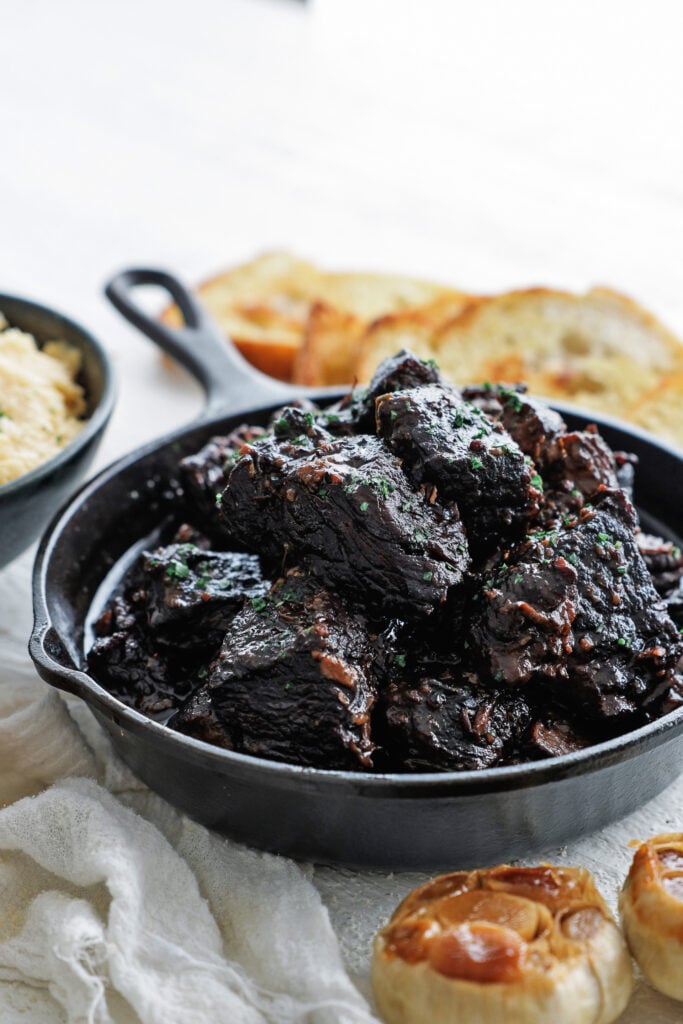
This Peposo recipe is a Tuscan beef stew braised low in a bottle of Chianti with smashed garlic and a heavy hand of cracked pepper until fork tender. I brown the beef hard first, then finish the sauce with butter and lemon. It’s a delicious main dish I love serving to my family on a cozy night at home.
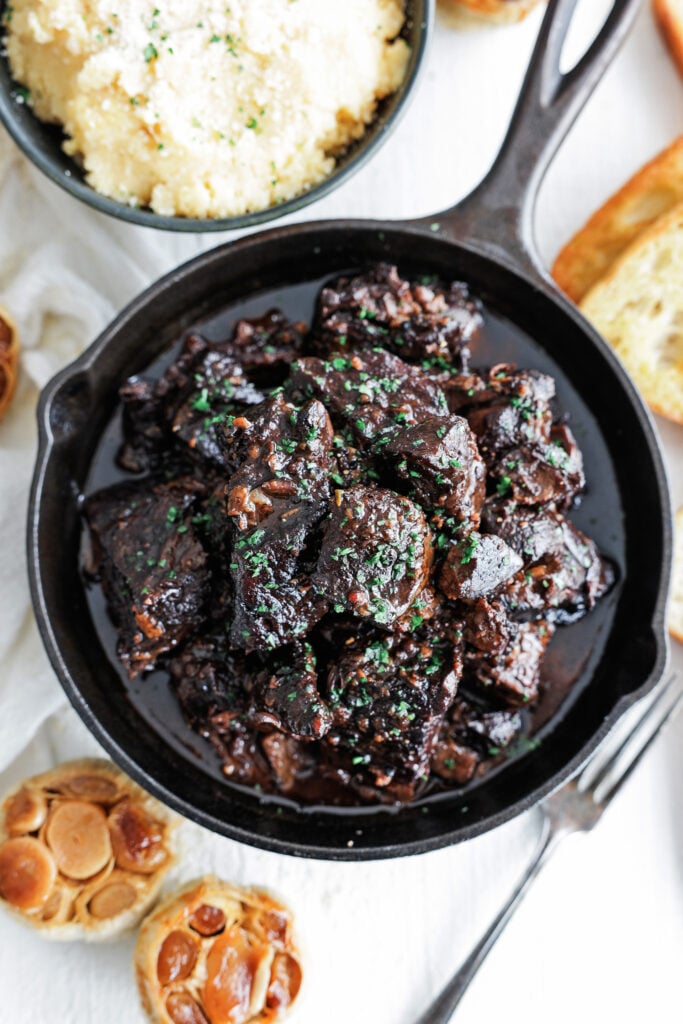

I only found out about this dish a year or two ago, which is a little embarrassing for a chef who spent 15 years on Italian-leaning fine dining lines. I made up for lost time. The first pot I braised at home reminded me why I fell for slow cooking in the first place. Somewhere between my short rib pasta and an Italian pot roast on the comfort scale, but with a peppery edge that neither one has. It is the kind of dish you start on a cold afternoon in Northwest Indiana and forget about while the house fills up with the smell of wine and garlic.
Peposo
Peposo is a classic Tuscan braise of beef, red wine, garlic, and a lot of black pepper. It’s cooked low until the meat is spoonably tender and the wine reduces into the sauce. The dish came out of Impruneta, where the brickmakers would set tough cuts of beef, wine, garlic, and a ridiculous amount of pepper into clay pots and let them cook next to the kilns while they worked. Those same craftsmen fired the bricks for Brunelleschi’s dome in Florence. Legend has it that Brunelleschi tasted the stew and loved it, turning a kiln worker’s lunch into one of the city’s great dishes.
I know it might look like a long recipe, but it only uses a few ingredients. The method is straightforward once you follow my step-by-step directions. Brown the cubed beef well for the crust, then perfume the fat with garlic. Toast the cracked pepper, then deglaze with wine. Cook the tomato paste to rust before the whole bottle, and a cup of stock goes in. From there it braises covered for 2 hours and uncovered for one. It’s finished with a reduction, butter, and a squeeze of lemon.
The way I cook it at home is with a combination of cuts, whatever I have around, because I almost always have a stray chuck roast or a few short ribs in the freezer. I dry brine the beef, toast the peppercorns before I crack them, and use a mix of colored peppercorns that I have cooked with going back to my early restaurant days. My daughter is not sold on the pepper, but she will eat the sauce over mashed potatoes all day long.
I highly recommend giving this one a shot on a slow weekend. Read the chef tips below before you start, especially the part about browning the beef in batches. Sound good? Let’s cook!
Ingredients and Substitutions
The key ingredients in this Peposo recipe are beef, pepper, and wine. The handful of ingredients around them are there to balance the acidity and round out the sauce. Here is what I use:
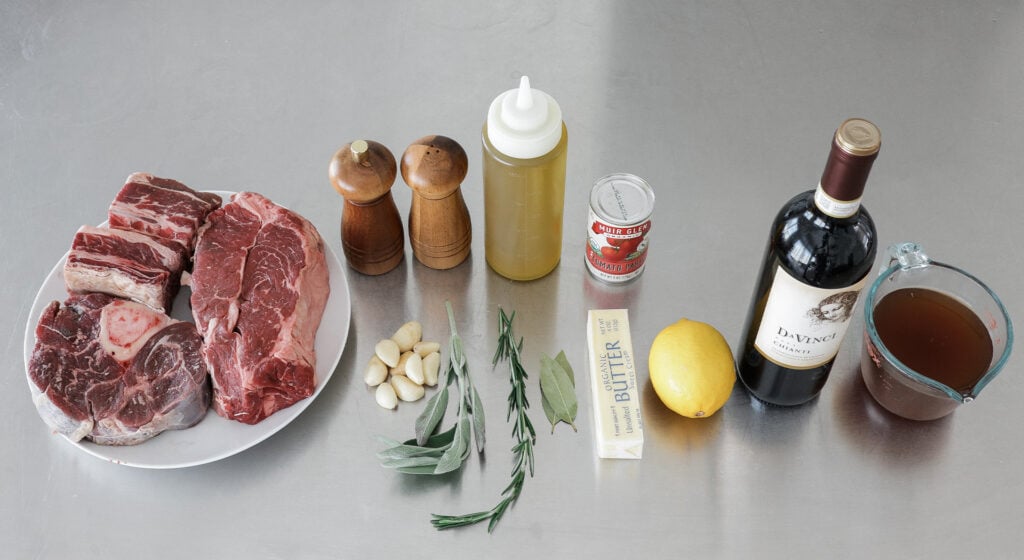
- Beef – The classic cut is boneless beef shank. Chuck roast or boneless short ribs are what most people use now. I use a combination of all three when I have them, since the different fat and connective tissue give the braise more character. Any of them work as long as you hit the total weight.
- Peppercorns are the star of the dish and where the name comes from. Traditional peposo uses black, but I use a mix of pink, green, white, and black for a range of flavors. Straight black peppercorns are perfectly correct if that is what you have.
- Olive oil is the classic choice, or beef tallow for a beefier, richer sauce. Tallow is what I go with when I want the braise to taste like it came out of a restaurant.
- Garlic – Smashed, not minced, so the cloves release their oils slowly and perfume the fat without burning. It flavors the sear and the braise both.
- Tomato paste – A modern addition that does two jobs. Cooked out until rust colored it deepens the savory flavor, and it also thickens the finished sauce.
- Fresh herbs, sage, rosemary, and bay – Never in the original, but a few sprigs enhance the braise without taking over. If I had to pick one, it would be rosemary.
- Wine – Chianti is the correct wine here since the Sangiovese grape is grown right in the center of Tuscany. A straight Sangiovese is the next best choice, and a Merlot or Cabernet Sauvignon will still make a delicious pot if that is what is open.
- Beef stock – Red wine reduces down into something very tannic and acidic, so a cup of stock cuts it and balances the sauce. It is the one addition I will argue for every time. Use a good homemade beef stock if you have it.
- Butter and lemon juice are the two finishers. A little unsalted butter gives the sauce body and sheen. A squeeze of fresh lemon brightens everything and knocks back any bitterness from the long-cooked pepper and wine.
- Kosher salt – For the dry brine and for seasoning the braise. I use Diamond Crystal these days.
How to Make Peposo
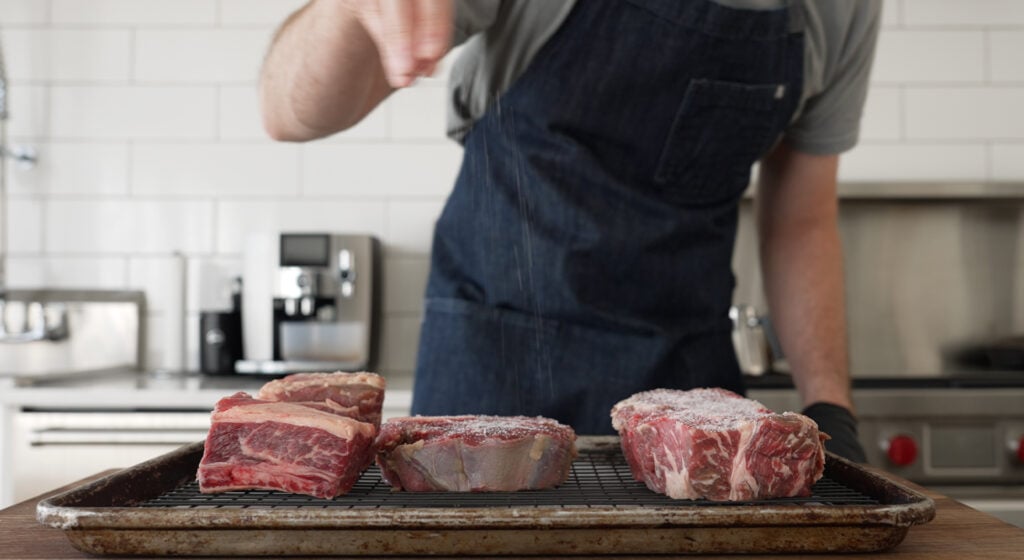
Dry brine the beef: Pat the roast dry on all sides and season generously with kosher salt, figuring about a teaspoon and a quarter per pound. Set it on a rack and refrigerate uncovered for 4 to 24 hours. This step is optional, but the salt draws moisture back in, seasons, and dries the surface so it browns better. To skip it, just salt the cubed meat right before searing.
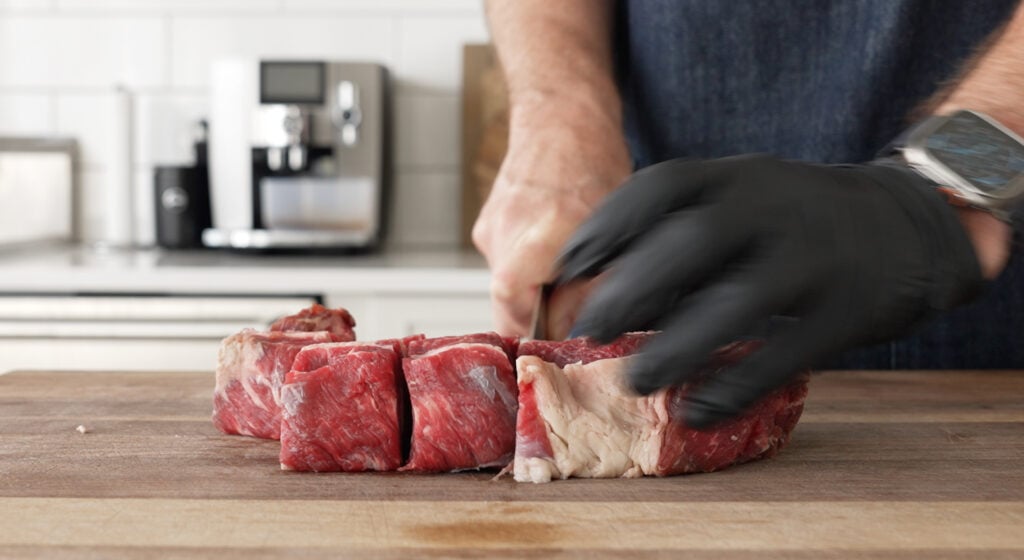
Cube the beef: When you are ready to cook, cut the meat into roughly 2 inch cubes so they brown well and stay tender through the long braise.
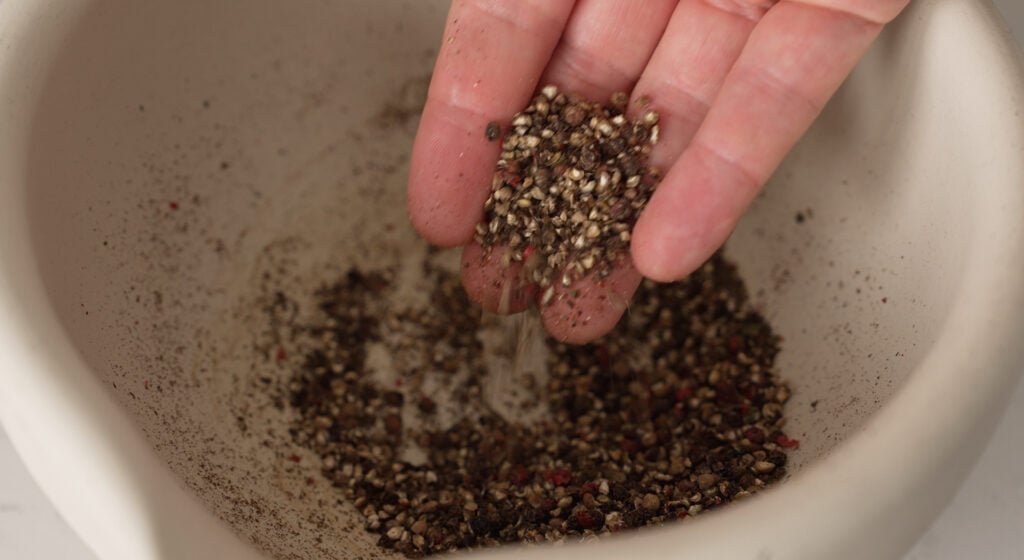
Toast and crack the pepper: In a large rondeau over low to medium heat, toast the peppercorns for 3 to 4 minutes until fragrant. Move them to a mortar and pestle and crack them coarsely.
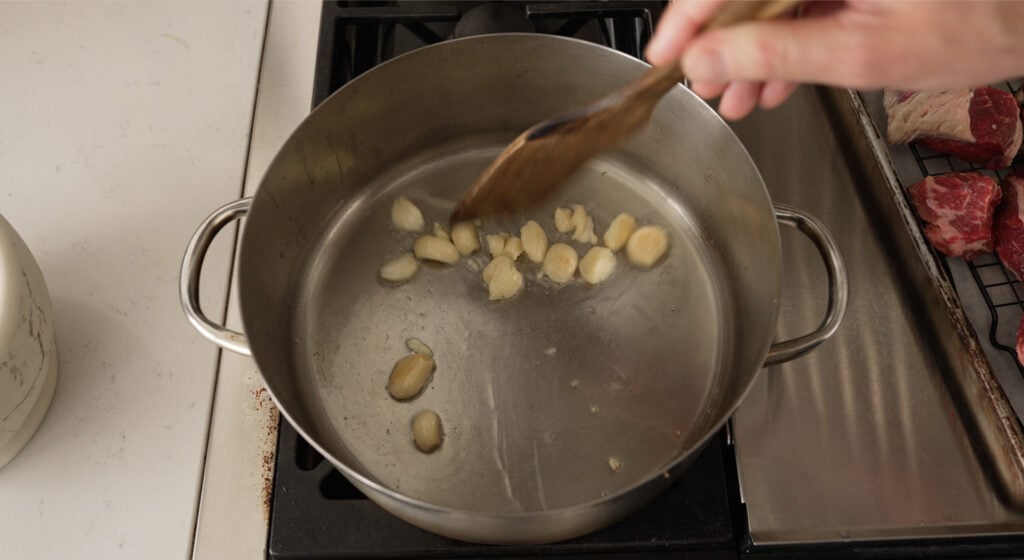
Perfume the fat: Add the tallow or oil to the same pot and toast the smashed garlic for 30 to 45 seconds. Set the garlic aside.
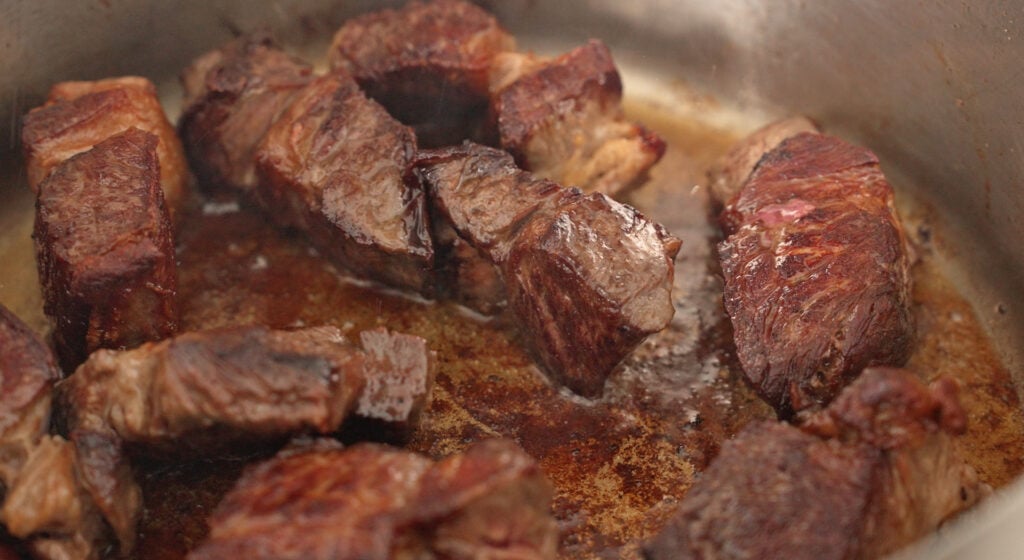
Sear the beef: Bring the heat up to medium high and let the fat just start to smoke. Add the cubed beef in a single layer without crowding, cooking 2 to 3 minutes per side until well browned on all sides. Work in batches if you have to. Set the seared beef aside on a plate.
Bloom the aromatics: Lower the heat to medium and add the garlic back to the pot along with the cracked pepper. Toast for just 20 to 30 seconds, until you can smell both, without letting the garlic scorch.
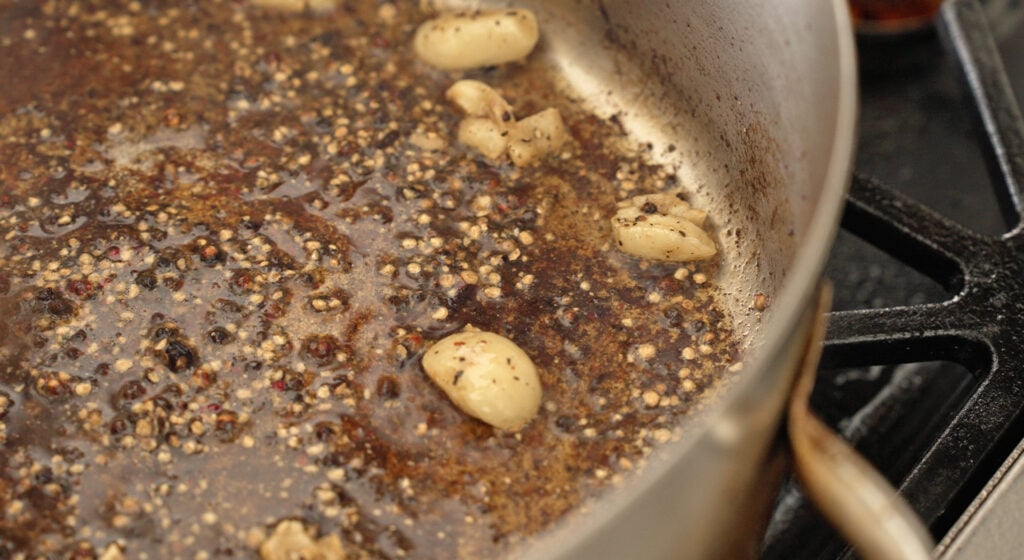
Deglaze and cook the paste: Pour in a half cup of the wine and scrape up the fond. Reduce until only about 2 tablespoons remain. Add the tomato paste and cook it 3 to 4 minutes until it goes rust colored, which is where it loses its raw edge and starts thickening the sauce.
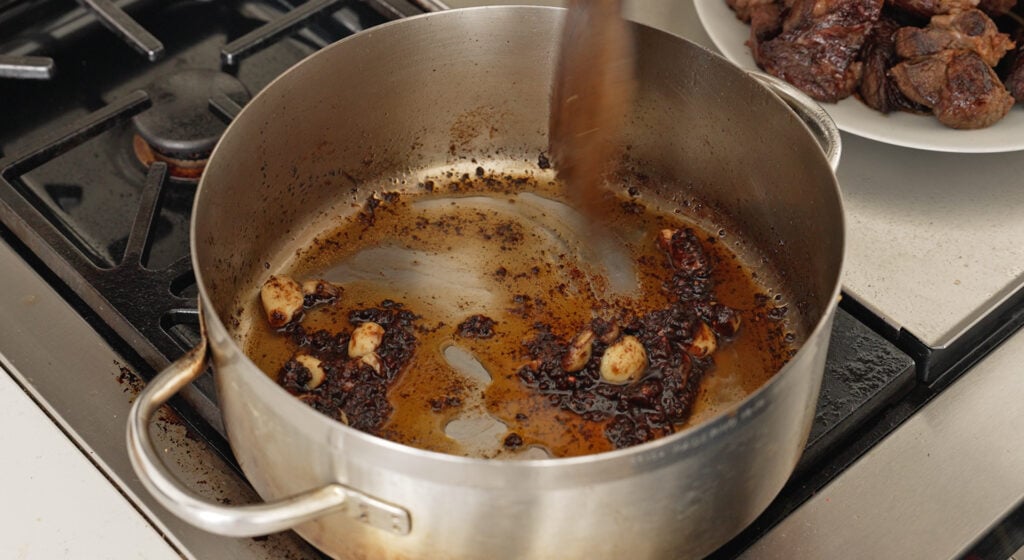
Assemble the braise: Pour in the rest of the wine along with the beef stock, sage, rosemary, and bay leaves. Season with salt and stir to combine.
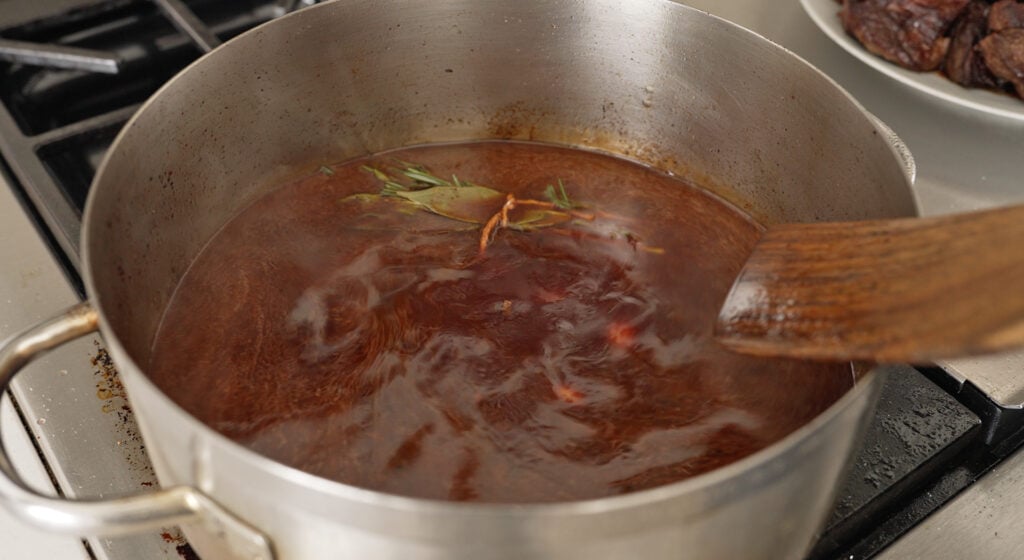
Add the seared beef back with any juices from the plate.
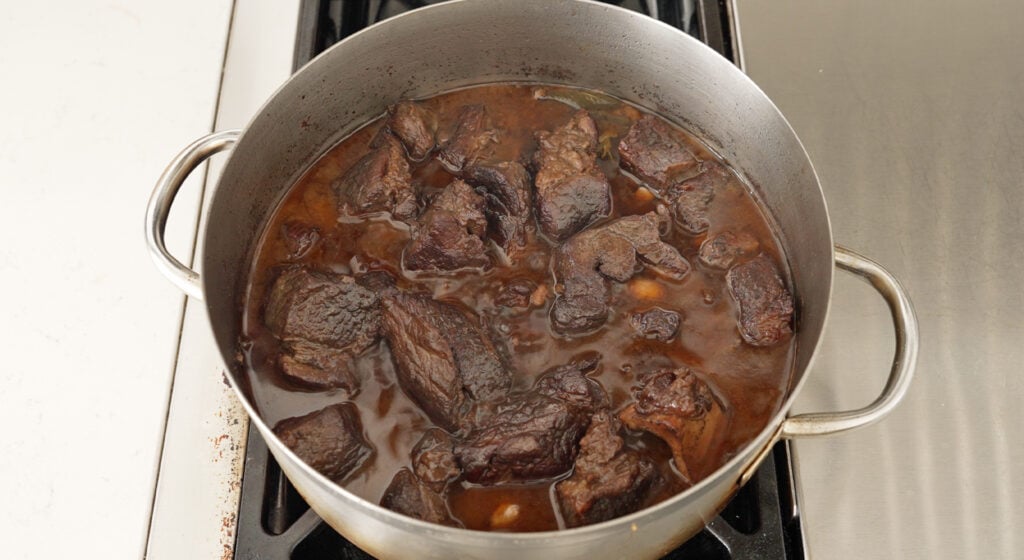
Braise low and slow: Cover and cook over low heat, or in a 300 F oven on a middle rack, for 2 hours. Remove the lid and cook 1 hour more, until the beef is fork tender and the sauce has reduced around it.
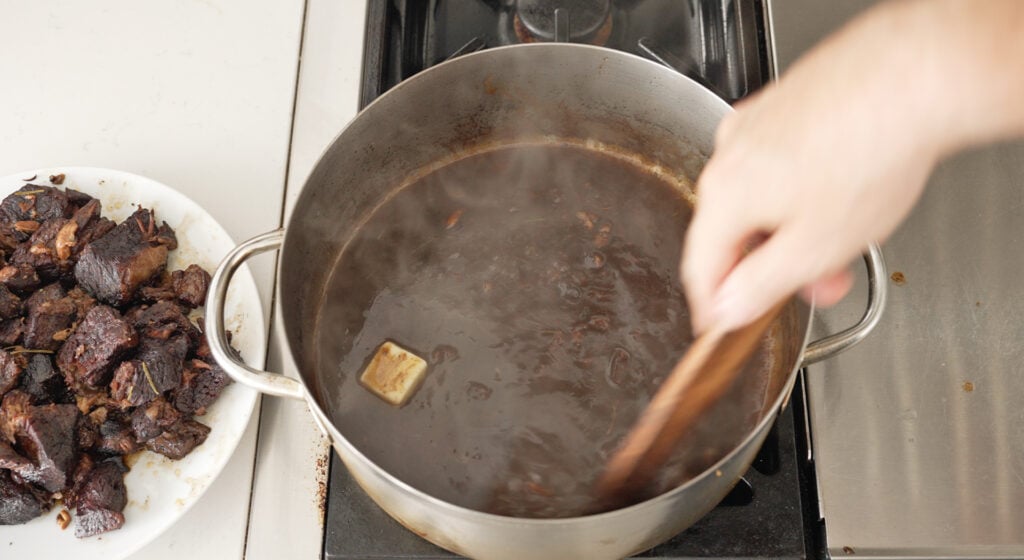
Reduce: Lift the beef out and set it aside. Raise the heat to medium and reduce the sauce 5 to 6 minutes until it thickens. Stir in the butter and lemon juice, then taste and adjust with salt and pepper.
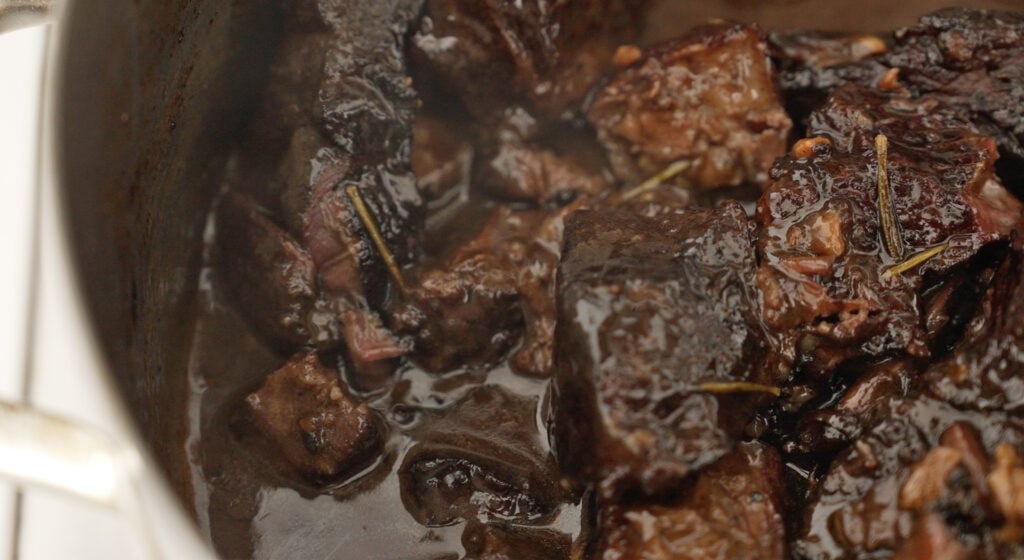
Serve: Return the beef to the sauce and serve over mashed potatoes, pasta, or polenta.

Chef Tip + Notes
As a chef with experience, I highly recommend browning the beef in batches and treating that sear like the most important step in the recipe, because everything the sauce becomes starts there. When the pot is crowded the cubes steam in their own juices instead of browning, the fond never develops, and you end up with gray meat and a thin, one-note braise no amount of time can fix. Give each cube room, let the fat get to a light smoke before the beef goes in, and do not move them until they release from the pot on their own.
- Toast the peppercorns before cracking: I warm them dry until fragrant, then crush coarse in a mortar and pestle. This makes the pepper aromatic and cuts the bitterness it would otherwise pick up over hours in the pot.
- Cut the wine with stock: A whole bottle of reduced Chianti gets sharp and tannic on its own. A cup of beef stock rounds it out and keeps the sauce from finishing harsh.
- Cook the tomato paste to rust: Please do not add it raw. 3 to 4 minutes until it darkens develops its savory depth and sets it up to thicken the sauce later.
- Finish off the heat with butter and lemon, I stir the butter in at the end for body and sheen, and add the lemon last. The acid brightens the whole pot and knocks down any lingering bitterness from the pepper.
- Let it rest before serving: Like most braises, peposo tastes even better the next day once the flavors settle, so making it ahead is never a bad call.
Serving Suggestions
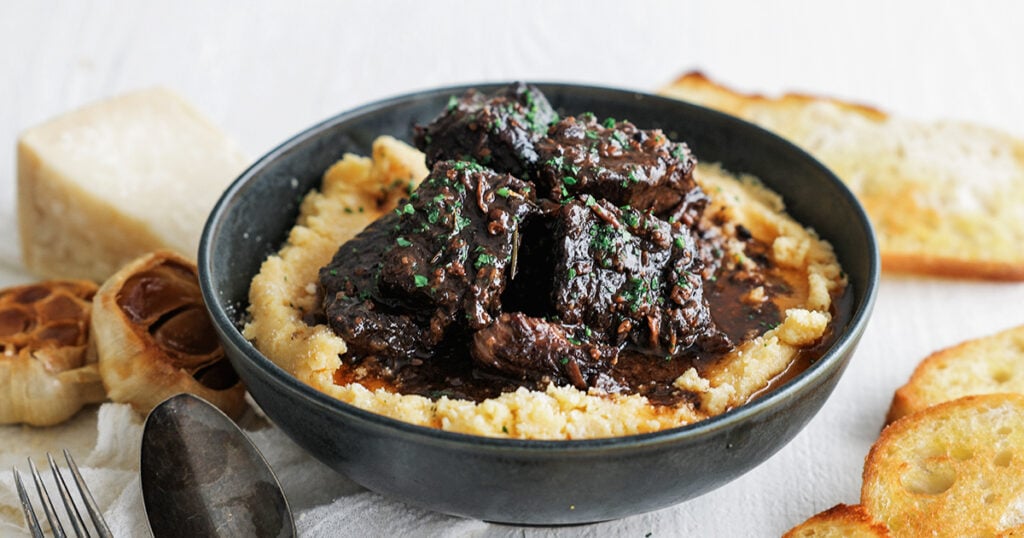
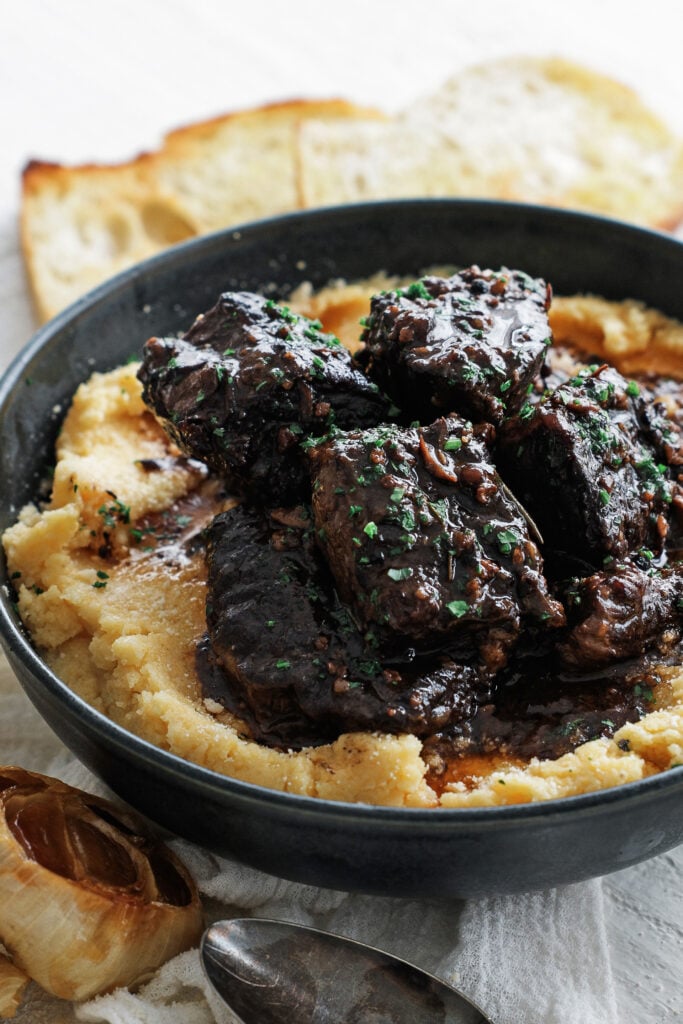
Peposo is as much a sauce dish as a meat dish, so I plate it over something that will soak up every bit of it. On a weeknight, I spoon it over a bowl of creamy mashed potatoes, letting the sauce soak into the potatoes. When I have the afternoon, I will roll out a batch of homemade pasta dough and serve the beef and sauce over wide noodles the way you would a lamb ragu, which is actually my favorite way to eat it.
For a cold Northwest Indiana Sunday, I go with a pot of creamy polenta under the beef. I love to have some olive focaccia on the table to mop the bowl. Whatever is left over is even better the next day. I reheat it slowly and pile it over polenta or fold it into pasta for lunch.
Make-Ahead and Storage
Make-Ahead: I make peposo a full day ahead all the time, since it only improves overnight. Cool, refrigerate, and reheat it low and slow before serving. It also holds warm over low heat for about an hour if needed.
How to Store: Cover it and refrigerate for up to 5 days.
How to Reheat: Reheat the desired amount in a pot over low heat until warmed through. If the sauce has thickened in the refrigerator, add about ½ cup of water or beef stock to loosen it.
Freezing: Freeze, covered, for up to 3 months. Thaw in the refrigerator for a day, then reheat it low and slow.
More Comforting Beef Recipes
- Beef Bourguignon
- Irish Beef Stew
- Spaghetti and Meatballs
- Steak with Red Wine Sauce
- Sirloin Tip Roast Recipe (Reverse Seared)

Peposo Recipe
Ingredients
- 4 pounds chuck roast, boneless short ribs, or boneless beef shanks, or a combination of all 3
- 1 1/2 tablespoons colored or black peppercorns
- 3 tablespoons beef tallow , or olive oil
- 8 garlic cloves, smashed
- 1 tablespoon tomato paste
- 5-6 fresh sage leaves on the stem
- 2 fresh rosemary sprigs
- 2 bay leaves
- 1 Chianti wine, 750ml bottle
- 1 cup beef stock
- 2 tablespoons unsalted butter
- 2 teaspoons freshly squeezed lemon juice
- salt to taste
Instructions
- Pat the meat down on all sides with paper towels and season on all sides with salt. Figure about 1 ¼ to 1 ½ teaspoons of salt per pound. Place the meat on a rack and dry brine in the fridge uncovered for 4 to 24 hours. This is optional, you can salt and cube the meat and go straight to cooking if you’d like.
- When you’re ready to cook, slice the meat into roughly 2” inch cubes.
- In a large rondeau pot over low to medium heat add in the peppercorns and toast them up for 3 to 4 minutes or until they become fragrant. Add them to a mortar and pestle and grind them down gently until they are roughly cracked.
- In the rondeau over the same heat, add in the tallow or oil and gently toast the garlic for 30 to 45 seconds to perfume the fat. Set the garlic to the side and turn the heat up to medium high.
- Once the fat begins to lightly smoke, add in the cubed beef and cook for 2 to 3 minutes on all sides until they are well browned. Ensure they aren’t touching each other. Feel free to cook in batches if need be.
- After they’re browned, set them to the side on a plate. Turn the heat down to medium and in the pan add back in the garlic along with the peppercorns and toast for just 20 to 30 seconds.
- Deglaze with a half cup of the wine and cook it until only 2 or so tablespoons remain. Then, add in the tomato paste and cook until it becomes a rust like color, which only takes about 3 to 4 minutes.
- Pour the remaining wine into the pan along with the beef stock, sage, rosemary, and bay leaves. Season it with salt and stir to combine everything.
- Add the seared beef back to the pot along with any juices on the plate. Cover and cook over low heat for 2 hours or in the oven on a middle rack at 300° F. Remove the lid and cook for 1 hour.
- Once the beef is fork tender remove it from the pot and set it to the side. Turn the heat up to medium and reduce the sauce for 5 to 6 minutes or until it becomes thicker. Finish the sauce with the butter and lemon juice. Stir to combine and adjust any seasonings with salt and pepper.
- Add the beef back to the thickened sauce and serve. It goes great with mashed potatoes, pasta or polenta.
Peposo Recipe