
This Miso Soup Recipe transforms 5 simple ingredients into a light, comforting, and umami-packed starter or side dish. It’s one of our favorite Japanese dishes to serve with sushi and chicken teriyaki.
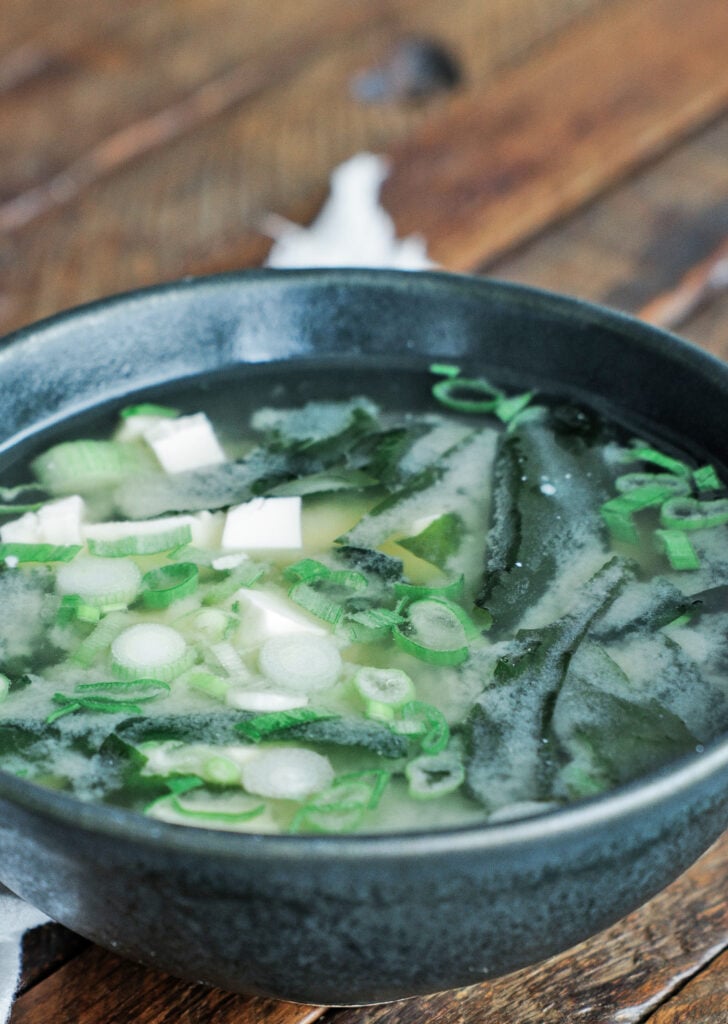
The simplest recipes are almost always the most satisfying, and classic soup recipes are proof. If you’re looking for more simple, brothy soups to warm up with, try my Matzo Ball Soup and Chicken Noodle Soup recipes.
Homemade Miso Soup
Miso soup is a classic Japanese soup, traditionally served as a starter, side dish, or light meal. At the heart of this simple yet comforting and umami-packed soup are two key ingredients: dashi and miso paste.
Dashi is a flavorful broth made from kombu and bonito, while miso is a fermented soybean paste that enhances the broth’s signature savory taste. Beyond the broth, silken tofu adds protein, while wakame provides a slightly chewy, briny element.
My easy miso soup recipe doesn’t skimp on the essentials of the classic. Even better, it’s a foolproof recipe made in one pot using only 6 ingredients. I like it best with tofu and wakame added, but there’s room for even more mix-ins, from vegetables to spicy chili peppers.
Ingredients and Substitutions
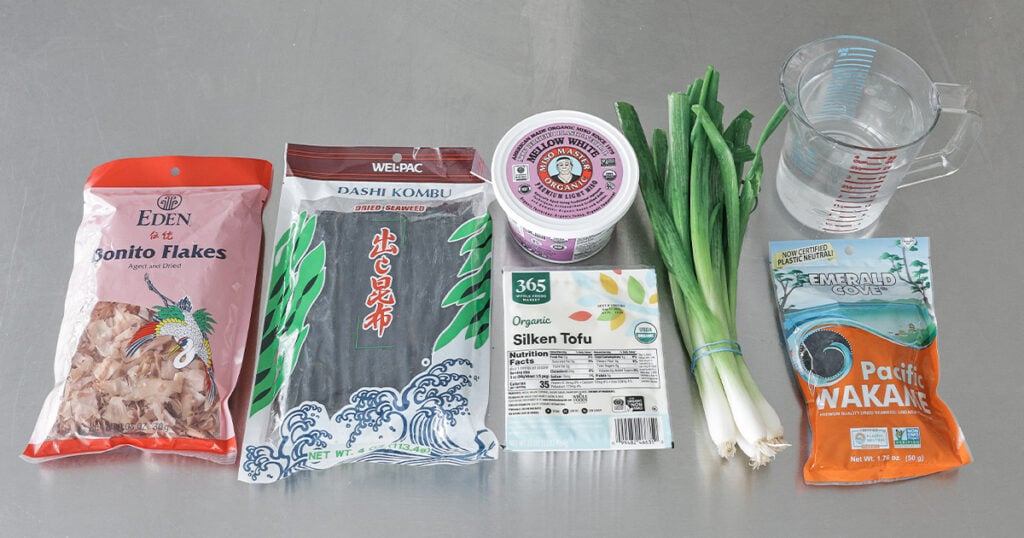
- Wakame – I use wakame seaweed to add a silky texture and a subtle briny bite. Look for cut wakame while you’re shopping, or buy whole wakame and cut the pieces yourself with kitchen shears. If you can’t find it, use fresh spinach or kale as an alternative.
- Dashi – For the broth, I make a quick homemade dashi using kombu (dried kelp) and bonito flakes. Store-bought instant dashi granules or packets will work as a substitute. If you prefer to make your miso soup without dashi, you can use vegetable stock, chicken stock, or bone broth instead. Just know that the finished result will be missing the authentic umami flavor.
- Miso – I made the soup with white miso (shiro miso) to keep the flavors fairly mild. Red miso paste will work as a substitute, but it will give the soup a stronger, saltier flavor.
- Tofu – Just like in traditional recipes, I add cubed silken tofu to the soup. It’s creamy, soft, and blends in better than firmer varieties would.
- Scallions – I slice the green onions thinly and sprinkle them into the soup at the end.
How to Make Miso Soup
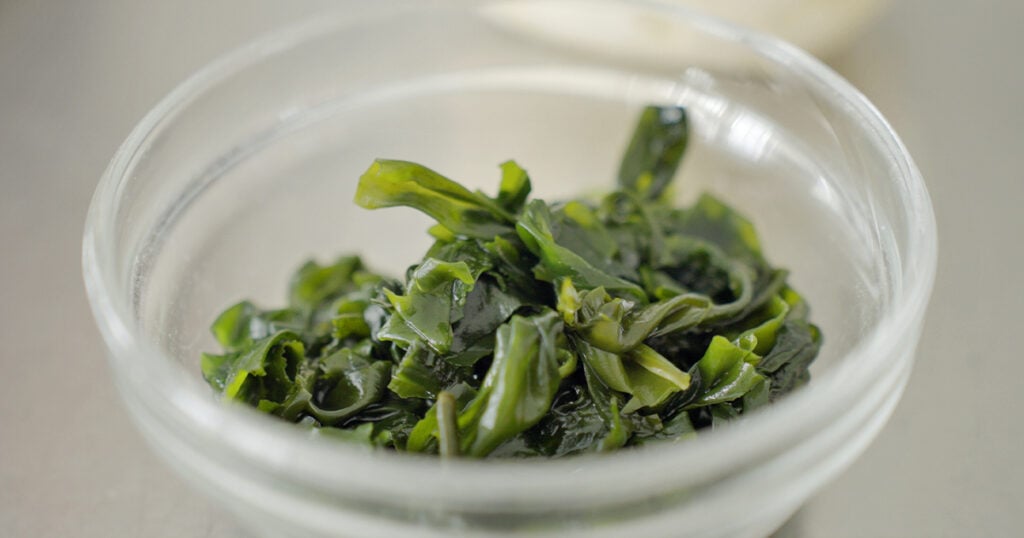
Rehydrate the wakame: First, I submerge the wakame in a small bowl of water for about 10 minutes to make sure it is fully rehydrated and softened. Once it’s ready, I drain the excess water.
Warm the dashi: I pour the dashi into a medium-sized pot and gently heat it over low to medium heat.
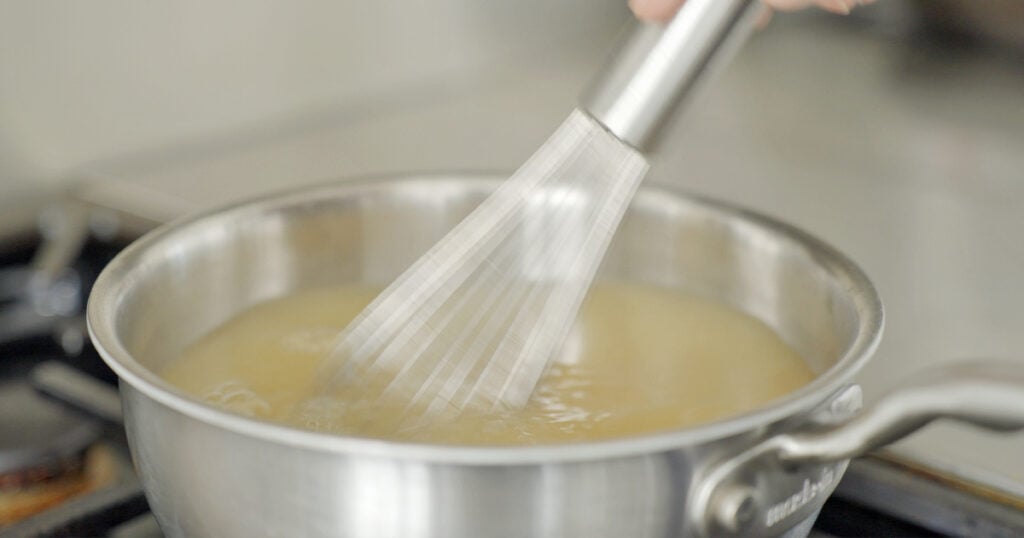
Dissolve the miso: I whisk in the miso a little at a time until it’s completely dissolved. I taste the soup and add more miso as needed, then I gently simmer the soup over low heat for about 10 minutes.
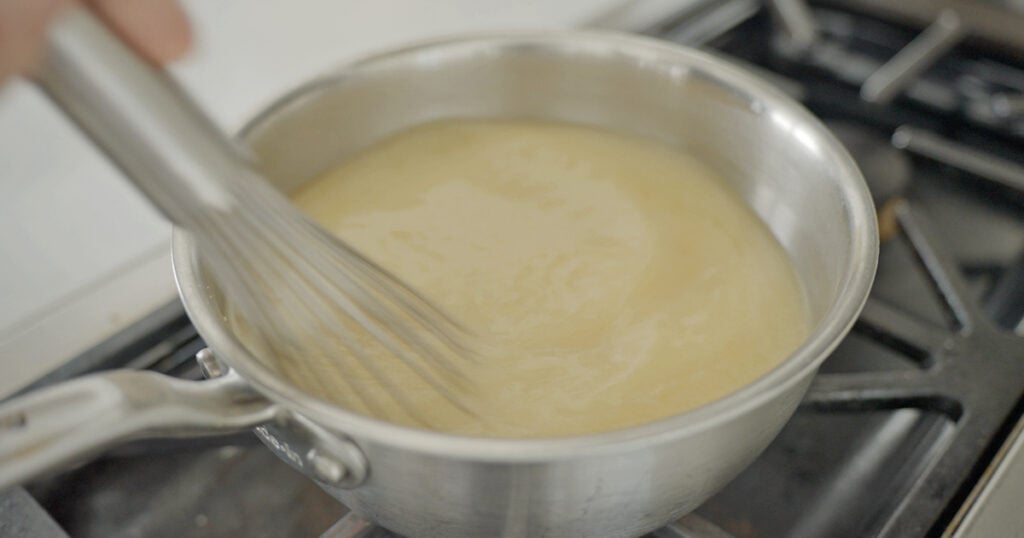
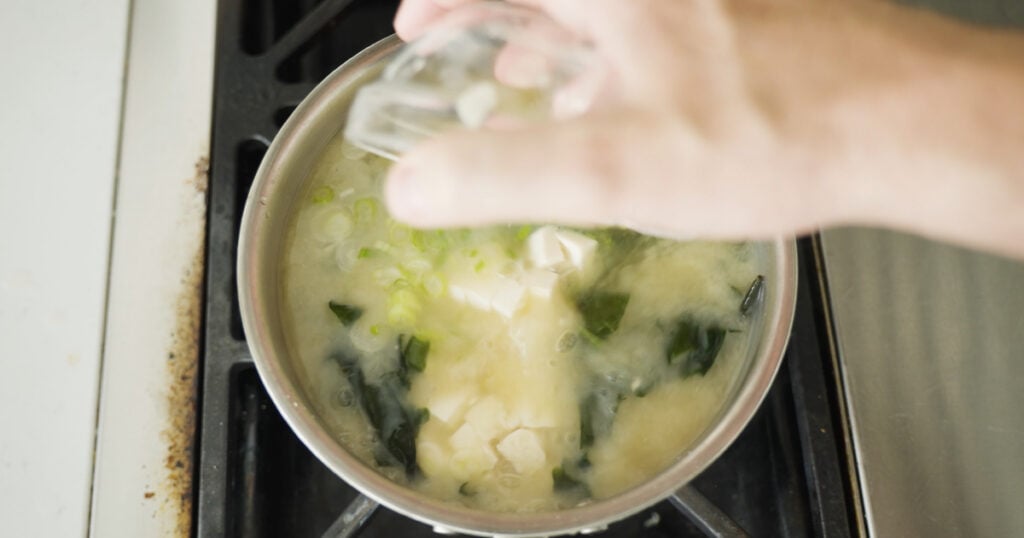
Add the rest: To finish, I stir the cubed tofu, sliced green onions, and the rehydrated wakame into the pot. I gently simmer the soup for a few more minutes before ladling it into bowls and serving.

Chef Tip + Notes
You’ll always want to treat your dashi and miso with care when making homemade miso soup. The dashi and miso should never be boiled because high heat can make the broth cloudy, taste overly “fishy,” and strip away the complex flavors and probiotic benefits of the miso. Maintain a low to medium heat as you make the soup and keep your patience—it will make all the difference for that silky, restaurant-quality finish.
- Avoid clumps: Do not add all the miso to the broth at once, as clumps will form. Instead, whisk some into a small bowl with a splash of warm dashi until the miso dissolves, then stir the mixture into the pot. Alternatively, add some of the miso into a fine mesh sieve, lower it into the broth (without submerging it), and whisk the miso in the warm broth until it dissolves.
- Season to taste: Each brand and type of miso will vary in saltiness. This is why I recommend tasting the soup before serving so you can adjust the umami or salt levels with a little extra miso or a splash of soy sauce.
- Add-in ideas: For a heartier miso soup, stir in shiitake mushrooms, shredded napa cabbage, spinach, sliced carrots, daikon, udon noodles, or leftover white rice. To finish, sprinkle sesame seeds over top for crunch or a dash of shichimi togarashi (Japanese chili pepper blend) for a spicy kick.
- Vegan miso soup: For a plant-based version, swap the bonito-based dashi for shiitake dashi, kombu dashi, or regular vegetable broth. The flavor will be slightly different but still delicious.
Serving Suggestions
Any Japanese-inspired meal will begin with a bowl of miso soup in our house. It’s the best way to warm up our stomachs while we wait for the sushi to arrive or for the chicken teriyaki to finish simmering.
And on cold days, I like swapping my usual salad for lunch with a bowl of miso soup. It usually only takes one bowl to warm me up and keep me full for a few hours.
Make-Ahead and Storage
Make-Ahead: The soup can be prepared up to 1 hour before serving. Cover the pot and keep it over low heat to keep the soup warm.
How to Store: Store the leftover miso soup in a covered container in the refrigerator for 2 to 3 days or in the freezer for up to 1 month. It can be frozen as-is, but for the best textures and flavors, freeze the dashi-miso broth separately, then add fresh tofu, seaweed, and green onions when reheating.
How to Reheat: Reheat the soup gently over low heat on the stovetop, stirring occasionally. Taste and adjust the flavors with extra miso if needed.
More Soup Recipes

Miso Soup Recipe
Ingredients
- 2 tablespoons wakame seaweed
- 6 cups dashi
- 4 tablespoons white miso
- 10 ounces medium-diced silken tofu
- 2 thinly sliced green onions
Instructions
- In a small bowl, cover the wakame with water until it is submerged, and let it stand for 10 minutes. This is done to reconstitute it and soften it.
- Add the dashi to a medium-sized pot and heat over low to medium heat.
- Whisk in the miso and cook until it is completely dissolved. Feel free to add more if you would like it to be saltier. Simmer over low heat for 10 minutes.
- Next, add in the tofu, green onions, and reconstituted wakame.
- Cook for 5 to 7 minutes and serve.
Miso Soup Recipe