
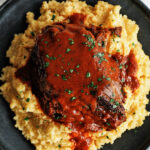
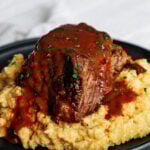
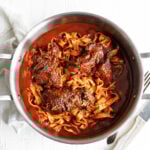
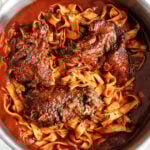
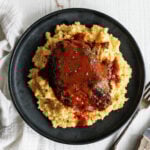
This Italian Pot Roast slowly braises chuck roast in a rich soffritto-based tomato sauce with pancetta and fresh herbs. Served with pasta, polenta, or risotto, this is what I consider comfort food at its finest—rich, hearty, and downright delicious.
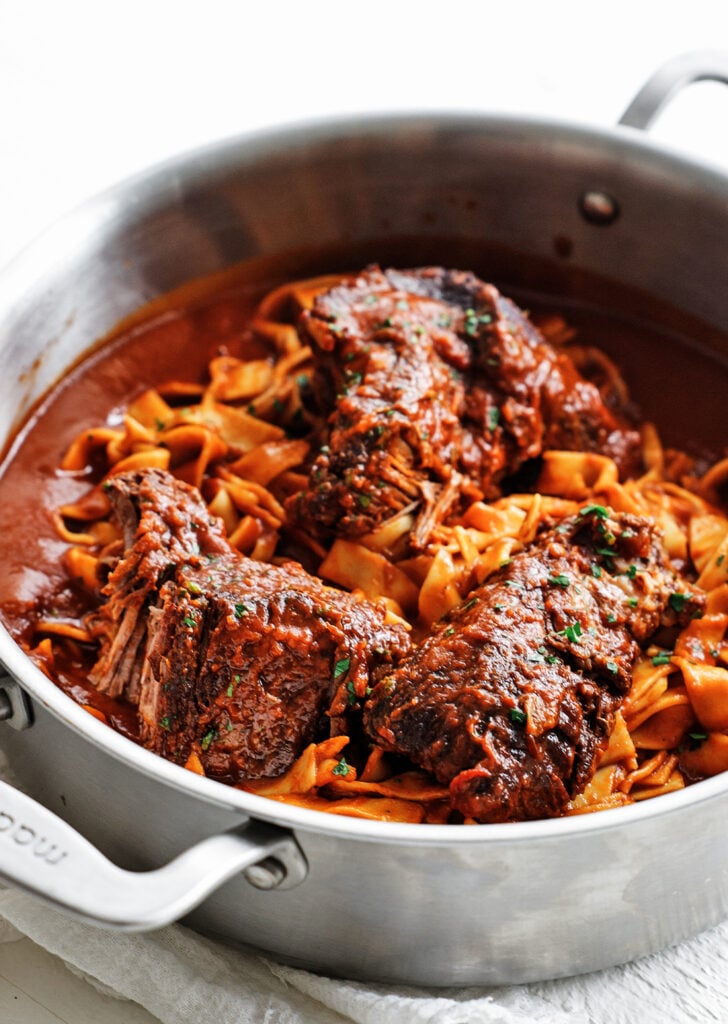
You’ll always find a chuck roast in our freezer because it’s an all-purpose cut that I can easily transform into a delicious, inexpensive dinner. From classic Slow-Cooked Chuck Roast to Irish Beef Stew, it’s a versatile favorite.
What is Stracotto?
You’re probably familiar with pot roast, the home-cooked, cozy classic where a hearty cut of beef is slowly simmered with vegetables until tender. Stracotto is essentially the American pot roast’s Italian cousin.
Italian pot roast uses similar concepts to the American version but relies on traditional techniques that Italians have used for generations. Seared chuck roast is the star of the meal, while an Italian soffritto builds the aromatic base. Red wine, tomatoes, and stock are essential to the sauce’s gourmet flavors.
After hours of slow cooking on the stove or in the oven, you’re left with a deeply savory, melt-in-your-mouth masterpiece. I like to serve this pot roast with fresh pasta. However, you can easily switch things up with polenta, risotto, or mashed potatoes instead.
Ingredients and Substitutions
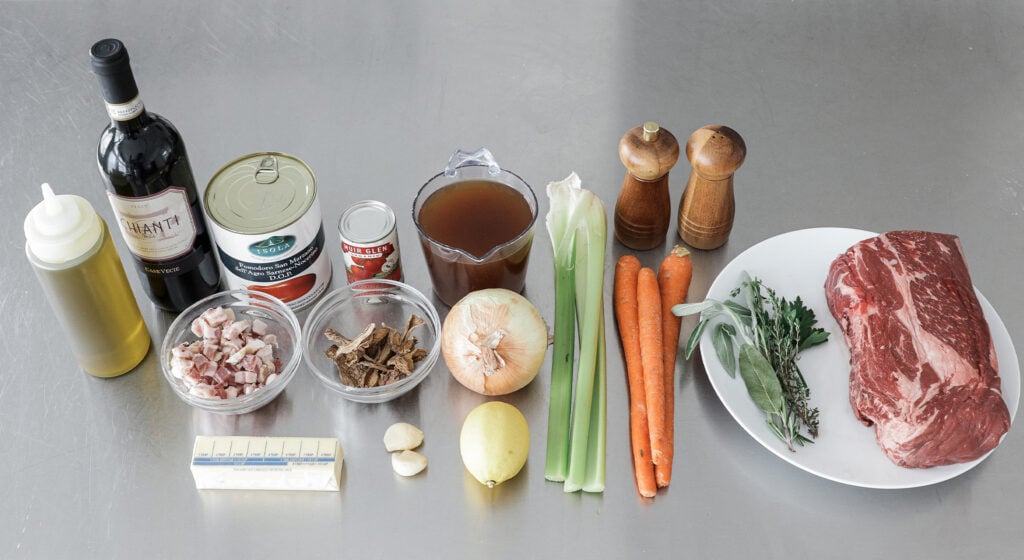
- Beef – Like most of my pot roast recipes, I used a chuck roast for this Italian version. It’s my favorite because it has the perfect balance of lean meat and fat marbling. Other cuts of beef you can use are brisket or bottom round roast.
- Pancetta – I sear pancetta in the pot for two reasons: crispy pancetta adds texture and a salty flavor, and the rendered fat builds flavor. Bacon or guanciale will work as a substitute.
- Soffritto – To start the sauce, I caramelized the Italian holy trinity of onions, celery, and carrots. I also add finely minced garlic.
- Wine – I recommend Italian red wine, like Chianti. If you prefer to skip the alcohol, use extra stock with a splash of balsamic vinegar or red wine vinegar for acidity.
- Tomato Paste – I use tomato paste from a tube to add layers of umami and sweetness.
- Stock – I use homemade beef stock to round out the braising liquid.
- Tomatoes – Canned crushed San Marzano tomatoes are best in Italian stews like this.
- Herbs – I tie together sprigs of rosemary, sage, thyme, parsley, and a bay leaf together with butcher’s twine before plopping them in the pot. This way, the bouquet garni is easier to fish out later.
- Butter – Unsalted butter is my go-to in cooking and baking.
- Seasonings – Just salt and pepper.
- Pasta – I recommend using long and wide noodles, like pappardelle. However, short pasta noodles are just as good.
How to Make Italian Pot Roast
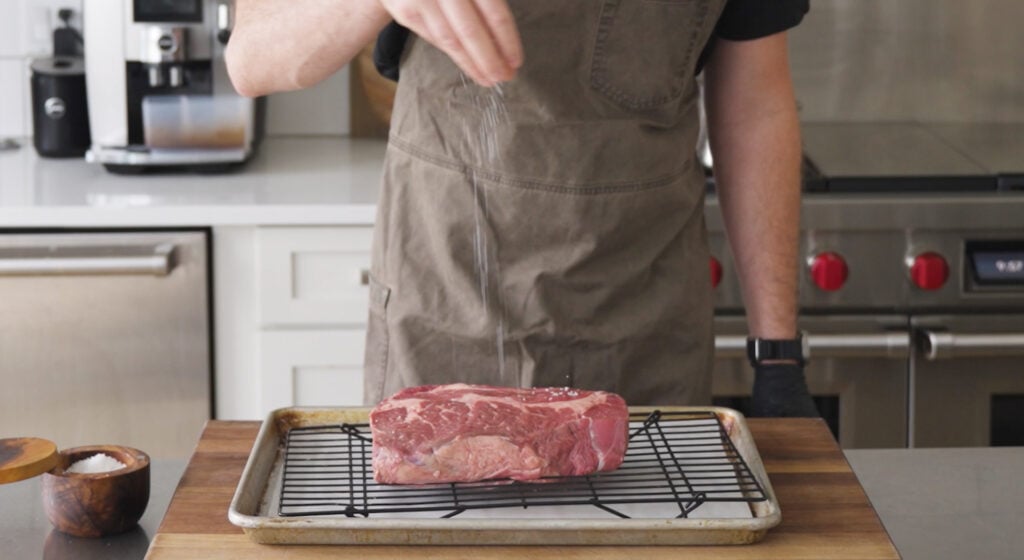
Dry brine: First, I pat the roast dry with a paper towel. Then, I transfer it to a rack set over a sheet tray. I generously season it with coarse salt and freshly cracked pepper. Then, I let it sit uncovered in the fridge for 12 to 48 hours. If you skip this step, season the beef right before searing.
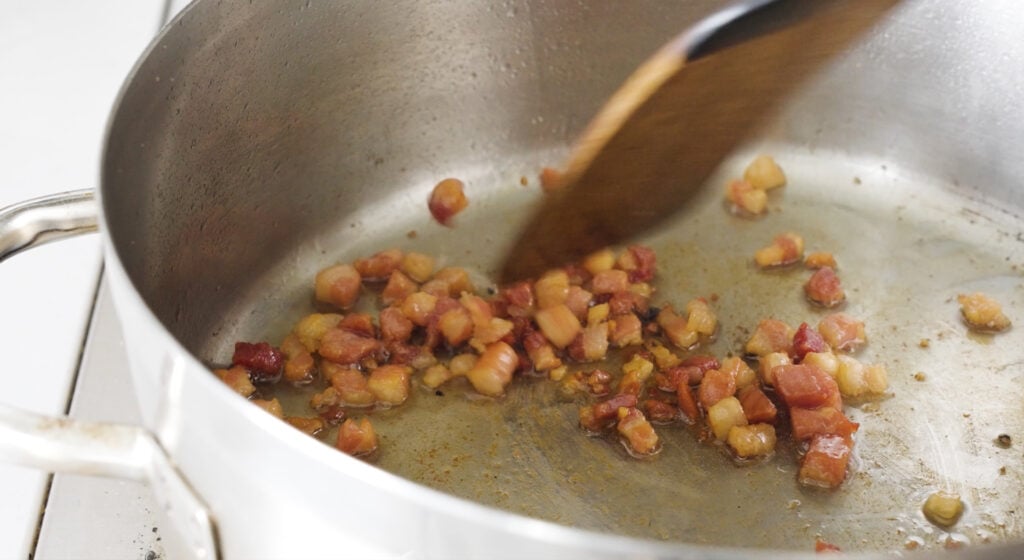
Render the pancetta: Next, I add the pancetta to a large rondeau pot and cook it over low-medium heat until it’s golden and crispy. I scoop out the lardons with a slotted spoon and set them aside, leaving the fat in the pot.
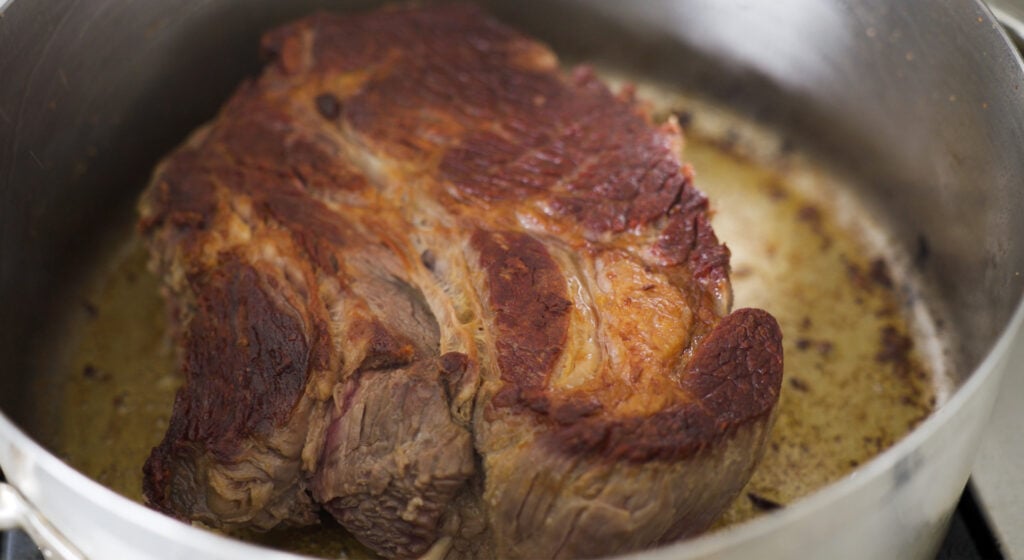
Sear the beef: I turn the heat to medium-high and let the pan smoke lightly. I sear the chuck roast in the hot pan until well-browned on all sides. I transfer the roast to a plate.
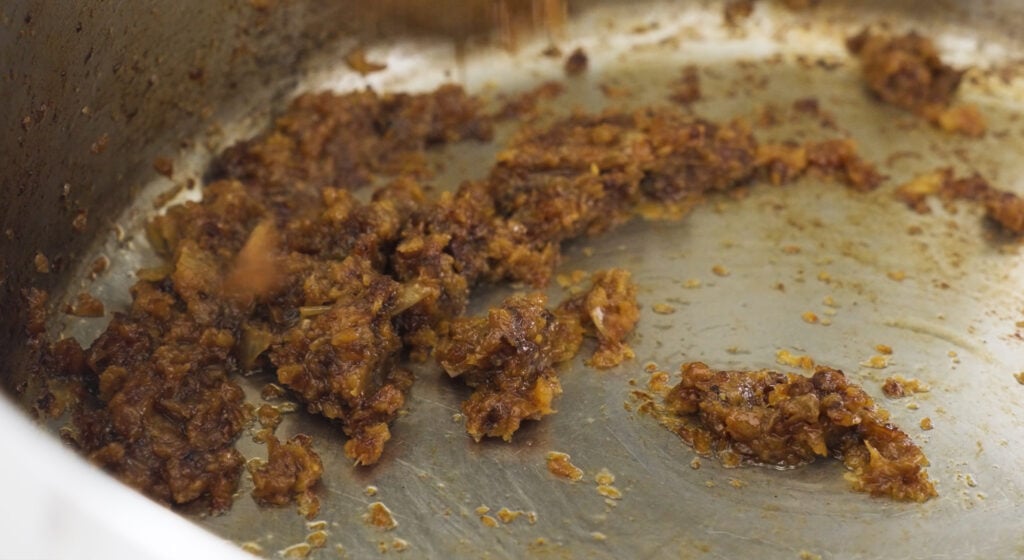
Caramelize the onions: Next, I add the onions to the pot, season them with salt, and sauté over medium heat for about 5 minutes. I lower the heat and continue cooking until they’re well-browned.
Build the soffritto: I stir in the celery and carrots and cook until they begin to brown around the edges. Then I add the garlic.
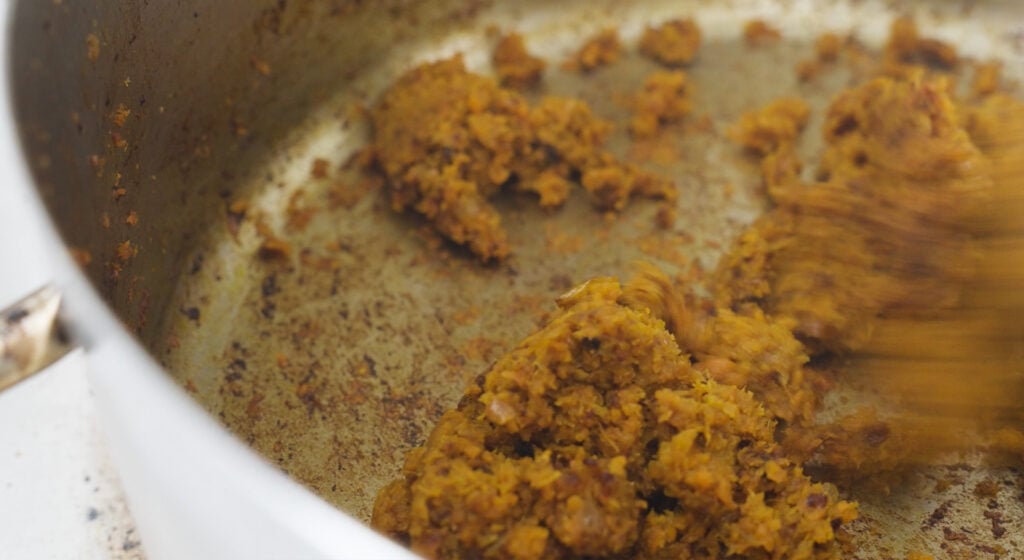
Deglaze and pinçage: I deglaze the pot with some of the red wine and scrape up any browned bits stuck to the bottom. Once most of the wine has cooked off, I stir in the tomato paste and cook until it darkens to a rust-red color. Then, I pour in the final cup of red wine and let it reduce by half.
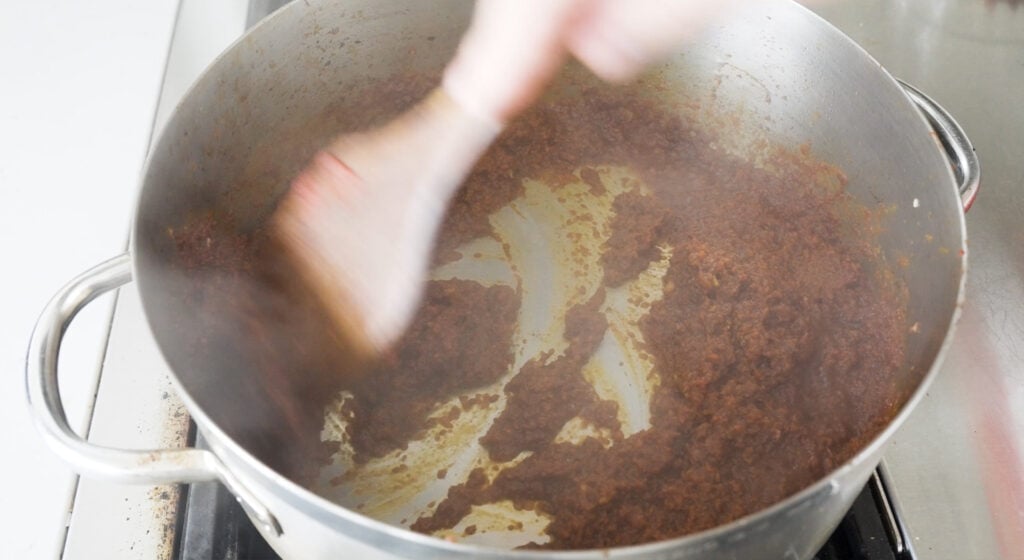
Slow braise: I add the beef stock, tomatoes, pancetta, salt, pepper, and my bundle of herbs to the pot. Then, I nestle the roast back into the pot, cover it, and let it cook over low heat on the stovetop or in a 325°F oven until the beef is fall-apart tender (mine was perfect after about 3 hours in the oven).
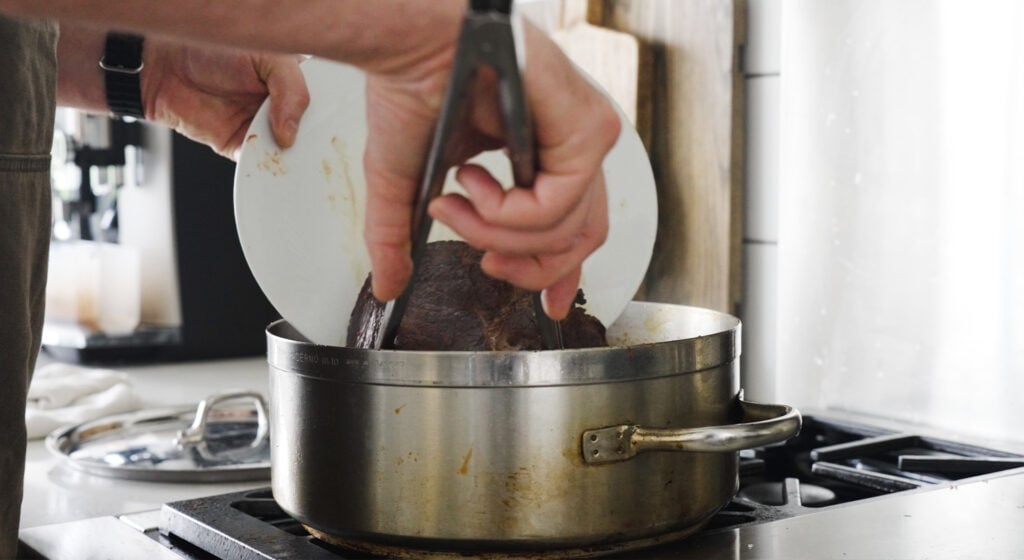
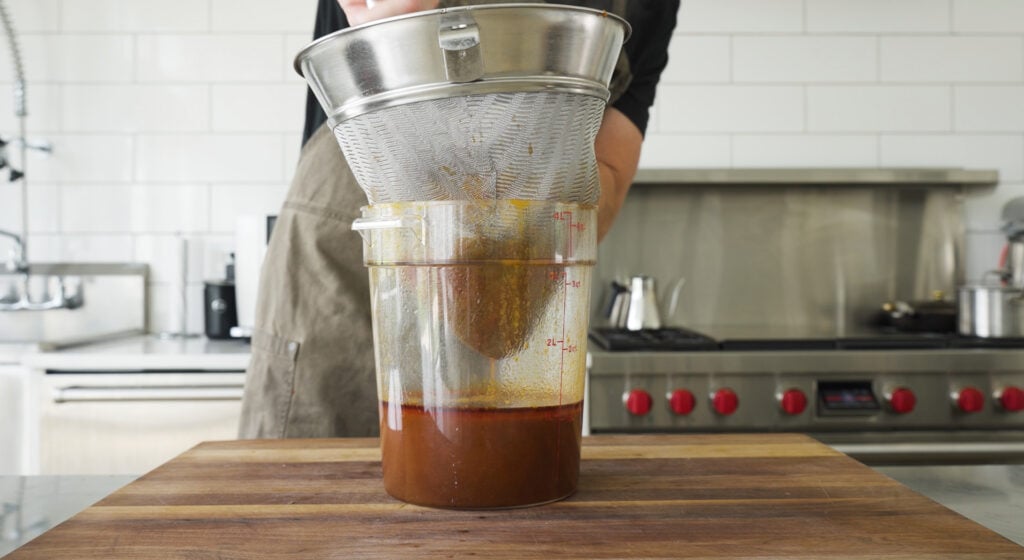
Strain and blend: Once the roast is done, I remove it from the pot. I strain the sauce into a separate pot. I transfer the strained veggies and pancetta to my blender with a cup of hot stock and blend until smooth. Don’t forget to remove the lid’s center cap to vent steam safely.
Finish the sauce: I add the blended mixture back to the pot with the broth and simmer over low-medium heat until it thickens. To finish, I whisk in a knob of butter and adjust the salt and pepper to taste.
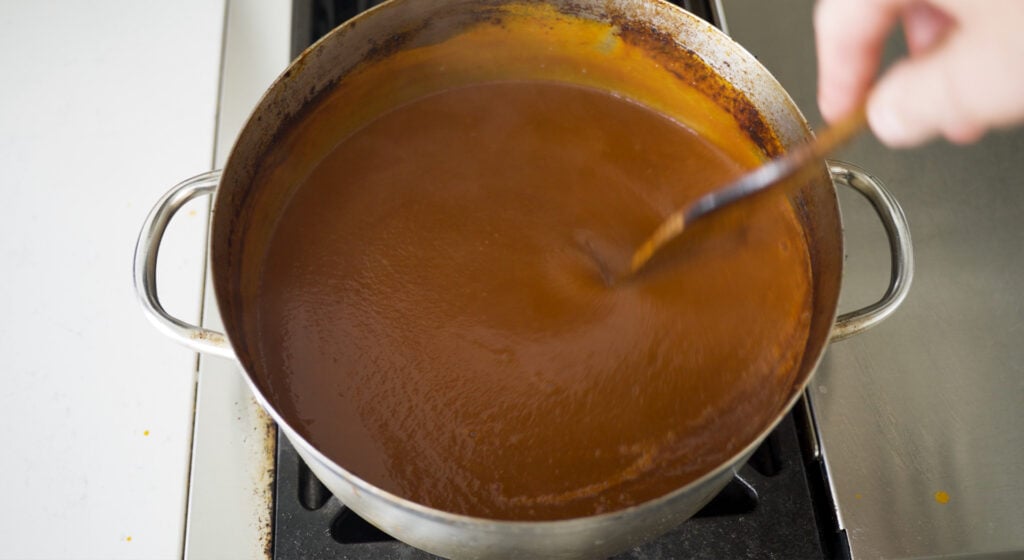
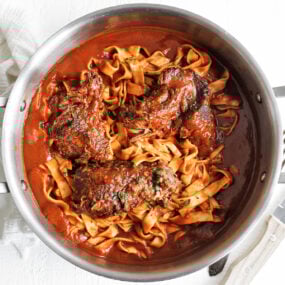
Serve: I toss cooked pasta with some of the sauce and serve it alongside the beef, either whole or sliced into portions. In addition, you can serve it with polenta.


Chef Tip + Notes
Searing the beef before the slow braise is non-negotiable, as it triggers the Maillard reaction. This reaction creates that deep, golden crust and adds layers of rich, savory flavor to the beef and stew. For the best results, take the meat out of the fridge 30 minutes ahead to bring it to room temperature. Then pat it completely dry and sear it in a smoking-hot pan.
- Optional dry brine: Though technically optional, dry brining (salting meat ahead and refrigerating it uncovered) deeply seasons the beef, helps it retain moisture, and ensures the exterior sears well. If you have time, it’s 100% worth it. However, if you’re low on time, you can season it just before searing and still end up with an excellent roast.
- Checking for doneness: Cook times may vary depending on the size of your roast. You’ll know the beef is ready when you can easily slide a fork into the meat with little resistance. The internal temperature for a chuck roast should also be between 200ºF and 210°F.
- Sauce consistency: If your sauce seems too thin after blending, continue simmering until it reaches your desired consistency. If it’s too thick, stir in a splash of beef stock to loosen it up.
- Crockpot Italian pot roast: After cooking the pancetta, searing the beef, and building the sauce on the stovetop, transfer everything to your slow cooker and cook on LOW for 8 to 10 hours. You’ll still want to finish the sauce by blending the veggies and pancetta, then thickening on HIGH before serving.
Serving Suggestions
For me, the classic way to serve stracotto is with al dente pasta stirred right in the sauce. If you’re craving something different, ladle a generous scoop of the pot roast over a bed of creamy polenta or risotto instead.
I’m a big fan of treating my family to stracotto on a Sunday evening after working on it throughout the weekend. It pairs well with all sorts of Italian side dishes, but we like it best with a basket of crusty bread and a green salad tossed with a simple vinaigrette.
Make-Ahead and Storage
Make-Ahead: Pot roast tastes even better the next day, so don’t hesitate to make it 1 day in advance and reheat the batch when you’re ready.
How to Store: Once cooled to room temperature, transfer the pot roast to an airtight container. It will keep in the fridge for up to 4 days or in the freezer for up to 3 months. Thaw the leftovers overnight in the refrigerator before reheating.
How to Reheat: Warm the pot roast on the stove over low heat, stirring occasionally, until heated through. If the sauce has thickened too much, add a splash of stock or water to thin it out.
More Italian Recipes
- Osso Buco
- Italian Breaded Steak
- Italian Chicken Marsala
- Beef Braciole (Involtini)
- Spiedini (Italian Style Kebabs)

Video
Italian Pot Roast Recipe (Stracotto)
Ingredients
- 3- pound chuck roast
- 4 ounces medium-diced pancetta
- 1 peeled, very finely minced large yellow onion
- 3 ribs of celery, very finely minced
- 3 peeled carrots, very finely minced
- 2 finely minced garlic cloves
- 1 ½ cups dry red wine, I used Chianti
- 2 tablespoons tomato paste
- 4 cups beef stock
- 28 ounces hand-crushed San Marzano tomatoes
- 1 sprig each fresh rosemary, sage, thyme, and parsley
- 1 bay leaf
- 2 tablespoons unsalted butter
- Optional: 1 pound of cooked pasta
- Coarse salt and freshly cracked pepper to taste
Instructions
- Optional: Pat the chuck roast down on all sides with a paper towel. Transfer it to a rack over a sheet tray and generously season it on all sides with coarse salt and freshly cracked pepper. You will use approximately 1 tablespoon of salt in total. Place it uncovered in the fridge for 12 hours and up to 48 hours to dry brine. If you don’t do this, simply season with salt and pepper before searing.
- When you’re ready to cook, add the pancetta to a large rondeau or enameled pot over low to medium heat and cook until they are crispy. Then, using a slotted spoon, remove the lardons and set them aside. Leave the rendered fat in the pan.
- Turn the heat to medium-high and once it begins to smoke, place the dry-brined beef chuck roast in the pan and sear for 3 to 4 minutes on all sides or until it is well browned. Set the roast to the sides
- Add the onions to the pot, gently season with salt to help draw out moisture, and sauté over medium heat for 5 minutes. Then turn the heat down to low and cook, stirring occasionally, for 10 minutes or until well browned.
- Stir in the minced celery and carrots and cook over low-medium heat for 10 to 15 minutes while occasionally stirring or until they start to brown on the edges. Then mix in the garlic and cook just until it becomes fragrant, which only takes about 30 to 45 seconds.
- Deglaze with ½ cup of red wine and cook until it is mostly absorbed. Stir in the tomato paste and cook over low to medium heat for 3 to 4 minutes or until it becomes a rust-like color.
- Deglaze with the final cup of red wine and cook down until the liquid has reduced by half.
- Add the beef stock, crushed tomatoes, cooked pancetta, salt, pepper, and herbs. I like to tie all the herbs together using butcher's twine so that it is easy to fish out.
- Place the beef back in the pot. Put the lid on and cook over low heat or in the oven at 325° for 3 hours or until fork-tender.
- Once done, remove the beef and set it aside. Strain the sauce into a separate pot. Be sure to remove the herbs.
- Transfer the strained veggies and pancetta to a blender with 1 cup of the hot stock. Remove the center cap on the lid of the blender to release some steam and blend on high speed until it is smooth.
- Add the mixture back to the pot with the stock and cook over low to medium heat for 3 to 4 minutes. It should thicken right up. Finish with butter, salt, and pepper.
- To serve, toss the cooked pasta with some of the sauce and serve with the stracotto. The stracotto can be whole or divided into equal pieces. This can also be served with polenta or risotto.
Made according to recipe, with exception of the rosemary, as hubs has very hard dislike for that herb. It was absolutely delicious. The flavor blend is out-of-this-world!! I could drink the gravy! And while I’m lucky enough to have some leftovers, I’ll make sure to do exactly that with anything that might be left!!
Awesome! So glad it was a hit!
I made this over the weekend for 4 people. It was really delicious and just a few bites left. Initially it seemed like the amount of liquid would be too much but once the vegetables were blended and added back into the liquid it was perfect. I agree with another comment…it takes time…do it over two days especially if you’re having company.
Thank you for giving it a shot!
I made this recipe and want to let you know it was delicious. Thank you for sharing.
My pleasure. Thank you for giving it a shot!
I made this today, it was absolutely delicious!
Thanks for giving it a shot!
I doubled the recipe and used a 9.5 qt dutch oven. my sofrito looked much bigger than yours. Much larger than just a double. Can’t figure that out. Felt like I crowded the pan the whole time. Anyway, it’s in the oven. Bet it’s going to be great.
How did it go?
I saw this recipe and had to make it for dinner.The roast turned out fantastic! Thank you for sharing!
Thanks for giving it a shot!!
Delicious! Used my immersion blender instead of the normal blender but otherwise followed instructions faithfully. I will say this is not something working folks can probably whip up during the week. Plan ahead!
Thanks for giving it a try!
Just finished this. Absolutely the best pot roast I have ever had. Served it with German egg noodles. The aroma, as it cooked, filled the house. Amazing!
So glad you enjoyed it! Thank you!
Loved it! Tender and flavorful. My wife said it was one of the best things I’ve ever made. Definitely a keeper. Thank you!
That’s awesome! So glad you enjoyed it!