

Corned Beef and Cabbage Recipe

- Published
- 48 comments


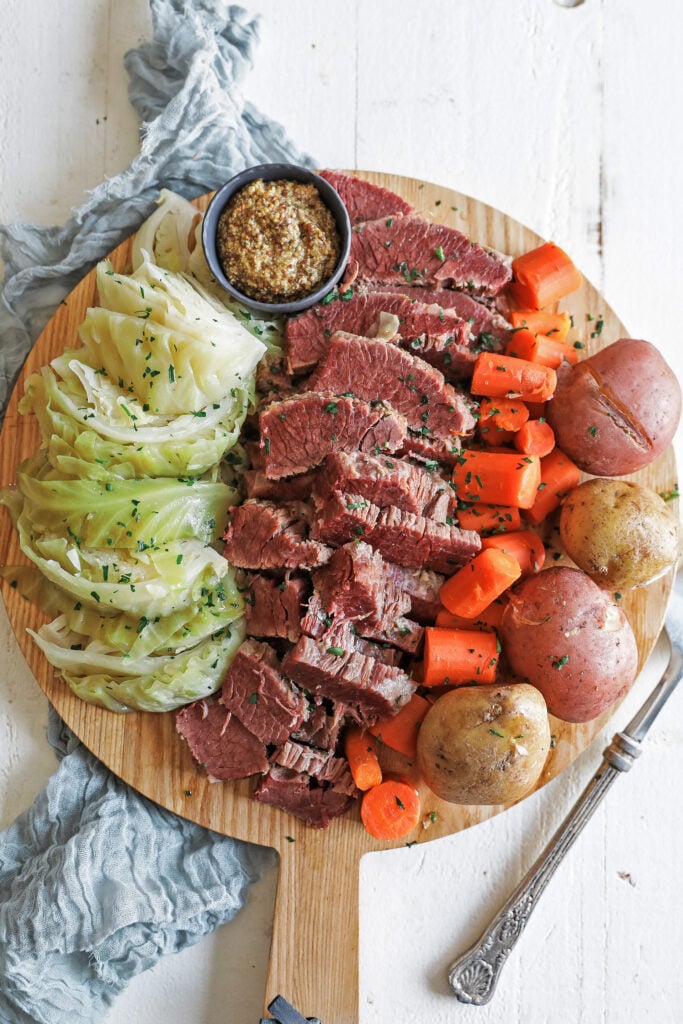
My homemade corned beef and cabbage is brined from scratch with a homemade pickling spice, slow cooked until fork tender, and served with cabbage, carrots, and potatoes for the ultimate St. Patrick’s Day dinner.
I confess, corned beef and cabbage is easily in my top 10 most comforting foods, we ate it pretty much every St. Patty’s Day growing up. I wonder who grabs the pre-packaged flat with the little spice packet from the grocery store and who takes the time to brine their own brisket from scratch? Look, I get it. A seven day brine sounds intense, but once you taste the difference, you will never go back. My Irish beef stew with Guinness is another one that takes some patience but pays off huge, and if you really want to go all out for St. Patty’s Day, my Mulligan stew recipe is another classic that deserves a spot on your table.
Corned Beef and Cabbage
Corned beef and cabbage has deeper roots than most people realize. Although it is seen as an Irish dish, the version we know today evolved over time. In the 17th century, increased beef production and low salt taxes made salt cured beef popular in Ireland, and the large salt crystals led to the name corned beef.
When Irish immigrants arrived in America during the mid 19th century, they settled near Jewish communities in cities like New York, where they adopted the deli style corned beef and began cooking it with cabbage and potatoes. That blend of cultures shaped the tradition we enjoy today.
I have been making corned beef for years, both in restaurant kitchens and at home, and I really believe the homemade brine is what sets this apart from anything you will find pre-packaged. I start by making my own homemade pickling spice with peppercorns, allspice, mustard seeds, coriander, and cinnamon, then I brine a whole brisket flat for a full seven days before slow cooking it until it practically falls apart.
My family always jokes that I make enough to feed the whole church crew, and honestly they are not wrong because this recipe feeds a crowd. If you want homemade food that is leagues beyond anything store bought, grab a brisket, clear some space in the refrigerator, and let me show how to make this Corned Beef and Cabbage step by step.
Ingredients and Substitutions
The ingredient list for this corned beef reads long, but most of it is whole spices you probably already have tucked away in your cabinet, plus a brisket, some vegetables, and a little patience. Here is what I use:
- Pickling Spice – A bunch of whole spices get mashed together to make a homemade pickling spice that flavors both the brine and the cooking liquid. You can absolutely use store bought pickling spice if you do not want to buy each one individually, but homemade gives you way more control over the flavor.
- Sea Salt – This is my main curing agent. I use a full 1 1/3 cup to properly brine a 5 to 6 pound brisket.
- #1 Curing Salt (Prague Powder) – This is optional but I highly recommend it. It gives the corned beef that classic red color, adds flavor, and helps preserve the meat during the long brine. You do not have to use it, but the results are noticeably better when you do.
- Light Brown Sugar – I use this to balance the saltiness of the brine.
- Brisket Flat – I go with a 5 to 6 pound flat for this recipe. This does not include the point, just the flat. It works for anywhere between a 4 and 7 pound brisket.
- Vegetables – I use one whole head of green cabbage cored and sliced into wedges (Savoy cabbage works too), carrots peeled and cut thick at about one to one and a half inches, and red or Yukon potatoes. I used both in my video and either one is classic, but Yukons have a creamier texture that I personally love.
How to Make Corned Beef and Cabbage
Make the brine: I add one gallon of cold water to a very large pot along with 4 tablespoons of the pickling spice, the sea salt, curing salt, and brown sugar. I bring it to a boil over high heat, whisking to make sure the salts and sugar are completely dissolved.
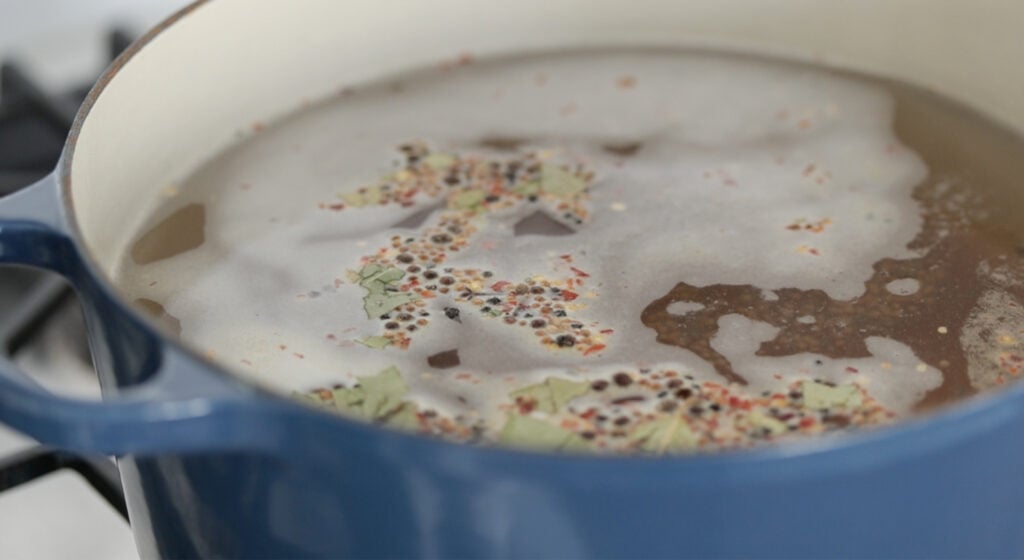
Cool the brine: I remove the pot from the heat and add half a gallon of ice to cool the liquid down quickly. If the ice does not cool it completely, I like to flash cool it in the freezer for 20 to 25 minutes. The brine must be at least room temperature before adding the brisket.
Submerge the brisket: Once the brine is completely cooled, I add the brisket flat to the pot, making sure it is fully submerged. I place a few glass plates or bowls on top to keep it under the liquid, then cover and refrigerate.
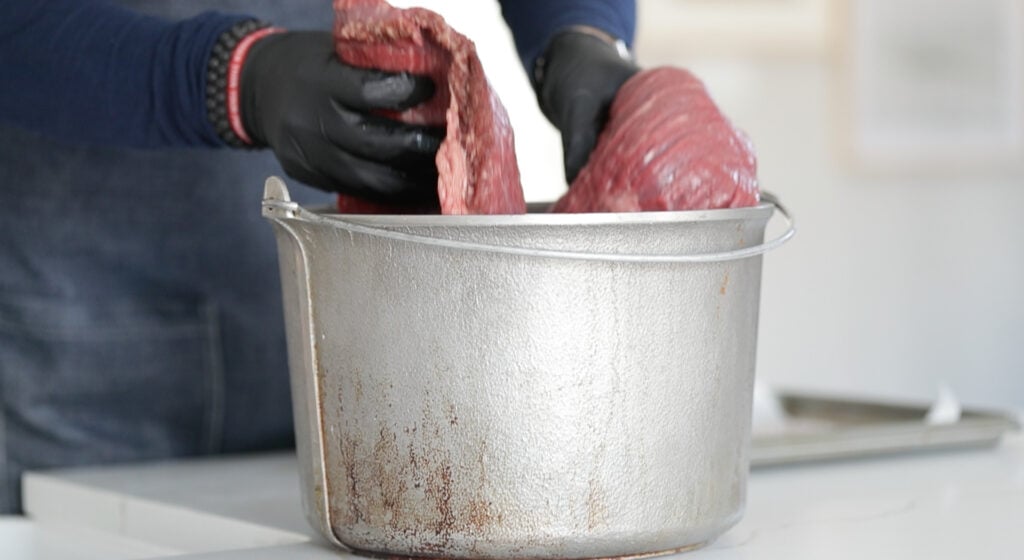
Brine for 7 days: Every two days, I go back and move the brisket around, flipping it to make sure every side gets proper contact with the brine. This step is important for even curing, so do not skip it.
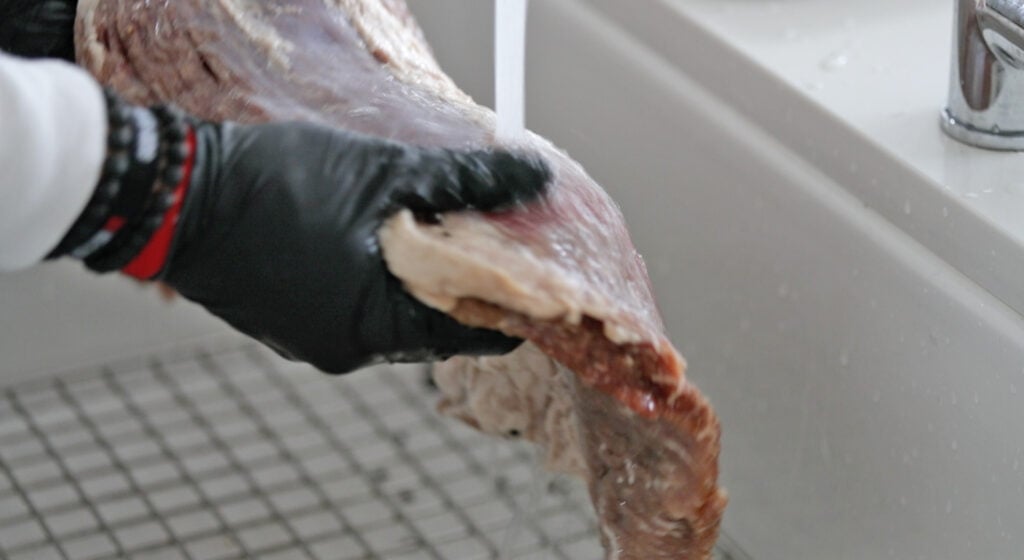
Rinse the brisket: After 7 days, I remove the brisket from the brine and rinse it very well on all sides under cold running water. This gets rid of excess salt and any spices clinging to the surface.
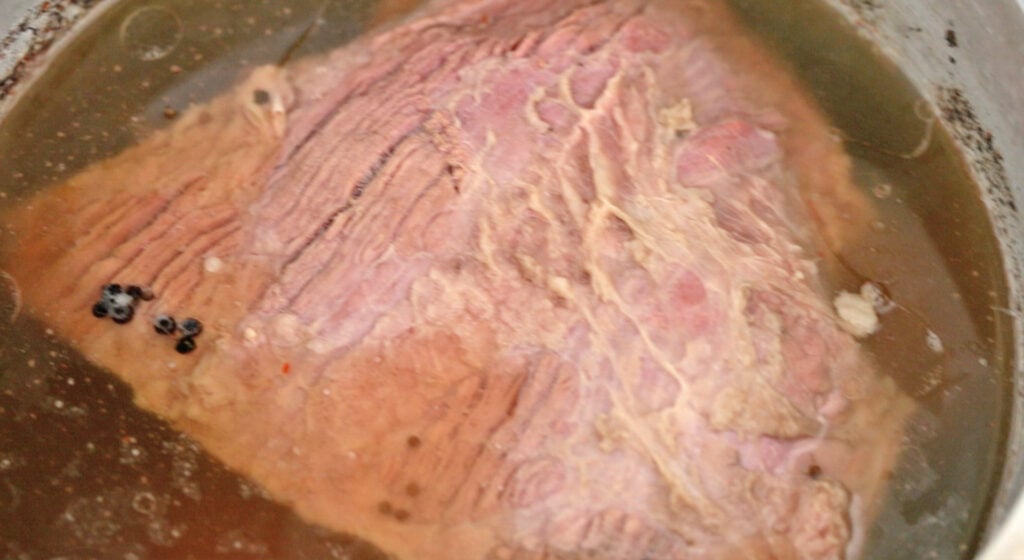
Cook the brisket: I place the rinsed brisket into a large pot and cover it with cold water by about 4 inches. I add 1 tablespoon of the remaining pickling spice, bring it to a boil over high heat, then reduce to low and simmer for 3 1/2 to 4 hours until the beef is very tender. If the brisket is too long for your pot, just slice it in half before cooking.
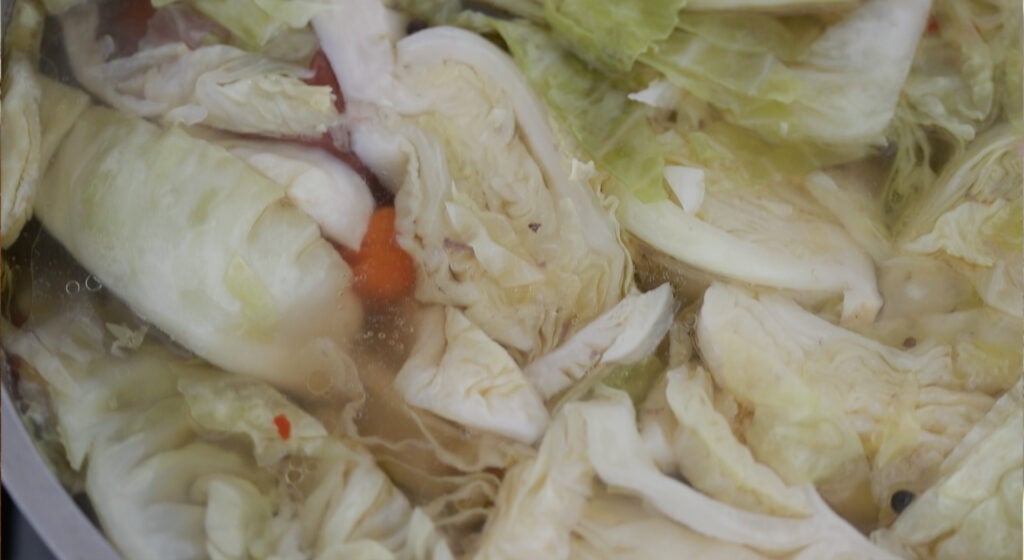
Add the vegetables: With about 30 minutes left in the cooking process, I add the carrots and potatoes to the pot, cover and cook for 15 to 20 minutes. Then I add the cabbage wedges on top, pressing them down and moving things around to fit. I cover it again and cook for another 10 to 15 minutes until everything is tender.
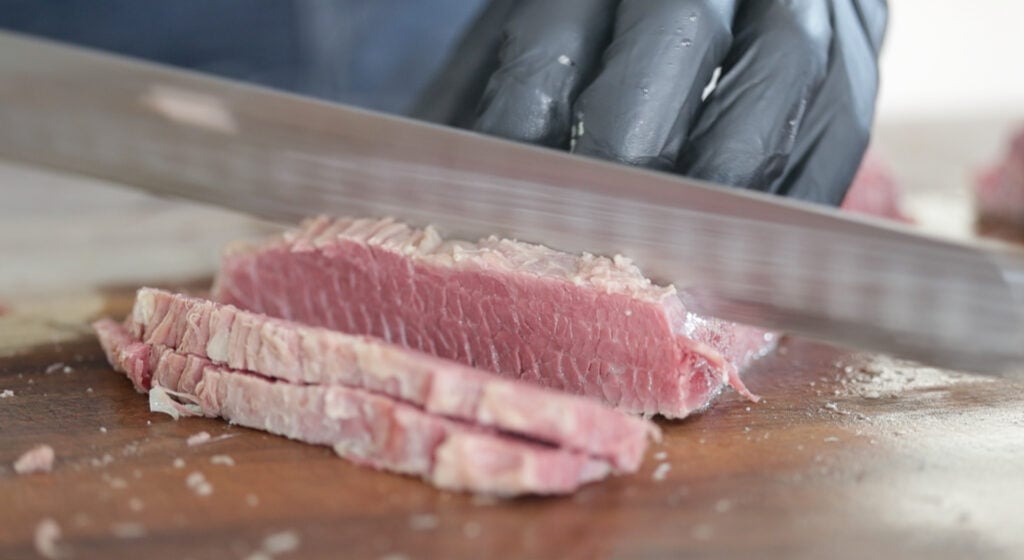
Slice and serve: I remove the brisket from the pot and place it on a cutting board. I slice against the grain about half to three quarter inches thick, then arrange the sliced corned beef on a large platter or cutting board alongside the cooked cabbage, carrots, and potatoes. I finish it off with a sprinkle of chopped parsley for color and serve mustard on the side.

Chef tip + notes
I have made corned beef so many times guys, in restaurant kitchens and at home, and the number one thing I always tell people is to respect the brine time. Seven days sounds like a lot, but that is what gives the beef its incredible depth of flavor and that perfect tender texture. Trust me and do not rush it.
- Slice against the grain: This is the most important step when serving. Look at the direction the muscle fibers run and slice perpendicular to them. This makes each piece tender instead of chewy. Watch my video below to see exactly how I do it.
- Don’t skip the rinse: After brining for seven days, the surface of the brisket is very salty. A thorough rinse under cold water is essential or the finished corned beef will be too salty to enjoy.
- Save the cooking liquid: Refrigerate some of the broth from the pot. It is perfect for reheating leftovers and keeps the meat moist.
- Slow cooker option: If you prefer, place the brined brisket in a slow cooker with water and cook on low for about 8 hours. Add the vegetables after 5 hours and cook the rest of the way.
- Oven method: You can also place the brisket in a deep hotel pan, cover with water, wrap tightly in foil, and bake at 300°F for 4 1/2 to 5 hours. This is a method I used back at a country club I worked at.
Serving Suggestions
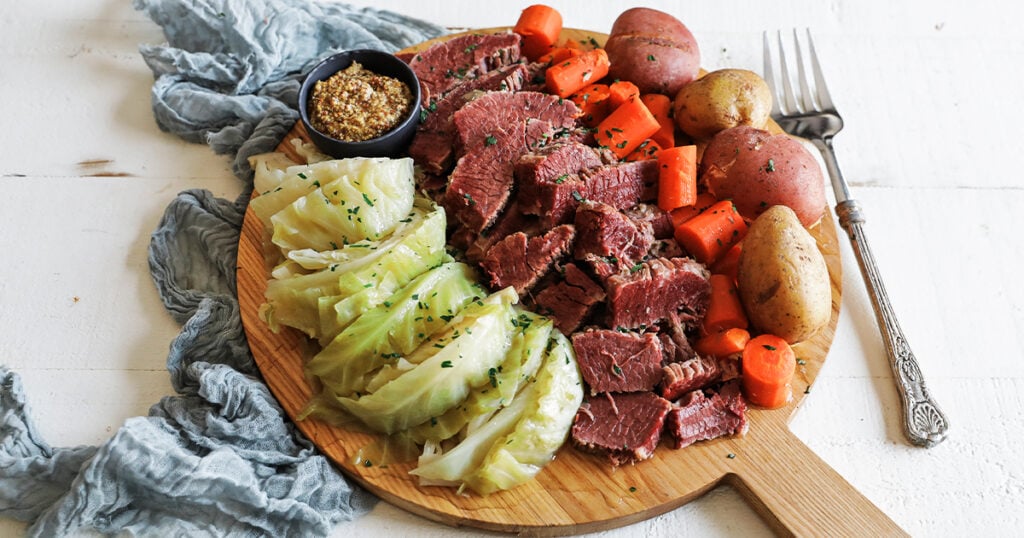
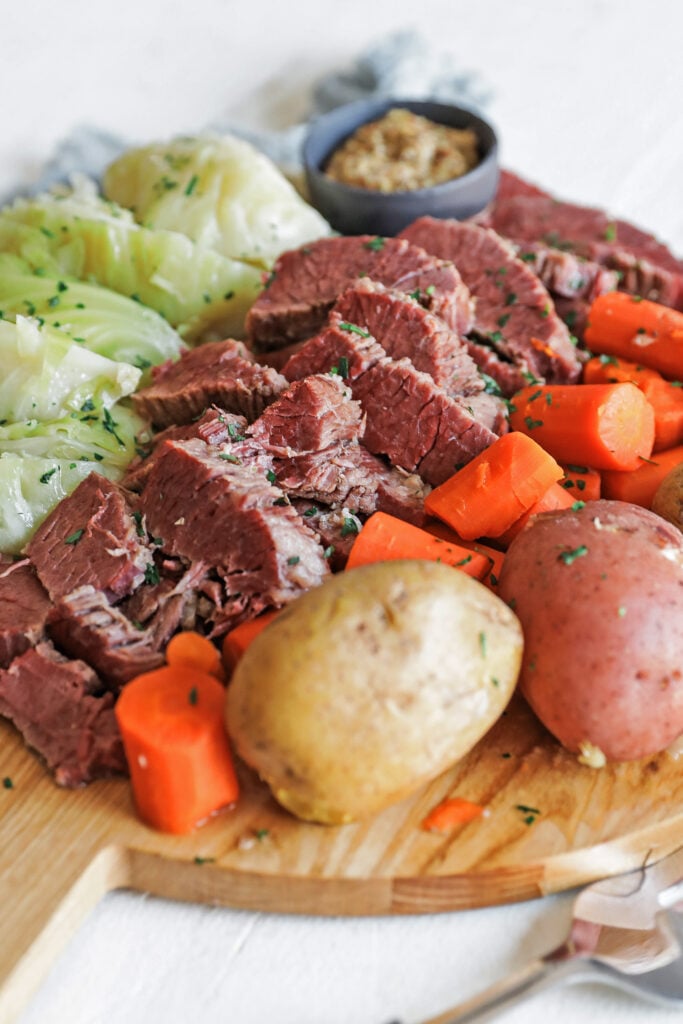
I love pulling a platter of homemade corned beef out to the table that just stops everybody in their tracks. I like arranging the sliced brisket right on a big wooden cutting board with the cabbage, carrots, and potatoes piled around it, a little bowl of mustard sauce on the side, and let everyone dig in family style. My wife always sets the table with a loaf of my Irish soda bread for tearing and dipping, and it is hands down the perfect pairing for this meal.
If you are going all out for St. Patrick’s Day, pair this with my Irish apple cake with custard sauce for dessert and you have a full spread that will impress anyone who walks through the door. Leftover corned beef the next morning? My corned beef hash with jammy eggs is one of those breakfasts my daughter asks for by name, and honestly it might be even better than the dinner itself. Serve it alongside some Irish colcannon if you want another Irish classic on the table.
Make-Ahead and Storage
Make-Ahead: I like to make this up to 1 day ahead of time and simply reheat before serving. I find the flavors actually develop a bit more overnight.
How to Store: I cover the corned beef with or without the cooking liquid and keep it in the refrigerator for up to 5 days. For freezing, I cover it without the cooking liquid and freeze for up to 2 months. I thaw it in the refrigerator for 1 day before reheating.
How to Reheat: I add the desired amount of corned beef to a pot with some of the reserved cooking liquid and heat it over low heat until warmed through.
More Comforting Beef Recipes

Video
Corned Beef and Cabbage Recipe
Ingredients
For the Corned Beef
- 2 tablespoons peppercorns
- 1 tablespoon allspice berries
- 1 tablespoon mustard seeds
- 1 tablespoon coriander seeds
- 2 teaspoons red pepper flakes
- 1 ½ teaspoons ground ginger
- 1 teaspoon cloves
- 5 bay leaves
- 1 broken up cinnamon stick
- 1 gallon water
- 1 1/3 cup sea salt
- 4 teaspoons #1 curing salt
- 1 cup packed light brown sugar
- ½ gallon ice
- 5-6 pound brisket flat
For the Vegetables
- 1 tablespoon pickling spice
- 1 head cabbage cored and sliced into wedges
- 6-8 peeled and very thickly sliced large carrots
- 3-4 pounds of red or Yukon potatoes
Instructions
- Corned Beef: Place all of the spices minus the salt and brown sugar into a medium-size bowl and simply smash using a fork to help break it up to make a homemade pickling spice. You can also do this with a mortar and pestle if you have one. Set it aside.
- Next add 1 gallon of water to a very large pot along with 4 tablespoons of pickling spice, salt, curing salt, and brown sugar and bring it to a boil to dissolve the salts and sugar.
- Remove the pot from the heat and add the ice to help cool.
- Once the liquid is completely cooled to at least room temperature add the brisket flat to the pot making sure it is completely submerged. Add plates or bowls to help keep it submerged and refrigerate.
- Every 2 days move the brisket around to make sure every side is getting brine on it.
- After 7 days remove the brisket and rinse it very well on all sides.
- Place the brisket into a large pot and cover it with water by about 4 inches.
- Add in 1 tablespoon of the pickling spice and then bring the mixture to a boil over high heat.
- Next, turn the heat down to low and simmer for 3 ½ to 4 hours or until very tender.
- With about 30 minutes left in the cooking process add the cabbage, carrots, and potatoes to the pot and cover. You may need to move some things around to get it all to fit.
- Once everything is done, slice the brisket against the grain and serve.
I haven’t made your recipe yet but one thing I cook my corned beef with is beer added with the water prior to cooking. The beer adds a depth of flavor to the meat which adds to the Irish heritage the recipe comes from. I am a lover of this dish and look forward to enjoying the deliciousness .
This is really good corned beef, I cooked mine on the smoker and it was amazing.
I wish recipes like this included weights and not just volumes, there is much less error when using weights 1 1 1/3c sea salt could have vastly different weights depending on the actual salt used.
Grams are available by clicking the US Customary Measurement Button in the recipe card and clicking Metric.
Thank you for pointing that out, I didn’t see it before. Thanks!
I had to delay my brining while waiting for Prague Powder #1 to arrive, so for St. Patrick’s Day I made one of the packaged corned beef briskets while mine cured in the fridge. The side-by-side comparison was incredible—what a difference. The wait was absolutely worth it, and I don’t think I’ll ever go back to packaged corned beef again.
So glad you enjoyed the homemade version! Thanks for giving it a try!
Perfect Recipe!
My St. Patrick’s Day dinner was a success and I will be making your corned beef recipe at least once a year. I followed your brining recipe and cooking instructions. I did make the beef, carrots and potatoes a day in advance. The cabbage was cooked when I reheated everything.
Thank you!!