
German Beef Rouladen Recipe

- Published
- 33 comments
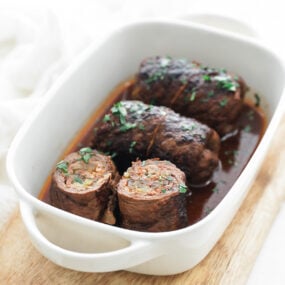
I love making this German beef rouladen for a nice family dinner. I use thin slices of top round rolled around Dijon mustard, smoked bacon, onion, and dill pickles, then sear them before braising them low and slow in a red wine and mirepoix sauce for about 2 hours. You will love how simple this is to prepare and just how flavorful it is.
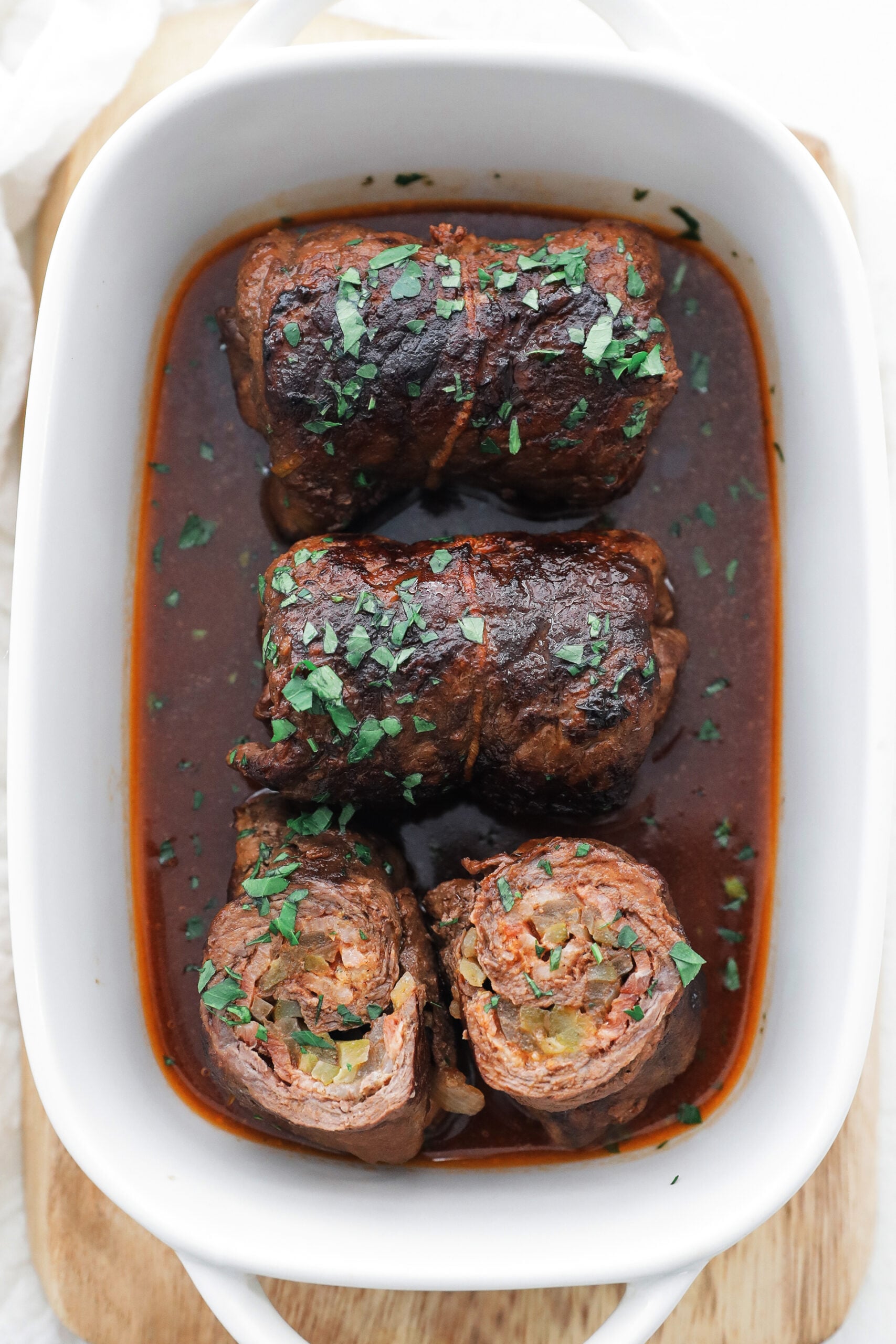

I learned this dish in the middle of the lunch rush at the University Club at the University of Missouri, working with my favorite Chef Daniel Pliska. We had a leftover top round from a catering gig that I was staring at it with no plan. Chef walked past me and said, “just make some rouladen.” I said, “cool, what’s rouladen?” He showed me the pound, the roll, the sear, and the braise. I absolutely loved it, and I have been cooking it that way ever since. If you like a good braised beef dinner, I would also make my beef stroganoff or my braised beef short ribs.
German Beef Rouladen
Rouladen is a classical German preparation of thinly pounded beef, seasoned inside and out and stuffed with mustard, bacon, onion, and pickles, then rolled, tied with butcher’s twine, seared, and braised in a red wine sauce until the meat is fork-tender. It is a Sunday-table dish in Germany, most often served with spaetzle or potatoes and red cabbage on the side.
The way I make it at home is close to how I made it on the line at the University Club. Season the beef properly on both sides, get a real good sear on the outside of every rouladen. You want to treat the braising liquid like it is going to be a sauce, not just a cooking bath, ok? Next, I roast the mirepoix in the same pan the beef came out of, pinch the tomato paste until it darkens, deglaze with a dry red wine until it is au sec, then add the beef stock and slide the tied rouladen back in for the long ride in the oven.
I have a video on my recipe card below that shows you exactly how I make it if you’d like to follow along. If you prefer reading, I’ve also included my step-by-step instructions, which will seriously make you the most popular person when you serve this dish to your friends and family at your next gathering. You’ve got this, my friends!
Ingredients and Substitutions
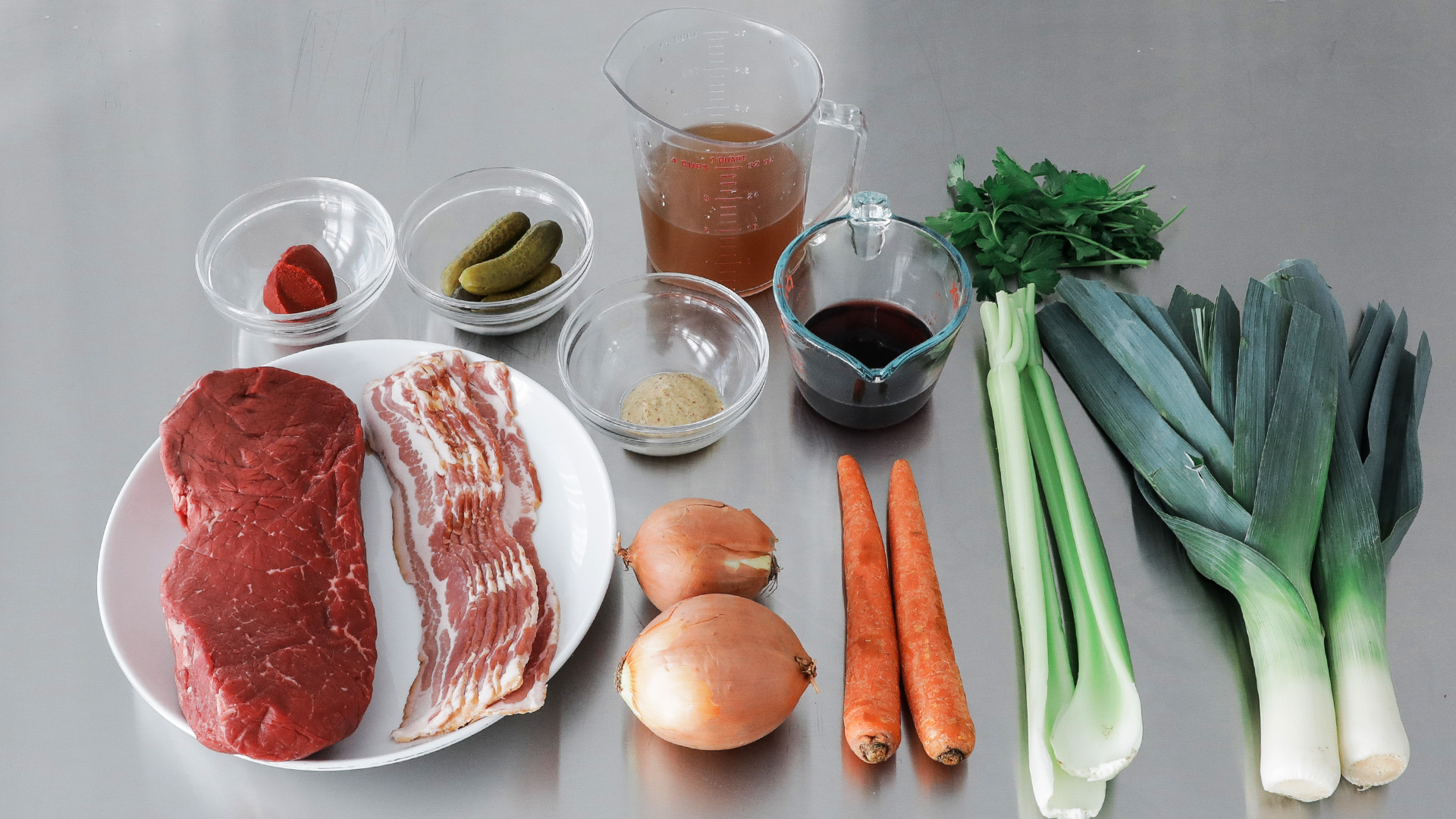
For the Rouladen:
- Beef – Top round is the cut I personally prefer because it’s a low-fat, uniform muscle, which means every rouladen comes out roughly the same size and cooks at the same rate. Bottom round and sirloin tip are the next-closest swaps, and a chuck roast works if you want a fattier dish.
- Mustard – A good stone-ground or Dijon mustard is what gives the inside of the rouladen its tang and its faint spice. The acid in it is what cuts the richness of the beef and bacon once everything braises together. A real German mustard is even better when you can find one.
- Bacon – I mean bacon makes everything taste better, and a thick-cut smoked bacon adds salt, fat, and smoke to the inside of the roll, and it renders slowly while the beef braises so the interior stays juicy. I stay away from anything heavily cured unless the cure is natural.
- Onion – Yellow onion is my default, thinly sliced so it softens inside the roll during the braise. It adds a little sweetness against the mustard and pickles. White, red, sweet onion, or even shallot all work.
- Pickles – Dill pickles , julienned, are the only kind that belong in a rouladen. The vinegar tang is what makes the whole roll read as classical German. A spicy dill is a good option if you want a little heat.
- Salt and pepper – Diamond Crystal kosher salt and fresh-ground black pepper. Obviously this flavors up everything.
For the Sauce:
- Leeks – Optional, but I highly recommend them. Sliced leeks add a softer, sweeter onion note than yellow onion alone and give the finished sauce more depth. Use the white and pale green parts only.
- Onion – A large-diced yellow onion roasts with the mirepoix and becomes the sweetness backbone of the braising liquid. White or sweet onion works too.
- Carrots – Peeled and large-diced. Carrots add body and a natural sweetness to the sauce that balances the acidity of the wine and tomato paste. Standard mirepoix duty.
- Celery – This adds some freshness and earthiness to the sauce to balance out the carrots and onions.
- Parsley stems – I save my parsley stems in a bag in the freezer for exactly this reason. They add a fresh herbaceous note to the braising liquid that finished parsley leaves cannot match.
- Tomato paste – Stirred into the mirepoix and cooked until it darkens on the vegetables. Tomato paste is what gives the sauce body, a subtle sweetness, and a roasted, savory backbone. Do not skip cooking it in the pan.
- Wine – A good dry red like cabernet sauvignon, merlot, or shiraz. The wine adds acidity, fruit, and body to the finished sauce. My rule from culinary school still stands: if you would not drink it, do not cook with it. If you do not drink alcohol, sub in more beef stock and a squeeze of lemon juice.
- Beef stock – The main liquid in the braise. Use a good homemade beef stock when you have one; a quality boxed stock is fine when you don’t. Chicken stock, brodo, or even a vegetable stock will get you there if that is all you have.
- Butter – I finish all my sauces with unsalted butter to give it richness and that beautiful sheen.
- Salt and pepper – To taste, at the finish, after the sauce has reduced.
- Red currant jelly – Optional. Whisked into the finished sauce, it cuts through the salt and richness with a quiet sweetness. Dang good with it, dang good without it.
How to Make Beef Rouladen
Preheat the oven: Preheat the oven to 325°F. This is the temperature the rouladen will braise at for the full cook. It’s low enough that the connective tissue in the top round has time to break down without the meat drying out.
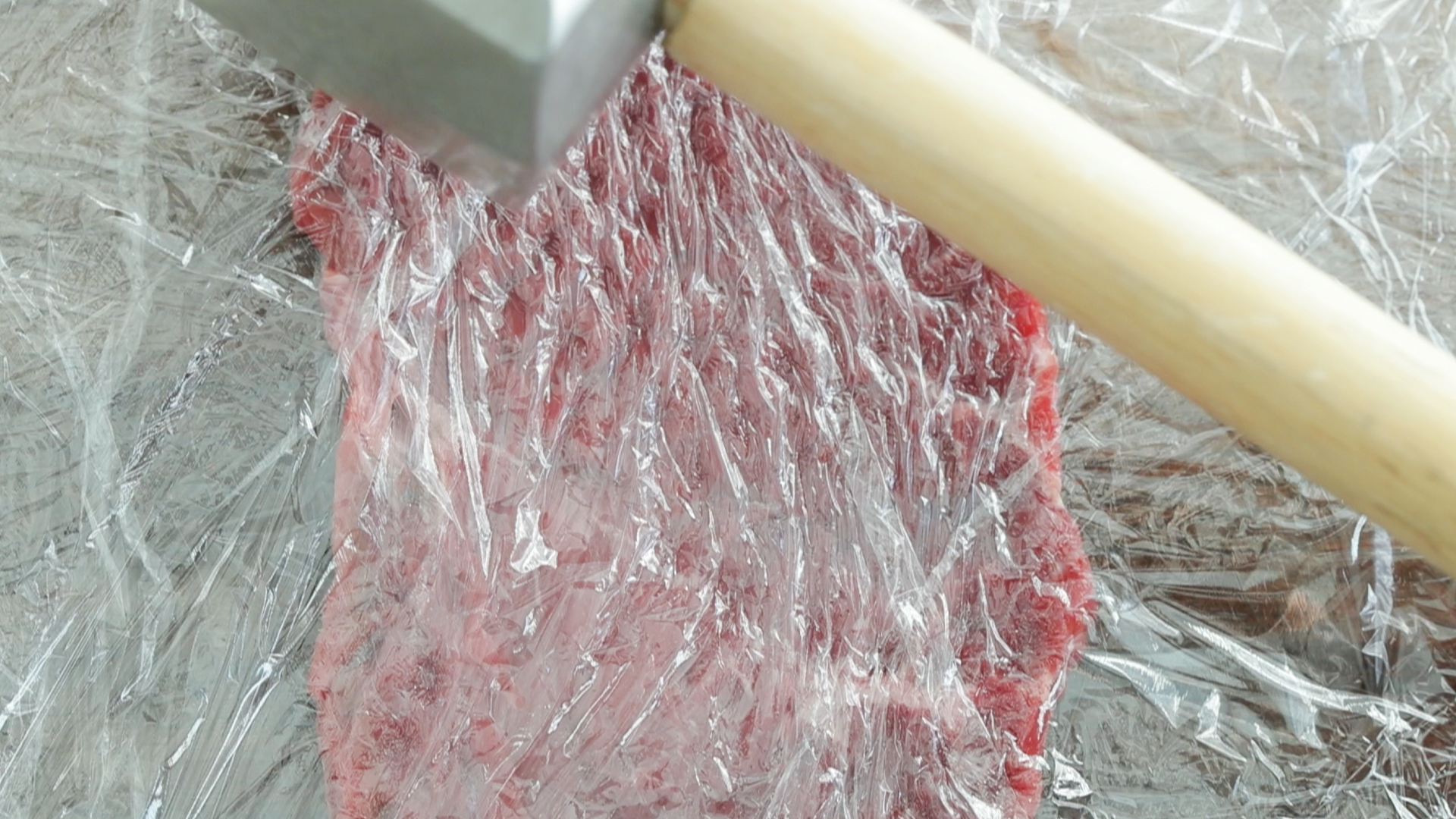
Pound the beef: Slice the top round into 8 large steaks across the grain. Lay each steak between 2 pieces of plastic wrap and pound with the flat side of a mallet. Work from the center out with even taps, until the piece is roughly double its original size and about a 1/4 ‘ thick.
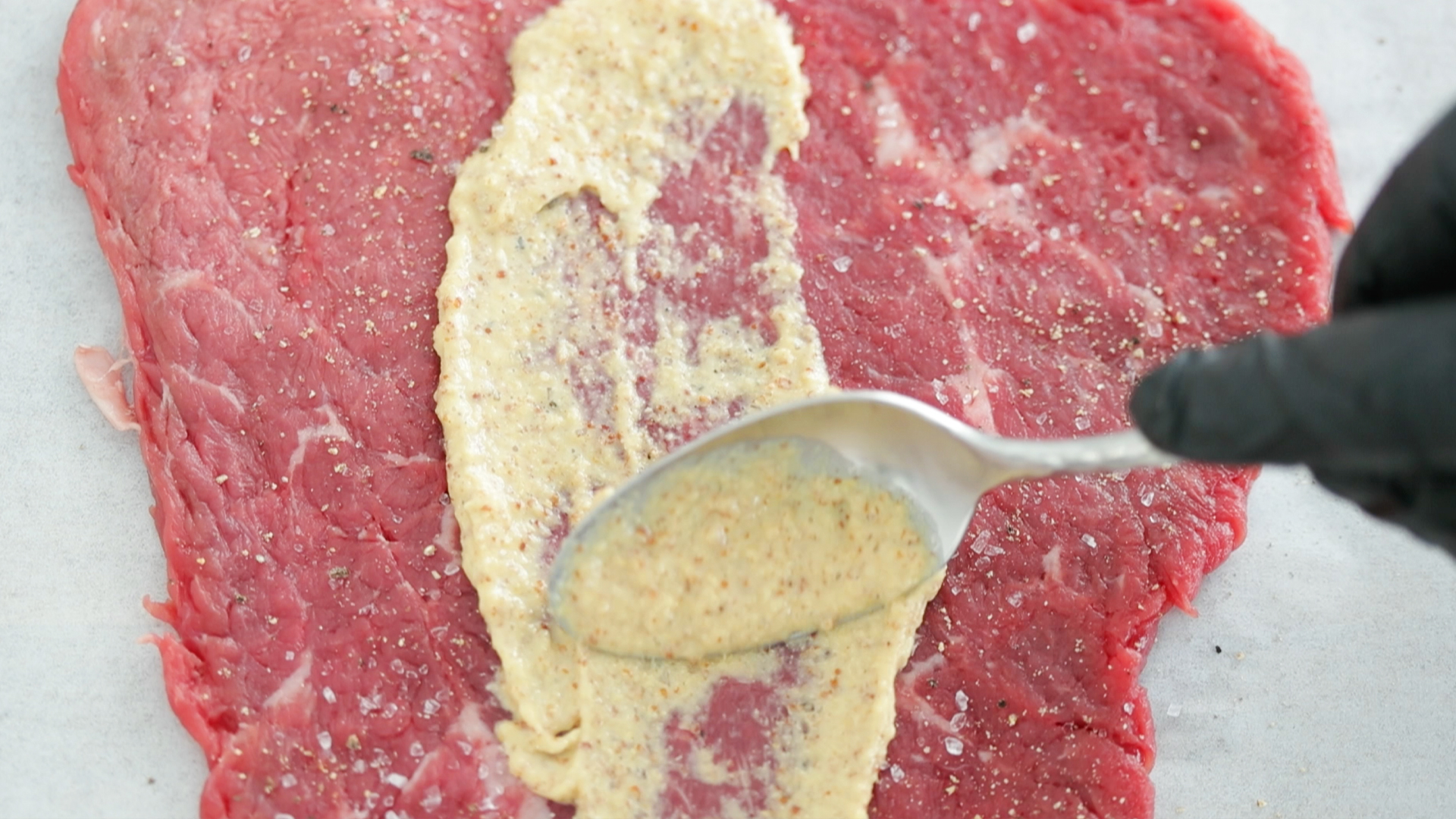
Season and mustard the beef: Lay each pounded piece out flat and season the top side generously with salt and pepper. Brush a spoon of Dijon or German mustard across the center of the seasoned face. Season the inside face honestly here. The bacon, pickles, and mustard help, but they are not enough on their own to season an unseasoned piece of beef.
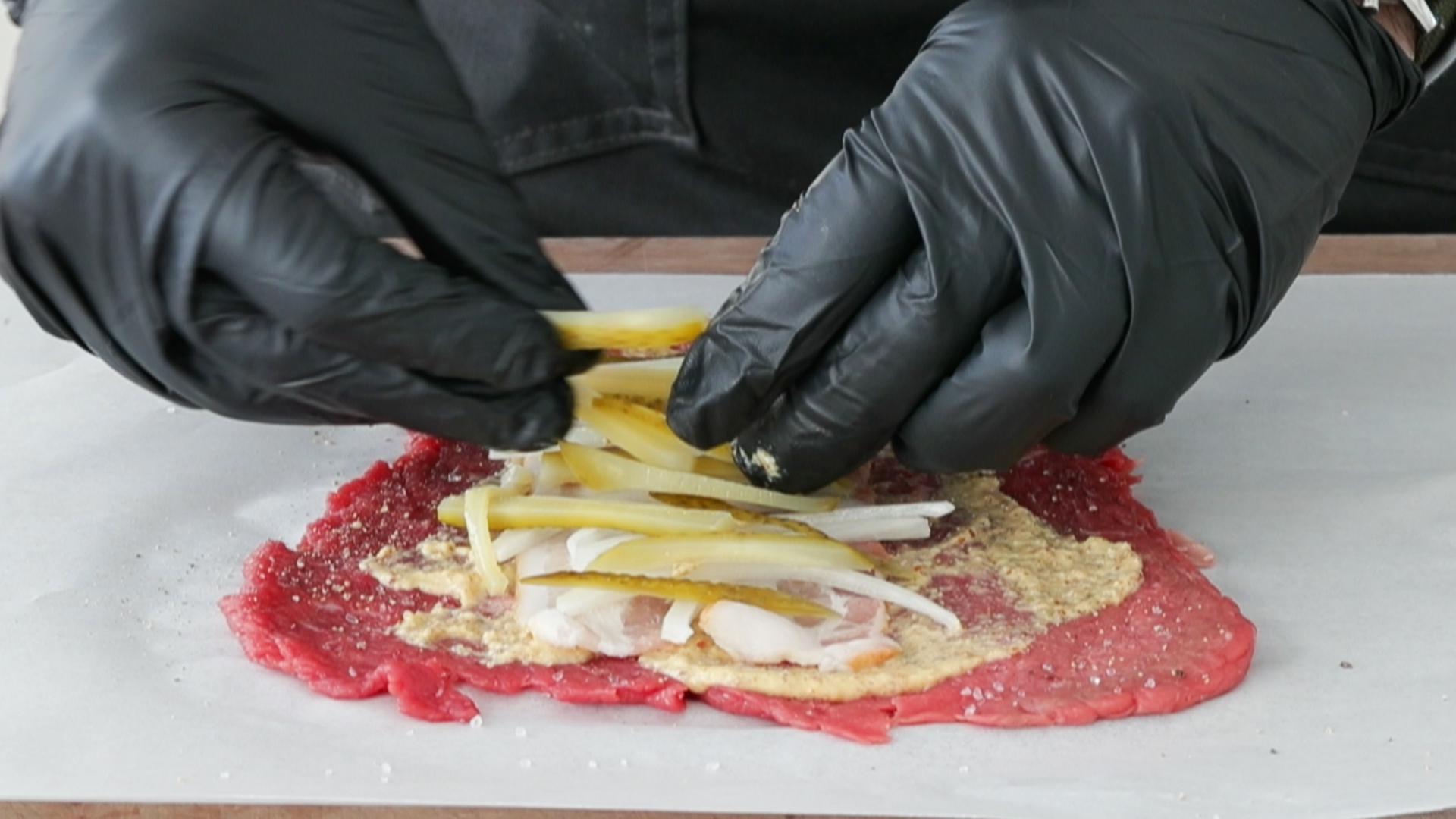
Fill the roll: Lay 2 half-slices of bacon down the center of the seasoned, mustarded beef. Then add a small handful of thinly sliced onion and a few julienned dill pickles on top of the onion.
Roll: Fold the 2 short sides of the beef in over the filling, then roll the whole thing up tight from the back edge to the front.
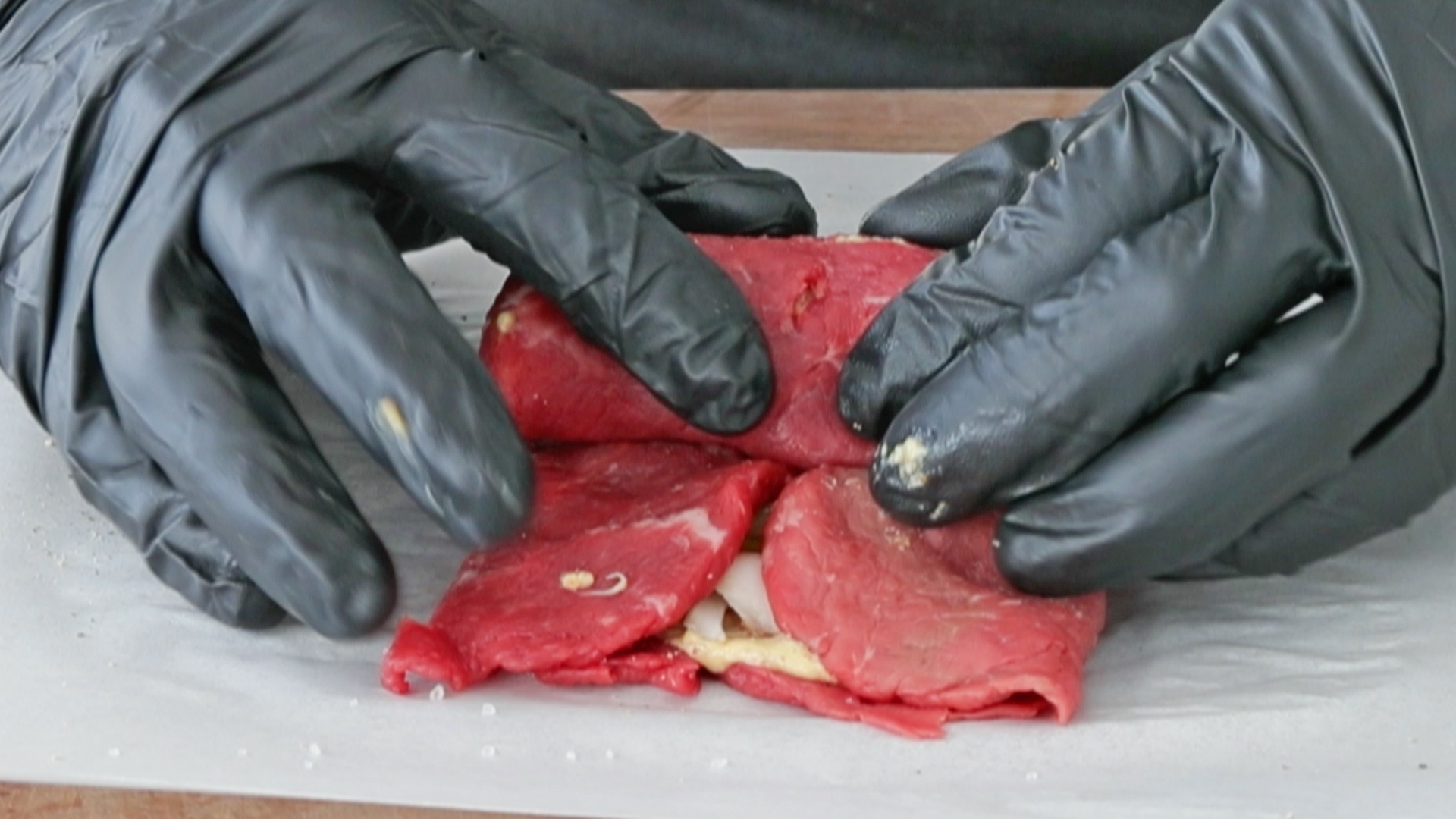
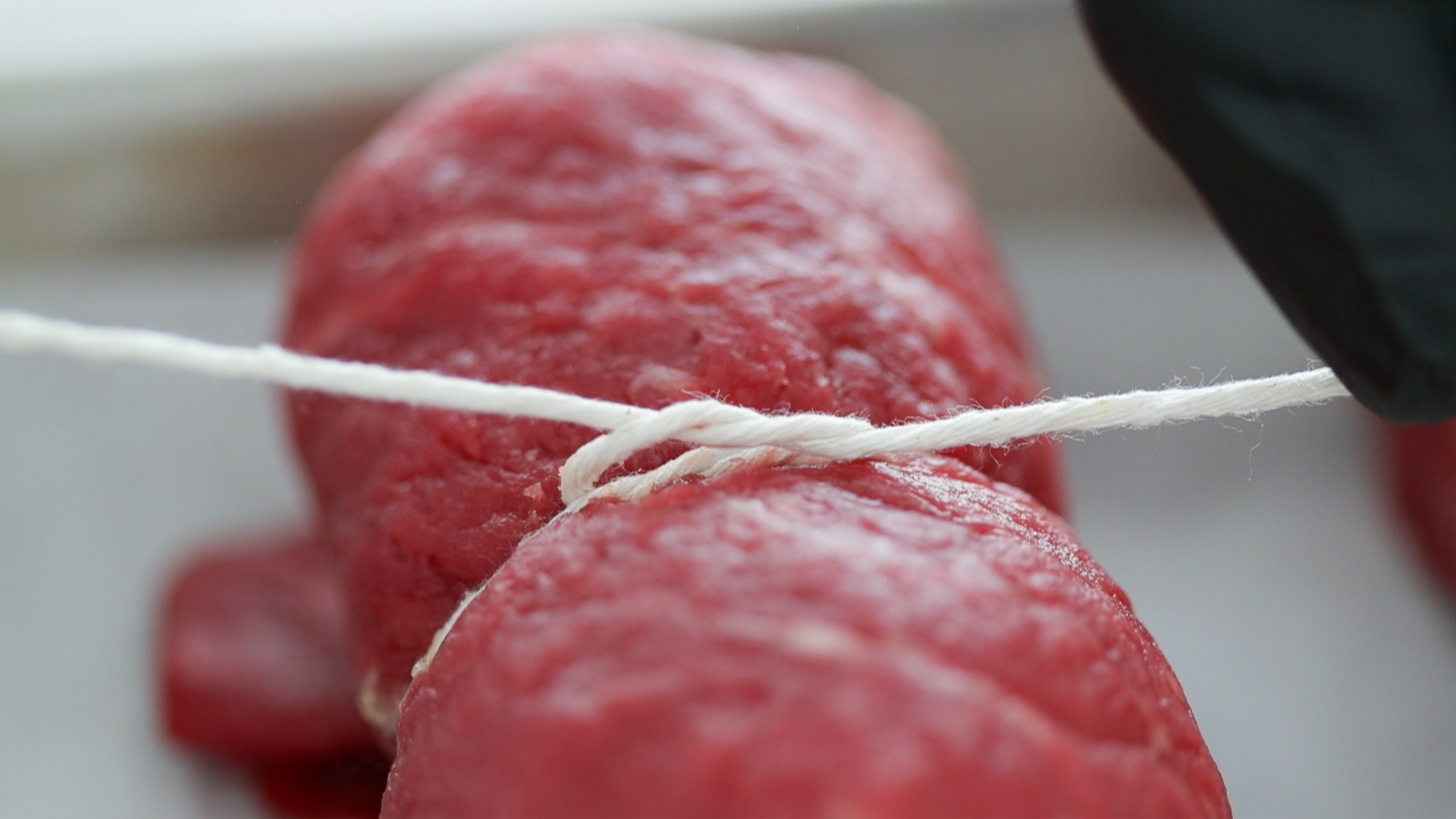
Tie a length of butcher’s twine around the center to hold the roll closed. If the filling looks like it wants to escape, add a second knot running the opposite direction. Repeat until all 8 rouladen are rolled and tied.
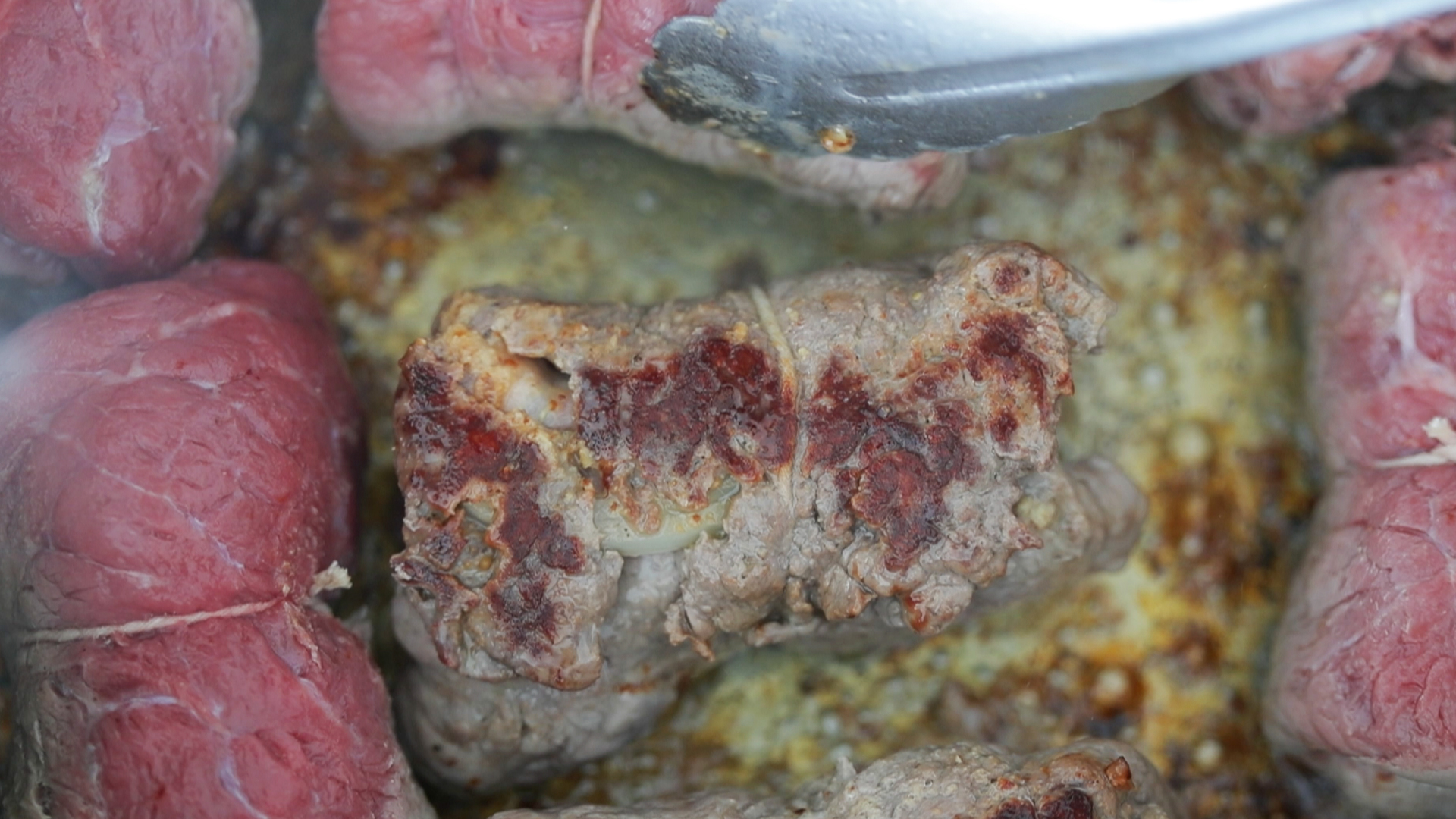
Sear the rouladen: Heat a large rondeau or heavy Dutch oven over medium-high heat and add enough clarified butter to slick the bottom. Sear the rouladen on every side until hard-browned on every face, working in batches so the pan stays hot. This is where the finished sauce gets its color and its meaty backbone. That fond stuck to the bottom of the pan is what takes the braising liquid from beef-flavored water to a real sauce.
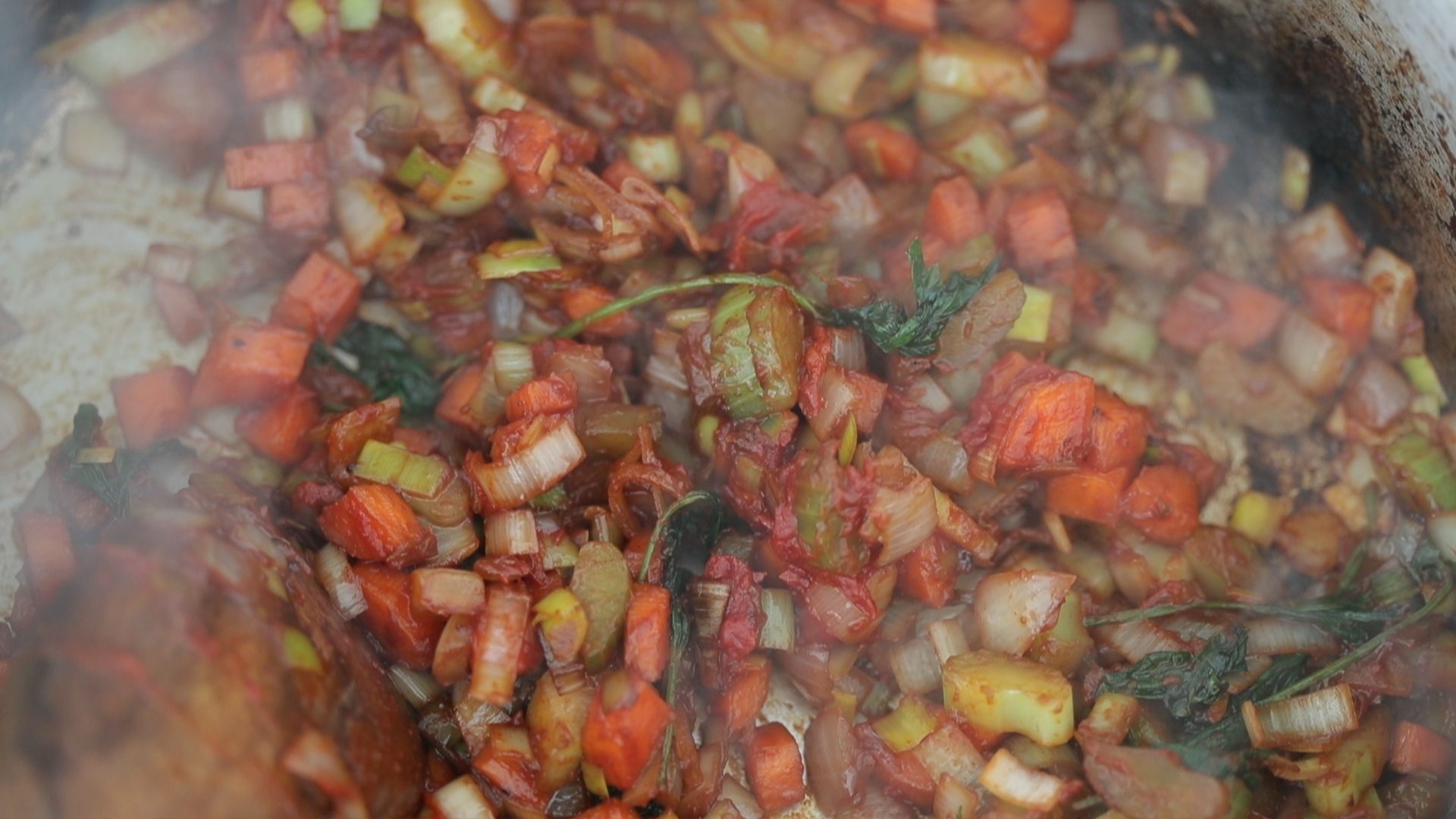
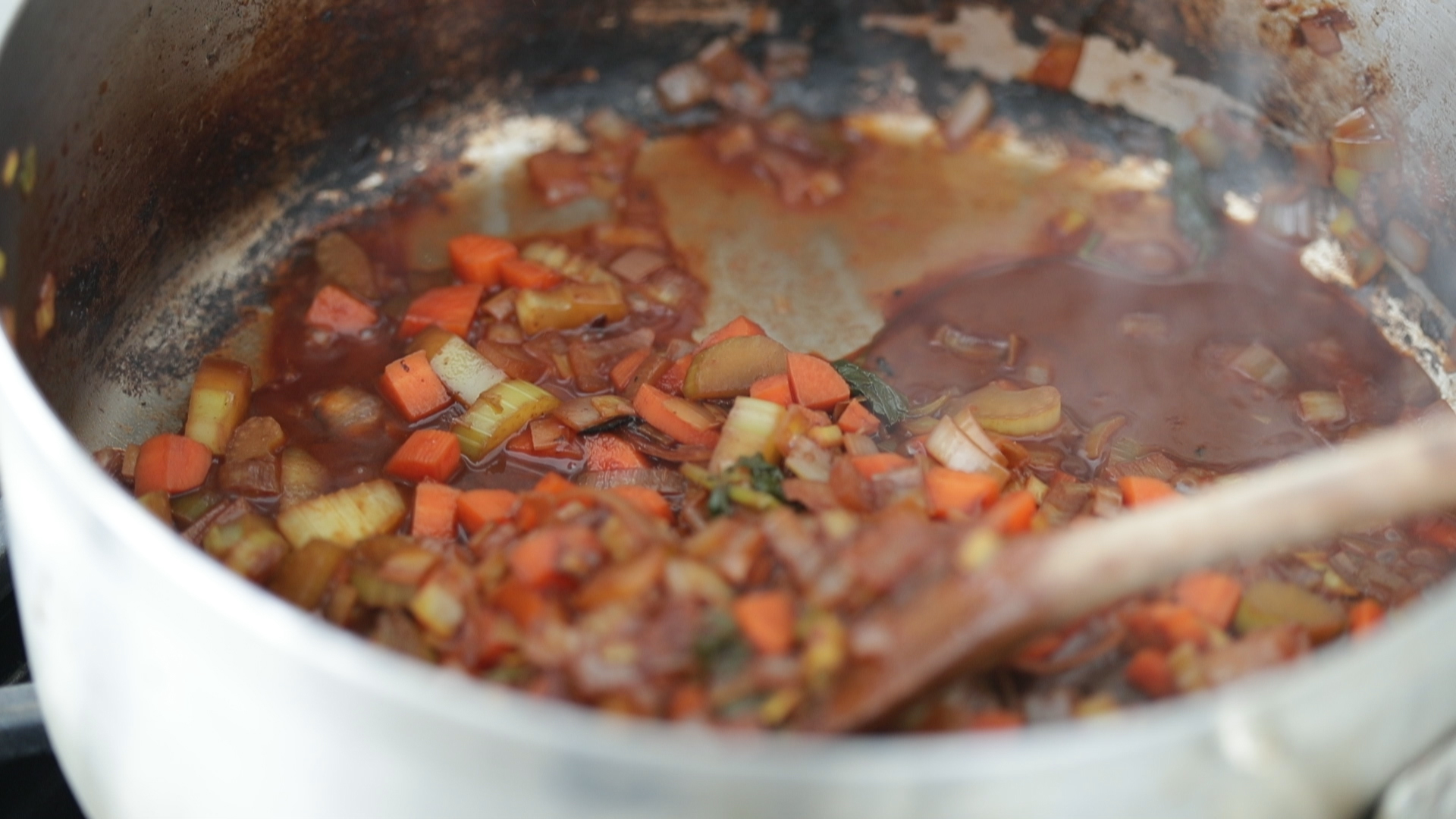
Roast the mirepoix and pinch the tomato paste: Set the seared beef aside on a plate. Into the same hot pan, add the leeks, diced onion, carrots, celery, and parsley stems. Roast the vegetables for 3 to 4 minutes, stirring often, until they are lightly browned and the fond starts to lift off the bottom of the pan. Stir in the tomato paste and cook another minute or two until the paste darkens. The color of the pan darkens from red to almost brown.
Deglaze with red wine: Pour in the red wine and scrape the bottom of the pan with a wooden spoon to release every last bit of fond. Let the wine simmer down until it is au sec, almost gone and syrupy on the vegetables, so the alcohol cooks off and the wine flavor concentrates.
Add stock: Pour in the stock, season the liquid with salt and pepper, and nestle the seared rouladen back into the pan. The tops should just be breaking the surface of the liquid.
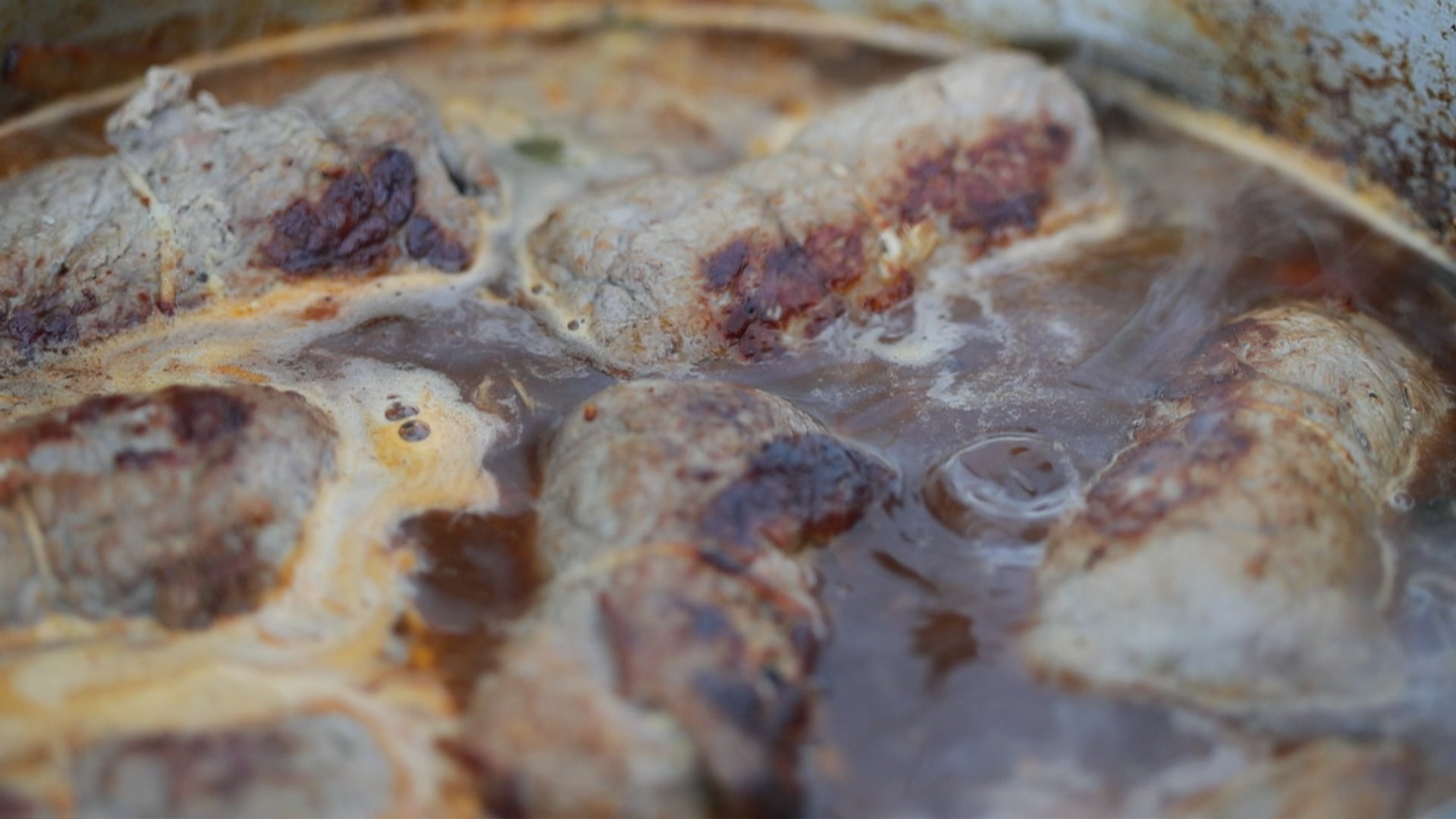
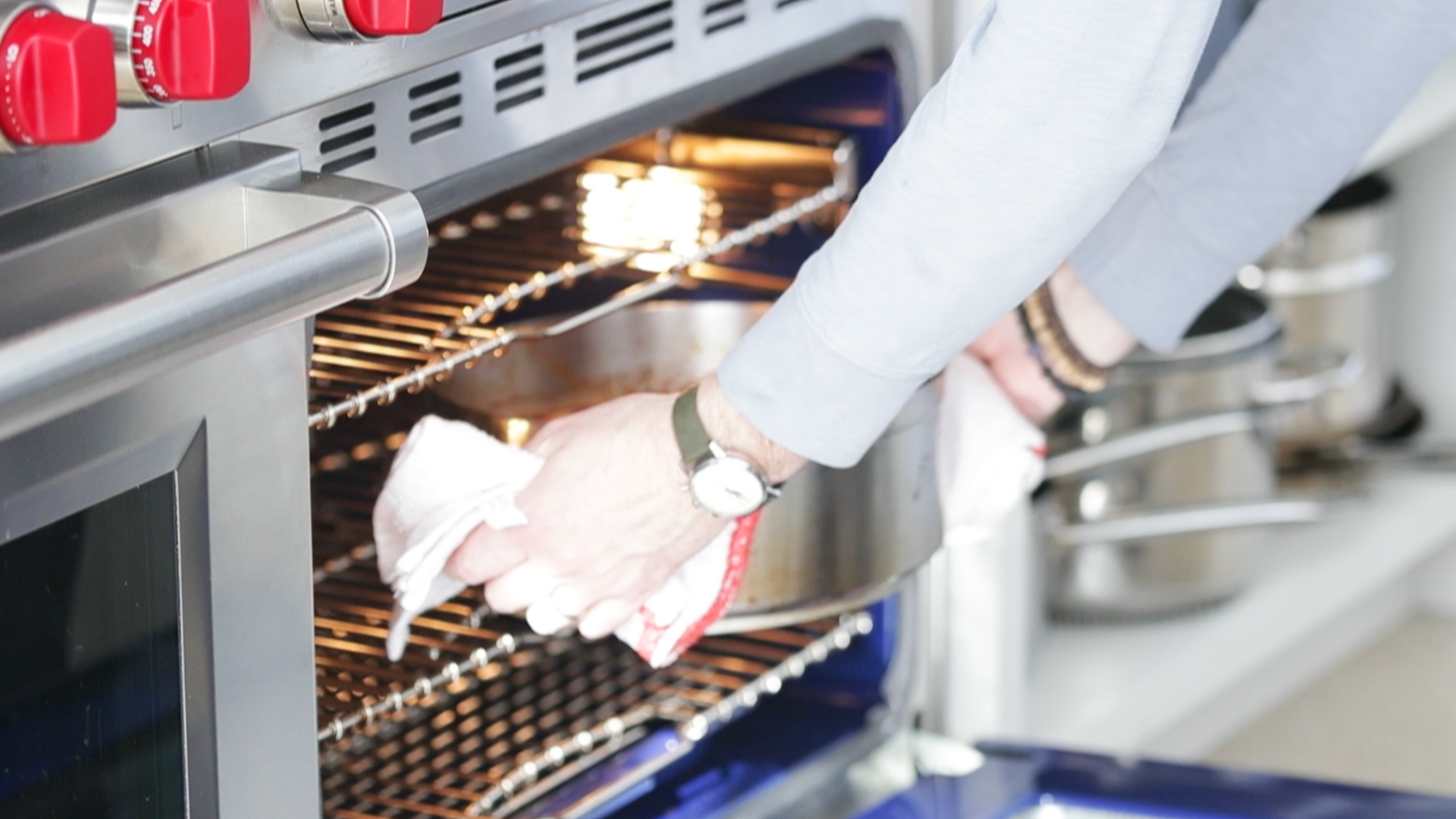
Braise: Cover, transfer to the 325°F oven, and braise for about 90 minutes, or until the beef is fork-tender. Larger rouladen can take an extra 30 minutes.
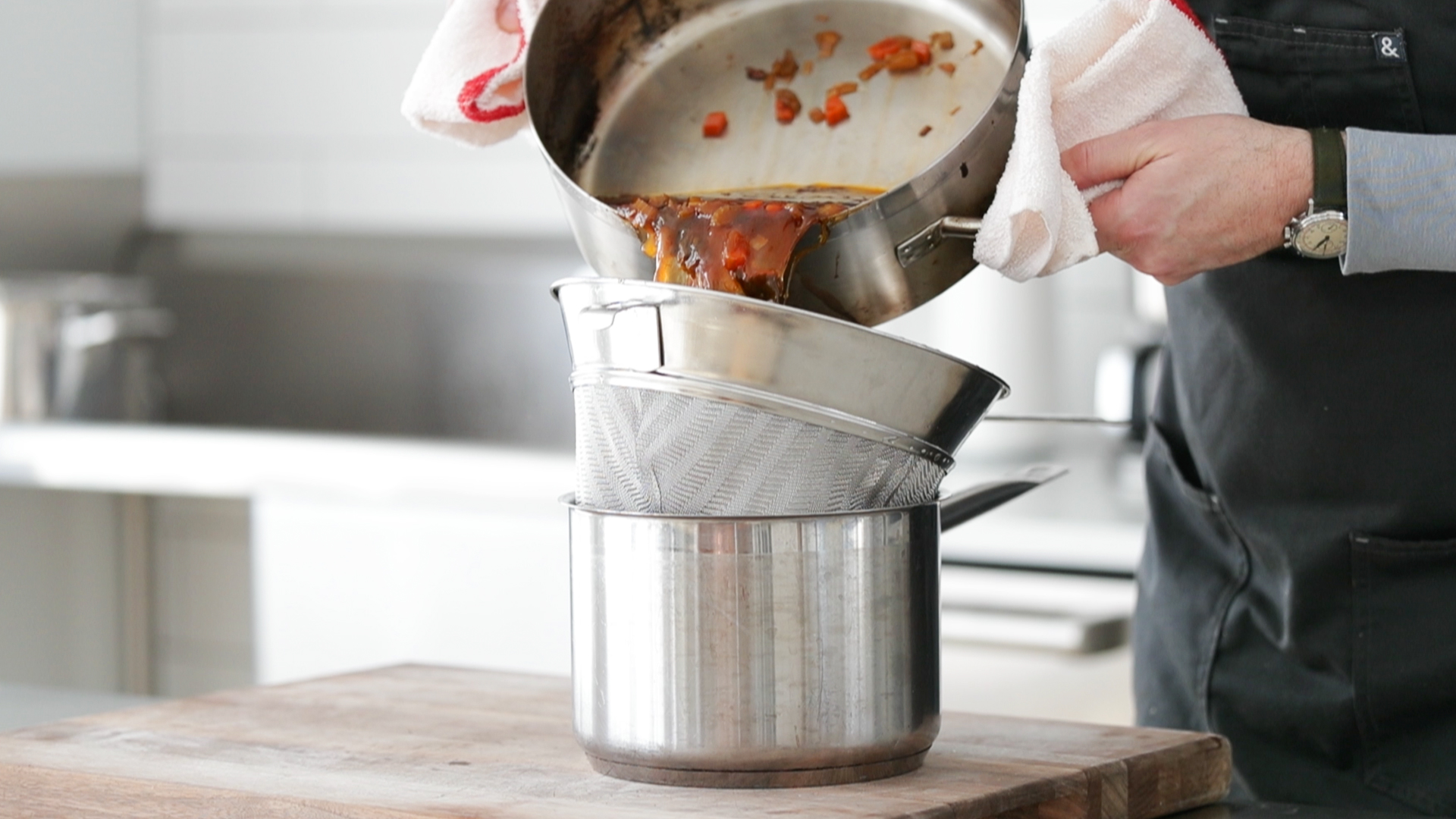
Strain: Lift the cooked rouladen out and set them on a warm plate under foil. Strain the braising liquid through a fine-mesh sieve into a saucepot, pressing on the vegetables to get every drop.
Simmer the strained sauce over medium heat for 4 to 5 minutes, or longer if you have time, until it thickens enough to coat the back of a spoon. Longer here is better; the sauce keeps concentrating and the flavor keeps sharpening. Whisk in the cold butter off the heat until the sauce goes glossy.
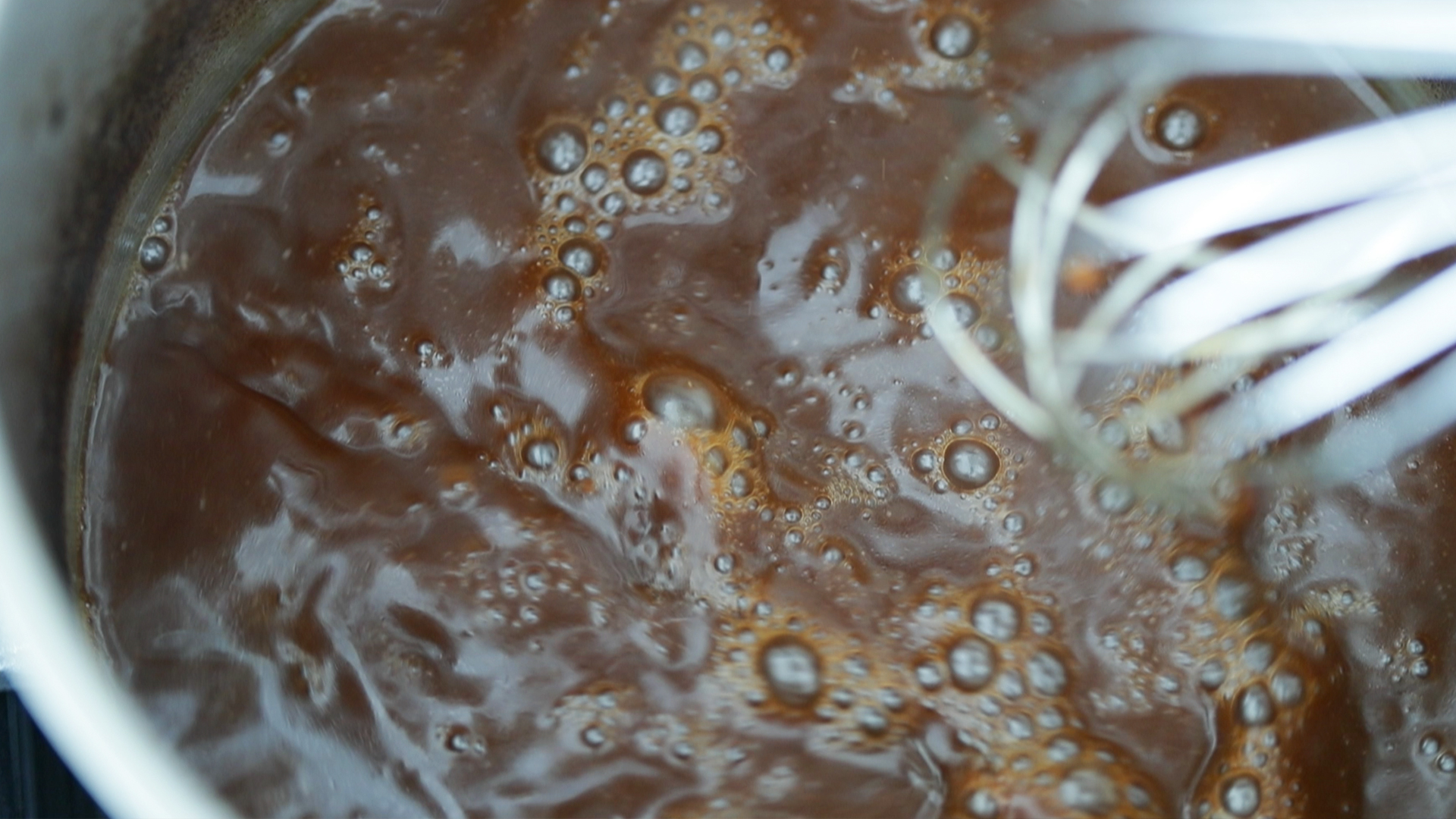
Taste it, adjust salt and pepper, and whisk in the optional red currant jelly if using. Snip the twine off each rouladen.
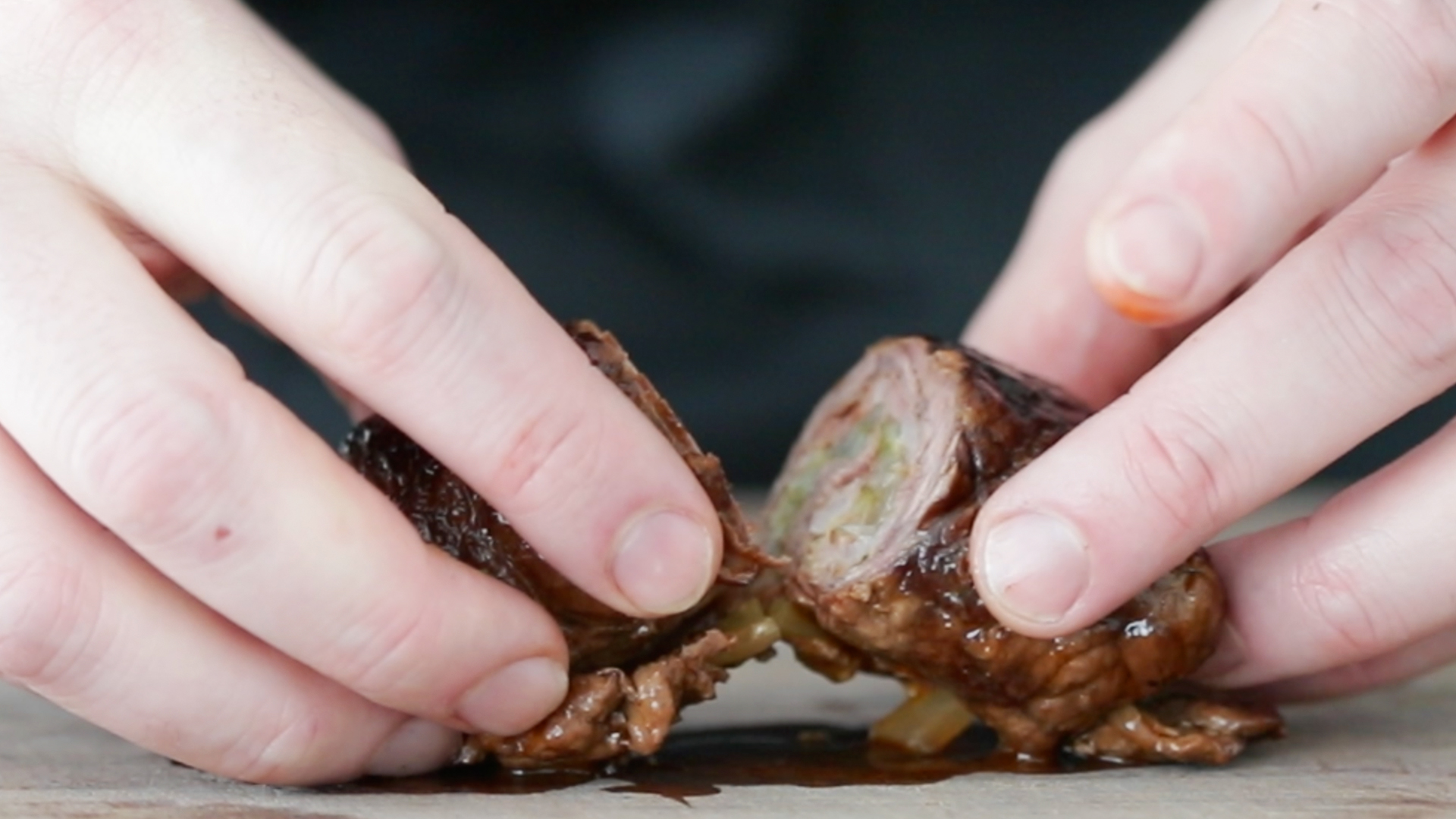
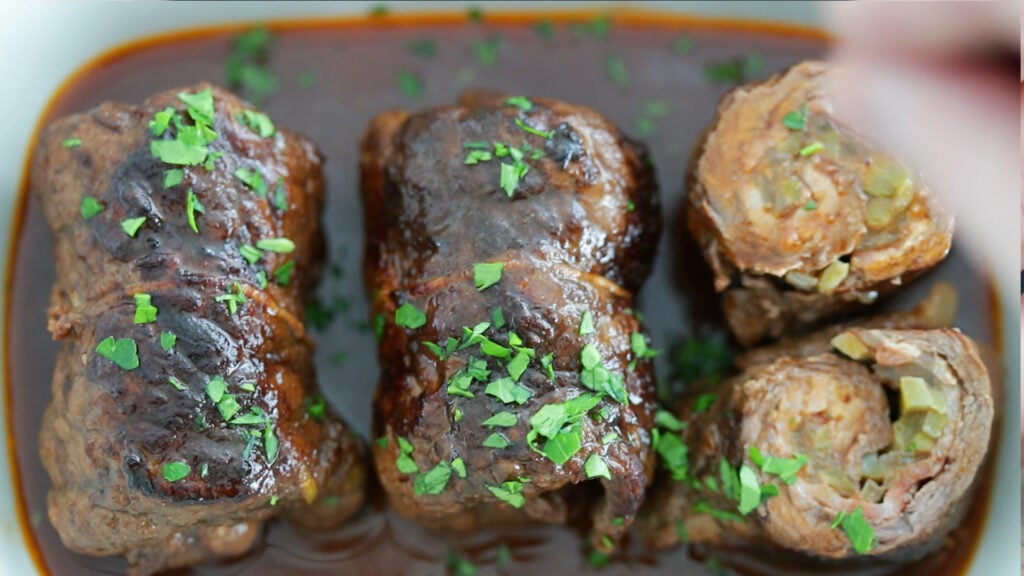
Serve: Plate them whole or sliced across the middle, and spoon the finished sauce over the top.

chef tip + notes
The most important tip for making this German Beef Rouladen recipe is seasoning the beef inside and out. It will pay dividends in ensuring every bite is delicious. The bacon and pickles bring their own salt to the roll, but that salt is not enough to season the beef. Salt and pepper the pounded steak on the mustard face before the mustard goes on, and season the outside of every roll again once it is tied. I can’t recommend this enough!
- Pound to stretch, not to shred: Use the flat side of the mallet, not the toothed side. The goal is a wide, thin sheet of beef that rolls tight without tearing, not a torn piece with holes the filling can escape through. Gentle, even taps from the center out ok.
- Get a hard sear on every side of every roll: Any time you can get a Maillard brown crust on protein, it just concentrates the umami and makes it that much more delicious. Work in batches so the pan stays hot, and do not touch the rouladen for the first 2 minutes on each face.
- Tie the twine snug, not tight: A snug knot holds the filling in while the beef braises and expands. A tight knot squeezes the filling out the ends the second the beef relaxes in the oven. Snug enough that the twine does not slide, loose enough that the twine is not cutting into the roll.
- Strain and reduce the sauce longer than you think: Straining and reducing is where a good braising liquid becomes a great sauce. The longer you can devote to this, the more concentrated and flavorful it will become. Little things like this take this dish from good to great and it doesn’t require all that much work.
- Rest the rouladen under foil while the sauce reduces, 15 minutes of rest is what keeps the juices inside the roll instead of pooling on the cutting board when the twine comes off.
Serving Suggestions
Rouladen is a Sunday dinner dish at my house. The classic plate is the rouladen sliced across the middle to show off the mustard, bacon, onion, and pickle spiral inside. It has to go over a nest of perfect homemade spaetzle with the reduced sauce spooned over the top. Don’t forget about a mound of braised German red cabbage on the side.
My easy German potato salad is my other favorite side to serve up when going for an all German theme. For a bigger table on a holiday or a Sunday, I’ll plate this rouladen alongside my pork schnitzel so there is a second protein on the table. This comobo is insanely delicious for meat eaters!
Make-Ahead and Storage
Make-Ahead: This recipe is meant to be served once it is done cooking. However, you can keep the roulade warm in the sauce in a pan over very low heat up to 30 minutes before serving.
How to Store: I keep leftover rouladen sitting in the finished sauce in an airtight container in the fridge for up to 3 days. The sauce keeps the beef moist while it sits, and the flavors sharpen overnight. On day 2, the rouladen is honestly better than day 1.
How to Reheat: Add the desired amount of rouladen and sauce into a covered saucepot. Warm it over low heat until the beef is heated through, about 10 to 15 minutes. Low and covered is the whole game here. High heat dries the beef out.
How to Freeze: I portion cooled rouladen with plenty of sauce into airtight containers and freeze for up to 3 months. Thaw overnight in the fridge before reheating. If you go straight from freezer to stove, it overcooks the outside of the beef before the inside is warm.
More Beef Recipes

Video
German Beef Rouladen Recipe
Ingredients
For the Rouladen:
- 2 pounds top round beef, cut into 8 large slices
- 1/3 cup Dijon or German mustard
- 8 slices of bacon, cut in half
- ½ peeled and thinly sliced yellow onion
- 5 small-medium size pickles, julienne
- salt and pepper
For the Sauce:
- 2 thinly sliced leeks
- 1 peeled and large diced yellow onions
- 2 peeled and large diced carrots
- 2 large diced celery stalks
- 6-8 parsley stems with leaves
- 2 tablespoons tomato paste
- 1 cup cabernet sauvignon wine
- 4 cups beef stock
- 2 tablespoons unsalted butter
- salt and pepper to taste
- 2 tablespoons of red currant jelly, optional
Instructions
- Preheat the oven to 325°.
- Gently pound out the top round steak between two pieces of plastic wrap or in a plastic zip bag until it is doubled in size, and still about a ¼” thick. Repeat until all the steak is flattened.
- Next, season one side of the meat with salt and pepper and then brush some Dijon or German mustard in the center of the seasoned beef.
- Add 2 slices of bacon to the center of the beef onto the mustard and then add on a few sliced onions.
- Place some julienne pickles on top of the onions.
- Fold in the sides of the beef and then roll it up tight from back to front.
- Tie a piece of butcher’s twine, about 1 foot in length, around the center of the rouladen to close it up tight. You can also add an additional knot going in the opposite direction as well if you are worried the inside stuffing may spill out. Repeat the process until all the ingredients are used.
- Add some clarified butter to a large rondeau or pot and heat to medium-high. Sear the beef on both sides until well browned. You may need to do this in batches if your pot is not big enough.
- Once browned, set the beef to the side, and add the leeks, onions, celery, carrots, and parsley to the pan and cook for 3 to 4 minutes or until lightly browned. Stir in some tomato paste until it is completely mixed into the vegetables.
- Deglaze with red wine and cook until the wine is almost gone, or au sec.
- Pour in the beef stock, season well with salt and pepper, and then add the beef rouladen back into the pan.
- Bake in the oven at 325 for about 90 minutes or until the beef is very tender. It could take an additional 30 minutes.
- Remove the cooked beef and set aside and strain the braising liquid into a medium-size sauce pot.
- Simmer the sauce over medium heat for 4 to 5 minutes or until it has slightly reduced and thickened. Finish with butter, salt, and pepper and optional red currant jelly.
- Slice the beef rouladen and serve with the sauce.
Billy,
In the oven uncovered. ?
Liquid fully covering the Rouladen?
Christel.
( 69 year old German here—
Oma (93) always makes.
She’s at a quilt retreat and I’m feeding the gang of 16
Can’t wait to come to your restaurant,
Have to combine with a fishing trip!
Yes. Also, I stepped away from the restaurant if you missed my Facebook post
Love this recipe yet have to admit i partially cook the bacon first , before adding to the roll so it’s not rubbery. The sauce is fabulous with your spaetzle@