
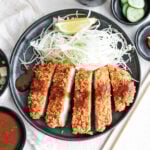
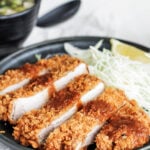
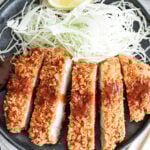
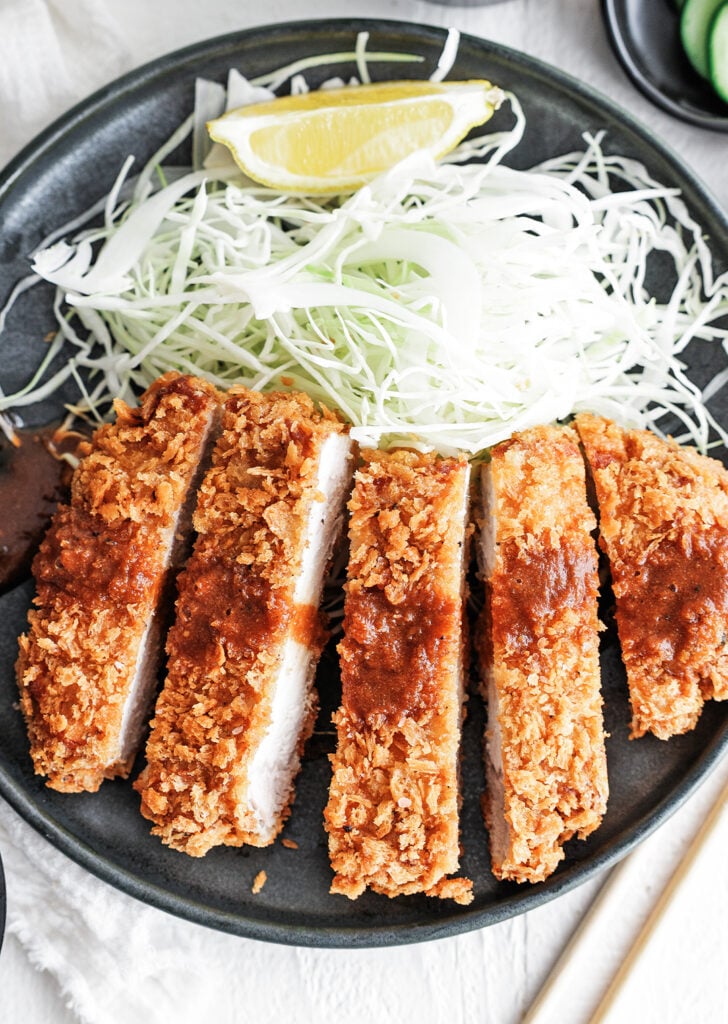
My Tonkatsu Recipe teaches you how to make deep-fried Japanese breaded pork cutlets drenched in mouthwatering tonkatsu sauce. The pork stays juicy and tender while the panko coating fries up golden and crisp.
We enjoy mixing things up when recreating our usual takeout menu at home. If you’re the same, then my Teriyaki Chicken and Beef and Broccoli recipes could turn into some of your new favorites.
Homemade Tonkatsu
Tonkatsu (also known as “pork katsu”) is a Japanese meal that first appeared at the Rengatei restaurant in Tokyo in 1899. It’s a great example of yoshoku-style cuisine (Western-inspired Japanese cuisine), as its inspiration traces back to Western dishes such as pork schnitzel and French côtelette.
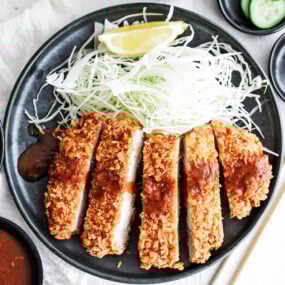
To make it, panko-crusted pork cutlets are deep-fried until they’re golden and crispy on the outside and juicy on the inside. The pork is traditionally sliced into strips, served with shredded cabbage, and topped with sweet and tangy tonkatsu sauce.
Pork katsu is one of my and my family’s favorite comfort foods. We love how the cutlets stay light and never feel greasy. Plus, the steps are straightforward, making it easy to bring the Japanese flavors we love to the table in no time.
Ingredients and Substitutions
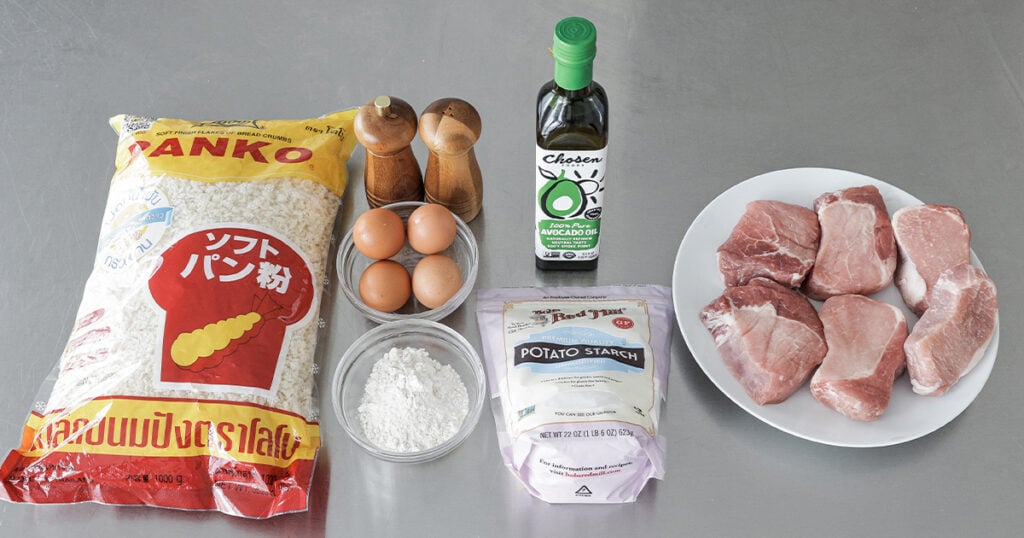
- Pork – I use boneless ¾-inch thick pork loin chops because they’re lean, tender, and cook quickly. Boneless pork sirloin or pork tenderloin medallions will also work, but you’ll need to adjust the cooking time slightly.
- Flour – I coated the pork chops in all-purpose flour.
- Starch – Potato starch is the secret to a light and crispy pork breading. It’s important to coat the pork in a 50-50 blend of flour and starch rather than using either alone.
- Eggs – I whisk three large eggs together to make an egg wash that binds the coating to the pork.
- Panko – These light and airy Japanese breadcrumbs are key to the crunch. Regular breadcrumbs are too fine for the thick, puffy crust we want.
- Oil – I typically use a neutral high-heat oil for deep-frying, such as canola, peanut, or vegetable oil.
- Cabbage – Topping the fried pork chops over a bed of thinly shredded green cabbage is my favorite way to enjoy tonkatsu.
- Sauce – To complete the meal, I top the pork with a drizzle of pre-made tonkatsu sauce.
How to Make Tonkatsu
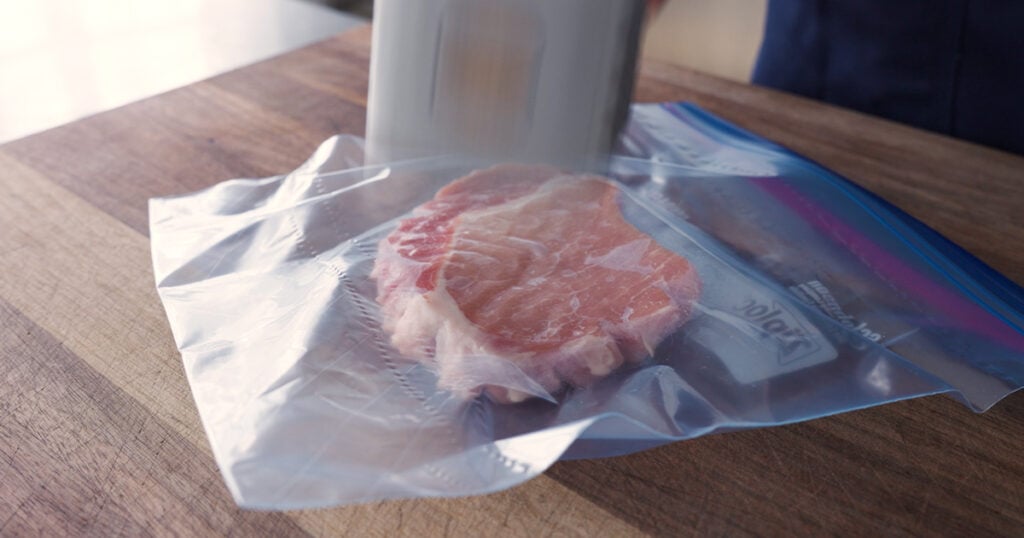
Tenderize: I start by making shallow slices across the pork. Then, I take a meat mallet or Jaccard tenderizer and gently pound each piece until it is about ¾ inch thick.
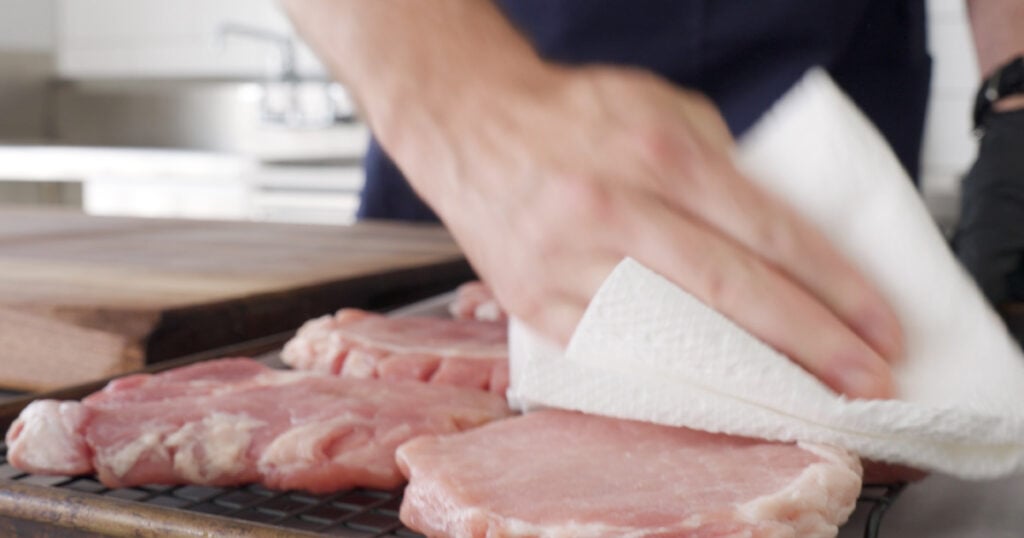
Dry the pork: I pat the pork dry on all sides with paper towels, then place the pieces on a wire rack set over a sheet tray. I refrigerate them uncovered while I assemble my breading stations.
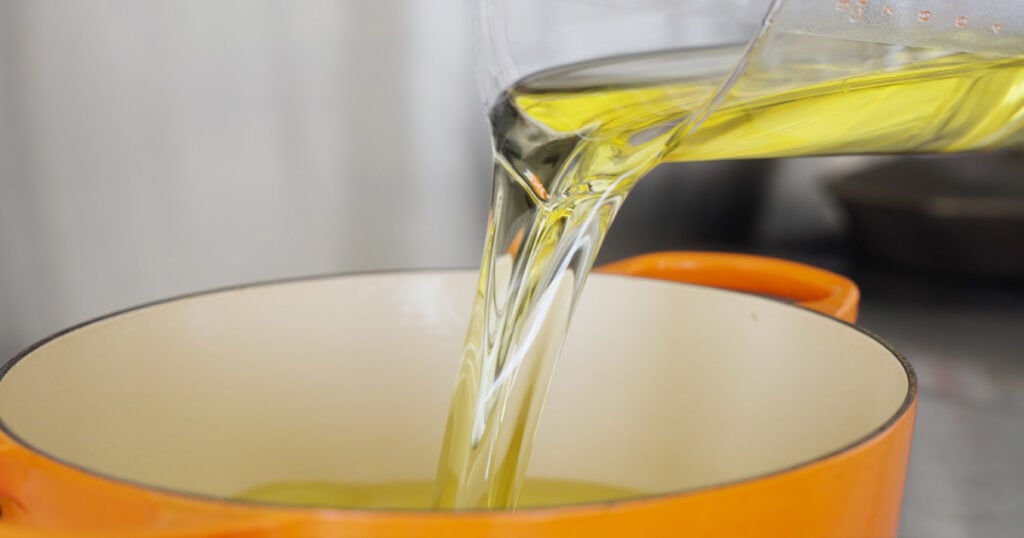
Heat the oil: I heat a 7- or 8-quart pot filled halfway with oil over medium-low heat until it reaches 350°F. A thermometer helps me maintain a steady oil temperature. If it’s too hot, the coating will brown before the pork cooks through. Too cool, and the pork absorbs oil, becoming greasy.
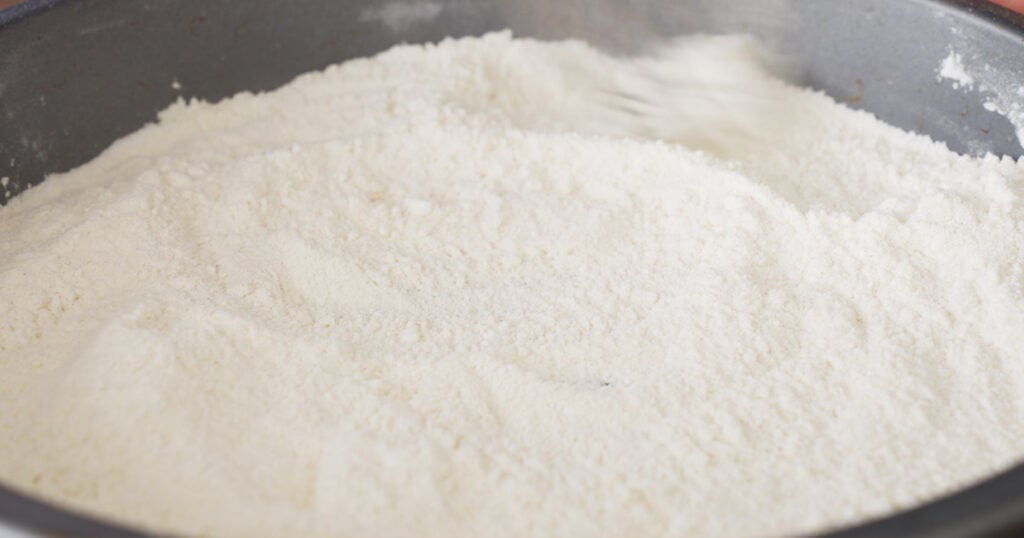
Breading stations: I place three shallow dishes or cake pans side by side. I mix the flour and potato starch in the first dish, whisk the eggs in the second, and pour the panko breadcrumbs into the third.
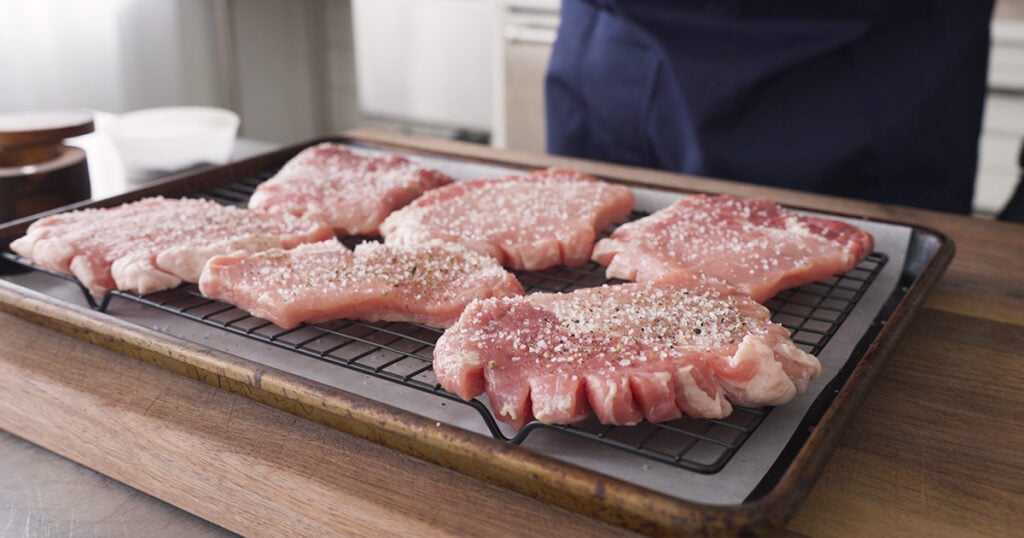
Season the pork: I pull the pork from the fridge and season it generously with salt and pepper.
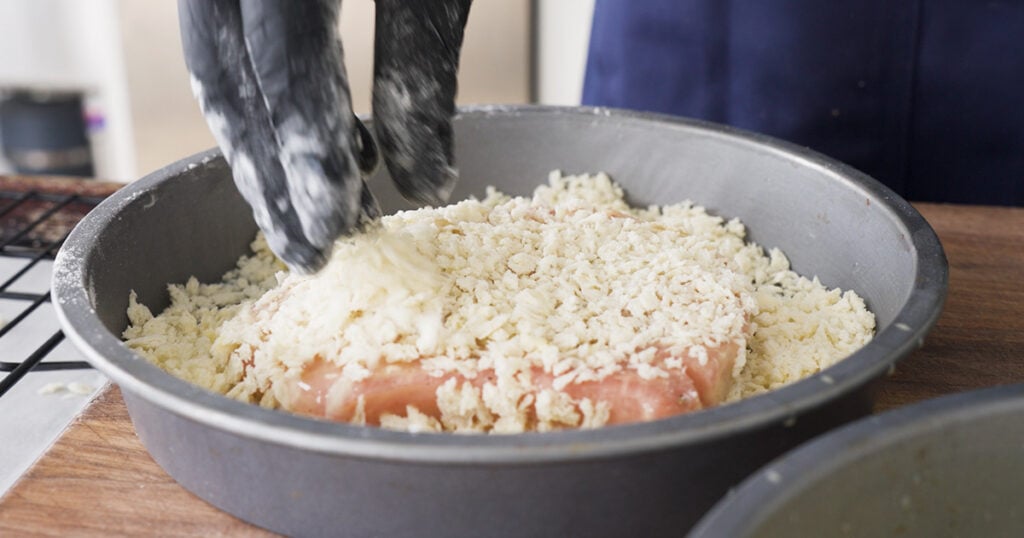
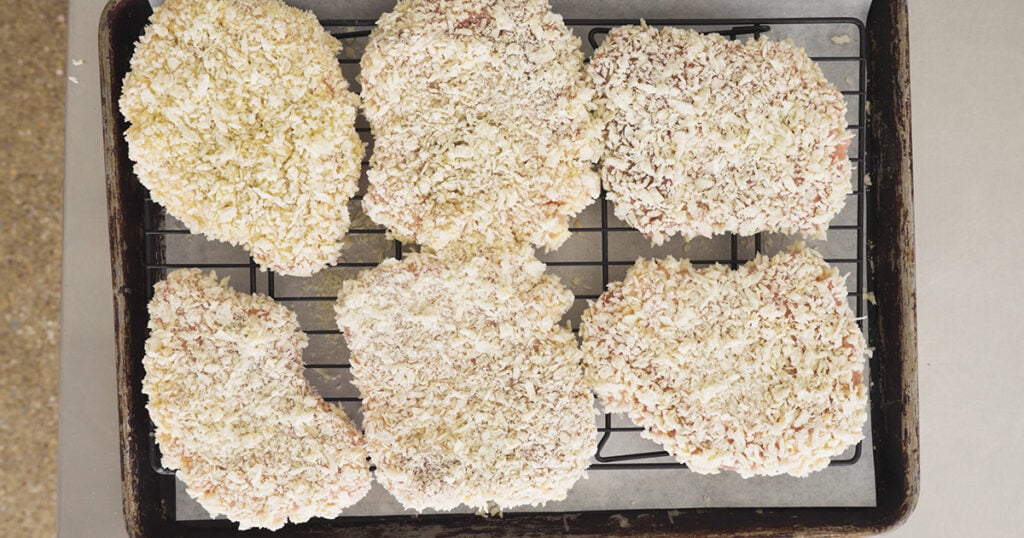
Dredge: I dredge one chop at a time, first in the flour mixture, second in the egg wash, and third in the panko. I’ll repeat these steps one more time when I want extra crispy cutlets.
Rest: Once coated, I return the chops to the wire rack and let them sit at room temperature for 10-15 minutes.
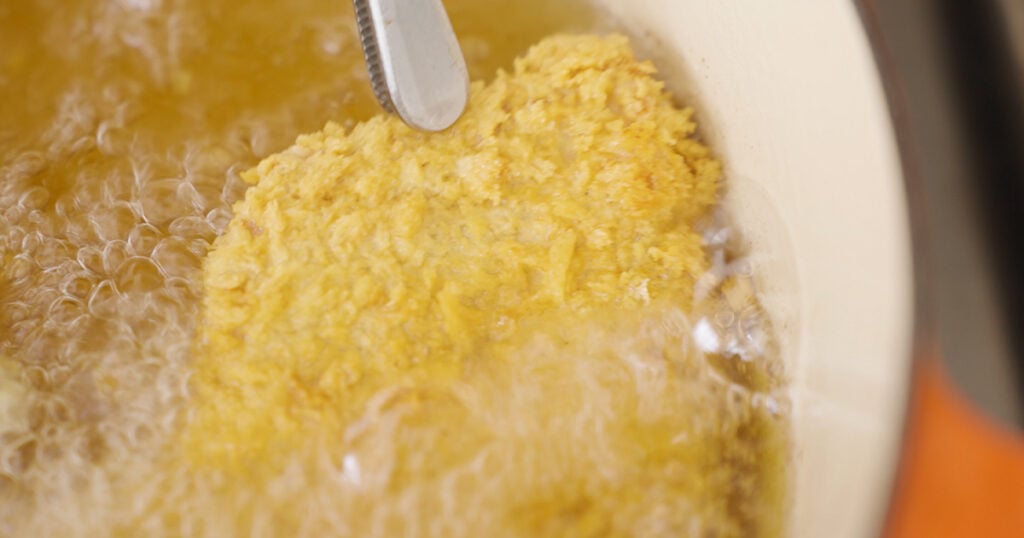
Fry and drain: I carefully lower 1 or 2 pork chops at a time into the hot oil and fry each one for 1.5 to 2 minutes per side. Once golden brown and cooked through, I transfer the pork to a clean wire rack set over a sheet tray to drain the excess oil.
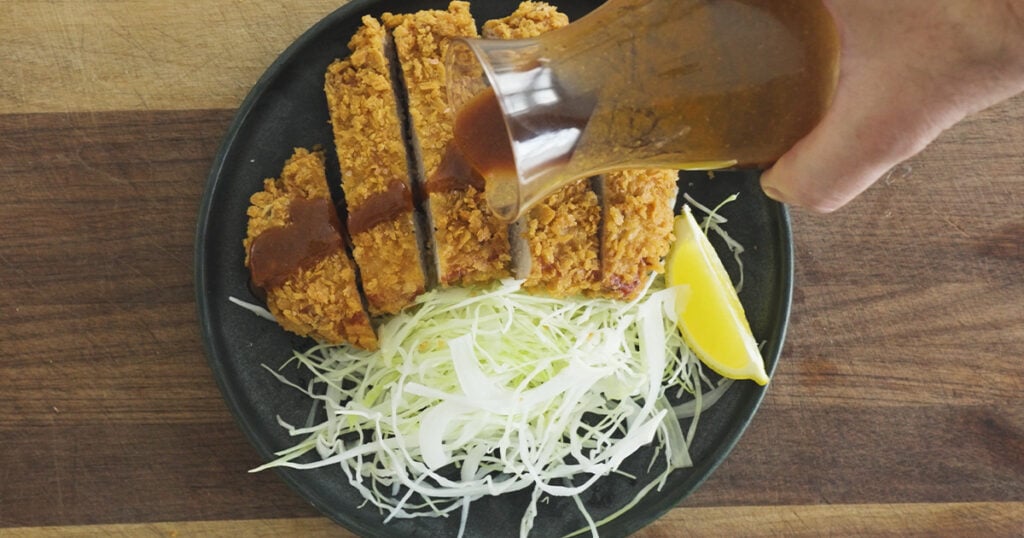
Slice, plate, and serve: Once all the pork is fried, I slice each piece into 1-inch strips. Then I fan them out over a bed of shredded cabbage. I drizzle each one generously with tonkatsu sauce and serve lemon wedges on the side.

Chef Tip + Notes
Pork katsu requires some patience. Instead of rushing, take your time pressing the flour, egg, and panko into the pork to coat the surface evenly. Then, set the pork aside to rest for 10-15 minutes. This crucial step allows the coating time to set, preventing it from sliding off the pork while it’s frying. A little patience gives you golden, perfectly crispy pork every time!
- Double-battered: For the ultimate crunch, repeat the flour-egg wash-panko process one more time. This creates a slightly thicker coating with an even louder crunch when you bite into it.
- Fry in batches: Overcrowding the pot drops the oil temperature and can lead to soggy tonkatsu. For the best results, fry one or two pieces at a time and let the oil return to 350°F before adding the next batch.
- Drain properly: Let the fried pork chops drain on a wire rack over a sheet pan instead of placing them on a paper towel-lined plate. Elevating the pork like this allows the excess grease to drain, locks in the juices, and helps maintain the crispy coating.
- Baked tonkatsu: If you’re not a fan of deep-frying, bake the breaded pork on a wire rack set over a baking sheet in a 400°F oven for about 20 minutes, or until it’s no longer pink on the inside.
- Chicken or tofu katsu: This recipe works just as well with chicken cutlets or pressed extra-firm tofu steaks. Adjust the frying time as needed.
Serving Suggestions
I usually slice tonkatsu into strips, fan it out over a bed of finely shredded cabbage, and top it with a drizzle of tonkatsu sauce. For a true homestyle Japanese meal, I’ll include lemon wedges, steamed white rice, and a bowl of miso soup on the side.
These crunchy pork cutlets also taste amazing with pickled veggies, gyoza, edamame, and stir fried veggies.
Make-Ahead and Storage
Make-Ahead: You can fry the pork katsu about 1 hour before serving. Place the chops on a wire rack set over a baking sheet. Keep warm in a 200°F oven. You can also bread the pork chops and refrigerate them (uncovered) for up to 4 hours before frying.
How to Store: Transfer the leftover pork katsu to a paper towel-lined airtight container. Refrigerate for up to 3 days.
How to Reheat: For best results, reheat tonkatsu in a 375°F oven or air fryer for 8 to 10 minutes, or until hot and crispy.
More Pork Recipes

Video
Tonkatsu Recipe
Ingredients
- 6 4-6 ounce boneless pork chops
- ½ cup all-purpose flour
- ½ cup potato starch
- 3 large eggs
- 4 cups Japanese panko
- neutral-flavored oil for frying
- 6 cups thinly sliced cabbage
- Tonkatsu sauce
- coarse salt and freshly cracked pepper to taste
Instructions
- Using a sharp knife, make shallow slices about ½ inch deep across the pork, spaced roughly every ½ inch. Gently tenderize the pork with a meat mallet or a Jaccard until it is about ½to ¾ inch thick.
- Next, pat the pork dry on all sides with a paper towel. At this stage, transfer onto a rack over a sheet tray and place them uncovered in the fridge. Then, prep the cooking oil and breading station.
- Pour enough oil to fill a 7 or 8-quart pot to the halfway mark and heat to and hold at 350° over medium to low heat.
- In a cake tin or wide shallow bowl, mix together the flour and potato starch.
- In a separate cake tin or a wide, shallow bowl, whisk together the eggs until they are beaten.
- In the final cake tin or wide shallow bowl, add in the panko.
- Take the pork back out and season both sides with salt and pepper. Press the seasoning into the pork.
- Grab a pork loin chop and dredge it in the flour. Be sure to rub the flour into the pork, covering it on all sides.
- Dust off any excess and then proceed directly to the egg wash, using the same technique. Coat and cover it completely. Lastly, coat in the panko crumbs. Give the pan a shake and transfer the crumbs to the outside and to the top. Gently press it down to get the pork coated. Flip it over and repeat. If necessary, you can repeat this a few more times.
- Place on a rack over a sheet tray and let it stand at room temperature for 10 to 15 minutes. This will help the panko adhere to the pork.
- Next, gently place 1 or 2 pork chops at a time into the frying oil at 350°. Cook for approximately 2 minutes, or slightly less, per side. I usually like to gently move things around right away to ensure nothing is sticking.
- Transfer to a rack over a sheet tray and let the oil drain while the other Tonkatsu cooks. Refer to the notes on how to set it up correctly for the best results.
- Once all the pork chops are finished, slice them into 1-inch-thick pieces and serve fanned out slightly over 1 cup of shredded cabbage. Pour the tonkatsu sauce over the pork cutlets and serve with an optional side of lemon wedges.
Followed your directions and it turned out wonderfully! Thank you!
My pleasure!
I find that I turn to Billy’s recipes first because they always turn out perfect. His instructions and tips are clear. I don’t deep fry foods too often, but this one did not disappoint. It was so crispy, his method for draining worked really well. The Tonkatsu sauce was really good with it. I served the cabbage w/lemon and a sesame vinegarette that complimented the pork nicely. Unfortunately, I didn’t have time to make the miso soup, but I will try it someday soon!
Many thanks!
Turned out well. Family loved it and it will be made again.
Thank you for giving it a shot!