

This Filipino-style Beef Mechado recipe is a holiday favorite, made by simmering chuck roast, short ribs, and pork belly in a deeply flavorful braising liquid. It’s a guaranteed crowd-pleaser that serves 8 and tastes even better the next day.
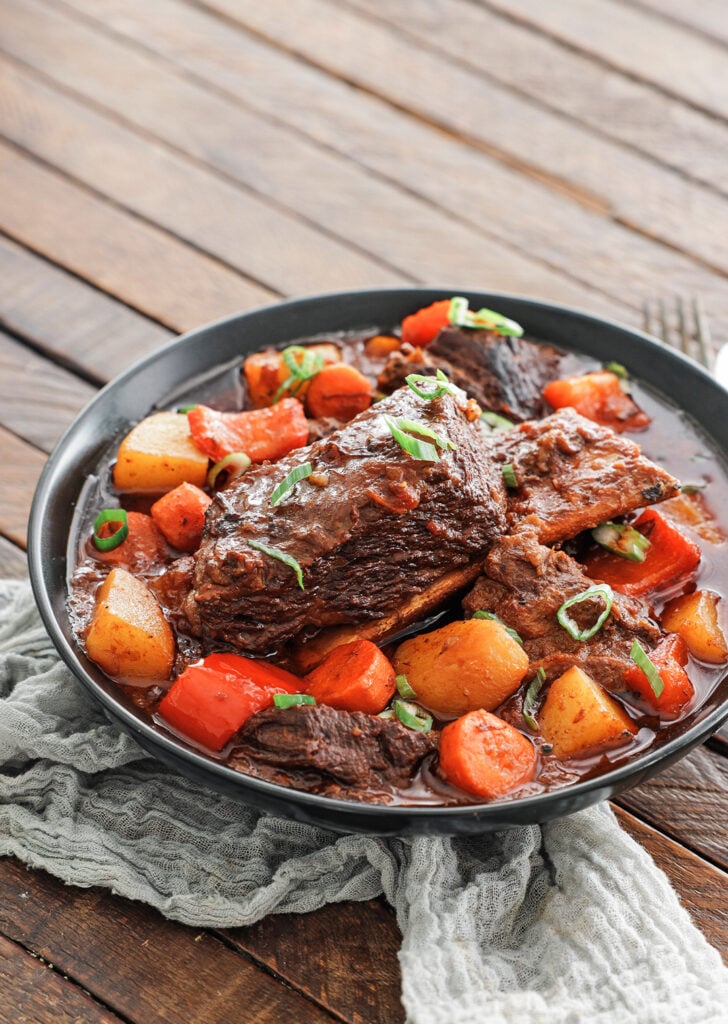
Beef mechado reminds me a lot of my Beef Kaldereta in that it’s slow-braised, intensely flavorful, and perfect for sharing. The best way I can describe it is the Filipino version of my Classic Pot Roast, but with an unmistakable umami depth. My daughter and my wife were both over the moon about how flavorful and tender it turned out, and honestly, I can’t say I disagree.
Filipino Beef Mechado
If you’ve ever been to a Filipino celebration, you’ve probably had mechado. It’s a staple at holidays, Noche Buena, birthdays, family reunions, Sunday lunches—basically any time where people come together and pass around a shared meal.
As I become more familiar with Filipino cooking, I learn that no two recipes are ever quite the same. The same goes for Filipino pot roast. A more traditional recipe would thread a strip of pork fat through the beef like the wick of a candle. Mine, on the other hand, uses more modern techniques and ingredients I already had in my pantry.
I like to start my version of this popular dish by marinating a chuck roast and short ribs, then slowly caramelizing onions in rendered pork belly fat, searing the beef, simmering the sauce, and adding vegetables at the perfect moment to keep them tender. It’s a little extra effort, but building those flavors in stages is what makes Filipino beef mechado so special.
Ingredients and Substitutions
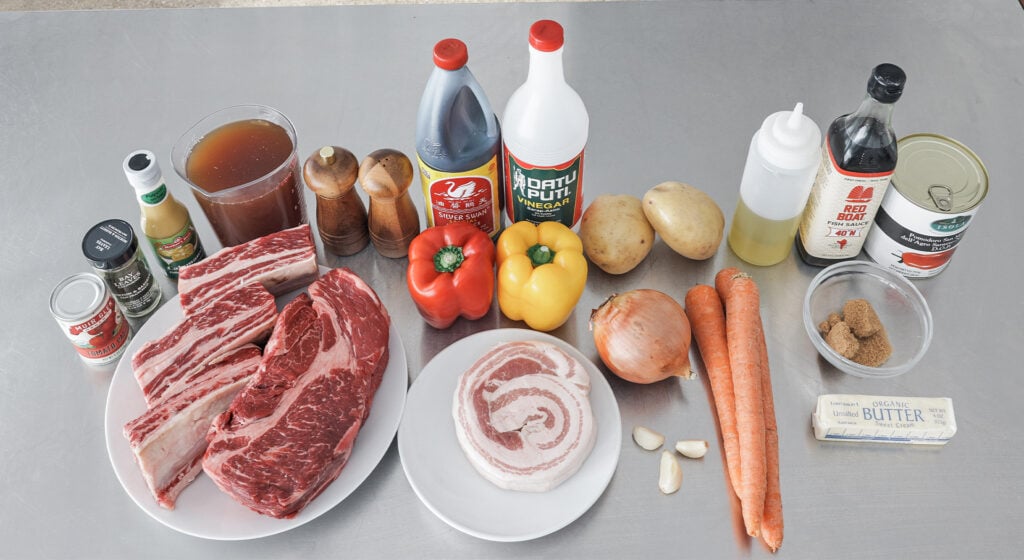
- Beef – Chuck roast is my favorite for beef stew. I also added bone-in short ribs because the flavor payoff is just ridiculous. I cut both into roughly 2-inch pieces and leave all the fat on—a tip my Filipino buddy, Sam, swears by that will give you that ultra-rich, silky texture. If you don’t have these exact cuts, brisket or beef shank works as well.
- Pork – I cook down pork belly at the start to get a golden, chicharrón-like crispiness. More importantly, this step renders the pork fat, which becomes the base oil for browning the vegetables. It’s a traditional ingredient, but if you’d rather skip it, use ¼ cup of neutral cooking oil instead.
- Calamansi Juice – Calamansi is a tiny citrus fruit that tastes like a cross between a mandarin, a lemon, and a kumquat. I buy mine from Amazon, but fresh-squeezed is even better. Feel free to use lemon juice as a substitute.
- Soy Sauce – After watching a ton of Filipino cooking videos, I’m convinced Silver Swan or Datu Puti soy sauce is the way to go. Both are easy to find at Asian and Filipino grocery stores.
- Vegetables – I went with classic stew vegetables, like carrots, Yukon Gold potatoes, and bell peppers.
- Butter – I always use unsalted butter in my cooking.
- Aromatics – I caramelized sliced yellow onions and added fresh garlic for more flavor.
- Sugar – I used brown sugar to slightly sweeten the caramelized onions.
- Oil – I reach for any neutral oil I have on hand to brown the beef.
- Tomatoes – Tomato paste and canned San Marzano tomatoes thicken and add acidity to the sauce.
- Fish Sauce – Trust me, fish sauce doesn’t make the stew “fishy”; it just adds umami, saltiness, and depth.
- Stock – My homemade beef stock is my go-to.
- Vinegar – I used white distilled vinegar.
- Lemon Juice – Added at the end for balance.
- Herbs and Seasonings – All you need are a couple of bay leaves, salt, and pepper.
How to Make Beef Mechado
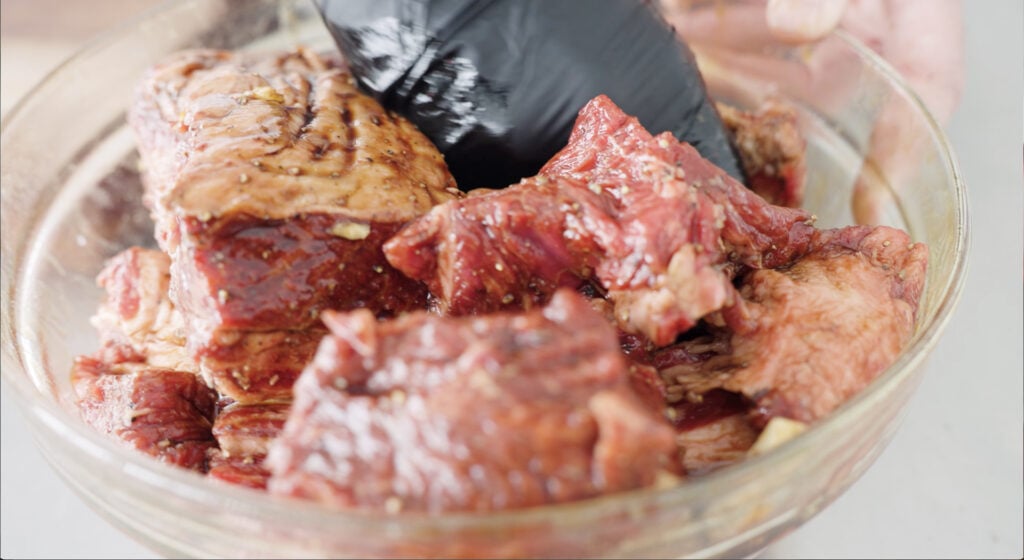
Marinate the beef: I start by mixing the chuck roast, short ribs, garlic, calamansi juice, soy sauce, and pepper in a large bowl until the meat is well coated. I cover the bowl and refrigerate it for 4 to 24 hours. The longer the beef sits in the marinade, the better.
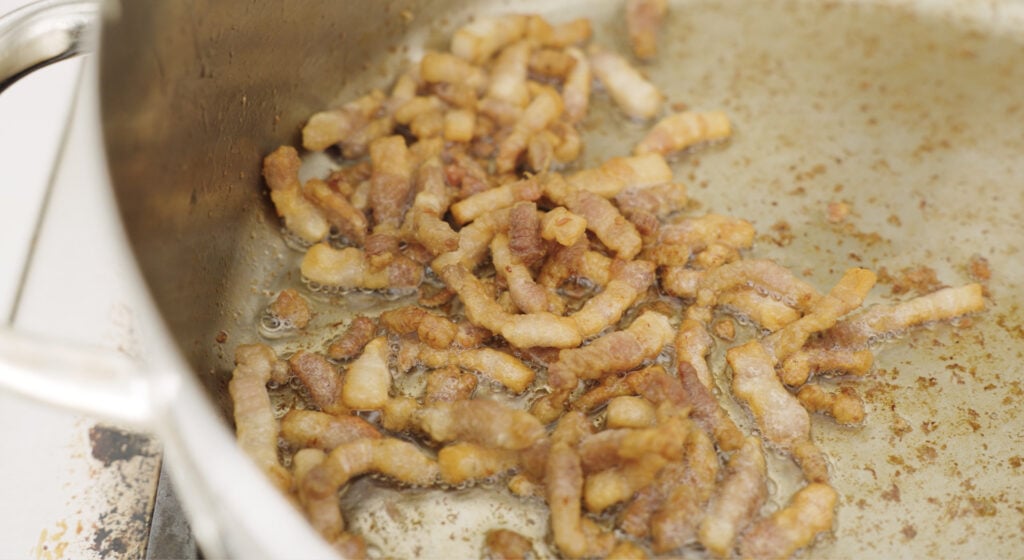
Render the pork: Next, I heat a pot over low–medium heat. I add the pork belly and cook it until it turns golden and crispy, then lift it out with a slotted spoon and set it aside. All that rendered pork fat in the pot? That’s flavor, and I’m keeping it.
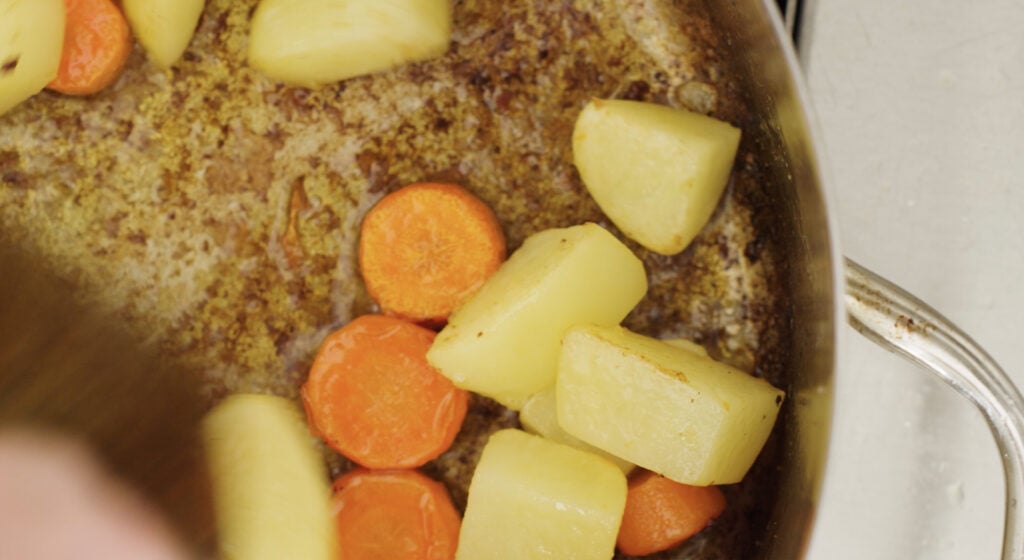
Pan-roast the vegetables: I crank the heat to high, and as soon as the fat starts to smoke lightly, I add the carrots and potatoes to the now-empty pot. I sauté the veggies until they begin to brown. From here, I add the peppers and sauté for another few minutes. I season the veggies with a pinch of salt before transferring them to a plate. I keep them in the fridge for now.
Caramelize the onions: In the same pot, I melt the butter over medium heat, then add the onions. I season them with salt and sauté them until they soften and develop some color. From there, I stir in the brown sugar and keep cooking until the onions are caramelized.
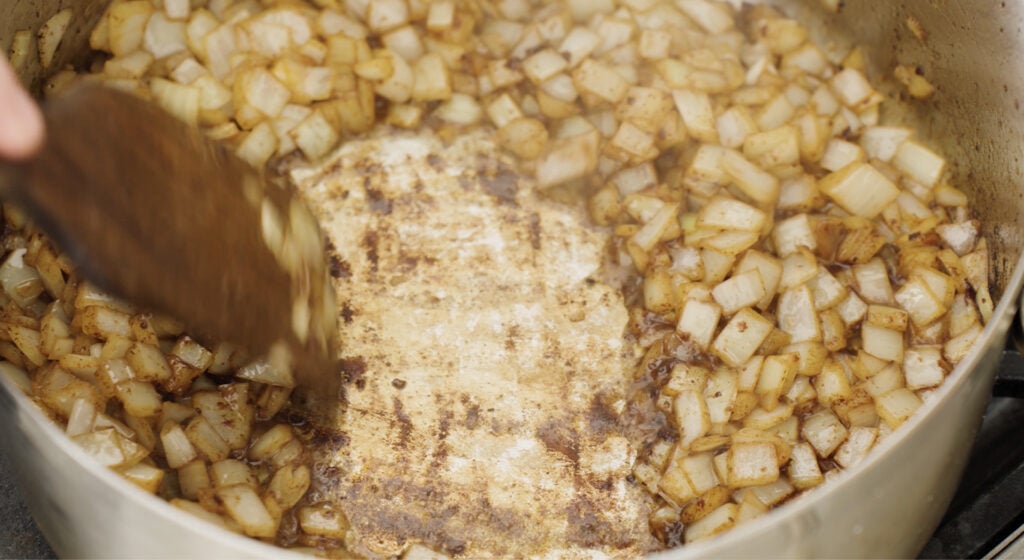
Add the garlic: I stir in the garlic and cook it just until fragrant, then scoop out the onion-garlic mixture and set it aside.
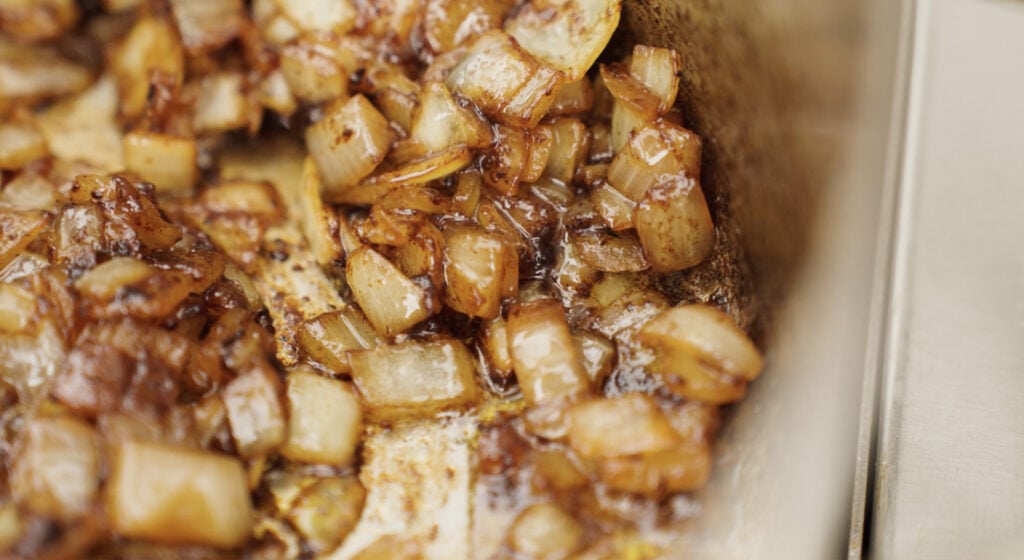
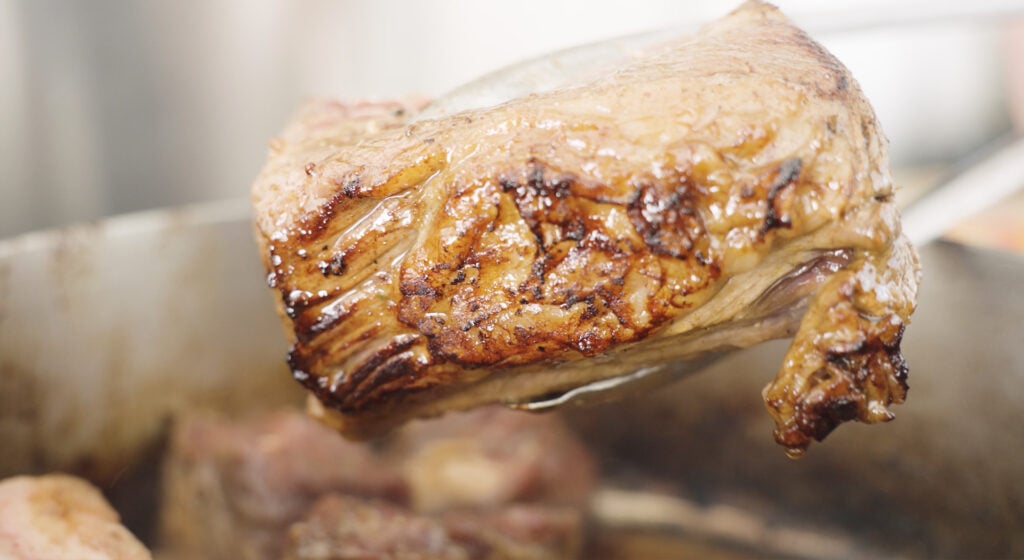
Sear the beef: Next, I heat the oil in the same pot over high heat. Once it begins to smoke lightly, I add the marinated beef and sear it until it’s browned all over. Once all the beef is browned, I set it aside with the onions.
Build the braising liquid: With the pot over medium heat, I add the tomato paste and cook it until it turns a rusty red. Then, I add the tomatoes, the leftover marinade, fish sauce, beef stock, vinegar, bay leaves, salt, and pepper. The liquid should thicken almost immediately.
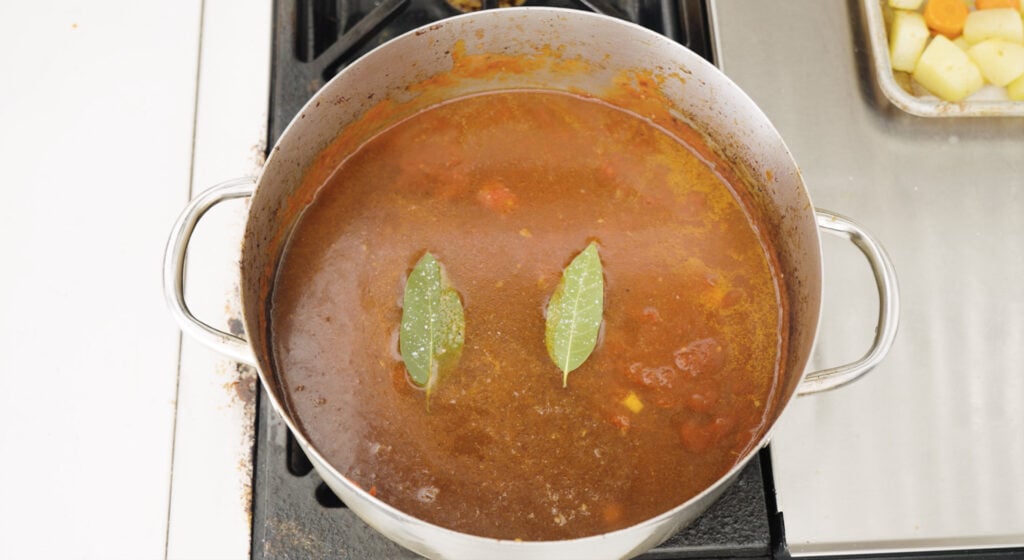
Braise the beef: I return the seared beef, crispy pork belly, and the caramelized onion-garlic mixture to the pot. I cover it and cook the stew over low to low-medium heat until the beef is fork-tender.
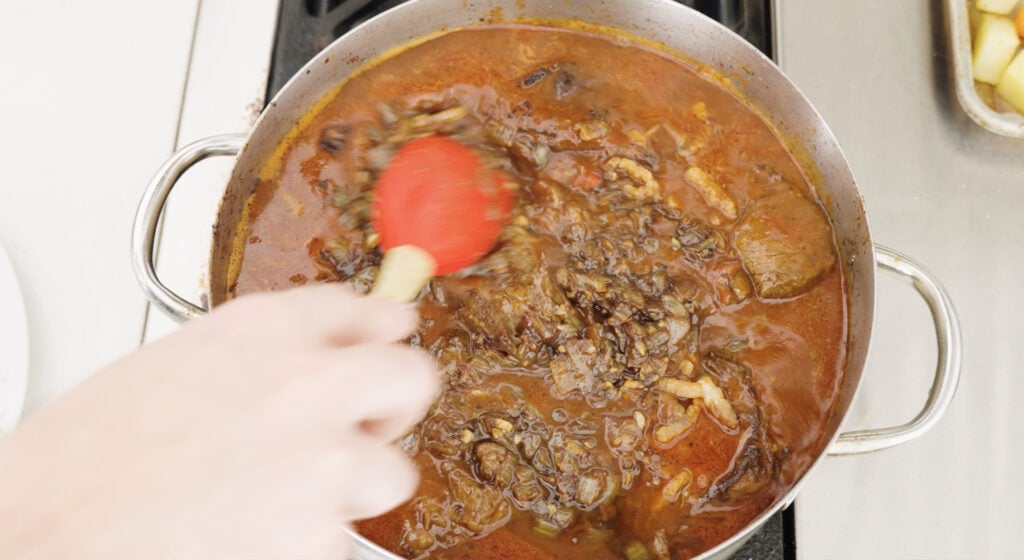
Add the vegetables: Once the beef is tender, I stir in the sautéed carrots, potatoes, and peppers and continue simmering.
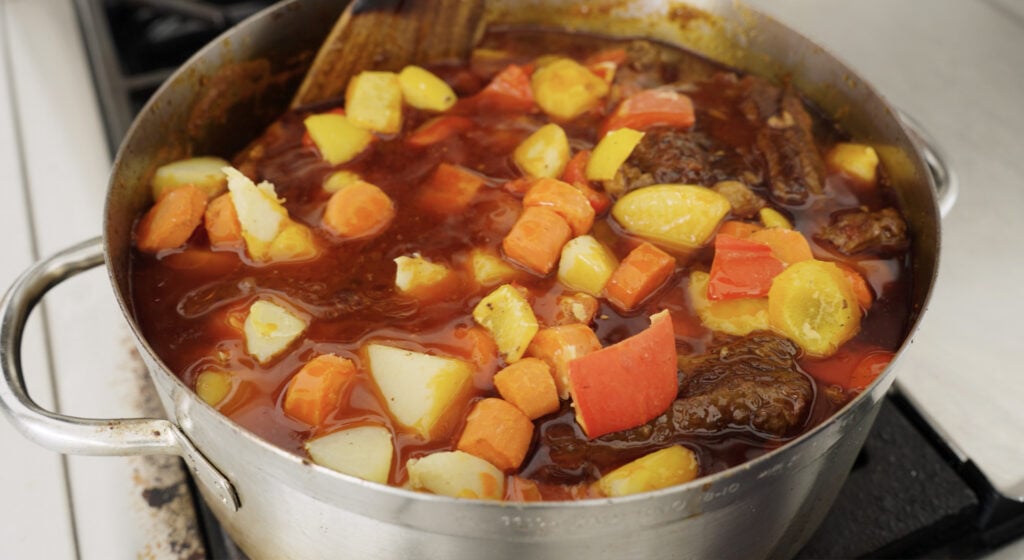
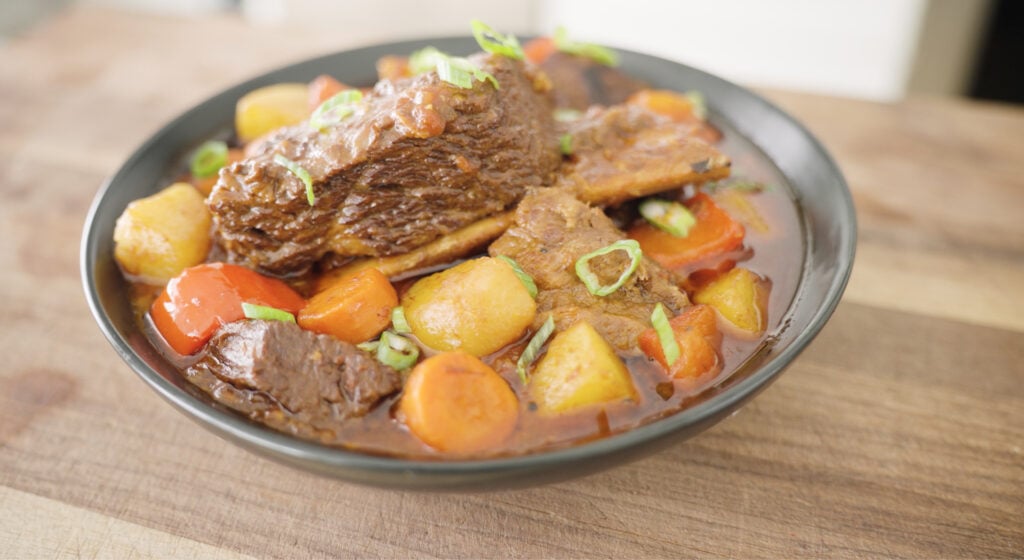
Season and serve: I finish the mechado with a splash of lemon juice and adjust the seasoning to taste right before serving.

Chef Tip + Notes
When making beef mechado, the most important thing I can tell you is not to rush the flavor-building steps. This includes the long marinade, the slow caramelized onions, and the deep sear on the beef. I give each of these steps the time it needs; the payoff is a mechado that tastes like it simmered all day in your lola’s kitchen.
- Marinade time: I always marinate the beef for at least 4 hours, but if you can swing the full 24 hours, do it. A shorter marinade does make a difference, but a longer one tenderizes and seasons the beef all the way through.
- The right pot: A heavy-bottomed Dutch oven or stew pot gives you even heat and consistent simmering.
- Sear in batches: Most of the time, I’ll sear the beef in two batches to ensure each piece sears evenly.
- Taste as you go: Between the soy sauce, fish sauce, and beef stock, the stew’s salt level can shift as it reduces. I make sure to taste it toward the end and adjust the flavors with salt, pepper, or vinegar as needed.
Serving Suggestions
In my house, we love serving mechado family-style with plenty of steamed white rice or crusty bread on the side to soak up the sauce. Did you know that mechado is a popular breakfast food, too? I don’t know about serving it with my pancakes, but I’ll happily treat myself to a bowlful first thing in the morning.
Filipino food has quickly become a favorite of mine, and I’ll always find an excuse to go all-out with inspired feasts at home. I’ll get the party started with a plate of lumpia, then serve mechado alongside pork adobo and classic pancit.
Make-Ahead and Storage
Make-Ahead: Like most stewed beef dishes, mechado actually gets better as it sits. You can make it 1 or 2 days in advance, and it will only get better with time. You can also marinate the beef, chop the veggies, and submerge the potatoes in water a day ahead.
How to Store: Store leftovers for 4 days in the fridge or 3 months in the freezer. Thaw overnight in the fridge before reheating.
How to Reheat: Reheat leftovers in a pot on the stove over low to medium heat, or warm smaller portions in the microwave. The sauce tends to thicken in the fridge, but a splash of water or beef stock will fix it.
More Stew Recipes

Video
Beef Mechado Recipe
Ingredients
- 2 ½ pounds chuck roast, cut into 2” cubes
- 3 pounds bone-in short ribs
- 8 smashed garlic cloves
- ¼ cup calamansi juice, or lemon juice
- 2/3 cup soy sauce
- 1 teaspoon of ground pepper
- 4 ounces pork belly, cut into thin slices
- 3 carrots, peeled and thickly sliced
- 3 Yukon gold potatoes, peeled and sliced into thick quarter slices
- 1 red bell pepper, seeded and cut into 1” squares
- 1 yellow bell pepper, seeded and cut into 1” squares
- 4 tablespoons unsalted butter
- 1 yellow onion, peeled and small-diced
- 2 tablespoons packed light brown sugar
- 4 garlic cloves, finely minced
- 3 to 4 tablespoons cooking oil
- 3 tablespoons tomato paste
- 56 ounces canned San Marzano tomatoes, hand-crushed
- 2 teaspoons fish sauce, optional
- 4 cups beef stock
- 1 tablespoon white distilled vinegar
- 2 bay leaves
- Juice of ½ lemon, about 1 ½ tablespoons
- salt and pepper to taste
Instructions
- In a large bowl, add the chuck roast, short ribs, garlic, calamansi juice, soy sauce, and ground pepper, and thoroughly mix until coated. Cover and refrigerate for 4 to 24 hours.
- In a large 10 to 12-quart pot over low to medium heat, add the pork belly and cook until golden brown and crispy, about 6 to 8 minutes. Using a slotted spoon, remove the pork and set it aside. There should be plenty of rendered fat in the pot.
- Turn the heat up to high, and once it begins to smoke lightly, add the carrots and potatoes and sauté for 6 to 7 minutes, or until they start to brown. At this stage, add in the pepper and saute for a further 2 to 3 minutes. Season with salt and stir to combine, then set the vegetables aside and refrigerate.
- In the same pot, add the butter over medium heat. Once melted, add in the onions, give them a gentle season of salt, and saute for 5 minutes or until lightly browned. Then add in the brown sugar and stir to combine. Cook for a further 10 to 15 minutes or until well caramelized.
- Stir in the garlic and cook just until fragrant, which takes 30 to 45 seconds. Set the onions and garlic aside on a separate plate or platter.
- Add the oil to the pot and turn the heat to high. Once it begins to smoke lightly, add in the chuck roast and short ribs and sear for 2 to 3 minutes per side or until well browned on all sides. You may need to do this in batches. Set it aside with the onions.
- In the empty pot over medium heat, add the tomato paste, stir, and cook it for 3 to 4 minutes or until it turns a rust-like color. Then add in the tomatoes, along with any marinade liquid, to the pot. It should almost immediately thicken.
- Next, add in the fish sauce, beef stock, vinegar, bay leaves, salt, and pepper. Taste it, it should be delicious. Stir to combine, then add back the seared beef, crispy pork belly, and caramelized onions and garlic.
- Cover and cook over low to low-medium heat for 2 ½ to 3 hours or until fork-tender.
- Next, stir in the sauteed carrots, potatoes, and peppers and cook for an additional 20 minutes or until tender.
- Finish with lemon juice and adjust any seasonings.
- Serve with steamed rice.
It’s delicious and family favorite 😍
Many thanks!
This was fire! Thanks for the recipe!
Awesome!
I was given a bottom round roast to cook. I need help with a recipe since this is not the most tender beef.
Thank you