
Crème Anglaise Recipe
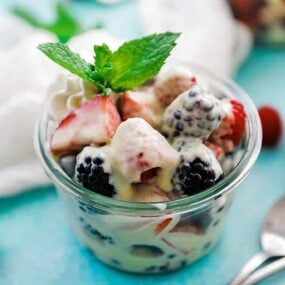
This crème anglaise is a French vanilla bean custard I whisk over low heat with heavy cream, egg yolks, and sugar until it coats the back of a spoon. I chill it hard and pour it over fresh berries with whipped cream and mint. This is the perfect dessert to enjoy this season!
Ingredients
- 2 vanilla bean pods
- 4 cups heavy whipping cream
- 12 egg yolks
- 1 cup sugar
- 1 lb fresh strawberries quartered
- 1 pint blueberries
- 6 oz raspberries
- 6 oz blackberries
- whipped cream, recipe
- fresh mint
Instructions
- Split the vanilla bean pods lengthwise down the middle. In a heavy saucepan, add 4 cups of heavy cream and the vanilla bean pods. Heat the cream over low heat until bubbles begin to form on the edges. Remove it from the heat.
- Remove the vanilla beans from the cream. Using the back of a paring knife, scrape the inside of the vanilla beans to remove the insides. Add the vanilla beans back to the heavy cream. Discard the pods.
- Separate the egg whites from the egg yolks and place the yolks in a large bowl. Reserve the egg whites for another recipe.
- Whisk the sugar with the egg yolks until combined.
- While whisking constantly, pour ¼ to 1/2 cup of the hot, heavy cream into the egg yolks to bring the yolks up in temperature. Add the remaining heavy cream and whisk quickly to combine.
- Place the heavy cream and egg mixture on a burner over low heat. Low heat is essential here. Whisk constantly until the sauce is thickened and coats the back of a spoon, about 8–12 minutes, see the notes below. Remove from the heat and transfer through a fine-mesh sieve or chinois. Refrigerate for 90 minutes or until cool.
- Serve by pouring some of the crème anglaise over top of fresh berries and serving with optional heavy whipping cream and mint.
Notes
For making this anglaise recipe, I recommend buying the best vanilla beans the budget allows, because the entire character of the sauce is the vanilla. Madagascar beans are warm and rounded and the easiest to find. Tahitian beans are more floral and a little fruity. Mexican beans go smoky and woody. Any of the three is honest vanilla; the supermarket bottle of imitation vanilla extract is not, and it will taste thin no matter how perfectly the custard is cooked.
Scald, do not boil: Watch for small bubbles along the edges and bottom of the pot, no rolling boil. A boil scorches the cream and starts to cook the vanilla out.
Temper slowly at the start: The first cup of hot cream into the yolks is where most cooks scramble the eggs. Pour it in a thin stream with the whisk already moving, and only stream the rest of the cream in after the yolks are warm.
Read the nappe test: Dip a wooden spoon into the sauce, flip it over, and drag a finger across the coated back. When the line holds crisp without the sauce dripping back over the edge, the sauce is done. If the line closes right back up, keep whisking. You’re looking for an Alfredo sauce-like texture when whisking the crème anglaise over the burner.
Use a thermometer when in doubt: Between 182°F and 185°F is the finished window. Above 185°F and the yolks start to curdle. An instant-read thermometer takes the guesswork out.
Cool the sauce fast: Strain into a fresh bowl and set it in the refrigerator uncovered so the sauce drops out of the danger zone quickly. A shallow bowl chills faster than a deep one.
Worry about cooking safety? The same temperature window that thickens the sauce also pasteurizes the egg yolks, which is why anglaise has always been safe to serve cold on a buffet line. The cooking is the food safety. As long as the sauce hits that window before it comes off the heat, the yolks are safe even though they were never boiled.
Make-Ahead: I make the crème anglaise up to 4 days ahead, strain it into a lidded container, press plastic wrap directly against the surface, and hold it in the coldest part of the fridge until I need it.
How to Store: When storing it be sure to hold in a plastic container wrapped with plastic in the refrigerator and keep it for up to 5 days. It will freeze, making a very rich, delicious ice cream. With that being said, it does not thaw well because it will begin to separate.
How to Reheat: I warm the sauce back up in a small saucepan over low heat, whisking constantly, until it is just hot to the touch and pours smooth off the spoon. Skip the microwave, because a hot spot will curdle the yolks in a second.
Nutrition
Calories: 669kcalCarbohydrates: 47gProtein: 8gFat: 52gSaturated Fat: 30gCholesterol: 456mgSodium: 60mgPotassium: 318mgFiber: 5gSugar: 36gVitamin A: 2230IUVitamin C: 49.8mgCalcium: 136mgIron: 1.5mg