
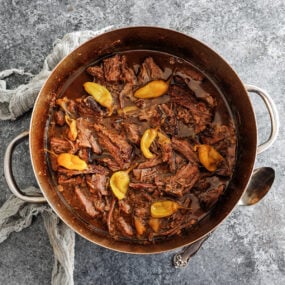
Mississippi Pot Roast
My Mississippi Pot Roast is made with real ingredients—no packets—featuring fall-apart beef and a rich, pepperoncini gravy everyone loves.
Ingredients
- 3 to 3 1/2 pound chuck roast
- 3 tablespoons of cooking oil or tallow
- 1 peeled finely minced yellow onion
- 4 finely grated or minced cloves of garlic
- ½ teaspoons anchovy paste
- 1 ½ cups beef stock
- 1 teaspoons Worcestershire sauce
- ½ teaspoon blackstrap molasses
- ½ cup unsalted butter
- 1 parmigiano cheese rind
- 6 to 7 pepperoncini’s with ¼ cup of brine
- 1 teaspoon of white or champagne vinegar
- 1 teaspoon of soy sauce
- ½ teaspoon dry dill
- 1 to 1 ½ teaspoons freshly squeezed lemon juice
- salt and pepper to taste
Instructions
- Optional: Pat the chuck roast down on all sides with a paper towel. Transfer it to a rack over a sheet tray and generously season it on all sides with coarse salt and freshly cracked pepper. You will use approximately 1 to 1 ½ tablespoons of salt. Place it uncovered in the fridge for 4 hours and up to 24 hours to dry-brine. If you don’t do this step, simply season with salt and pepper before searing.
- When you’re ready to cook, preheat the oven to 325° F, and add the oil or tallow to a large rondeau over medium-high heat until it begins to smoke lightly. Place the dry-brined beef chuck roast in the pan and sear for 3 to 4 minutes on all sides, or until well browned. Set the roast to the side.
- Add the onions to the pot, gently season with salt to help draw out moisture, and sauté over medium heat for 5 minutes. Then turn the heat down to low and cook, stirring occasionally, for 10 minutes or until well browned.
- Then mix in the garlic and cook just until fragrant, about 30 to 45 seconds.
- Stir in the anchovy paste and cook over low heat for 3 to 4 minutes.
- Deglaze with beef stock, then add in the Worcestershire sauce, molasses, butter, pepperoncinis, and pepperoncini brine.
- Season with salt and pepper, return the seared roast to the pan, cover, and place on the lower-middle oven rack. Roast at 325°F for 3–3½ hours, or until fork-tender.
- When it’s done, remove it from the oven. Using two forks, break up the roast into large chunks, or smaller if you’d like.
- Add the vinegar, soy sauce, dill, and lemon juice, and mix until combined.
- Rest for 10 minutes and then serve.
Notes
I highly recommend taking your time when searing the beef (or, as we professional chefs like to call it, building the "fond"), as this is where all the umami magic really begins. If you pull the meat out while it’s still grey or light tan, you’re leaving behind some complex, savory flavors. Take the extra five minutes to develop a true, dark-brown-colored crust.
To dry brineor not? Dry brining is hands down the best way to prepare beef. As salt slowly penetrates the meat, moisture collects on the surface and then reabsorbs, leaving the exterior dry. And dry meat yields a beautiful brown Maillard crust every time after searing.
Braise fat cap-side up: I recommend placing the roast fat-side up in the pot. As the fat renders, it bakes down into the meat, acting as a natural basting liquid that keeps the roast juicy.
Greasy sauce: The fat from the chuck roast made my braising sauce a bit oily, so I just let it sit for a few minutes after taking it out of the oven. This gives the fat time to rise to the top, making it easy to skim off before finishing the roast.
Beef not shredding? This means it hasn't cooked long enough. If the timer goes off and the beef is still resisting the fork, replace the lid and continue cooking for another 30 minutes.
Crockpot method: For slow-cooker Mississippi pot roast, sear the meat and soften the aromatics in a pan, then transfer everything to the slow cooker. Cook on Low for 8 to 10 hours.
Make-Ahead: You can make this Mississippi Pot Roast up to 1 hour ahead, keeping it covered and warm over very low heat. Or, make it 1–2 days ahead to let the flavors mingle and deepen.
How to Store: Keep the cooled roast and gravy in airtight containers in the fridge for up to 4 days, or freeze for up to 3 months. Defrost overnight in the fridge before reheating.
How to Reheat: The easiest way to reheat pot roast is in a covered pot on the stove over medium-low heat. Heat it to a gentle simmer for about 20 minutes or until the leftovers are warmed through.
Nutrition
Calories: 700kcalCarbohydrates: 4gProtein: 53gFat: 53gSaturated Fat: 24gPolyunsaturated Fat: 5gMonounsaturated Fat: 24gTrans Fat: 2gCholesterol: 224mgSodium: 428mgPotassium: 1077mgFiber: 1gSugar: 2gVitamin A: 545IUVitamin C: 11mgCalcium: 69mgIron: 6mg