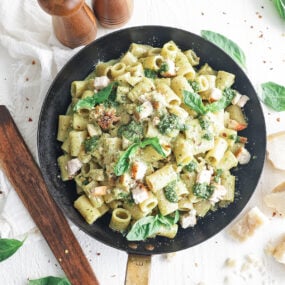
Chicken Pesto Pasta Recipe
Servings: 4
This creamy Chicken Pesto Pasta combines chicken and pasta in a rich Parmesan pesto sauce finished with fresh basil and Parmigiano Reggiano.
Ingredients
- 1 pound boneless skinless chicken breasts
- 2 tablespoons olive oil
- ½ peeled small-diced shallot
- 2 finely minced garlic cloves
- ½ cup heavy cream
- ¾ cup grated Parmigiano Reggiano
- 1 cup starchy pasta water + more
- ½ cup pesto
- 1 pound rigatoni
- salt and pepper to taste
Instructions
- Season the chicken breasts on both sides with salt and pepper.
- Next, add the olive oil to a large saucier pan (5-quart) over medium heat and heat for 2 minutes. Place the seasoned chicken in the pan and cook for 5 to 7 minutes per side, or until it reaches 165° internally. Feel free to lower the heat and cook for longer if you are worried that things are burning. Large dice the chicken and set it aside, covered, to keep warm.
- After I flip the chicken, I add the pasta to a large pot of boiling, salted water. It takes roughly 12 to 13 minutes for al dente pasta. You can wait until the sauce is completely done before dropping the pasta if this makes you nervous.
- While the pasta is cooking and the chicken is removed from the pan, add the shallots and garlic to the pan, along with a gentle seasoning of salt, and sauté for 1 to 2 minutes, or until lightly browned.
- Next, add 2 to 3 ounces of the starchy pasta water to deglaze. Cook just until 1 to 2 tablespoons remain.
- Pour in the cream and cook until it thickens, which takes about 3 to 4 minutes.
- Add ½ cup of the cheese and the pesto, then stir to combine.
- Once the pasta is done, add it to the saucepan along with the cut-up chicken, remaining cheese, and 5 to 6 ounces of starchy pasta water and toss until the pasta is completely coated.
- Serve the pasta with optional garnishes of Parmigiano Reggiano, pepper flakes, and whole basil leaves.
Notes
Keep in mind that this pasta dish has a lot of moving parts. I’d love to have multiple sets of hands to sear the chicken, boil the pasta, and make the sauce all at once, but time-saving tricks will have to do. When I’m feeling rushed, I’ll boil the pasta and finish the pesto cream sauce before searing the chicken. I’ll just keep the sauce on the lowest heat setting and save extra pasta water to loosen it if it thickens.
Cooking fresh pesto: I find that pesto loses its bright green color and herbaceous flavor when it’s heated too long or cooked at a high temperature. That’s why I fold it in at the very end, just to warm it through.
Taste and tweak: I always taste the pesto sauce before I plate this dish. Since pesto and Parmigiano are naturally salty, I usually don’t need much extra salt. Most of the time, all I need is a crack of fresh black pepper or a pinch of red pepper flakes.
Add-ins and extras: This pasta can be customized with add-ins, such as pan-seared mushrooms, sun-dried tomatoes, halved cherry tomatoes, broccoli florets, asparagus, peas, or fresh baby spinach. For extra crunch, consider garnishes like toasted pine nuts or some crispy bacon.
Swap the protein: Pesto pasta with chicken is a classic, but browned Italian sausage and pan-seared shrimp also pair well with the basil and cream.
Make-Ahead: Pasta dishes with cream-based sauces like this are best served fresh off the stove. When I need to save time, I’ll sear the chicken or make the pesto sauce and store them separately in the fridge overnight.
How to Store: If you have leftovers, store them in an airtight container in the refrigerator for up to 3 days.
How to Reheat: The pasta will soak up the pesto cream sauce as it sits, so I’d recommend reheating the leftovers in a skillet over medium-low heat with a splash of milk or cream.
Nutrition
Calories: 911kcal, Carbohydrates: 90g, Protein: 48g, Fat: 39g, Saturated Fat: 14g, Polyunsaturated Fat: 2g, Monounsaturated Fat: 10g, Trans Fat: 0.01g, Cholesterol: 121mg, Sodium: 740mg, Potassium: 734mg, Fiber: 4g, Sugar: 5g, Vitamin A: 1243IU, Vitamin C: 2mg, Calcium: 327mg, Iron: 2mg