
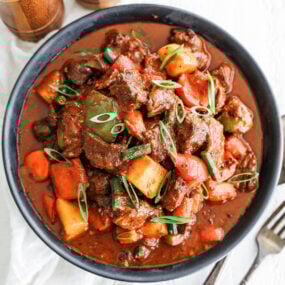
Beef Kaldereta Recipe
Beef Kaldereta is a hearty Filipino stew of chuck roast simmered in tomato sauce with soy, calamansi, and spices, perfect for any occasion.
Ingredients
- 3 ½ pound chuck roast, cut into 1” to 2” inch cubes
- ½ cup soy sauce
- ¼ cup calamansi juice, substitute with lime or lemon
- 8 tablespoons cooking oil
- 5 peeled large cut Yukon gold potatoes
- 3 peeled thickly sliced carrots
- 1 cup thickly sliced green beans
- 2 seeded red bell peppers, cut into 1” squares
- 1 seeded green bell pepper, cut into 1” squares
- 2 peeled small diced red onions
- 8 finely minced garlic cloves
- 3 tablespoons tomato paste
- 4 cups beef stock
- 2 cups tomato puree
- 2 bay leaves
- ½ teaspoons crushed red pepper flakes
- ¼ cup liver spread, optional
- ¼ cup creamy peanut butter, optional
- coarse salt and freshly cracked pepper to taste
Instructions
- Add the beef, soy sauce, and calamansi to a large bowl and mix until the meat is completely coated. Cover with plastic wrap and refrigerate for 4 to 24 hours.
- In a large rondeau or cast-iron pot over high heat, add 2 tablespoons of oil. Place the potatoes and carrots in the pot, gently season with salt, and sauté for 4 to 5 minutes or until lightly browned. Set to the side. Next, add 2 more tablespoons to the pot over high heat, then add in the green beans and peppers, gently season with salt, and sauté for 4 to 5 minutes or until lightly browned. Set aside with potatoes and carrots. Place in the fridge.
- Pour in 1 tablespoon of oil, add in the onions, gently season with salt, and saute for 5 minutes over medium heat until lightly browned. Then turn the heat down to low and cook for 10 to 12 minutes, stirring occasionally. They should be well browned at this point.
- Stir in the garlic and cook just until fragrant. Then set the onions and garlic aside on a separate plate.
- Add the remaining oil over high heat, then once it begins to smoke, add in the beef and cook until browned on all sides. This takes about 3 minutes per side. It’s ok to do this step in batches.
- Once well browned, add the onions and garlic back to the pot, stir in the tomato paste, and cook until everything in the pot becomes dark, about 3 to 4 minutes.
- Deglaze with the beef stock, then pour in the tomato sauce. At this point, I usually fill the can or cup of tomato sauce up with 1 cup of water and swirl it around to get all that goodness, then add it to the pot.
- Place in the bay leaves, pepper flakes, and salt. Stir and taste. It should be delicious. Put on the cover and cook over low-to-low medium heat for 2 ½ hours or until the beef is tender and easily shreds apart.
- Next, stir in the optional liver spread and peanut butter. The liquid should immediately turn to a thick sauce consistency.
- Stir in the sauteed and chilled potatoes, carrots, green beans, and peppers, and cook for 4 to 5 minutes to reheat.
- Adjust any seasonings with salt and pepper and serve with rice.
Notes
I know I’m in for something delicious when I make beef kaldereta simply because of how long it takes. That’s why my #1 tip for making this is to have lots of patience. The beef should ideally be marinated overnight (but 4 hours will still give it good flavor), the vegetables need to be sautéed in stages, and the stew should be left to simmer over low heat for 2 ½ hours. Yes, it takes time, but those layers of well-developed flavors are what make every bite so special.
Don’t clean the pot: Each vegetable sautéed in it adds serious flavor to the stew. I never clean the pot in between rounds. Instead, I’ll just deglaze it with the beef stock and scrape up any stuck pieces of veggies at the bottom (that’s where the flavor is).
Brown the beef in batches: I have to sear the chuck roast in at least two batches because I don’t have a big enough pot to fit them all without overlapping. This always gives the pieces a gorgeous golden brown crust, so I don’t mind the extra time it takes.
Check for doneness: I always know the beef is ready when it shreds easily with a fork and when a meat thermometer measures its internal temperature between 200ºF and 205°F (93º and 96°C).
Customize it: You can add a splash of fish sauce or Worcestershire sauce near the end to deepen the umami. You can also stir in peas, sautéed mushrooms, or spinach if those are the vegetables you have in the fridge. A briny pop from some olives or pickled jalapeños would be nice, too.
Make-Ahead: Like most slow-cooked stews, kaldereta tastes better the next day. You can make it a day ahead to let those flavors mingle or just keep it warm over low heat for a few hours before serving.
How to Store: Leftover beef kaldereta keeps for 4 days in the fridge or 3 months in the freezer. I like to pack the leftovers in individual airtight containers for easy reheatable meals.
How To Reheat: Gently warm the stew on the stovetop until it’s warmed through. It may thicken in the fridge, but a splash of beef stock or water will loosen it.
Nutrition
Calories: 717kcalCarbohydrates: 40gProtein: 50gFat: 42gSaturated Fat: 12gPolyunsaturated Fat: 7gMonounsaturated Fat: 23gTrans Fat: 1gCholesterol: 157mgSodium: 1342mgPotassium: 2030mgFiber: 7gSugar: 11gVitamin A: 6646IUVitamin C: 88mgCalcium: 106mgIron: 8mg